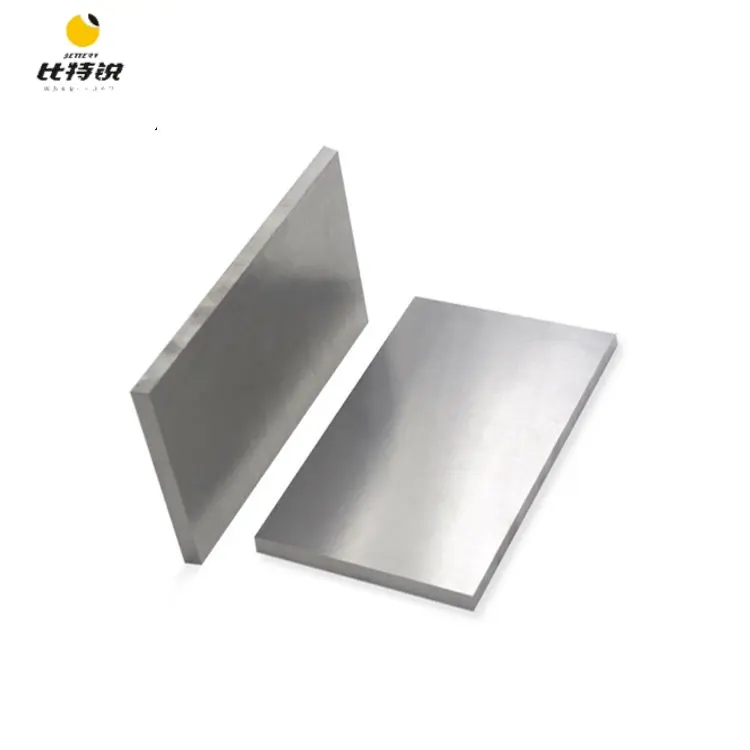
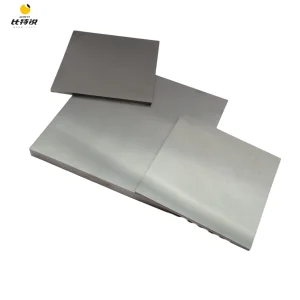
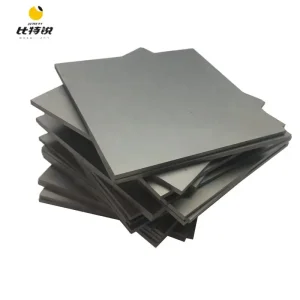
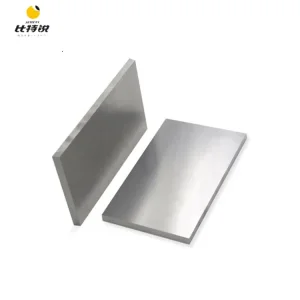
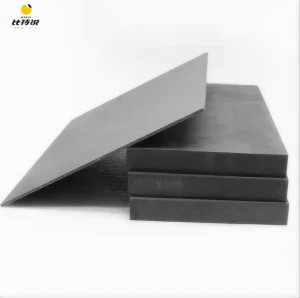
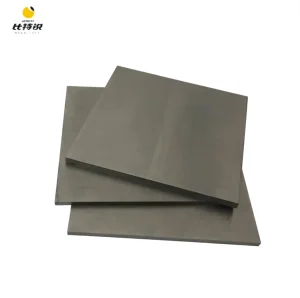
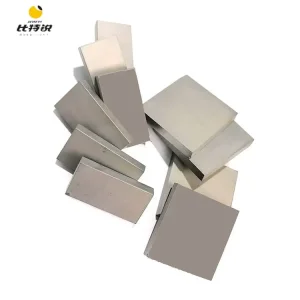
Tungsten carbide plate (also called cemented carbide flat blank or wolfram carbide sheet) is a dense, ultra-hard semifinished material made from tungsten carbide (WC) powder bonded with cobalt or nickel. With hardness typically between HRA 85.5 and 92.5 and transverse rupture strength up to 3,900 N/mm², carbide plate is the go-to starting stock for parts that must survive abrasion, compression and heat far beyond what tool steel can endure.
100% Virgin Powder SourcingManufactured from premium raw powder formulations for structural integrity and peak tool durability.
Gas-Pressure (HIP) SinteringAdvanced HIP processing eliminates internal porosity, ensuring blanks machine cleanly without edge chipping.
Every plate we ship starts from 100% virgin raw powder and is gas-pressure (HIP) sintered to eliminate internal porosity — the difference you can see under a microscope, and the reason our blanks machine cleanly and hold their edges without chipping.
Choosing the Right Grade
Cobalt content is the lever between hardness and toughness. Lower cobalt (YG6/YG6X) gives you maximum wear resistance for finishing tools and precision wear parts; higher cobalt (YG15/YG20) absorbs impact in stamping and cold-forming dies. The quick guide below covers the grades we ship most often:
YG15Standard for stamping dies, punch dies and nut-forming tooling
YG20Highest TRS — progressive dies and cold-heading applications
YN SeriesNickel-bonded, non-magnetic — magnet-forming moulds, EDM blocks
Not sure which grade fits your part? Send us the working conditions — material being cut or formed, impact level, temperature — and our engineers will recommend a grade, or adjust the grain size and binder ratio to build one for you.
Where Carbide Plates Are Used
Cutting tool blanks — inserts, blades, knives for machining cast iron, steel, stainless steel and non-ferrous alloys
Stamping & forming dies — punch plates, die inserts, progressive-die segments for hardware and fastener production
Wear parts — crusher jaws, wear strips, guide plates, scraper blades in mining and recycling equipment
Mould components — core inserts, mould bases and cavity blocks for powder metallurgy and ceramics
Specialty applications — non-magnetic tooling for the magnet and electronics industries, high-temperature fixtures, corrosion-resistant liners
OEM / ODM Customization
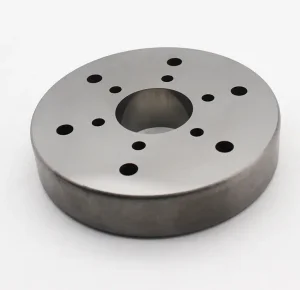
Standard plate sizes only get you so far. As a source manufacturer, we cut, grind and finish plates to your drawing — including square blanks, rectangles, disc segments, chamfered edges and pre-machined pockets. Customization covers:
Non-standard dimensions and thickness from 1 mm upward, single piece or full production lots
Grade formulation adjusted to your performance requirements (we hold formula patents)
Precision grinding and polishing to your specified tolerance and surface roughness
Laser or wire-cut profiling, drilling and milling before shipment
Custom packaging and labelling for direct delivery to your production line
Frequently Asked Questions (FAQ)
What are the main performance benefits of tungsten carbide plates over tool steel?
Tungsten carbide plates provide significantly higher hardness (HRA 85.5 to 92.5) and superior transverse rupture strength up to 3,900 N/mm². They withstand severe abrasion, deformation, and thermal stress far beyond the limits of conventional tool steel.
Why is HIP (Hot Isostatic Pressing) sintering critical for carbide blanks?
Gas-pressure (HIP) sintering eliminates microscopic voids and internal porosity within the plate. This solid microstructure ensures optimal mechanical strength, clean machining, and high fracture resistance without chipping during edge grinding or cutting operations.
How does cobalt content influence grade selection?
Cobalt functions as the binding agent between hardness and fracture toughness. Grades with low cobalt (such as YG6/YG6X) deliver optimal wear resistance for precision cutting and wear pads, while high cobalt grades (such as YG15/YG20) absorb impact energy in stamping, punch, and cold-heading tooling.
When should the nickel-bonded YN series be chosen?
The YN series utilizes a nickel binder rather than cobalt, making it completely non-magnetic and highly corrosion-resistant. It is ideal for electronic manufacturing, magnet-forming dies, and EDM block applications where magnetic interference must be avoided.
What custom machining and finishing capabilities are available?
As a direct manufacturer, we offer thickness customization from 1 mm upward, surface grinding, tight tolerance polishing, laser cutting, wire EDM profiling, edge chamfering, and pre-machined pockets manufactured precisely to your CAD drawings.
Can formulas and grain sizes be tailored for specific working conditions?
Yes. Our engineering team holds proprietary formulation patents and can adjust WC grain sizing, cobalt ratios, and additive binders according to your specific workpiece material, cutting temperature, impact load, and wear parameters.