Industrial Grade Wear Solutions · West Africa Hub

Wholesale Carbide Plate Manufacturers & Factories in the Nigeria Market

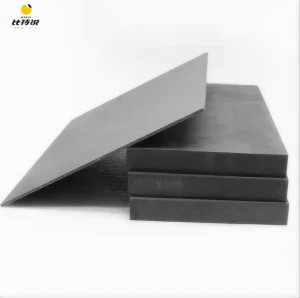
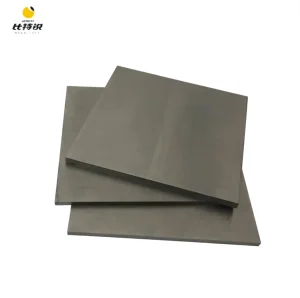
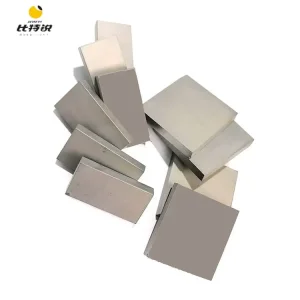
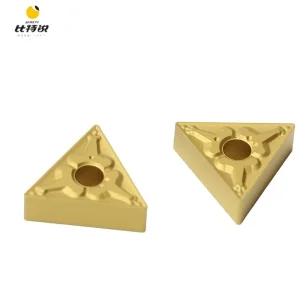
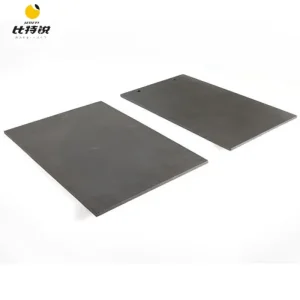
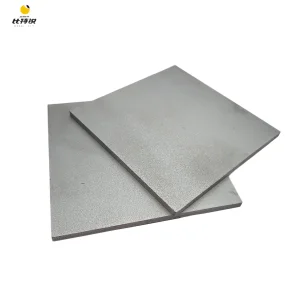
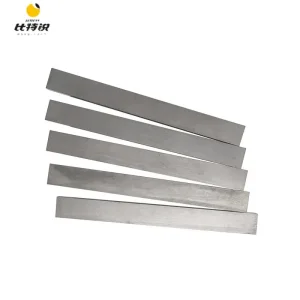
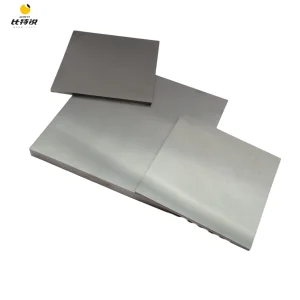
Engineering premium tungsten carbide wear plates, HIP-sintered flat blanks, and heavy alloy components engineered specifically for Nigeria’s oilfield extraction, mining excavation, and heavy agro-processing infrastructure.

Nigeria Industrial Macro Analysis

The State of Wear Parts & Carbide Tooling in Nigeria’s Commercial Hubs

An in-depth assessment of the growing need for specialized metallurgy, tool longevity, and cost-efficient wholesale distribution in West Africa’s primary manufacturing corridor.

Nigeria’s industrial economy is undergoing an aggressive structural realignment. From the oil-bearing sandstone belts of the Niger Delta (Warri, Port Harcourt) to the vibrant engineering, metal conversion, and recycling ecosystems of Lagos and Ogun State, down-time caused by tool failure is the single largest drain on factory margins. The domestic demand for tungsten carbide plates (cemented carbide flat blanks) has expanded well past traditional generic cutting tools into highly engineered wear segments capable of enduring brutal industrial environments.

In regions like Jos and Kaduna, where solid mineral processing, gold extraction, and granite quarrying are expanding exponentially under federal diversification directives, standard carbon steel and low-alloy plate liners fail within weeks. The presence of silica-rich granites and high-friction alluvial ores rapidly erodes chutes, scrapers, and mill hammers. Cemented tungsten carbide plates, specifically HIP (Hot Isostatic Pressing) sintered variants with cobalt binders ranging between 6% and 15%, have proven to elevate component operating lifespans by 800% to 1,200% compared to traditional Hardox-grade steels.

Upstream Petroleum & Downhole Valves

Drilling operators across Port Harcourt require high-density non-magnetic and nickel-bonded carbide plates for MWD/LWD directional housings, choke valves, and abrasive sand slurry barriers exposed to H2S sour gas.

Crushing & Solid Mineral Extraction

Granite aggregate quarries around Abuja and the Middle Belt rely on thick carbide plates (YG11C/YG15) to line primary impact aprons, vertical shaft impactor (VSI) rotors, and pulverizer hammer tips.

Agro-Industrial Processing Machinery

From palm kernel extraction in Edo to cassava starch milling in Oyo, abrasive fiber shearing knives tipped with polished tungsten carbide plates eliminate frequent line stoppage and reduce labor costs.
Metallurgical Engineering

Carbide Grade Matrix Engineered for Tropical & Abrasive Working Loads

Selecting the precise tungsten carbide (WC-Co/Ni) grade is paramount to balancing fracture toughness against fine-particle abrasion in Nigerian industrial plants.

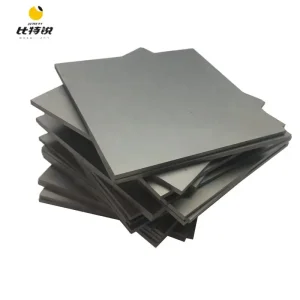
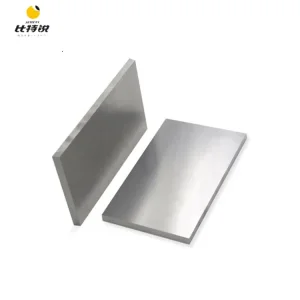
Wholesale procurement requires an exact understanding of binder ratios and particle metallurgy. Many Nigerian fabricators encounter premature chipping because they select brittle high-hardness grades (e.g., standard YG6) for high-impact stamping or crushing. Zhongfu Cemented Carbide formulates custom virgin powder blends to bridge the gap between mechanical toughness and rock-face abrasion resistance.

Grade Class Binder Ratio (%) Density (g/cm³) Hardness (HRA) TRS (N/mm²) Recommended Nigerian Operating Scenario
YG6X (Ultra-Fine) 6.0% Co 14.90 - 15.05 91.5 - 92.5 1,900 Precision wire drawing, slitting non-ferrous metals, paper conversion in Lagos printing clusters.
YG8 / K20 8.0% Co 14.60 - 14.80 89.5 - 90.5 2,200 General lathe guide rails, wood shaping, moderate wear liners for agricultural defibrizer hammers.
YG15 (Heavy Impact) 15.0% Co 13.95 - 14.15 86.5 - 87.5 2,800 Heavy cold heading dies, metal stamping dies, rock drill wear pads for Jos limestone quarries.
YG20C (Coarse Grain) 20.0% Co 13.40 - 13.60 84.0 - 85.5 3,100 Severe impact scrap metal shearing blades, deep-well percussion shoes, sand-blast nozzle blocks.
Ni-Resist non-mag 9.0% - 12.0% Ni 14.40 - 14.70 88.0 - 89.5 2,100 Offshore oil & gas directional tools, sour crude transport valves, subsea anti-corrosive seals.

Macro Industry Solutions: Overcoming Nigeria Supply Chain Bottlenecks

International procurement managers operating in West Africa encounter three recurring barriers: extended lead times for tooling, erratic alloy composition from untraceable trading firms, and failure to match international DIN/ISO standards. Zhongfu addresses these vulnerabilities through an integrated direct-to-enterprise supply chain structure:

  • Consolidated Container Logistics: Routine maritime freight forwarding direct to Apapa Port, Tincan Island, and Onne Port with complete Form M and SONCAP (Standards Organisation of Nigeria Conformity Assessment Programme) documentation readiness.
  • Air Freight Priority for Breakdowns: Door-to-door express sample dispatch via Lagos Murtala Muhammed Airport (LOS) to ensure production plants resolve critical machine outages in under 7 business days.
  • Bespoke Pre-Machined Tolerances: Finished plates ground to precision tolerances (ISO h6 or ground mirror finishes Ra ≤ 0.2 µm) or supplied with EDM allowances (+0.5mm / +1.0mm) to cut local wire-cutting hours by half.
Compliance & Procurement Reliability

Local Regulatory Alignment & International Standards Verification

Guaranteeing metallographic integrity, verifiable virgin raw materials, and flawless clearance processing for Nigerian corporate buyers.

SONCAP & MANCAP Compliance

Each wholesale batch is certified with complete Chemical Analysis Reports and physical density verifications to guarantee swift clearance under NAFDAC and Standards Organisation of Nigeria import protocols.

Zero-Recycled Virgin Tungsten Guarantee

We utilize 100% pure tungsten concentrate sourced from our Jiangxi mining ecosystem, completely eliminating structural failure points caused by recycled zinc-processed scrap powder.

Guaranteed Production Timelines

Fast-track rapid prototyping within 3 business days for custom drawings, followed by production-scale runs dispatched in under 15 days, providing stability against global maritime delays.

Optimize Your Tooling Lifecycle Today

Consult with our lead metallurgists for customized plate dimensions, custom binder alloys, or to receive an instant CIF Lagos/Port Harcourt quotation.

Send Inquiry Now
Procurement Knowledge Base

Frequently Asked Questions: Sourcing Carbide Plates in Nigeria

Clear, direct metallurgical and logistics guidance for plant managers, purchasing executives, and mechanical engineers.

How do cemented tungsten carbide plates perform compared to high-chromium cast iron in Nigerian stone crushers?
While high-chromium cast iron plates offer adequate toughness, their hardness rarely exceeds 60-64 HRC. In contrast, medium-coarse grain carbide plates (such as YG15C or YG20C) deliver 84 to 88 HRA (equivalent to >70 HRC) combined with a dense WC ceramic structure. In granite crushers across the Niger State aggregate corridor, carbide wear plates routinely outlast high-chrome alloys by 10 to 14 times, significantly minimizing machine disassembly downtime.
Can you manufacture carbide wear plates according to custom 2D/3D engineering drawings?
Yes. Over 70% of our production volume comprises custom-engineered OEM components. We work directly with AutoCAD, SolidWorks, STEP, and PDF drawings. Our multi-axis precision CNC surface grinders, profile grinders, and wire-EDM facilities can machine specialized countersunk holes, interlocking bevels, and step plates with dimensional tolerances held tightly within ±0.01 mm.
What binder formulation should we select for offshore oil and gas equipment in the Niger Delta?
For downhole valves, choke stems, and marine flowlines exposed to brackish water, sand slurries, and sour hydrocarbons, standard cobalt (Co) binders are susceptible to galvanic corrosion and binder leaching. We strongly advise our Nickel-bonded (Ni) grades or specialized Ni-Cr-Mo bonded tungsten carbides. These formulations eliminate magnetic interference for directional MWD tools while preventing corrosive pitting in high-chloride marine environments.
What are the shipping options and documentation procedures for industrial deliveries to Nigeria?
We routinely supply industrial components to corporate clients in Nigeria. For urgent maintenance, we ship via express air freight (DHL/FedEx/Air Cargo) arriving at Lagos (LOS) within 5 to 7 days. For regular production inventory, we provide ocean freight (FCL and LCL) to Apapa, Tincan, or Onne. We issue comprehensive Clean Report of Findings (CRF), Form M assistance, commercial invoices with exact HS Code classification (8209.00), and detailed packing lists.
How does Hot Isostatic Pressing (HIP) sintering enhance plate performance under heavy dynamic shock?
Conventional sintering can leave residual microscopic voids and pore clusters inside thick carbide blocks. HIP sintering applies simultaneous extreme temperature (up to 1,450°C) and uniform isostatic inert gas pressure (up to 10 MPa) during the liquid phase. This collapses all internal micro-pores, yielding a metallurgical theoretical density approaching 100%. The Transverse Rupture Strength (TRS) is boosted by 25% to 35%, virtually eliminating unpredictable catastrophic cracking under shock loading.