
Engineered Tungsten Carbide Plate Solutions
Preserving structural density and uniform cobalt matrix dispersion for critical operational equipment across Sumatra, Java, Kalimantan, and Sulawesi.
-
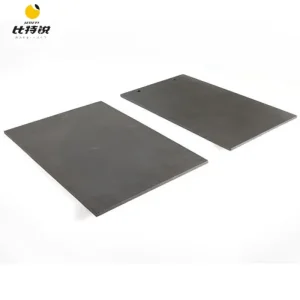
Pressureless Sintered Silicon Carbide Plate & Ceramic Wear Liners for Indonesia Mineral Slurry Systems
View Technical Specs -
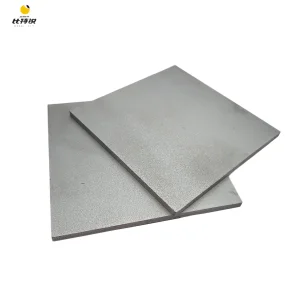
High-Density Tungsten Heavy Alloy Sheets & Pure Tungsten Plates for Industrial Tooling in Indonesia
View Technical Specs -
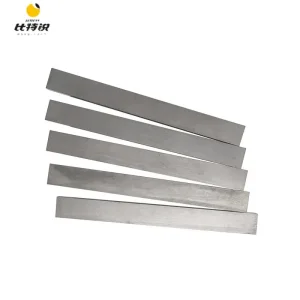
Cemented Tungsten Carbide Strips & Wolfram Flat Bars for Timber Processing & Slitting Knives
View Technical Specs -
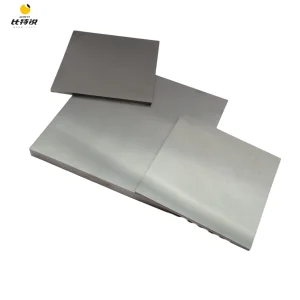
P30 Alloy Tungsten Carbide Sheet (200×200×10mm) for Metal Stamping Dies & Punching Molds
View Technical Specs
Indonesian Industrial Landscape & Tungsten Carbide Consumption
How the downstream mineral processing (Hilirisasi) policy and Southeast Asia's primary manufacturing corridors drive exponential demand for certified sintered tungsten carbide wear parts.
Nickel Downstreaming & HPAL Facilities
Indonesia's aggressive push toward battery-grade chemical refining has resulted in massive downstream complexes across Central Sulawesi (IMIP Morowali), North Maluku (IWIP Weda Bay), and South East Sulawesi (Konawe). High-Pressure Acid Leach (HPAL) autoclaves, high-velocity ore transfer chutes, and cyclone separators operate under severe gouging abrasion and concentrated sulfuric acid exposure.
Standard hardened chrome-moly steels wear out within weeks. High-density tungsten carbide plates engineered with specialized corrosion-resistant binders (such as Nickel-Chromium matrices) ensure unbroken continuous operations under abrasive slurry velocities exceeding 12 m/s.
Automotive Stamping & Die Hubs in Java
The industrial manufacturing corridor spanning Cikarang, Karawang, and Bekasi (KIIC, MM2100, Surya Cipta) forms the heart of Indonesia's automotive supply chain. Tier-1 stamping suppliers producing EV structural elements, motor laminations, and structural chassis components rely on extreme-precision carbide punch plates.
Our micro-grain carbide plates (such as YG15 and YG20 grades) exhibit transverse rupture strengths (TRS) surpassing 3,400 MPa, preventing micro-chipping during high-speed blanking of high-strength low-alloy (HSLA) sheet metals up to 400 strokes per minute.
Agro-Commodity & Palm Oil Processing
As the world's leading crude palm oil (CPO) producer, Indonesia's vast plantations across Riau, North Sumatra, and East Kalimantan require robust mechanical wear solutions. Palm kernel expeller screws, shredder hammer plates, and fiber cake separator rings encounter abrasive silica sands combined with high organic fatty acid corrosion.
Custom-cut carbide wear tiles brazed directly to carbon steel backing plates extend operational lifetimes by 800% to 1,200% compared to conventional hardfacing weld overlays, saving hundreds of thousands of dollars in unscheduled downtime.
Cemented Carbide Grade Formulation for High-Stress Load Cases
Selecting optimal cobalt content and grain size sizing to balance micro-impact fracture toughness with pure abrasion resistance in equatorial tropical operational environments.
| Carbide Grade | Binder Content (% Co / Ni) | WC Grain Size (μm) | Hardness (HRA) | Transverse Rupture (MPa) | Target Indonesian Industry Applications |
|---|---|---|---|---|---|
| YG6 / K10 | 6.0% Co | 1.0 – 1.4 | 90.5 – 91.5 | > 2,400 | High-speed slitting knives for paper mills in Riau, wire drawing dies, wear guide rails. |
| YG8 / K20 | 8.0% Co | 1.4 – 1.8 | 89.5 – 90.5 | > 2,800 | Crusher hammer tips, timber chipper blades in Kalimantan, general wear plate liners. |
| YG11C / K30 | 11.0% Co | 2.2 – 3.2 (Coarse) | 87.0 – 88.0 | > 3,100 | Severe gouging abrasion in laterite nickel ore handling, excavator tooth inserts, dredge teeth. |
| YG15 / K40 | 15.0% Co | 1.2 – 1.6 | 87.0 – 88.5 | > 3,400 | Automotive progressive stamping dies in West Java, cold extrusion punches, compacting dies. |
| YG20 / G50 | 20.0% Co | 1.6 – 2.4 | 85.0 – 86.5 | > 3,600 | Heavy-impact cold heading dies, thick metal punching, deep drawing dies resistant to shock. |
| YN8 (Ni-Binder) | 8.0% Nickel | 1.2 – 1.8 | 89.0 – 90.0 | > 2,600 | Acidic leaching autoclaves (HPAL), chemical slurry impellers, non-magnetic subsea tooling. |
Why Sinter-HIP Technology Matters for Indonesian Tropical Heavy Tooling
Conventional vacuum sintering often leaves sub-microscopic residual pores within thick tungsten carbide plates. When these plates are subjected to cyclical impact—such as in stamping presses in Cikarang or high-pressure grinding rolls (HPGR) in copper-gold mining in Papua and Sumbawa—internal voids initiate catastrophic brittle fractures.
Our facility utilizes high-pressure Sinter-HIP (Hot Isostatic Pressing) furnaces operating at 1,450°C and 100 bar (10 MPa) of pure argon overpressure. The applied isostatic pressure collapses any internal microporosities, driving metallurgical density to 99.99% of theoretical maximum and boosting fracture toughness by up to 25% compared to non-HIP plates.
Nickel-Binder Formulations Against Tropical Acid Runoff
In wet mining environments and downstream hydrometallurgical refining, free cobalt binder reacts aggressively with moisture and sulfur-bearing acidic compounds. This phenomenon, known as binder leaching, leaves the hard tungsten carbide grains unsupported, causing rapid surface erosion and premature component disintegration.
For operations facing pH levels below 4.0, our engineering team supplies custom Ni-Cr bonded plates. Nickel forms an inert chemical passive layer, reducing leaching degradation rates by more than 90% while maintaining Rockwell A hardness above 89.0.
Import Logistics, TKDN Regulations, and Technical Local Support
Navigating Indonesian customs clearance (Bea Cukai), SNI technical guidelines, and ensuring high-reliability shipping corridors to remote smelter sites.
Tariff Optimization & ACFTA Form E
Procuring cemented tungsten carbide products under HS Code 8209.00 (plates, sticks, tips, and plates for tools) from China to Indonesia qualifies for zero or significantly reduced tariff rates under the ASEAN-China Free Trade Agreement (ACFTA).
Our dedicated export documentation department provides certified Certificate of Origin (Form E) declarations alongside compliant commercial invoices, allowing Indonesian purchasing teams to clear customs smoothly at Tanjung Priok (Jakarta) or Tanjung Perak (Surabaya) without tariff delays.
Direct Shipping to Island Smelter Ports
Major nickel projects in Morowali, Weda Bay, and Obi Island require consolidated container shipping that bypasses congested transshipment hubs. We coordinate direct break-bulk and sea container routes directly to project jetties or private industrial park ports.
For urgent die repairs in Cikarang or tool-room emergencies, we offer 3-to-5-day door-to-door express air freight consolidation directly into Soekarno-Hatta International Airport (CGK), complete with pre-cleared regulatory paperwork.
Full Material Traceability & QA
Every batch of carbide plates delivered to Indonesian buyers is accompanied by a certified 3.1 Mill Test Certificate (MTC) documenting precise density, HRA hardness, coercivity, and saturation magnetization levels.
Our quality department performs complete ultrasonic non-destructive testing (NDT) to ensure zero delamination or macro-inclusions, safeguarding costly CNC wire-EDM operations against unexpected breakage.
Precision Manufacturing Sequence for Indonesian Custom Orders
Formulation
High-purity virgin WC blended with micron cobalt or nickel in attritor ball mills.
Cold Isostatic Press
Automatic 500-ton hydraulic presses deliver uniform green-density plate blanks.
Sinter-HIP
Integrated 10 MPa overpressure sintering eliminates porosity and micro-cracks.
Surface Grinding
Precision double-disc diamond grinding ensures Ra 0.2 μm mirror surface finish.
Export CMM Check
Laser micrometer and coordinate measurement testing prior to rust-proof crating.
Engineering Roadmap: Advanced Wear Solutions (2025–2035)
Anticipating emerging wear challenges in high-pressure hydrogen pipelines, deep-sea seabed mining, and ultra-high-speed electric vehicle rotor stamping.
Functionally Graded Carbide Plates (FGM)
Traditional carbide plates maintain uniform cobalt content from the surface to the core, forcing tooling engineers to compromise between surface wear hardness and core impact strength. Our R&D team has developed functionally graded material (FGM) sintering protocols.
By controlling carbon potential and atmosphere diffusion during the sintering cycle, we produce plates with an ultra-hard surface zone (HRA 92.5) that transitions seamlessly into a tough, cobalt-enriched core (HRA 86.0). This provides unparalleled crack arrest capabilities in heavy-gauge automotive blanking dies and rock crushing machinery.
Circular Economy & Carbide Recycling in ASEAN
Tungsten is classified as a critical strategic raw material globally. To support Indonesian ESG initiatives and reduce Scope 3 carbon emissions, we partner with major mining and manufacturing groups across Java and Sumatra to establish closed-loop carbide scrap buyback channels.
Through advanced zinc-process recycling, high-purity recycled tungsten carbide powders can be blended into secondary wear plates without losing mechanical integrity, decreasing material costs by up to 25% while conserving precious global mineral resources.
Complete Carbide Plate, Block & Tooling Catalog
Stocked in standard dimensions and custom-sintered to your engineering blueprints with guaranteed delivery lead times across all Indonesian provinces.
-
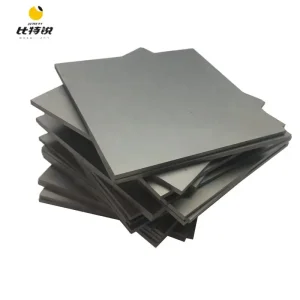
OEM Customizable HIP Processed Square Tungsten Carbide Plate Blanks for Industrial Cutting Tools
View Technical Specs -
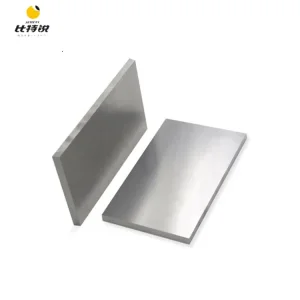
OEM Wear-Resistant Cemented Carbide Plate Blanks for High-Precision Tooling & Wire EDM Machining
View Technical Specs -
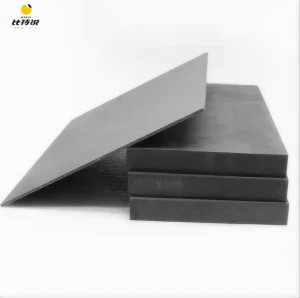
Tungsten Carbide Plate 100×100×60 mm Thick Block Stock for Heavy Cold Stamping & Extrusion Dies
View Technical Specs -
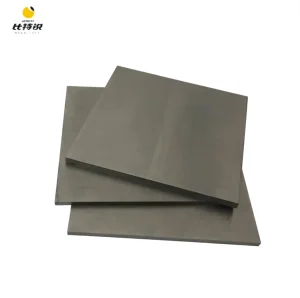
Customized Cemented Carbide Plate — Factory-Direct Sintered Blanks in Any Dimension & Grade
View Technical Specs -
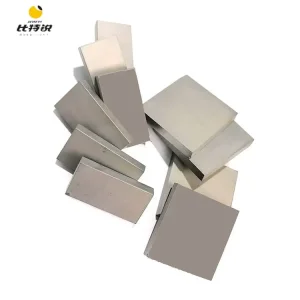
HIP-Sintered Wear-Resistant Carbide Flat Blanks in YG6 to YG20 Impact Grades for Mill Liners
View Technical Specs -
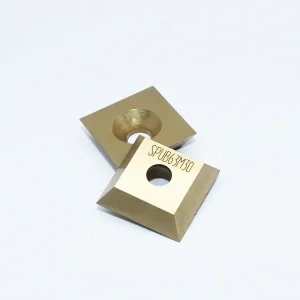
SPUB63 Heavy-Duty Tungsten Carbide Cutting & Turning Inserts for Metallurgical Plants
View Technical Specs -
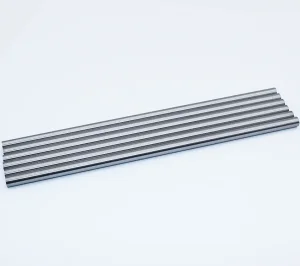
Nickel-Based Binder Tungsten Carbide Rods & Plates for Chemical Processing & Corrosive Environments
View Technical Specs -
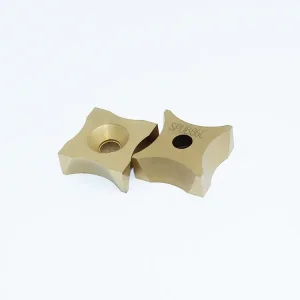
SPUB86C P40 CVD-Coated Carbide Scarfing Inserts for Hot Steel Pipe & Tube De-beading Lines
View Technical Specs
Frequently Asked Technical Questions by Indonesian Procurement Teams
In-depth insights into machinability, wire-EDM parameters, brazing techniques, and logistics protocols for cemented carbide plates.
How do your carbide plates perform during precision Wire EDM cutting in tooling workshops?
What is the optimal brazing method for bonding tungsten carbide plates onto steel backing structures?
Which carbide grade is recommended for high-temperature slag and slurry in nickel smelters?
Can you supply custom pre-formed carbide plates with countersunk bolt holes?
What are the standard delivery lead times to Indonesian industrial hubs such as Jakarta, Surabaya, and Morowali?
How does your quality assurance process guarantee structural integrity for critical stamping dies?
Upgrade Your Equipment Wear Life Today
Partner with an experienced cemented tungsten carbide manufacturing plant. Send your drawings, target operating parameters, or current tooling wear challenges for an immediate technical evaluation and direct quotation.
Send Inquiry Now