
Engineered for European toolmakers, stamping press facilities, and precision EDM mold shops demanding ultra-low porosity, sub-micron wear resistance, and long-cycle dimensional stability.
1. Executive Summary: The Industrial Ecosystem of Barcelona & Catalonia's Wear Tooling Needs
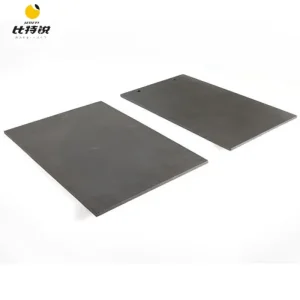
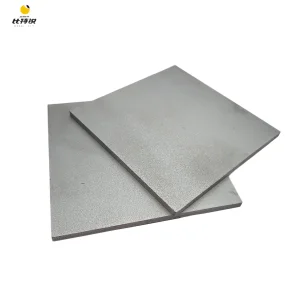
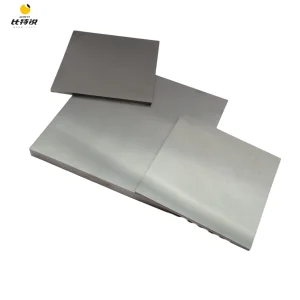
The Metropolitan Area of Barcelona and the broader Catalonia region represent one of Southern Europe’s most powerful industrial engines. From the automotive stamping giant of Martorell to the advanced medical packaging corridors of Vallès Occidental and Baix Llobregat, local manufacturing infrastructure demands extremely high reliability from mechanical components. At the center of this industrial reliability is tungsten carbide plate (cemented carbide flat blanks), a critical raw material utilized in metal punching, progressive stamping dies, pharmaceutical tablet compression, and heavy industrial wear liners.
Key Industry Sectors Driving Demand for Carbide Plates in Catalonia
- Automotive Stamping & Fine Blanking: Tier-1 and Tier-2 automotive suppliers surrounding Barcelona produce millions of structural chassis parts, electric vehicle (EV) motor laminations, and high-tensile steel brackets. Progressive dies require sub-micron tungsten carbide plates (such as YG15, YG20, and specialized P30 grades) capable of enduring severe cyclic impact without micro-chipping.
- Pharmaceutical & Medical Tooling: Catalonia is home to Spain’s premier pharmaceutical manufacturing hub. Packaging machines, tablet compression dies, and blister packs rely on non-magnetic nickel-bonded carbide plates and polished silicon carbide (SiC) ceramics that prevent corrosion and comply with strict food and health contact regulations.
- Aerospace & High-Precision Machining: Precision toolmakers in the industrial parks of Granollers, Sabadell, and Terrassa require ground carbide block stock with zero internal stress for wire Electrical Discharge Machining (EDM), creating custom cutting inserts, reamers, and wear guides.
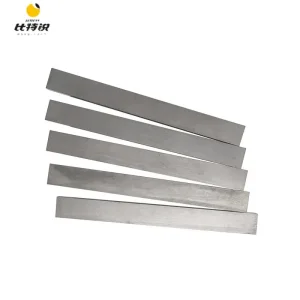
- Port Logistics & Heavy Recycling Equipment: The Port of Barcelona handles millions of tons of bulk cargo and container traffic annually. Wear-resistant tungsten carbide wear strips and heavy plates are routinely deployed on scrap metal shredders, dredging pumps, and conveyor transfer chutes.
Understanding the physics of Tungsten Carbide (WC) powder synthesis, binder metal ratios (Cobalt vs. Nickel), and Hot Isostatic Pressing (HIP) technology to prevent structural failure in high-stress applications.
Sub-Micron vs. Coarse Grain
Fine and sub-micron WC grains (< 0.6 µm) yield ultra-high hardness (HRA 92.5-93.5) ideal for sharp edge retention in electronic stamping. Coarse grains (2.0-4.0 µm) combined with higher cobalt content yield exceptional impact toughness against heavy shock loading.
Sinter-HIP Technology
Traditional vacuum sintering leaves microscopic gas pores that trigger fatigue cracks during wire EDM or heavy stamping. Our 100-bar pressure Sinter-HIP process eliminates porosity (achieving ISO 4499 A00, B00 rating), boosting Transverse Rupture Strength by up to 30%.
Non-Magnetic & SiC Alternatives
For chemical processing or magnetic sensor component tooling, nickel-bonded carbide grades and pressureless sintered Silicon Carbide (SiC) plates provide superior acid resistance and non-magnetic permeability without sacrificing sliding wear life.
| Grade Series | WC Grain Size (µm) | Binder (Co/Ni %) | Density (g/cm³) | Hardness (HRA) | TRS (MPa) | Primary Industrial Application |
|---|---|---|---|---|---|---|
| YG6 / K10 | 1.0 - 1.6 | 6.0% Co | 14.95 | 90.5 - 91.5 | 2400 | Non-ferrous metal cutting, wear plates, wire drawing dies |
| YG8 / K20 | 1.2 - 2.0 | 8.0% Co | 14.75 | 89.5 - 90.5 | 2700 | Heavy mechanical wear strips, stone cutting, wood tooling |
| YG15 / K40 | 1.4 - 2.2 | 15.0% Co | 14.05 | 87.0 - 88.5 | 3200 | Medium-heavy metal stamping dies, progressive punches |
| YG20 / Impact | 1.8 - 2.5 | 20.0% Co | 13.55 | 85.5 - 87.0 | 3600 | High-impact cold heading dies, thick sheet blanking, EDM blocks |
| P30 Alloy | 1.0 - 1.8 | 10.0% Co + TiC/TaC | 14.40 | 90.0 - 91.0 | 2800 | Steel stamping dies, thermal wear plates, continuous blanking |
| Ni-Bonded Grade | 1.2 - 1.8 | 9.0% Ni | 14.60 | 88.0 - 89.5 | 2500 | Corrosive fluid valves, non-magnetic pharmaceutical molding |
3. Macro-Industry Solutions: Technical Problem-Solving for Barcelona Tooling Engineers
In high-speed production environments, component failure is rarely caused by uniform abrasion alone. Micro-fractures, thermal stress cracking, and binder leaching are the real causes of unpredicted line stops. Factory procurement leads in Barcelona face specific technical challenges that require customized carbide plate formulations:
A. Eliminating Stress Cracking During Wire EDM Cutting
When toolmakers wire-cut intricate punch contours from large blocks (e.g., 100×100×60mm thick stock), unbalanced internal residual stresses in the raw carbide plate can cause the material to crack violently along the cutting path. To prevent this, our production route implements a multi-stage thermal annealing and stress-relieving cycle post Sinter-HIP. This guarantees isotropic mechanical properties, ensuring that complex die pockets can be wire-cut with micron-level precision without risk of premature cleavage.
B. Extending Tool Life in EV Motor Lamination Stamping
The manufacturing of electric motor stators and rotors utilizes razor-thin electrical steel sheets coated with abrasive insulation layers. Standard tool steel punches dull after 200,000 cycles. By switching to ultra-fine grain YG15/YG20 carbide plates with vanadium carbide (VC) grain growth inhibitors, European stamping plants achieve over 3,000,000 punch cycles between regrinds, dramatically reducing die maintenance labor costs.
C. Corrosion-Resistant Tooling for Food & Packaging Lines
Industrial packaging equipment often operates under high humidity or exposure to mild organic acids. Conventional tungsten carbide with pure cobalt binders suffers from galvanic corrosion, where the cobalt matrix dissolves, leaving brittle WC grains that spall off into the product stream. Utilizing specialized Nickel-Binder (WC-Ni) or Pressureless Sintered Silicon Carbide (SiC) plates eliminates binder corrosion, ensuring full food-grade and pharmaceutical regulatory compliance.
How Jiangxi Zhongfu Cemented Carbide Co., Ltd. combines 24 years of metallurgical expertise, state-of-the-art Sinter-HIP infrastructure, and raw material access to empower Barcelona manufacturers.
24+ Years Manufacturing Heritage
Situated in Nanchang, Jiangxi—the epicenter of global tungsten reserves—our 5,000 m² factory operates fully integrated powder mixing, ball milling, automatic pressing, and vacuum Sinter-HIP lines. We export engineered wear solutions to over 20 countries worldwide.
100% Virgin Raw Materials
We enforce a strict zero-recycled-scrap policy for all our primary wear plate blanks. Utilizing 100% virgin ammonium paratungstate (APT) derived powder ensures uniform grain morphology, predictable hardness, and superior transverse rupture strength.
35-50% Total Cost Reduction
By eliminating multi-tiered European stockist markups, Barcelona toolmakers and OEMs gain direct access to factory-direct pricing. Combined with rapid air-freight and DDP customs clearance, lead times are compressed to 10-15 business days.
5. European Compliance, Regional Logistics & Quality Control Assurance
Procurement within the European Union mandates rigorous regulatory adherence and transparent supply chain documentation. Importing tungsten carbide plates into Catalonia requires complete alignment with EU standards:
Strict REACH & RoHS Regulatory Compliance
All carbide plates, strips, and ceramic blocks manufactured by Zhongfu comply fully with EU REACH (Registration, Evaluation, Authorisation and Restriction of Chemicals) regulations. Chemical composition safety datasheets (MSDS) detailing binder metals (Cobalt/Nickel) are supplied with every shipment to support European environmental and workplace safety protocols.
Seamless DDP Logistics to Barcelona & Industrial Catalonia
Whether your machine shop is located in the Zona Franca logistics hub, the Polígon Industrial del Besòs, or inland industrial sectors in Vallès, we provide end-to-end Delivered Duty Paid (DDP) logistics. We manage all Spanish customs documentation, import duties, and local freight handoff directly to your plant receiving dock.
Comprehensive Quality Certification Package
Every shipment is accompanied by a comprehensive quality testing certificate, including:
- XRF Chemical Composition Analysis: Confirming exact WC ratio and binder percentage.
- Rockwell Hardness (HRA) & Density Testing: Verified across multiple sample points per plate.
- Metallographic Microstructure Inspection (ISO 4499): Confirming porosity level (A00/B00) and freedom from free carbon or eta-phase precipitation.
- CMM Dimensional Accuracy Certificate: Ensuring thickness, flatness, and parallelism tolerances meet exact drawing specifications.
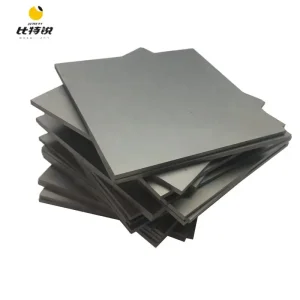
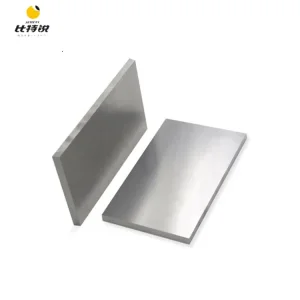
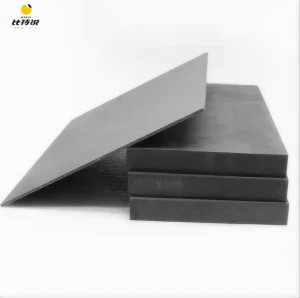
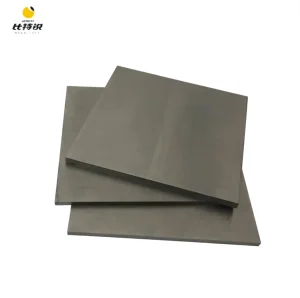
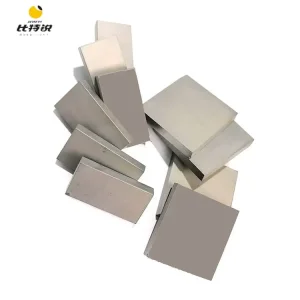
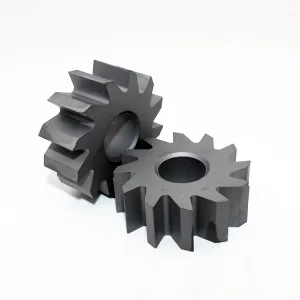
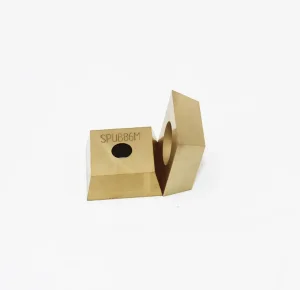
Explore our complete range of standard plate stock, thick EDM blocks, indexable scarfing inserts, and custom machined blanks engineered for high-duty European machinery.
6. Global Enterprise Procurement Framework: Step-by-Step RFQ Checklist
To expedite engineering review and obtain accurate commercial quotations for custom carbide plates, European purchasing managers should ensure their Request for Quotation (RFQ) package includes the following technical parameters:
Standard Technical RFQ Parameters for Carbide Plates:
- Dimensional Callouts: Length × Width × Thickness (mm), specifying ground stock tolerances (e.g., ±0.05mm or +0.5/+1.0mm unground sinter blank).
- Surface Roughness Requirement: As-sintered (Ra 1.6-3.2 µm), rough ground (Ra 0.4-0.8 µm), or precision mirror polished (Ra < 0.05 µm).
- Operating Stress Profile: Specify whether the part will experience pure sliding abrasion, extreme shock impact (e.g., cold heading), or chemical exposure.
- Machining Operations Post-Purchase: Indicate if the plate will undergo Wire EDM cutting, brazing to a steel holder, or surface coating (PVD/CVD).
Answers to common inquiries from European tool engineers, plant operations leads, and international buyers.
Partner with a World-Class Carbide Factory Today
Optimize your tooling performance, lower your procurement overhead by 35-50%, and secure guaranteed delivery to your Barcelona or European plant dock.
Send Inquiry Now