
High-Performance Carbide Plates & Wolfram Strips
Premium wear-resistant blanks optimized for metal forming, progressive stamping dies, and ceramic tooling across Lombardy, Emilia-Romagna, and Veneto manufacturing corridors.
-
 View Product Specs
High-Hardness Pressureless Sintered Silicon Carbide Plate & Polished SiC Plate for Italian Mechanical Seals
-
 View Product Specs
Premium Bright Surface Tungsten Heavy Alloy Sheets & Pure Tungsten Plates for Italian Industrial Shielding
-
 View Product Specs
High-Quality Tungsten Carbide Strips & Durable Cemented Wolfram Flat Bars for Italian Woodworking & Tooling
-
 View Product Specs
Wholesale Premium Tungsten Carbide Sheet for Stamping Dies, Durable P30 Alloy 200×200×10 mm for Italian Automotive Tooling
The Industrial Context of Tungsten Carbide in Italy
Italy stands as Europe’s second-largest manufacturing powerhouse. From the precision toolmakers in Brescia to packaging clusters in Bologna, cemented carbide plate consumption demands rigorous metallurgical predictability.
Demanding Tooling Ecosystems Across Northern & Central Italy
The Italian machine tool and precision metalworking sector (concentrated in Lombardy, Piedmont, Emilia-Romagna, and Veneto) relies extensively on high-density cemented tungsten carbide plates. In regions like Brescia and Bergamo, precision stampers require carbide plates for stamping electrical laminations, automotive connectors, and heavy-duty brass valves. These applications require high compressive strength, exceptional edge retention, and controlled fracture toughness (K1c).
In Emilia-Romagna's famous Packaging Valley (Bologna), automated blister packaging, pharmaceutical pouching, and high-speed flow-wrap machines depend on custom carbide shear knives and wear plates fabricated from stress-relieved sintered blanks. Furthermore, Sassuolo's global ceramic tile hub demands large-format, abrasion-resistant carbide plates to line hydraulic pressing dies that endure millions of highly abrasive cycles daily.
For Italian procurement directors, domestic or intra-European distributor markups often add 40% to 65% in overhead. Zhongfu bridges this gap by offering direct Chinese metallurgical factory sourcing with identical ISO/DIN grade performance, mill-test certificates, and complete traceability.
Key Italian Cluster Demands
- Turin & Modena Automotive Hubs: Heavy-gauge blanking plates, progressive trim dies (P30, YG15, YG20) resistant to severe micro-chipping.
- Bologna Packaging Machinery: Mirror-polished, razor-sharp slitting plates and rotary guillotine inserts with zero porosity.
- Sassuolo Ceramic Industry: Large-format wear liners with superior cobalt binder integrity resisting silica abrasion.
- Carrara Stone & Marble Extraction: Impact-resistant Wolfram carbide wear pads for diamond wire guides and gang saws.
Why Tier-1 European Buyers Partner with Jiangxi Zhongfu
Combining the natural raw tungsten ore dominance of Jiangxi province with 24 years of metallurgical formulation and sinter-HIP technology.
100% Virgin Powder & Native Ore Advantage
Located in Nanchang, Jiangxi—China's primary tungsten mining belt—Zhongfu utilizes exclusively 100% virgin ammonium paratungstate (APT) derived tungsten carbide powder. Zero recycled scrap powder prevents localized micro-voids, cobalt pooling, and premature fatigue fractures during Wire-EDM operations.
- Zero tungsten carbide scrap contamination
- Precise grain size classification from 0.4 µm to 2.5 µm
- Controlled carbon balance avoiding brittle Eta (η) phase
Overpressure Sinter-HIP Technology
Every carbide plate is sintered in state-of-the-art 100-bar overpressure Sinter-HIP furnaces. By applying extreme isostatic pressure during the liquid phase sintering cycle, microscopic pores are systematically collapsed, achieving theoretical density (>99.95%) and eliminating EDM wire-cut pitting.
- A00-B00 porosity rating according to ISO 4505
- Transverse rupture strength (TRS) boosted by >20%
- Uniform cobalt distribution for mirror-polish Ra ≤ 0.05 µm
Custom Tolerances & Rapid European Logistics
Equipped with heavy CNC surface grinding, optical profile grinding, and EDM wire slicing equipment, we furnish both as-sintered blanks with grinding allowance (+0.5/+1.5 mm) and ultra-precision ground plates with thickness tolerances within ±0.005 mm and parallelism ≤ 0.003 mm.
- Direct air freight (DHL/FedEx/UPS) to Milan Malpensa in 4-6 days
- Custom plate dimensions up to 400 × 400 × 80 mm
- 8-hour drawing response & engineering manufacturability review
Cemented Carbide Plate Grade Matrix for EU Tooling
Selecting the optimal cobalt percentage and WC grain size is crucial to balancing abrasion resistance with impact toughness. Cross-reference Chinese grades with European ISO/DIN equivalents.
| Zhongfu Grade | ISO / DIN Equiv. | Cobalt (Co %) | Density (g/cm³) | Hardness (HRA) | TRS (MPa) | Grain Size | Primary Industrial Application |
|---|---|---|---|---|---|---|---|
| YG6 (K10) | HW-K10 | 6.0% | 14.90 - 15.00 | 90.5 - 91.5 | 1,900 | Fine (1.0-1.4 µm) | Thin plate drawing dies, cast iron wear plates, non-ferrous shear knives |
| YG8 (K20) | HW-K20 / K30 | 8.0% | 14.70 - 14.85 | 89.5 - 90.5 | 2,200 | Medium (1.4-1.8 µm) | Woodworking planers, general wear components, stone cutting saw tips |
| YG11C (G20) | HW-G20 | 11.0% | 14.30 - 14.50 | 87.0 - 88.0 | 2,550 | Coarse (2.2-3.0 µm) | Heavy cold stamping, mining tool shims, high-shock impact wear plates |
| YG15 (G30) | HW-G30 / G40 | 15.0% | 13.95 - 14.15 | 86.5 - 87.5 | 2,800 | Medium-Coarse | Progressive stamping dies for thick steel sheets, deep drawing punches |
| YG20 (G50) | HW-G50 | 20.0% | 13.45 - 13.65 | 84.5 - 85.8 | 3,100 | Coarse (>2.5 µm) | Heavy cold heading dies, coin minting punches, extreme impact metal forming |
| YN6 / YN8 | Non-Magnetic | 6-8% Ni | 14.50 - 14.80 | 88.5 - 90.5 | 1,850 | Fine (Sub-micron) | Magnetic sensor tooling, titanium forming, corrosion-resistant seal plates |
Stress Relief for EDM Wire-Cutting & Micro-Cracking Prevention
A persistent pain point for Italian die makers when using standard carbide plate stock is internal stress cracking during wire electrical discharge machining (WEDM). Residual stresses from uneven cooling in non-HIP furnaces release violently during cutting, causing tool blanks to distort or develop hairline micro-fractures along cutting edges.
At Zhongfu, every thick plate and EDM block undergoes a multi-stage, proprietary sub-critical thermal annealing process post-HIP sintering. This neutralizes internal hydraulic and thermodynamic tension vectors. Italian moldmakers can perform complex, fine-pitch erosion without edge chipping or dimensional deviation.
Comprehensive QA Laboratory Protocol
Each exported carbide plate batch is accompanied by an inspection certificate detailing:
- Coercive Force (Hc): Validates exact grain sizing and prevents decarburization.
- Magnetic Saturation (4πσ): Confirms stoichiometric carbon balancing without eta-phase.
- Ultrasonic Flaw Detection: Inspects internal solid integrity up to 100 mm thickness.
Next-Generation Carbide Plate Trends in Global Manufacturing
How metallurgical advancements in ultra-fine grain structures, corrosion-resistant binders, and net-shape sintering are reshaping tooling efficiency.
Sub-Micron & Nano-Grain Tungsten Matrices
Conventional coarse-grain carbide plates exhibit micro-flaking when exposed to repetitive, high-impact shearing of ultra-high-strength automotive steel (UHSS). Zhongfu manufactures nano-grain WC plates (grain diameter 0.2 - 0.5 µm) that combine extraordinary surface hardness (>92 HRA) with superior compressive fracture resistance.
- Ideal for thin foil slitting (<0.05 mm copper/aluminum)
- Extreme edge sharpness without micro-burrs
Corrosion-Resistant & Nickel Binder Blanks
In wire EDM cutting with deionized water or working conditions exposed to acidic plastics, chlorinated cutting fluids, and food packaging, standard cobalt-bonded plates experience cobalt leaching. Zhongfu’s WC-Ni and WC-Co-Cr-Ni multi-alloy plates prevent binder depletion, surface pitting, and premature tool failure.
- Immune to cobalt-leaching in WEDM dielectric water
- Biocompatible and non-reactive for food and pharma tooling
Near-Net Shape Pre-Forming & TCO Optimization
Diamond grinding solid tungsten carbide is one of the most expensive processes in Italian precision workshops. Zhongfu leverages custom CNC pre-sintering green-machining technology to deliver plates with pre-formed screw holes, steps, bevels, and countersinks, reducing finish grinding time by up to 60%.
- Substantial reduction in diamond wheel wear
- Dramatically lower total cost of ownership (TCO)
Total Cost of Ownership (TCO) in Carbide Plate Sourcing
Why sophisticated supply chain directors evaluate wear life, EDM stability, and raw material purity above nominal piece price.
The Cost Iceberg in Tungsten Carbide Tooling
When purchasing carbide plates, initial material invoice cost accounts for less than 20% to 30% of total tooling expenditures. The invisible portion of the iceberg consists of secondary diamond grinding hours, EDM wire cutting feed rates, punch changeover downtime, and premature die catastrophic failure during high-speed stamping operations.
Sub-par plates manufactured from scrap blend powder frequently exhibit micro-segregation of carbon. When an EDM wire encounters these localized variations, the spark gap destabilizes, resulting in excessive recast layers, micro-cracking, and uneven cutting speeds.
By partnering directly with Jiangxi Zhongfu, Italian manufacturers obtain certified metallurgical consistency batch-to-batch. Our Sinter-HIP process guarantees zero voids, allowing toolmakers to operate wire EDM at peak feed rates with zero wire breakage and minimal recast layer thickness.
TCO Comparative Value Metric
- Grinding Time Reduction: Controlled near-net shapes with tight as-sintered tolerances (±0.3 mm) cut grinding labor by 35%.
- Die Regrind Intervals: Optimized WC grain distribution extends stamping cycles between regrinds from 400,000 strokes to >850,000 strokes.
- Elimination of Intermediate Margins: Buying direct from our Jiangxi factory reduces purchasing costs by 25-45% compared to local EU stockists.
Precision Plates, EDM Blocks & Carbide Tooling
Comprehensive portfolio of HIP-sintered wear plates, thick EDM die blocks, scarfing inserts, and woodworking cutters designed for European production lines.
-
 View Product Specs
OEM Customizable HIP Processed Square Tungsten Carbide Plate, Polished Flat Blank for Italian Cutting Tools
-
 View Product Specs
Tungsten Carbide Plate | OEM Wear-Resistant Cemented Carbide Blank for Tooling & EDM Toolmaking in Italy
-
 View Product Specs
Tungsten Carbide Plate 100×100×60 mm — Thick Block Stock for EDM, Die & Heavy Wear Parts for Italian Stampers
-
 View Product Specs
Customized Cemented Carbide Plate — Factory-Direct Tungsten Carbide Blanks in Any Size, Shape & Grade for Italy
-
 View Product Specs
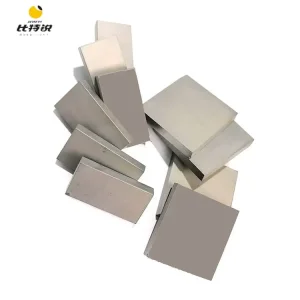
Tungsten Carbide Plate HIP-Sintered Wear-Resistant Flat Blanks in YG6–YG20 Grades for Italian Tool Specialists
-
 View Product Specs
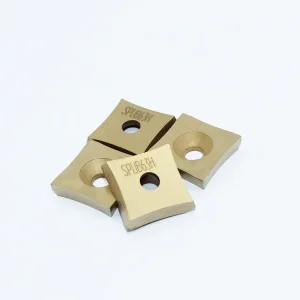
Wholesale Woodworking Blades, Tungsten Carbide Insert & Milling Inserts for Inconel Machining in Italy
-
 View Product Specs
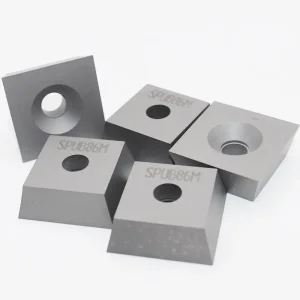
SPUB63M30 TiN Coating Scarfing Insert, Heavy-Duty Carbide OD Scarfing Insert for Italian Welded Tube Mills
-
 View Product Specs
Factory Wholesale Boxes Tungsten Woodworking Carbide Button Inserts for Italian CNC Router Cutters
Frequently Asked Questions by Italian & European Buyers
Comprehensive answers regarding metallurgical validation, custom tolerances, shipping times to Italy, and wire EDM processing best practices.
How can Italian buyers verify that Zhongfu uses 100% virgin tungsten carbide?
Every order is supplied with a comprehensive 3.1 Mill Inspection Certificate that documents measured physical and metallurgical parameters, including density, Rockwell hardness (HRA), transverse rupture strength (TRS), coercive force (Hc), and magnetic saturation (4πσ). Recycled scrap powder invariably exhibits irregular magnetic saturation and microscopic black-hole porosity under 500x metallographic examination. Buyers are welcome to inspect random samples via independent European testing laboratories (such as TÜV or local Italian metallurgical institutes).
What are typical delivery times for custom carbide plates to Milan, Turin, or Bologna?
For standard stock sizes (e.g., 100×100, 150×150, 200×200 mm in YG8, YG15, YG20), dispatch occurs within 48 to 72 hours. Custom-pressed and Sinter-HIP manufactured plates made to customer drawings typically require a production lead time of 12 to 16 business days. Express door-to-door air freight via DHL, FedEx, or UPS delivers directly to Italian workshops within 4 to 6 business days, complete with automated customs clearance.
How does Zhongfu prevent cracking during Wire-EDM (elettroerosione a filo)?
Cracking during WEDM is primarily caused by unreleased residual thermal stresses from non-isostatic sintering, combined with carbon imbalance. Zhongfu utilizes 100-bar overpressure Sinter-HIP processing followed by specialized thermal annealing to eliminate residual structural tension. Furthermore, our tight control over cobalt distribution minimizes the thickness of the EDM recast (white) layer, preventing micro-notch initiation.
Can you supply non-magnetic carbide plates for specialized sensor and electronics dies?
Yes. Standard WC-Co grades are ferromagnetic due to their cobalt binder matrix. For magnetic die applications, IC packaging molds, and non-magnetic downhole sensors, we engineer nickel-bonded (WC-Ni) and non-magnetic tungsten carbide plates with magnetic permeability (µ) approaching 1.000 to 1.005, while retaining high hardness (HRA 88.5–90.5) and superior corrosion resistance.
What surface finishes and dimensional tolerances can you achieve on ground plates?
We supply plates in three standard conditions: 1) As-sintered blanks with grinding allowance (+0.5/+1.5 mm); 2) Commercial ground plates with thickness tolerance ±0.02 mm and Ra 0.4 µm; 3) Ultra-precision lapped plates with thickness tolerance ±0.005 mm, parallelism ≤ 0.003 mm, flatness ≤ 0.002 mm, and mirror surface finish down to Ra 0.05 µm.
What are your payment terms and minimum order quantities (MOQ) for Italian accounts?
For standard catalogue plates and sample qualification batches, our minimum order quantity is flexible, typically starting from 1 to 5 pieces depending on thickness. For established European toolmakers and recurring OEM contracts, we offer flexible payment terms (including T/T and open account arrangements after credit assessment), with scheduled blanket release orders supported by factory buffer inventory.
Accelerate Your Tooling Performance with Direct Factory Sourcing
Send us your 2D/3D drawings or standard plate requirements today. Our senior metallurgical engineering team responds within 8 hours with grade recommendations, precision tolerances, and competitive factory-direct pricing for Italian manufacturing operations.