
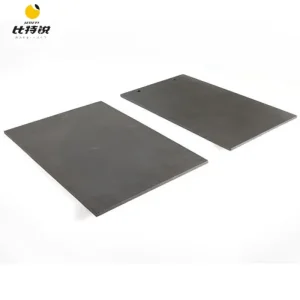
Priority Production Lines
High-Demand Carbide Flat Profiles for Philippine Manufacturers
Engineered via sub-micron grain sizing and Hot Isostatic Pressing (HIP) sintering to resist extreme abrasive sliding and severe dynamic shock in heavy-duty fabrication.
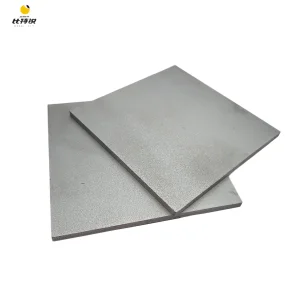
Buy Premium Bright Surface Tungsten Heavy Alloy Sheets & Pure Tungsten Plates for Philippine Heavy Industry
Explore Specification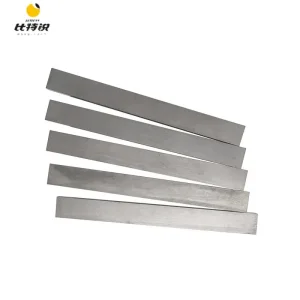
Philippine Direct Supply: High-Quality Tungsten Carbide Strips & Durable Cemented Wolfram Wear Bars
Explore Specification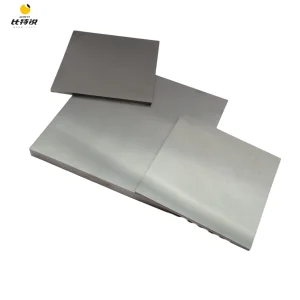
Wholesale Premium Tungsten Carbide Sheet for Precision Stamping Dies (P30 / YG15 Alloy 200x200x10mm)
Explore Specification
Industrial Ecosystem Analysis
The Philippine Industrial Transformation & Strategic Wear Parts Demand
Analyzing key drivers shaping advanced metallurgical requirements across Calabarzon, Central Luzon, Northern Mindanao, and the Caraga Mining Corridor.
The manufacturing and resource extraction sectors in the Philippines are undergoing a systemic upgrade under the modern industrial roadmap. Key economic corridors—spanning from the high-tech electronics hubs of Laguna, Cavite, and Batangas (PEZA Zones) to the intensive nickel and gold extractors in Surigao del Norte and Palawan—face severe operational stresses driven by rapid thermal cycling, tropical humidity, and highly abrasive geology. Cemented tungsten carbide plates are no longer treated as generic consumables; they represent mission-critical components that govern mean time between failures (MTBF) and overall equipment effectiveness (OEE).
Semiconductor & Electronics Stamping
Philippine assembly test facilities demand ultra-fine grain micro-structure plates (grain size 0.4–0.6μm) for lead-frame progressive dies. Near-zero porosity eliminates edge chipping during high-speed stamping of copper alloys and nickel-plated ribbons.
Resource Extraction & Mineral Slurry
Laterite nickel and copper-gold deposits create high-impact gouging abrasion. Conventional hardfacing steels fail prematurely. Heavy HIP-sintered YG11C and YG15 plates deliver structural longevity for chute liners, scraper blades, and transfer hoppers.
Agri-Industrial & Milling Tools
Processing sugar cane in Negros, palm oil in Mindanao, and rice husks in Isabela involves high silica erosion coupled with organic acids. Corrosion-resistant WC-Ni plates significantly outperform chrome carbide overlays in continuous shredder lines.
3.8x
Extended Service Life vs. D2/SKD11 Die Steels
100%
Virgin WC Raw Powders (Zero Secondary Scraps)
≤ A02
Micro-Porosity Standard (ISO 4505 Compliance)
6-10 Days
Direct Ocean Transit Time (China to Port of Manila)
Procurement Strategy
Global Enterprise Sourcing Standards: TCO vs. Initial Unit Price
Why Tier-1 engineering procurement departments are transitioning from catalog retail agents to factory-direct metallurgical partnerships.
International procurement divisions operating assembly units in the ASEAN zone face volatile supply lead times and fluctuating raw material surcharges. Sourcing carbide plates from non-integrated trading entities often introduces substantial batch-to-batch inconsistency in grain boundary cohesion, residual internal stresses, and unverified cobalt binder distributions. In high-cycle progressive tooling or deep-hole drilling wear plates, unhomogenized carbide manifests as micro-spalling, leading to unscheduled line stoppages that dwarf the plate's acquisition cost.
By establishing direct integration with an upstream manufacturer based in Nanchang, Jiangxi—China's primary tungsten tungsten-trioxide (WO3) and ammonium paratungstate (APT) processing corridor—procurement managers eliminate redundant distribution markups while gaining full transparency over chemical purity, sinter-HIP cycles, and non-destructive ultrasonic flaw detection test certifications.
| Carbide Grade | Cobalt Binder (%) | Grain Size (μm) | Hardness (HRA) | Transverse Rupture (MPa) | Target Philippine Industry Application |
|---|---|---|---|---|---|
| YG6X (K10) | 6.0% | 0.8 (Fine) | 91.5 - 92.5 | ≥ 1,900 | Precision EDM wire cut blanks, semiconductor trimming punches |
| YG8 (K20-K30) | 8.0% | 1.2 - 1.6 | 89.5 - 90.5 | ≥ 2,200 | General wear plates, wood machining blades, metal shear strips |
| YG15 (K40) | 15.0% | 1.6 - 2.2 | 86.5 - 87.5 | ≥ 2,800 | Cold heading dies, high-impact heavy stamping die plates |
| YG20C (Impact) | 20.0% | 2.5 - 3.5 (Coarse) | 82.5 - 84.0 | ≥ 3,100 | Mining chute impact liners, quarry crusher wear blocks |
| YN12 (Corrosion) | 12.0% (Nickel Binder) | 1.0 - 1.4 | 88.0 - 89.5 | ≥ 2,100 | Non-magnetic tooling, sugar cane acid-resistant wear shoes |
Technical Roadmap & Manufacturing
End-to-End Control: From Nanoscale Powder to Precision Ground Plates
Ensuring isotropic mechanical stability and zero surface micro-cracking through calibrated metallurgical processing.
1. Wet Ball Milling & Spray Drying
Tungsten carbide particles and electrolytic cobalt or carbonyl nickel binders are homogenized in alcohol-water solutions for 48–72 hours. Paraffin wax is atomized during tower spray drying to produce free-flowing spherical granules with ideal compaction traits.
2. Cold Isostatic Pressing (CIP)
For oversized carbide plates (up to 500x500mm and thicknesses exceeding 60mm), automated CIP units apply omnidirectional hydraulic pressure exceeding 200 MPa, preventing internal density gradients typical of uniaxial mechanical pressing.
3. 100-Bar Hot Isostatic Pressing (HIP)
Sintering occurs at 1,400°C–1,480°C under high-pressure Argon atmosphere. The liquid phase allows cobalt to wet WC grain boundaries completely, forcing any micro-porosity to collapse and yielding fracture toughness values above 12.5 MPa·m1/2.
Philippine Delivery Framework
Seamless Sourcing, PEZA Zone Benefits & Import Compliance
Optimized logistics corridors delivering direct to Manila, Batangas, Subic, and Cebu with complete trade documentation.
Form E / RCEP Tariff Reductions
Under the ASEAN-China Free Trade Area (ACFTA) and Regional Comprehensive Economic Partnership (RCEP), we supply verified Certificates of Origin (Form E), enabling 0% to reduced customs duties for qualifying Philippine importers.
PEZA Direct Delivery Protocol
Specialized export customs documentation tailored for Philippine Economic Zone Authority (PEZA) accredited entities in Cavite, Laguna Technopark, and Clark Freeport Zone, guaranteeing fast-track green-channel customs clearance.
Moisture-Barrier Sea Packaging
Due to high humidity transit conditions across the South China Sea, our export carbide plates feature anti-corrosion micro-wax film sealing, vacuum barrier laminates, and desiccants packed in reinforced seaworthy wooden crates.
Complete Inventory
Precision Tooling Blanks, Inserts & Sintered Carbide Plates
Standard and custom dimensional blocks ready for dispatch to metal stamping facilities, wire EDM shops, and mining contractors.
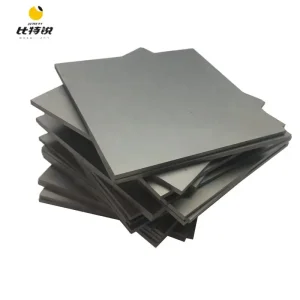
Customizable HIP Processed Square Tungsten Carbide Plate & Flat Blanks for Philippine Tool Makers
View Engineering Specs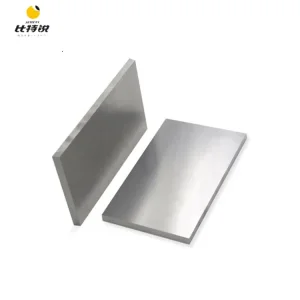
Wear-Resistant Cemented Carbide Plate Blanks for Philippine Tooling & High-Precision Wire EDM
View Engineering Specs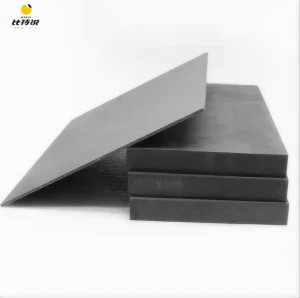
Heavy Block Stock: 100×100×60 mm Tungsten Carbide Plate for Heavy Die & Heavy Wear Components
View Engineering Specs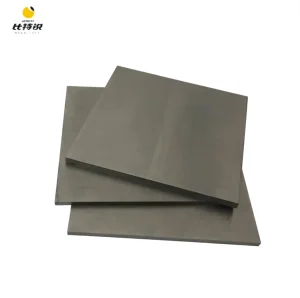
Factory-Direct Customized Cemented Carbide Plate Blanks in Custom Geometries for Philippine OEMs
View Engineering Specs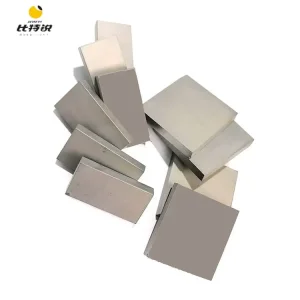
HIP-Sintered Wear-Resistant Carbide Flat Blanks in Standard YG6 to YG20 Structural Grades
View Engineering Specs
Durable P30 Tungsten Carbide Precision Sheet 200×200×10mm for Motor Core Laminations
View Engineering Specs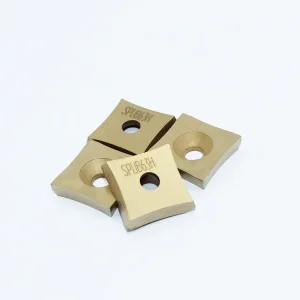
Industrial Woodworking Blades & High-Performance Inconel Milling Carbide Indexable Inserts
View Engineering Specs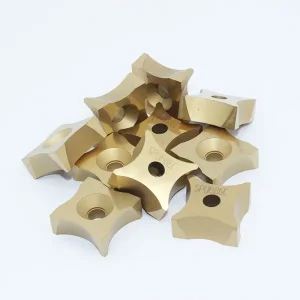
SPUB86 CVD Multi-Layer Coated Tungsten Carbide Turning & Scarfing Inserts for Heavy Steel Mills
View Engineering Specs
Technical Clarifications
Frequently Asked Questions: Sourcing Carbide Plates for the Philippines
Expert insights covering EDM wire-cutting integrity, grade formulation, shipping terms, and corrosive tropical performance.
How do Zhongfu carbide plates prevent micro-cracking and deformation during Wire EDM cutting?
Wire Electrical Discharge Machining (WEDM) introduces high thermal stresses into the carbide matrix. Zhongfu employs proprietary low-stress vacuum annealing cycles post-HIP sintering. By releasing internal casting gradients and controlling cobalt pool distribution, our plates eliminate the risk of spontaneous micro-fissuring and dimensional spring-back when cutting intricate punches, stripper plates, or progressive die pockets.
Which carbide grade is recommended for the humid, acidic conditions typical in Philippine agricultural processing?
For processing sugar cane, raw palm fruit, or coconut husk where organic acids corrode cobalt binder phases, we recommend our specialized YN series (Nickel-bonded WC) such as YN12. Nickel provides superior passivation against electrochemical corrosion compared to standard cobalt binders while retaining a hardness of HRA 88–90, preventing premature binder washout and abrasive tooth loss.
What are the typical sea and air freight lead times to Metro Manila, Batangas, and Cebu?
Direct air shipments from our factory via Shenzhen/Guangzhou hubs reach Ninoy Aquino International Airport (MNL) or Mactan-Cebu International Airport (CEB) within 3 to 5 business days. Standard LCL or FCL ocean container routes to Manila South Harbor or Batangas Port average 7 to 10 days sailing time, ensuring prompt stock replenishment for high-volume tooling runs.
Can you manufacture custom dimensions and ground pre-forms directly from 2D/3D CAD drawings?
Yes. Custom tooling blanks represent over 60% of our production output. Philippine machine shops and stamping houses can submit CAD drawings (DWG, DXF, STEP, or IGES). We fabricate near-net shape pressed blanks with minimal grinding allowances (≤ 0.3–0.5mm) or provide fully ground plates with parallelism and flatness tolerances within ±0.002mm and surface roughness down to Ra 0.1μm.
What quality assurance documentation accompanies each carbide plate export?
Every shipment includes an authentic Factory Mill Inspection Certificate specifying exact cobalt percentage, measured bulk density, Rockwell hardness (HRA), coercive force, magnetic saturation, and metallographic microstructure classification (confirming no eta phase or free carbon). Ultrasonic non-destructive test certificates are supplied for thick block stocks.
Direct Factory Collaboration
Ready to Optimize Tooling Life Across Your Philippine Operations?
Submit your specifications, material requirements, or tooling blueprints. Our metallurgists evaluate your load case and provide engineering quotations within 8 hours.