
Precision Carbide Plates & Wolfram Blanks for Industrial Engineering
Engineered for micron-level tolerance and high-pressure wear environments across maritime logistics and manufacturing plants.
-
 High-Hardness Pressureless Sintered Silicon Carbide Plate & Polished SiC Ceramic Plate for Hamburg Heavy IndustriesView Product Details
-
 Premium Bright Surface Tungsten Heavy Alloy Sheets & Pure Tungsten Plates for Hamburg Maritime & Mechanical EngineeringView Product Details
-
 High-Quality Tungsten Carbide Strips & Durable Cemented Wolfram Bars for Northern Germany Machining FacilitiesView Product Details
-
 Premium Tungsten Carbide Sheet for Stamping Dies - P30 Alloy Blank (200x200x10mm) for Hamburg Tool & Die MakersView Product Details
Hamburg’s Industrial Landscape: The Demands for Advanced Wear Materials
As the logistics gateway of Northern Europe and the third-largest civil aviation manufacturing site globally, the Free and Hanseatic City of Hamburg represents a high-density industrial ecosystem characterized by stringent mechanical reliability thresholds. The industrial geography of the Hamburg Metropolitan Region spans advanced shipbuilding at Blohm+Voss, extensive aircraft structural assembly at the Airbus Finkenwerder production complex, maritime logistics maintenance along the Port of Hamburg (Hamburger Hafen), and high-performance mechanical component fabricators throughout Harburg, Wilhelmsburg, and Altona.
Within these operating conditions, baseline tooling steels such as D2, M2, and conventional structural alloys routinely succumb to severe micro-abrasion, thermal cyclic fatigue, and galvanic-assisted erosion caused by North Sea saltwater exposure. Heavy industrial equipment requires cemented tungsten carbide plates (WC-Co and WC-Ni composites) featuring extreme bulk hardness (85 to 92 HRA), near-zero volumetric porosity achieved via high-isostatic-pressure (HIP) sintering, and chemical stability under aggressive operational friction. The procurement demand across Hamburg has shifted decisively from off-the-shelf standard shapes to engineered wear blanks tailored for wire electrical discharge machining (EDM), deep-drawing punch matrices, and dredging pump liners.
Port & Maritime Logistics
Continuous cargo throughput along the Elbe River requires extreme wear resistance. Our tungsten carbide plates are deployed in slurry pump seals, grab-bucket teeth backing plates, and container port conveyor guide wear blocks.
Aerospace Tooling & EDM
Serving northern precision toolmakers, our thick carbide blocks (up to 100mm) serve as stress-relieved matrix blanks for stamping titanium fasteners, carbon fiber composites machining wear liners, and aircraft frame punching dies.
Chemical & Polymer Processing
Chemical clusters in Hamburg-Süderelbe utilize our non-magnetic nickel-bonded carbide sheets and SiC ceramic plates for mechanical seal faces exposed to corrosive, acidic fluids and high-shear granulation cutters.
Tungsten Carbide Material Grade Selection Matrix for Hamburg Engineers
Balancing fracture toughness (K1C) and Vickers/Rockwell hardness for severe industrial applications.
| Carbide Grade | Binder Type & % | Grain Size (µm) | Hardness (HRA / HV) | TRS (MPa) | Recommended Hamburg Industrial Use |
|---|---|---|---|---|---|
| YG6 (ISO K10) | 6.0% Cobalt | 1.2 - 1.6 | 90.5 HRA / 1580 HV | ≥ 2100 | Precision wear plates, wire guide dies, light-impact non-ferrous metal slicing. |
| YG8 (ISO K20) | 8.0% Cobalt | 1.4 - 1.8 | 89.5 HRA / 1480 HV | ≥ 2400 | General machinery wear strips, wood/metal cutting knives, shear scrapers. |
| YG15 (ISO K40) | 15.0% Cobalt | 1.8 - 2.4 | 87.0 HRA / 1250 HV | ≥ 2800 | Heavy-duty sheet metal stamping dies, cold-heading matrices, forming punches. |
| YG20 (Impact Grade) | 20.0% Cobalt | 2.2 - 3.0 | 85.5 HRA / 1120 HV | ≥ 3000 | Severe shock stamping, forging wear blocks, thick EDM blanking stock. |
| NM-12 (Non-Magnetic) | 12.0% Nickel alloy | 1.5 - 2.0 | 88.5 HRA / 1380 HV | ≥ 2300 | Marine electronic sensor brackets, MWD downhole casing, high-salinity Elbe pumps. |
| S-SiC (Direct Sintered) | Pressureless SiC | Sub-micron | ≥ 93 HRA / 2200 HV | ≥ 420 | Aggressive mineral slurry wear plates, maritime dredging pipe sleeves, ceramic seals. |
Localized Support & EU Regulatory Compliance Assurance
Eliminating supply chain risk through rigorous material traceability, REACH certifications, and streamlined logistics.
REACH & RoHS Validation
Every carbide shipment dispatched to Hamburg contains complete Material Test Reports (MTR) verifying compliance with EU Regulation (EC) No 1907/2006 (REACH) and RoHS limits, guaranteeing non-hazardous chemical binder integration.
Hamburg Direct Port Logistics
By leveraging direct maritime cargo lanes from major Asian metallurgical terminals into the Port of Hamburg (CTH / CTA terminals), we offer DDP and CIF terms with low landed logistics overhead, complete German customs documentation, and bonded warehousing.
DIN EN ISO 4499 Metallography
Internal porosity is verified via quantitative optical and scanning electron microscopy to ISO 4499 standards. Zero A02/B02 micro-pores ensure smooth wire EDM machining without localized breakout, pitting, or premature cracking.
Technical Roadmap: Next-Generation Cemented Carbides for Green Industry
Aligning raw powder engineering with Europe’s transition toward carbon-neutral manufacturing and alternative binders.
Cobalt-Free Alternative Binders
In accordance with updated EU ECHA chemical reclassification trajectories, our R&D division is scaling Fe-Ni-Cr cemented matrices, providing equivalent TRS and hardness without traditional cobalt supply constraints.
Gradient-Structured Sintering
Functionally graded carbide plates combine a hyper-hard wear-resistant superficial surface layer (0.2 µm nano WC) with an ultra-tough core, eliminating surface brittle fractures during severe cyclic punch impacts in German automotive stamping facilities.
Closed-Loop Wolfram Recycling
Supporting Hamburg's circular economy mandates, our production systems support high-grade zinc-process and chemical conversion reclaiming routes, reducing carbon emissions by over 40% compared to primary ore refining.
Frequently Asked Questions: Carbide Plate Procurement for Hamburg
Key metallurgical and logistics considerations answered by our engineering specialists.
Why is Sinter-HIP processing vital for wire EDM tooling plates?
Standard vacuum sintering often leaves microporosity that triggers galvanic burning, localized cracking, and pitting during wire EDM cutting. Sinter-HIP applies 60 to 100 bar of inert gas pressure at sintering temperature, closing all microscopic voids to ensure an ultra-dense, homogeneous workpiece suitable for pristine optical finishes.
What is the typical shipping lead time for custom carbide plates to Hamburg?
Standard inventory blanks (e.g., 100x100x60mm blocks, YG6/YG15 strips) ship within 3–5 days. Custom sintered or ground plates to CAD drawings take 15–20 production days. Air freight to Hamburg Airport (HAM) takes 4–6 business days, while standard FCL/LCL ocean freight directly into the Port of Hamburg takes approximately 28–32 days.
How do nickel-bonded carbide plates perform in North Sea marine conditions?
Standard cobalt binder experiences electrochemical depletion when exposed to electrolyte-dense seawater. Our nickel-binder grades eliminate ferromagnetic response (relative magnetic permeability μr < 1.05) and offer exceptional galvanic corrosion resistance, preserving wear tolerance inside dredging pumps and offshore valves.
Can you provide ground surface finishes according to DIN ISO 1302?
Yes. In addition to sintered flat blanks with controlled machining allowances, our facility provides diamond surface grinding, double-disc lapping, and precision polishing to surface roughness levels down to Ra 0.05 µm, parallelism within ≤ 0.005 mm, and perpendicularity to micron specifications.
Standard & Custom Sintered Carbide Plates, Inserts & Flanges
Explore complete specifications for our factory-direct tungsten carbide components supporting German mechanical engineering standards.
-
 Customizable HIP Processed Square Tungsten Carbide Plate & Polished Flat Blank for Cutting Tools in HamburgView Product Details
-
 Wear-Resistant Cemented Carbide Plate Blank for Tooling & Precision Wire EDM serving Hamburg Machining ShopsView Product Details
-
 Thick Tungsten Carbide Block Stock 100×100×60 mm for EDM Die Making & Heavy Wear Parts in Northern GermanyView Product Details
-
 Factory-Direct Customized Cemented Carbide Plate - Tailored Blanks in Any Dimension & Grade for Hamburg OEMsView Product Details
-
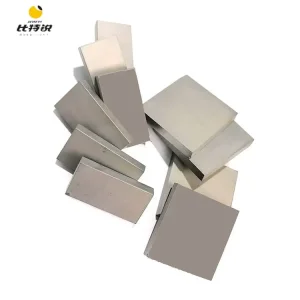 HIP-Sintered Wear-Resistant Flat Blanks in YG6–YG20 Grades for Stamping Tooling in the Hamburg MarketView Product Details
-
 SPUB-63 Steel Pipe Scarfing Inserts & Tube De-beading Cutting Tools for Northern Germany Metal Tube MillsView Product Details
-
 Custom Size Tungsten Cemented Carbide Carbon Steel Reducer Blind Plate Flange for Hamburg Petrochemical PlantsView Product Details
-
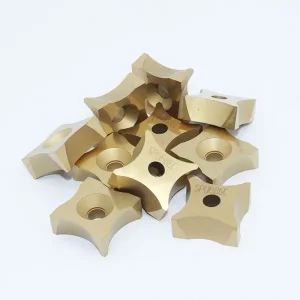 SPUB86C P40 Heavy Machining Carbide Tube Scarfing Insert for Steel Processing Facilities in HamburgView Product Details