
Buy Carbide Plate: Manufacturer & Suppliers Serving Seattle Market
Delivering aerospace-grade tungsten carbide wear plates, HIP-sintered flat blanks, and micro-grain tooling substrates to Seattle, Kent Valley, Everett, and Pacific Northwest manufacturing hubs.
Engineered Carbide Plate Solutions for Seattle Industry
Direct-from-press precision substrates designed to withstand severe cyclic thermal shock, high compressive loads, and abrasive friction in aerospace composite machining and maritime manufacturing.
-
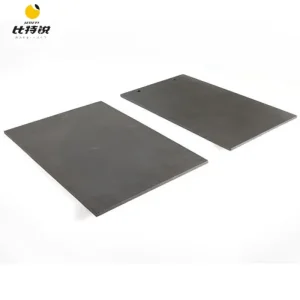
Seattle High-Hardness Silicon Carbide Plate & Polished SiC Substrate
-
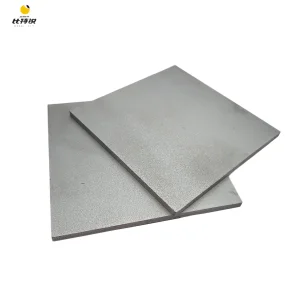
Everett Industrial Pure Tungsten & Heavy Alloy Ballast Balancing Plates
-
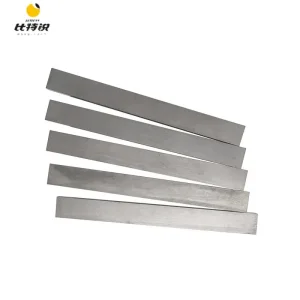
Pacific Northwest Cemented Wolfram Strips & Woodworking Edge Plates
-
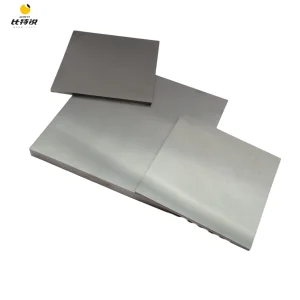
Kent Valley Tooling Heavy-Duty P30 Alloy Stamping Die Wear Plate
Carbide Plate Demands in Seattle & Puget Sound Manufacturing
The industrial landscape across Greater Seattle—spanning King, Pierce, and Snohomish counties—demands structural materials capable of outperforming standard tool steels under severe duty cycles. From the Boeing-affiliated aerospace supply corridor in Everett and Renton to the specialized marine engineering infrastructure along the Port of Seattle and Tacoma, procurement engineers encounter rigorous metallurgical specifications.
Tungsten carbide plates serve as the foundational backbone for high-speed machining fixture wear pads, titanium and Inconel routing templates, ultrasonic composite trimming antechambers, and high-pressure extrusion dies. Given the high humidity and saltwater exposure inherent to the Puget Sound basin, local machine shops increasingly demand corrosion-resistant binder phases (Cobalt-Chromium and Nickel blends) to prevent intergranular micro-pitting in EDM wire cutting fluids.
Our direct manufacturing channel bridges the supply chain deficit for specialized, stress-relieved HIP (Hot Isostatic Pressed) carbide blanks, providing custom thicknesses from 0.5 mm shims up to 60 mm thick monolithic blocks ready for finish grinding.
Key Technical Specifications for Pacific Northwest Buyers
- Grain Class Customization: Sub-micron (0.5–0.8 µm) for razor-sharp edge retention in aerospace carbon fiber cutting tools; coarse grain (2.5–4.0 µm) for shock absorption in scrap metal recycling.
- Near-Zero Porosity: Mandatory 10 MPa overpressure sinter-HIP process, guaranteeing ISO A00-B00 porosity levels to prevent subsurface micro-fracturing during sinker EDM machining.
- Localized Stocking Support: Buffer inventory options tailored to Seattle just-in-time (JIT) delivery intervals, mitigating lead time vulnerabilities for Tier 1 and Tier 2 suppliers.
- Thermal Stability: High transverse rupture strength (TRS > 3,200 MPa) maintained at operational temperatures up to 800°C without mechanical softening.
Engineering Grade Selection Matrix for Wear Applications
Balancing fracture toughness, hardness, and corrosion resistance to solve premature tool wear, micro-spalling, and edge breakout in mission-critical manufacturing.
Micro-Grain WC-Co Formulations
Engineered with 6% to 10% Cobalt binder and an average WC grain size of 0.6 µm. Ideal for thin wear shims, precision knives for composite prep, and razor-sharp slitters requiring exceptional hardness (≥ 91.5 HRA) and wear longevity.
High-Impact Toughness Grades
Utilizing 15% to 20% Cobalt binder phases, our YG15 and YG20 series deliver extreme transverse rupture strength (> 3,400 MPa), preventing catastrophic fracture during heavy stamping, cold forging, and mechanical pulverization.
Corrosion-Resistant Ni Binder
Cobalt-free, Nickel-bonded formulations (WC-Ni) tailored for marine propulsion pump components, downhole oil exploration equipment, and parts working in low-pH cooling emulsions common in Puget Sound boatbuilding yards.
| Alloy Grade | Composition (wt%) | Density (g/cm³) | Hardness (HRA) | TRS (MPa) | Recommended Seattle Applications |
|---|---|---|---|---|---|
| ZF-YG6X | WC: 94%, Co: 6% (Sub-micron) | 14.95 | 92.5 | 2,400 | Carbon fiber composite trimmers, aerospace edge scrapers, EDM shims |
| ZF-YG8 | WC: 92%, Co: 8% | 14.70 | 89.5 | 2,800 | Pacific Northwest softwood & engineered lumber saws, chipper anvils |
| ZF-YG15 | WC: 85%, Co: 15% | 14.05 | 87.0 | 3,200 | Cold stamping dies, fastener heading blocks, structural wear strips |
| ZF-YG20C | WC: 80%, Co: 20% (Coarse) | 13.50 | 84.5 | 3,600 | Heavy demolition shears, gravel crushing wear plates, marine dredging |
| ZF-Ni10 | WC: 90%, Ni: 10% (Non-magnetic) | 14.50 | 88.5 | 2,600 | Saltwater hydraulic valving, MWD directional tools, medical device tooling |
China Upstream Refining + Jiangxi Industrial Cluster Advantages
- Upstream Ore Security: Jiangxi Province holds world-class tungsten reserves. We procure virgin ammonium paratungstate (APT), eliminating secondary scrap impurities that cause internal void inclusions.
- Cost Efficiency without Metallurgical Compromise: Integrated spray drying, automated multi-axial isostatic compaction, and pressure sinter-HIP furnaces yield direct cost savings of 25–40% compared to domestic US distributors.
- Full Analytical Traceability: Every batch leaves our facility with ICP-OES elemental analysis, metallographic carbon-saturation certs, and Vickers/Rockwell hardness logs.
- Rapid Export Logistics: Express air freight dispatch directly to Seattle-Tacoma International Airport (Sea-Tac) within 3-5 business days for emergency tooling interventions.
Seamless Import Compliance & Engineering Trust
Sourcing carbide plate components overseas requires stringent adherence to international trade regulations and technical quality audits. Our export operations are fully aligned with United States customs compliance, standard Harmonized Tariff Schedule (HTS) classifications (HTS 8209.00.0030 for plates, sticks, tips, and the like for tools), and Lacey Act certifications where wood-product tooling is concerned.
For Seattle manufacturers navigating critical supply chains, we provide Mill Test Certificates (MTC) conforming to EN 10204 3.1 standards, micro-porosity assessments verified via metallographic scanning electron microscopy (SEM), and dimensional CMM reports ensuring true flatness within ≤ 0.02 mm.
Field-Tested Performance Across Regional Applications
Engineered carbide plate solutions calibrated to solve structural wear, high friction, and premature fatigue across local industries.
Aerospace Carbon Fiber Machining
Supplied to precision machine facilities in Everett and Snohomish County. Ultra-fine grain carbide wear plates serve as guide templates and vacuum chuck wear surfaces resistant to abrasive CFRP micro-dust abrasion.
Marine Winches & Dredging Wear
Heavy-duty, high-cobalt (YG15/YG20) wear blocks deployed in ship repair facilities around Puget Sound. Resists gouging impact and scouring sand slurry in marine dredging and commercial fishing line guides.
Timber & Engineered Wood Tooling
Serving timber mills throughout Western Washington. High-wear resistant YG8 alloy strips and profiled tips maintain extreme sharpness against high-silica Douglas fir, Western red cedar, and composite strand board.
Need Custom Metallurgical Sintering for Seattle Operations?
Submit your 2D/3D component drawings. Our metallurgical engineers provide material grade matching, tolerancing advice, and comprehensive volume pricing within 8 hours.
Send Inquiry NowFull Catalog of Wear Blanks, Inserts & Precision Components
Precision sintered carbide blanks, square plates, and high-performance wear components manufactured for American tooling engineers and precision job shops.
-
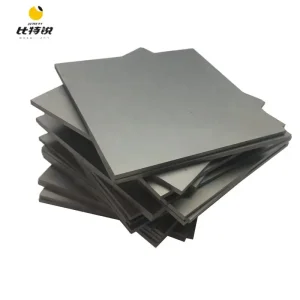
Seattle Square Tungsten Carbide Plate & HIP Polished Flat Blank
-
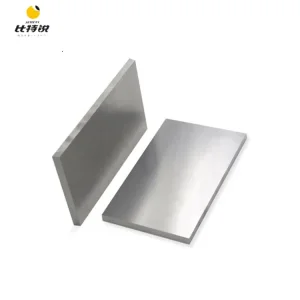
Puget Sound Wear-Resistant Cemented Carbide Blank for Tooling & EDM
-
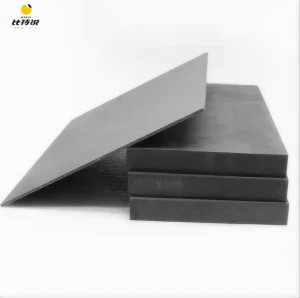
Everett Heavy Block Stock (100x100x60mm) for Tooling & EDM Die Parts
-
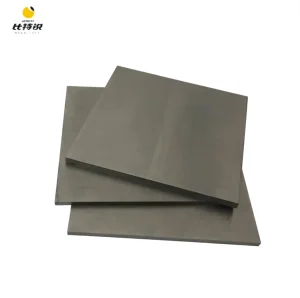
Customized Cemented Carbide Plate & Precision Wear Blanks in Any Grade
-
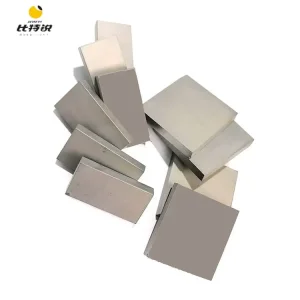
HIP-Sintered Wear-Resistant Flat Blanks in YG6–YG20 Grades
-
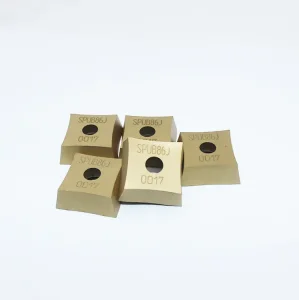
CVD Coating Non-Standard Carbide Jaw Inserts for Seattle CNC Chucking
-
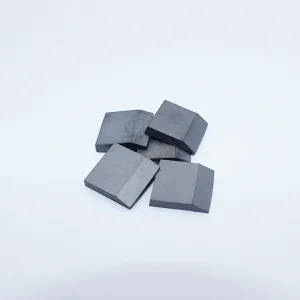
Pacific Railway Sintered Carbide Tamping Tine Armor Components
-
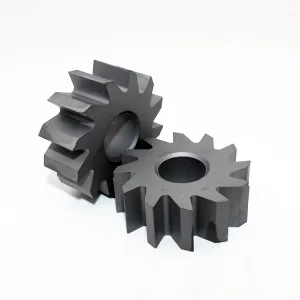
Precision Sintered Gearing & Agricultural Heavy Wear Plate Blanks
Engineering & Procurement FAQ for Carbide Plates
Direct technical answers addressing porosity, machinability, EDM degradation, and international delivery timelines.
How does Hot Isostatic Pressing (HIP) enhance carbide plate life?
Standard vacuum sintering can leave micro-voids within dense tungsten carbide blanks. Our 10 MPa overpressure sinter-HIP cycle subjects the molten binder phase to extreme pressure during the liquid phase. This collapses microscopic gas pockets, virtually eliminating porosity (achieving ISO A02, B00) and increasing Transverse Rupture Strength by up to 25%, drastically reducing spalling during high-shock wire EDM processing.
What is the standard delivery timeline for Seattle machine shops?
For catalog sizes and standard flat plates (e.g., 100x100, 150x150, 200x200 mm), dispatch takes place within 48 to 72 hours. Custom-geometry blanks, multi-cavity preforms, or ground plates requiring h6 surface grind tolerances typically ship within 12 to 18 business days. We utilize direct air logistics to Sea-Tac Airport (SEA) or sea freight via the Northwest Seaport Alliance (Seattle/Tacoma ports) for volume consignments.
Can you provide semi-machined plates with EDM starting holes?
Yes. Machining pre-sintered green-state carbide allows us to add start holes, mounting counterbores, bevels, and coolant conduits before final densification. This dramatically reduces costly diamond-wheel grinding and long wire-EDM cycle times for your local toolmakers, delivering finished net-shape blanks directly to your facility.
How do Cobalt binder levels influence performance in wet environments?
Standard WC-Co alloys can suffer cobalt leaching when exposed to acidic cutting fluids, deionized EDM dielectrics, or marine saltwater, leading to surface degradation and grain pullout. For these working conditions, we formulate special grain-stabilized Cobalt-Chromium (WC-Co-Cr) or corrosion-proof Nickel-binder (WC-Ni) grades, preserving mechanical strength and preventing edge breakdown.