
Featured Solid Carbide Rods for Canadian CNC Toolmakers
Direct-from-manufacturer Sinter-HIP carbide rods engineered to sustain high shear loads in tough alloy milling, titanium profiling, and deep-hole drilling.

Tungsten Carbide Round Rod Blanks for End Mills – Canada Tooling Series

Precision Ground Tungsten Carbide Rods for Deep Drilling & High-Feed Milling

Industrial Tungsten Carbide Rods for Stainless Steel & Superalloy Milling

Carbide Cutting Rods for Rotary Tooling & Custom Tool Components
Tungsten Carbide Rod Consumption in Canada’s Industrial Landscape
A comprehensive macroeconomic and metallurgical perspective on the procurement requirements of Canadian manufacturers from Ontario to Alberta.
The Canadian manufacturing and resources economy maintains one of the world's most demanding profiles for cemented carbide consumption. Spanning high-tolerance aerospace engineering in the Montreal industrial cluster, advanced automotive tool-and-die fabrication along the Southern Ontario corridor, extreme-environment drilling equipment in Alberta’s Western Canadian Sedimentary Basin (WCSB), and severe wear mining applications across the Canadian Shield (Ontario, Quebec, and Saskatchewan), the country demands cutting tool blanks that perform under severe thermal, mechanical, and abrasive stress.
Regional Demand Distribution Across Canadian Provinces
Unlike markets centered primarily on generic consumer hardware, the Canadian procurement ecosystem for tungsten carbide rods is bifurcated into high-tech rotary tooling manufacturing and specialized heavy-duty wear components:
Quebec: Aerospace Precision Cluster
Centering on Montreal, Dorval, and Mirabel, the Canadian aerospace sector (Bombardier, Pratt & Whitney Canada, CAE) utilizes ultra-fine grain carbide rods (≤0.5 μm) for solid end mills machining titanium alloys (Ti-6Al-4V), nickel superalloys (Inconel 718), and structural carbon-fiber reinforced polymers (CFRP). Any microscopic void or grain segregation can lead to catastrophic tool delamination.
Ontario: Automotive Tool & Die Belt
Stretching from Windsor through the Greater Toronto Area (GTA), stamping die facilities, powertrain builders, and contract precision tool grinding centers require mass quantities of ground carbide rods (diameter 3.0 mm to 25.0 mm with h6 precision). The focus here is high transverse rupture strength (≥3800 MPa) to resist chattering during prolonged hardened steel (HRC 50–65) die cavity milling.
Western Canada: Energy, Forestry & Mining
In Calgary, Edmonton, and Fort McMurray, downhole drilling systems, measurement-while-drilling (MWD) pulse generators, and flow-trim orifices utilize solid and coolant-channel carbide rods. Binder leaching from sour crude (H2S) and erosive bitumen slurry necessitates specialized cobalt-ruthenium or nickel-alloy binders to combat corrosive erosion.
Material Science Evolution: Sinter-HIP and Sub-Micron Tungsten Matrices
How modern powder metallurgy and grain growth inhibition are revolutionizing tool life and cutting velocities worldwide.
Historically, solid carbide rods were consolidated via conventional vacuum sintering or hydrogen atmosphere furnace processes. Today, global tooling standards have transitioned irrevocably to Sinter-HIP (Hot Isostatic Pressing). In our manufacturing facility, the Sinter-HIP process applies up to 10 MPa (100 bar) of high-purity argon gas pressure at peak sintering temperatures (~1400°C–1450°C). This pressure forces the molten cobalt binder into any remaining internal micropores, reducing porosity to less than ISO 4505 class A02/B02, effectively achieving near-zero internal void rates (A00, B00).
Grain Growth Inhibitors (GGI) and Grain Morphology Control
When producing nano-grain and ultra-fine grain carbide rods (0.2 μm to 0.5 μm) for making micro-drills and end mills, thermal grain coalescence is the primary failure mechanism. Without precise chemistry, tungsten carbide grains dissolve into the liquid cobalt binder during liquid phase sintering and precipitate out onto larger grains, creating localized brittle clusters. We integrate proprietary dopants of:
Vanadium Carbide (VC)
The most potent grain growth inhibitor available in powder metallurgy. Adding 0.2%–0.5% VC creates continuous nanoscale surface pinning along WC interfacial grain boundaries, retaining ultra-high hardness (≥92.5 HRA) for micro-machining graphite and hardened alloys.
Chromium Carbide (Cr3C2)
Cr3C2 balances grain stabilization while drastically inhibiting binder dissolution in corrosive environments. Canadian machine shops running water-soluble synthetic coolants rely on our Cr3C2-stabilized rods to avoid cobalt leaching and surface edge crumbling.
Tantalum / Niobium Carbide (TaC/NbC)
Integrated into medium-cobalt grades (10%–12%) to enhance high-temperature plastic deformation resistance. Critical for dry milling aerospace alloys where cutter tip temperatures routinely exceed 900°C prior to chip evacuation.
Global Circular Economy & Scrap Secondary Reclamation Dynamics
The tungsten carbide value chain is heavily impacted by raw material security. Virgin ammonium paratungstate (APT) refined directly from scheelite or wolframite ore maintains consistent crystalline stoichiometry compared to low-cost zinc-reclaimed powders. For Canadian industrial clients, we strictly utilize 100% virgin-formulated tungsten carbide powder. Reclaimed zinc-process carbide contains residual impurities (iron, copper, and alkali metals) that reduce Transverse Rupture Strength by up to 25%, causing sudden tool failure during high-speed spindle operations.
Engineering Grade Selection Guide for Canadian Toolmakers
Evaluate density, hardness, cobalt binder content, and transverse rupture strength to match your specific Canadian workpiece alloy.
| Internal Grade | Cobalt Binder (wt%) | Grain Classification | Density (g/cm³) | Hardness (HRA / HV30) | TRS (MPa) | Target Canadian Machining Application |
|---|---|---|---|---|---|---|
| ZF-06U | 6.0% Co | Ultra-Fine (0.4 μm) | 14.90 - 15.05 | 93.2 HRA / 1850 HV | 3800 | High-speed finishing of cast iron, graphite dies, unhardened steel |
| ZF-08N | 8.0% Co | Nano / Sub-micron (0.3 μm) | 14.65 - 14.80 | 92.6 HRA / 1720 HV | 4000 | Universal end mills, aerospace aluminum routing, medical titanium tools |
| ZF-10U | 10.0% Co | Sub-Micron (0.5 μm) | 14.40 - 14.55 | 91.8 HRA / 1600 HV | 4200 | General steel milling (P20, 4140), Inconel profiling, Ontario die shops |
| ZF-12M | 12.0% Co | Fine-Medium (0.8 μm) | 14.10 - 14.30 | 90.2 HRA / 1450 HV | 4400 | Heavy roughing cutters, interrupted cutting, high-feed mining core bits |
| ZF-08Ni Non-Magnetic | 8.5% Ni | Medium (1.2 μm) | 14.60 - 14.75 | 89.5 HRA / 1380 HV | 3200 | Western Canada MWD/LWD sensor housing, acid-resistant flow valves |
*Custom rod diameters from Ø0.5 mm up to Ø45.0 mm. Standard stocked bar length: 330 mm. Length-cut options and single/double coolant channels (straight or 30°/40° helical) available on request.
Engineering Case Studies: Canadian Field Deployments
Demonstrating real-world tool longevity, cycle-time reductions, and dimensional repeatability across diverse Canadian operations.
Scenario 1: Aerospace Flange Milling in Greater Montreal (Quebec)
A tier-two aerospace machining subcontractor in Longueuil, QC faced high tool replacement costs when five-axis trochoidal milling forging billets of Ti-6Al-4V airframe ribs. The contract grinder supplying the shop switched their blank stock from commercial multi-source rods to our ZF-10U Sinter-HIP ground h6 rods (Ø12 mm × 330 mm) with Cr3C2 additive.
Outcome: The homogenous sub-micron grain structure eliminated micro-chipping on the corner radii of the 4-flute end mills. In high-pressure coolant milling trials (70 bar emulsion), cutter tool life increased by 34.2% before reaching the 0.15 mm flank wear criterion (VB max), allowing the machine shop to run unmanned overnight shifts without catastrophic edge fractures.
Scenario 2: Heavy Automotive Stamping Die Machining in Windsor, Ontario
Tool-and-die builders in the Windsor-Detroit industrial corridor routinely machine hardened SKD11 and DC53 tool steels (58–62 HRC) for electric vehicle battery tray stamping dies. Typical tool failure occurs through thermal micro-cracking caused by rapid cyclic cooling during high-speed rough milling.
Outcome: By transitioning to our ZF-12M high-toughness ground rods (TRS 4400 MPa), the shop experienced superior shock damping during interrupted passes across deep pocket ribs. Grinding operators noted zero straightness runout along the 330 mm blank length (≤0.002 mm per 100 mm), reducing grinding wheel wear during tool flute manufacturing.
Scenario 3: Severe Slurry Resistance in the Alberta Oil Sands
Athabasca oil sands operations process bitumen slurries containing up to 40% sharp silica sand particles under aggressive temperature regimes. Standard cobalt-bonded tungsten parts suffer rapid binder erosion followed by mechanical detachment of the WC particles.
Outcome: We formulated custom solid carbide rods utilizing our ZF-08Ni nickel-chromium binder matrix for fabricators in Nisku and Edmonton who produce directional valve spools and sensor wear sleeves. The nickel-base cemented carbide exhibited a 3.8× reduction in volumetric wear loss compared to standard YG8 cobalt grades under ASTM G65 abrasive wheel testing.
Request Canadian Freight & Engineering Consultation
Need trial samples of h6 ground rods, custom metric diameters, or non-standard grain structures for your Canadian grinding facility? Speak directly with our metallurgical engineers.
Send Inquiry NowTechnology Roadmap: The Future of Solid Carbide Tooling
Analyzing the shift toward additive binder jetting, functionally graded carbide rods, and cryogenic machining compatibility.
Functionally Graded Materials (FGM)
Traditional carbide rods maintain homogeneous chemistry from core to outer diameter. Next-generation FGM rods feature a cobalt-gradient architecture: a tough, high-cobalt core (∼12% Co) to absorb deflection stress and an ultra-hard, low-cobalt outer shell (∼6% Co) to resist abrasive rubbing.
Complex Helical Coolant Geometries
As deep-cavity aerospace milling adopts minimum quantity lubrication (MQL) and supercritical CO2 cryogenic cooling, carbide rods with twisted 30° and 40° twin coolant ducts ensure optimal chip clearing directly at the cutting shear plane, preventing thermal softening of the tool edge.
Surface Integrity for PVD Diamond Coatings
The mechanical adhesion of CVD/PVD diamond and AlTiN coatings relies heavily on chemical pre-treatment of the carbide rod surface. Controlling the surface cobalt depletion layer during centerless grinding guarantees interfacial bond adhesion under extreme cutting speeds (>350 m/min).
Frequently Asked Questions: Carbide Rod Supply for Canada
Straight answers regarding tolerances, customs clearance, shipping lead times, and metallurgical testing.
What precision tolerances do you guarantee on ground tungsten carbide rods for Canadian buyers?
How does your factory prevent internal micro-porosity in thick diameter rods (>20 mm)?
What are the typical sea freight and air express transit times to Canadian destinations?
How are Canadian customs duties, tariffs, and import documentation handled?
Can you supply coolant-duct carbide rods for high-speed machining in Canadian tool shops?
Extended Carbide Tooling & Wear Solutions for Canada
Explore our full line of nano-grain rods, ground blanks, scarfing inserts, and wear plates engineered for harsh industrial duty.

Ø8 × 330 mm Nano Grain Carbide Rods for 0.25 μm Precision End Mills

Tungsten Carbide Round Rod h6 Ground Ø1–40 mm Solid Carbide Blanks
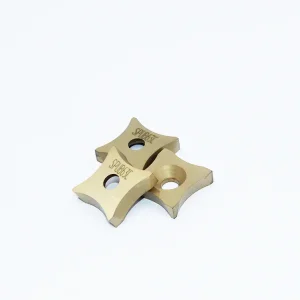
SPUB-63 External Scarfing Inserts for Tube Machining & High-Frequency Pipes
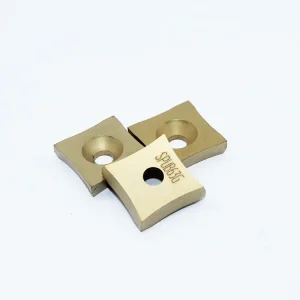
Wear Resistant SPUB 63G Custom Carbide Threading & Planing Inserts

CVD Coated Non-Standard Carbide Jaw Insert for Heavy CNC Chuck Gripping

Tungsten Carbide Plate – OEM Wear-Resistant Cemented Blanks for Tooling & EDM
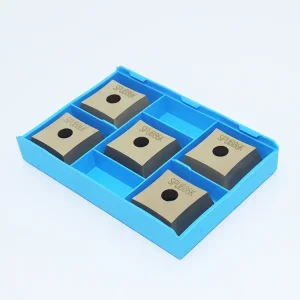
SPUB86K CVD Coated Carbide Lathe Cutting Insert for Rail & Pipe Conditioning

SPUB63B ISO TiN Tungsten Carbide Scarfing Insert for Tube Weld Bead Removal
Partner with a Direct Carbide Manufacturer Serving Canada
Gain metallurgical transparency, factory-direct bulk pricing, rapid air/sea logistics, and custom grain engineering for your rotary tooling and wear parts business. Inquiries answered within 8 hours.