China Tungsten Carbide Round Rod H6 Ground Ø1-40mm Solid Carbide Blanks Manufacturer, Supplier
Product Description
Product Description
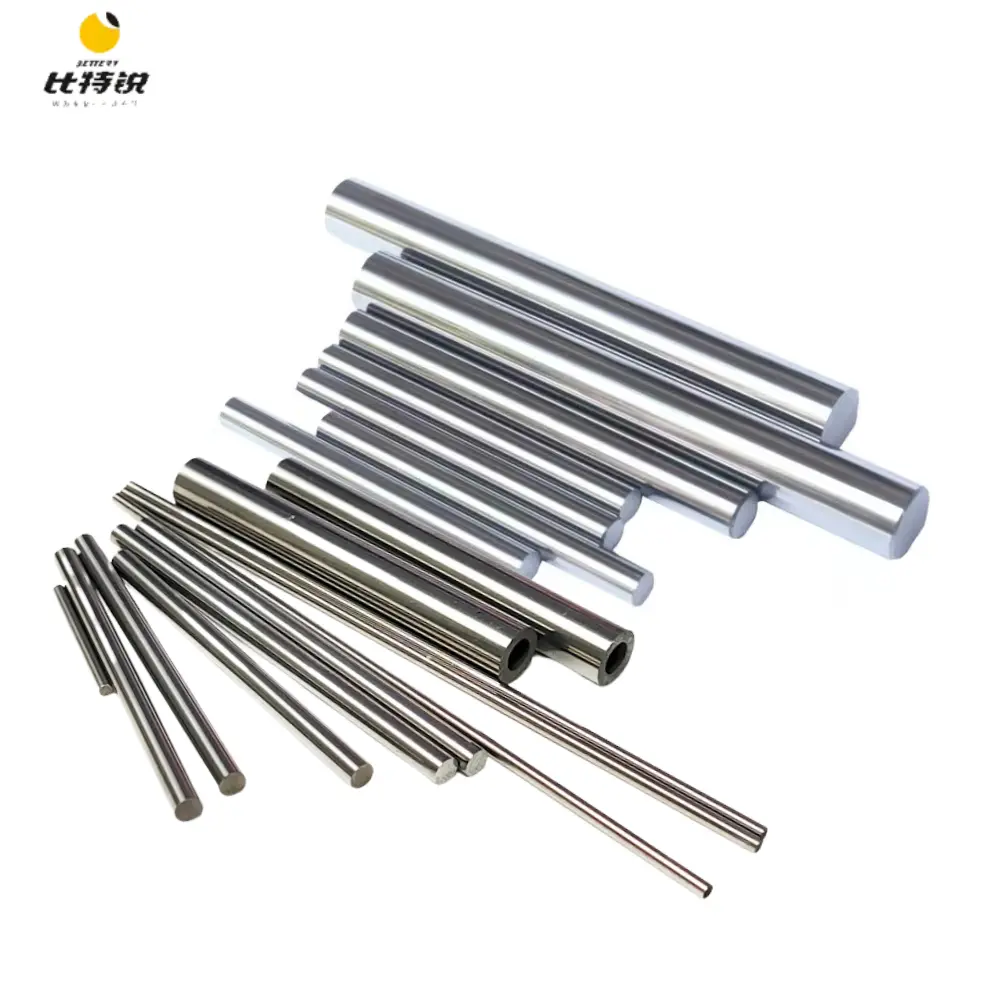
Tungsten carbide rod is a solid round bar of tungsten carbide (WC) bonded in a cobalt matrix, produced by extrusion and sinter-HIP processing to achieve near-zero porosity and a uniform, fine-grained structure. It is the standard starting material for solid carbide rotating tools: a rod is ground, fluted, relieved and coated to become an end mill, drill, reamer or boring bar.
Rod quality directly determines what the finished tool can do. Fine and ultra-fine grain structures allow a sharper edge, which translates into lower cutting forces, better surface finish and longer tool life in hardened and high-temperature alloys. Precision-ground rod supplied to H6 diameter tolerance removes the need for rough grinding on the customer's side and shortens the production route from blank to finished tool.
Standard rods are supplied in diameters from 1 mm to 40 mm and lengths up to 330 mm, in nano, submicron, fine and medium grain grades. Cut-to-length pieces, chamfered ends and ground-end blanks are available to order.
Main Specifications
| Parameter | Value |
|---|---|
| Material | WC-Co cemented carbide, highest-purity virgin raw material |
| Production process | Extrusion + sinter-HIP (hot isostatic pressing) |
| Diameter range | Ø 1 – 40 mm |
| Standard length | 100 / 200 / 330 mm (cut-to-length on request) |
| Grain size | Nano 0.2 µm · submicron 0.4–0.8 µm · fine 0.8–1.6 µm · medium 2–3 µm |
| Hardness | HRA 89 – 94.5 (grain size and cobalt content dependent) |
| Density | 14.0 – 14.9 g/cm³ |
| Transverse rupture strength | 2,000 – 4,200 MPa |
| Diameter tolerance | H6 ground · h7 ground · as-sintered (+0.3 ~ +0.5 mm) |
| Roundness / straightness | ≤ 0.01 mm (ground); ≤ 0.02 mm per 100 mm straightness |
| Surface condition | As-sintered · ground · polished (Ra ≤ 0.2 µm) |
| End condition | Square cut, chamfered, or ground flat and square |
| Customization | Diameter, length, grade, grain size, tolerance class and end preparation |
Diameter and Tolerance Table
| Diameter range (mm) | Standard tolerance | Stock length (mm) | Typical application |
|---|---|---|---|
| Ø 1.0 – 3.0 | h6 / h7 | 100 | Micro drills, PCB drills, small end mills |
| Ø 3.0 – 6.0 | h6 / h7 | 100 / 200 / 330 | End mills, drills, reamers, engraving tools |
| Ø 6.0 – 10.0 | h6 | 200 / 330 | Standard end mills, drills, boring tools |
| Ø 10.0 – 20.0 | h6 / h7 | 200 / 330 | Heavy-duty end mills, step drills, wear pins |
| Ø 20.0 – 40.0 | h7 / as-sintered | 200 / 330 | Large tool blanks, punches, gauges, wear shafts |
Grade and Grain Size Chart
| Grade | Co (wt %) | Grain size | Density (g/cm³) | Hardness (HRA) | TRS (MPa) | Typical tooling use |
|---|---|---|---|---|---|---|
| Nano grade | 9 | 0.2 µm | 14.5 | ≥ 94 | ≥ 4,200 | 0.25 µm-class end mills, micro drills, high-hardness machining |
| YG6X | 6 | 0.6 – 0.8 µm | 14.9 | 91.5 – 92.5 | 2,600 – 3,200 | Finishing end mills, reamers, precision drills |
| YG8 | 8 | 1.2 – 1.6 µm | 14.8 | 89.5 – 90.5 | 2,300 – 2,800 | General-purpose drills, end mills, wear pins |
| YG10X | 10 | 0.8 – 1.2 µm | 14.4 | 91 – 92 | 3,000 – 3,600 | High-performance end mills, stainless and alloy steel machining |
| YL10.2 | 10 | 0.6 – 0.8 µm | 14.5 | 91.5 – 92.5 | 3,200 – 3,800 | Roughing and finishing mills, titanium and heat-resistant alloys |
| YG12 | 12 | 1.6 – 2.4 µm | 14.2 | 88 – 89 | 2,800 – 3,200 | Impact-resistant drills, punches, wear components |
Grain Size Selection Guide
| Grain class | Grain size | Effect on performance | Best for |
|---|---|---|---|
| Nano | 0.2 – 0.4 µm | Highest hardness and edge sharpness; excellent surface finish | Micro tools, hardened steel, mirror-finish machining |
| Submicron | 0.4 – 0.8 µm | Balanced hardness and toughness; strong edge stability | General CNC end mills and drills, stainless and alloy steels |
| Fine | 0.8 – 1.6 µm | Good wear resistance with higher impact tolerance | Standard cutting tools, mixed production conditions |
| Medium | 2 – 3 µm | Maximum toughness, lower hardness | Punches, wear parts, interrupted cutting |
Surface and End Conditions
| Condition | Diameter tolerance | Surface roughness | Purpose |
|---|---|---|---|
| As-sintered | +0.3 ~ +0.5 mm | As-sintered | Lowest cost; customer performs all grinding |
| Ground | h7 | Ra ≤ 0.8 µm | General tool grinding stock |
| Precision ground | h6 | Ra ≤ 0.4 µm | Direct CNC grinding and coating lines |
| Polished | h6 | Ra ≤ 0.2 µm | Precision gauges, measuring components |
Applications
Performance Advantages
Frequently Asked Questions
Sinter-HIP uses simultaneous high temperature and isostatic gas pressure during sintering, effectively eliminating internal micro-porosity to enhance transverse rupture strength and reduce tool chipping risks.
Ground h6 rods provide tighter diameter tolerances and high concentricity, allowing toolmakers to immediately start fluting and finishing without spending extra time and resources on preliminary external grinding.
Nano grain grades (around 0.2 µm) offer optimal hardness and exceptionally sharp edges for micro-machining and hardened steels, whereas submicron grades provide an optimal balance of hardness and toughness for general CNC machining.
Yes, while standard lengths are 100 mm, 200 mm, and 330 mm, cut-to-length services, chamfering, and specific end-face preparations can be provided to meet specific tool production requirements.
Yes, the uniform metallurgical structure and fine grain distribution ensure reliable substrate adhesion for all common PVD coatings, including TiAlN, AlCrN, and DLC.