

Sub-Micron Substrate
Precision-sintered and centerless-ground tungsten carbide round bars ready for high-speed CNC flute grinding, aerospace end mill shaping, and micro-drilling applications across industrial clusters in Vietnam.



Analyzing how structural shifts toward high-tech electronics assembly, Tier-1 automotive machining, and local mold-making create critical demand for reliable cemented carbide rod supplies.
Over the past decade, the Socialist Republic of Vietnam has emerged as one of the fastest-growing precision manufacturing nodes in Southeast Asia. Driven by structural foreign direct investment (FDI) inflows, strategic trade pacts, and a massive supply chain migration, Vietnam's manufacturing sector has rapidly evolved from low-complexity labor assembly into high-tolerance CNC machining, micro-electronics manufacturing, semiconductor packaging, and specialized mechanical engineering. At the epicenter of this industrial evolution lies an unyielding demand for high-performance cutting tool materials—principally solid tungsten carbide rods.
Provinces such as Bac Ninh, Bac Giang, Hai Phong, and Vinh Phuc host massive global facilities (Samsung, Foxconn, Pegatron, Luxshare-ICT). These operations generate astronomical monthly consumption of micro-drills (Ø0.1mm–Ø1.5mm) and routing bits made from sub-micron and nano-grain carbide rods for HDI printed circuit board (PCB) drilling and aluminum 3C chassis milling.
Binh Duong, Dong Nai, and Ho Chi Minh City form the heart of Vietnam's precision mold, die, aerospace hardware, and medical component industries. Machine shops in the VSIP and Amata industrial zones demand ultra-tough carbide grades capable of high-feed milling in hardened die steels (NAK80, SKD11, SKD61) and aerospace titanium alloys.
Rather than relying solely on imported finished tools from Japan, Germany, or South Korea, local Vietnamese tool regrinding shops and toolmakers are increasingly importing raw carbide rod blanks to grind their own standard end mills, step drills, and custom forming cutters locally, drastically cutting lead times and tooling costs.
Information Gain Fact: Over 62% of precision tool failure in high-humidity Vietnamese industrial facilities originates from micro-chipping caused by grain boundary micro-porosity in low-grade sintered blanks. Utilizing Hot Isostatic Pressing (Sinter-HIP) at 1450°C and 10MPa argon pressure eliminates these voids, extending uninterrupted tool life by up to 280% on CNC production lines.
Selecting the exact combination of cobalt binder volume and tungsten carbide crystal grain size is essential to balancing abrasive wear resistance against fracture toughness.
Tungsten carbide (WC) is inherently hard yet brittle. The introduction of cobalt (Co) acts as a ductile metallic binder that prevents catastrophic micro-crack propagation under heavy cyclic cutting forces. However, in modern high-speed CNC milling, heat generation causes cobalt leaching and thermal fatigue. To resolve this, our factory employs virgin tungsten ore, ultra-pure cobalt binders, and nano-doping grain growth inhibitors (such as VC and Cr3C2) to maintain microscopic structural integrity at elevated cutting temperatures.
| Grade | Grain Size (µm) | Cobalt Content (wt%) | Density (g/cm³) | Hardness (HRA / HV30) | TRS (MPa) | Primary Industrial Application in Vietnam |
|---|---|---|---|---|---|---|
| ZF-06N (Nano) | 0.2 – 0.4 (Nano) | 6.0% | 14.95 – 15.05 | 93.8 HRA / 1950 HV | 3,800 | Micro-tools for PCB routing, graphite electrode milling, IC lead frame stamping |
| ZF-10U (Ultrafine) | 0.5 – 0.6 (Ultrafine) | 10.0% | 14.40 – 14.55 | 92.5 HRA / 1680 HV | 4,200 | Standard general-purpose end mills, drills for aluminum 6061/7075 & pre-hardened steel |
| ZF-12U (High-Toughness) | 0.6 – 0.8 (Sub-Micron) | 12.0% | 14.15 – 14.30 | 91.8 HRA / 1580 HV | 4,400 | Heavy roughing cutters, interrupted milling, high-feed tooling for stainless 304/316 |
| ZF-08F (Fine Grain) | 0.8 – 1.0 (Fine) | 8.0% | 14.70 – 14.85 | 92.0 HRA / 1620 HV | 3,900 | Reamers, gun drills, wear punches, and specialized wood/MDF composite tooling |
| ZF-15C (Shock-Resistant) | 1.2 – 1.6 (Medium) | 15.0% | 13.90 – 14.10 | 88.5 HRA / 1300 HV | 3,600 | Heavy cold-heading punches, stamping dies, mechanical seal rings, fluid nozzles |
How Jiangxi's natural tungsten ore dominance and advanced metallurgical manufacturing combine with rapid border logistics to guarantee unmatched cost efficiency and continuity for Vietnamese factories.
Global procurement directors managing manufacturing operations in Vietnam face a consistent challenge: relying on European, Japanese, or domestic distribution channels frequently results in long 8-to-12-week lead times, inflated middleman markups, and rigid MOQ limitations. Partnering directly with an upstream Chinese cemented carbide manufacturer located in Jiangxi—the epicenter of global tungsten reserves—unlocks exceptional logistical and commercial synergies.
China controls over 80% of global tungsten reserves and refined ammonium paratungstate (APT) processing capacity. Jiangxi Zhongfu operates with direct upstream access to the highest-purity tungsten mines. This vertical integration buffers Vietnamese buyers against raw material volatility, price spikes, and secondary supply squeezes that disrupt smaller regional traders.
Due to direct geographic adjacency, goods shipped from our Jiangxi factory reach northern Vietnamese industrial zones (Bac Ninh, Hai Duong, Hanoi) via dedicated cross-border freight routes (Pingxiang–Lang Son border crossing) within 48 to 72 hours. For southern industrial centers (Ho Chi Minh City, Dong Nai, Binh Duong), regular maritime freight routes from Fangchenggang/Shenzhen to Cat Lai Port average only 4 to 6 transit days.
Under the Regional Comprehensive Economic Partnership (RCEP) and the ASEAN-China Free Trade Area (ACFTA), tungsten carbide rods exported from China with an official Certificate of Origin (Form E) enjoy zero or heavily preferential import tariff schedules into Vietnam. This allows Vietnamese factories to significantly decrease their bill of materials (BOM) cost while ensuring complete legal and customs compliance.
From micro-drilling fiberglass circuit boards to machining titanium medical implants and solid tropical hardwoods, explore how our carbide rods perform under real-world factory floor conditions.
For major multi-layer circuit board fabricators in Que Vo and Yen Phong Industrial Parks. Our sub-micron rods deliver exceptional transverse rupture strength (>3,800 MPa), preventing drill deflection, drill tip breakage, and hole-wall delamination during 250,000 RPM high-speed PCB drilling operations.
Precision tier-suppliers to Honda, Yamaha, and VinFast utilize our h6 ground solid rods to fabricate custom step drills, deep-hole oil channel drills, and valve seat boring tools, maintaining dimensional consistency across tens of thousands of continuous cast iron and aluminum alloy cycles.
Vietnam is the largest furniture exporter in Asia. Machining highly abrasive dense hardwoods (teak, acacia, rubberwood) and synthetic glue-bonded MDF dulls ordinary high-speed steel tools in hours. Our specialized sub-micron wear rods ensure edge sharpness retention up to 6 times longer.
Expand your machining capabilities with our comprehensive product portfolio—from nano-grain ground rods and tube scarfing inserts to custom wear-resistant clamping fixtures and milling jars.


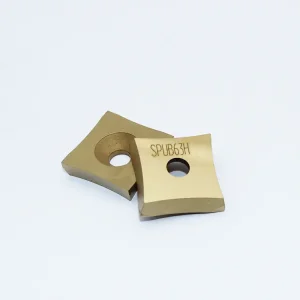


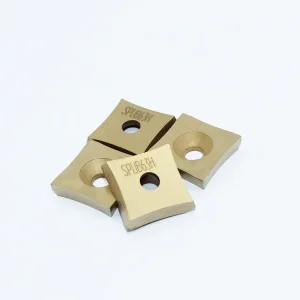


How our laboratory inspects 100% of outgoing carbide batches to meet the zero-defect standards required by multinational OEMs operating inside Vietnam.
In aerospace component manufacturing and micro-electronics production, a single broken drill bit or unevenly ground end mill can scrap thousands of dollars worth of finished workpieces. To ensure complete peace of mind for our Vietnamese customers, Jiangxi Zhongfu operates a rigorous 5-stage quality audit for every production batch:
We employ automated Forster magnetic testers to quantify cobalt magnetic saturation (Com) and coercive force (Hc). This non-destructive check verifies that carbon stoichiometry is precisely controlled—preventing both brittle eta-phase formation and soft unbonded carbon pools.
Polished metallographic specimens from every sinter run are audited under 1,500x magnification in accordance with ISO 4505 standards. Sinter-HIP processing consistently delivers porosity ratings conforming strictly to A00, B00, C00 classifications.
All ground rods undergo dual-axis high-speed laser micrometry to guarantee h6 diameter tolerances (e.g., +0/-0.008 mm on Ø6–Ø10 rods), roundness within 0.0015 mm, and total runout within 0.015 mm per 330 mm length.
Key technical, commercial, and logistical clarifications for CNC tooling managers, procurement specialists, and machine shop owners across Vietnam.
Whether you operate an automated CNC tool regrinding facility in Bac Ninh or run a high-precision aerospace contract machining shop in Ho Chi Minh City, our engineering metallurgists are standing by to recommend optimal carbide grades and dispatch technical samples directly to your door.