
Featured Precision Tungsten Carbide Products & Factory Blanks
Direct-from-factory high-density cemented tungsten carbide components engineered for heavy impact, downhole wear, and extreme thermal resilience.
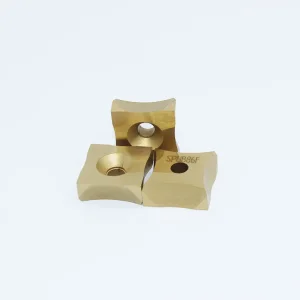
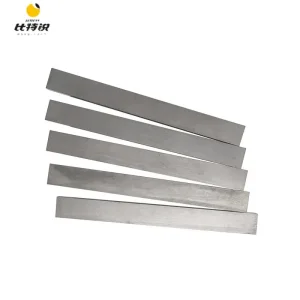
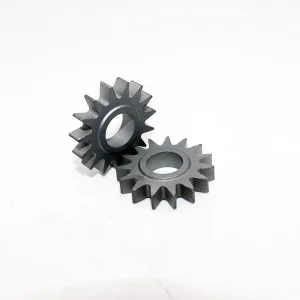
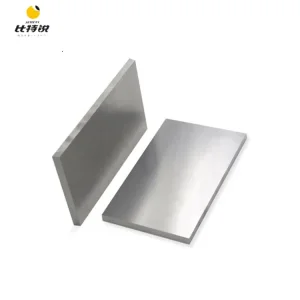
Wholesale Inquiry: Is Tungsten Stronger Than Titanium?
When global engineering and procurement directors ask whether tungsten is stronger than titanium, the answer depends fundamentally on the engineering definition of "strength": compressive resistance versus strength-to-weight ratio.
In classical metallurgical mechanics, strength is multifaceted. It splits into compressive strength, tensile strength, shear resistance, fracture toughness, and surface yield hardness. For OEM buyers evaluating wholesale raw materials and wear components from certified factories, comparing Tungsten (and its industrial form, Cemented Tungsten Carbide - WC) against Titanium (specifically Grade 5 Ti-6Al-4V) requires breaking down empirical data.
| Physical & Mechanical Property | Sintered Tungsten Carbide (YG8 / WC-Co) | Grade 5 Titanium (Ti-6Al-4V Annealed) | Engineering Advantage Winner |
|---|---|---|---|
| Density (g/cm³) | 14.6 – 14.8 | 4.43 – 4.51 | Titanium (3.3x Lighter) |
| Vickers Hardness (HV) / Mohs | 1,500 – 1,800 HV (Mohs 9.0–9.5) | 350 HV (Mohs 6.0) | Tungsten Carbide (4.5x Harder) |
| Compressive Yield Strength (MPa) | 4,000 – 4,800 | 970 – 1,070 | Tungsten Carbide (4x Higher) |
| Ultimate Tensile Strength (MPa) | 1,100 – 1,500 (Transverse Rupture) | 950 – 1,170 | Even / Context Dependent |
| Modulus of Elasticity (GPa) | 600 – 650 | 110 – 114 | Tungsten Carbide (5.5x Stiffer) |
| Melting Point (°C) | 3,422°C (Pure W) / ~2,870°C (WC) | 1,660°C | Tungsten (+1,760°C Thermal Threshold) |
| Thermal Expansion (10⁻⁶/K) | 4.5 – 5.0 | 8.6 | Tungsten Carbide (Superior Stability) |
Why Hardness and Modulus Dictate Extreme Industrial Wear
Titanium is celebrated across the defense and aviation industries for its exceptional structural integrity relative to its light mass. It withstands ballistic stress and structural flexure without brittle cleavage failure. However, in aggressive industrial metalworking, high-speed pipe scarfing, rock drilling, or stamping die tooling, Titanium degrades rapidly through abrasive gouging and micro-galling.
Cemented Tungsten Carbide incorporates microscopic tungsten monocarbide crystals encapsulated within a ductile metallic binder (Cobalt or Nickel). With an Elastic Modulus exceeding 600 GPa, it resists elastic deformation under pressures that would permanently warp Grade 5 Titanium. When evaluating wholesale component longevity for abrasive slurries, high-pressure die inserts, and rotary milling tools, Tungsten Carbide delivers an operational service life typically 10 to 25 times longer than hardened titanium alloys.
Why Source Tungsten Carbide From Chinese Manufacturing Hubs?
Capitalizing on domestic wolframite mineral reserves, state-of-the-art sinter-HIP furnaces, and automated CNC finishing at Jiangxi Zhongfu Cemented Carbide Co., Ltd.
Mineral Proximity & Virgin Powders
Located in Nanchang, Jiangxi—the epicenter of global tungsten reserves—our factory guarantees 100% virgin tungsten carbide powder sourcing, eliminating cross-contamination, scrap brittleness, and inconsistent carbide grain matrices.
Pressure Sinter-HIP Technology
We utilize Overpressure Sinter-HIP furnaces up to 10 MPa (100 bar) argon environment. This closes sub-surface micro-voids, increasing mechanical density to near 100% theoretical limits and doubling transverse rupture strength.
Tolerancing & h6 Centerless Grinding
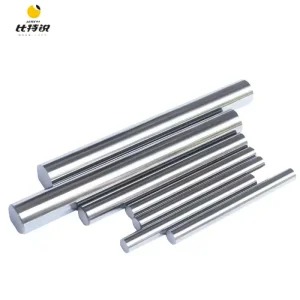
Our workshop houses CNC profile grinders, slow-feeding wire EDMs, and automatic centerless grinders capable of achieving diameter tolerances down to h6 and surface mirror finishes under Ra 0.05 µm.
Macro Solutions: Strategic Deployment Across Global Industries
Where Tungsten Carbide and Titanium diverge in mechanical implementation across mission-critical equipment.
Downhole Oil & Gas Drilling
MWD/LWD pulsers, directional drill nozzles, and trim chokes encounter extreme abrasive drilling fluids at 150°C+. We engineer proprietary Nickel-bonded non-magnetic tungsten carbide to prevent magnetic signal distortion while providing zero-washout durability against silica sands.
Steel Mill High-Speed Scarfing
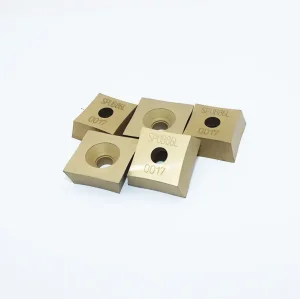
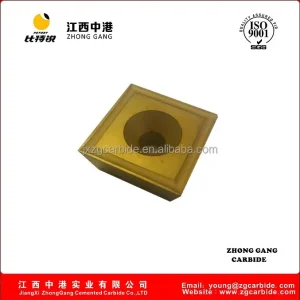
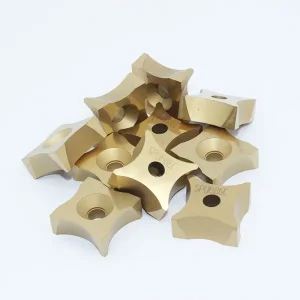
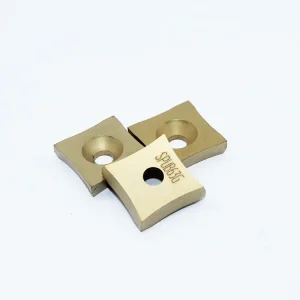
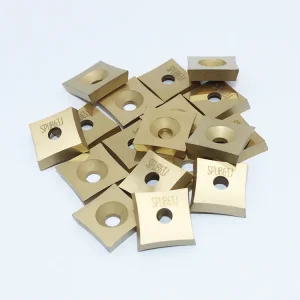
During welded tube production and continuous slab conditioning, scarfing tools face sudden red-hot thermal gradients. Our SPUB63, SPUB86, and SNMX inserts deliver thermal-shock crack arrest superior to high-strength titanium or coated tool steels.
Precision Micro-Tooling Blanks
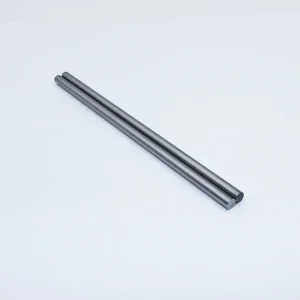
Semi-conductor PCB drilling and aerospace composite machining demand ultra-rigid micro-end mills. Sintered from 0.25 µm nano-grain WC powders, our h6 ground rods avoid deflection vibrations, providing precise cutting edges that preserve dimensional tolerances.
Wholesale Procurement Trends & Supply Chain Resilience
How tier-1 European, North American, and Asia-Pacific procurement managers evaluate Total Cost of Ownership (TCO) in wear materials.
Total Cost of Ownership (TCO)
While raw titanium billets fluctuate wildly due to aerospace demand, factory-direct tungsten carbide provides consistent, predictable cost structures. Lowering replacement shutdown frequency offsets initial tooling costs inside the first operational quarter.
Sub-Micron Grain Customization
International buyers are shifting toward tailored grain structures—from 0.2 µm ultrafine matrices for titanium alloy milling to 5.0 µm coarse grades for heavy impact rock drilling—maximizing fracture toughness without losing edge retention.
Supply Security & ISO Compliance
With Jiangxi Zhongfu's 24 years of manufacturing heritage, tier-1 buyers eliminate multi-tiered trading markups and guarantee compliance through full material test certifications, metallographic reports, and CMM dimensional documentation.
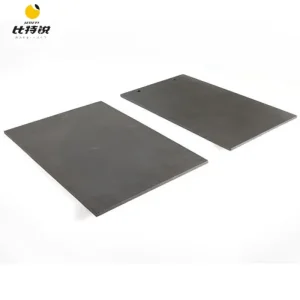
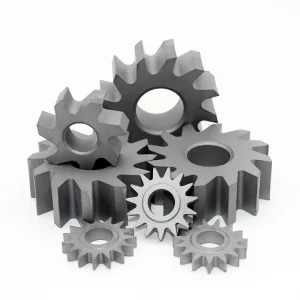
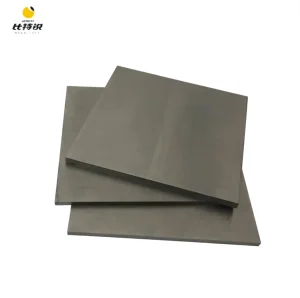
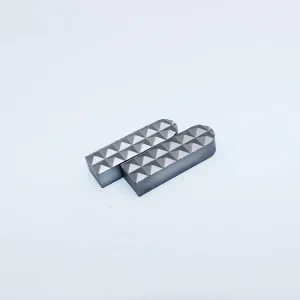
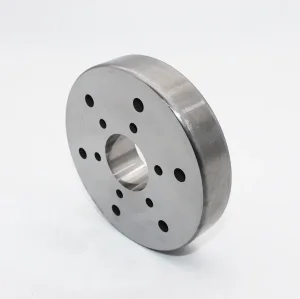
Wholesale Factory Solutions: Plates, Scarfing Inserts & Wear Parts
Precision-manufactured cemented carbide inventory ready for standard wholesale distribution or bespoke CAD/CAM manufacturing.
Frequently Asked Questions for Industrial Procurement
Engineering insights into material properties, factory customizations, and order logistics.