

Precision Engineering Catalog
High-Performance Tipos De Aleaciones: Products Selection 01–08
Explore our certified sintered blanks, ground bars, indexable scarfing inserts, and high-impact mining tips manufactured from 100% virgin tungsten carbide matrices.

Wholesale SPUB63B wholesale ISO TiN tungsten carbide scarfing insert Supplier, Factory
View Specifications
China Best price YG8 tungsten carbide gripper inserts for chuck jaw Suppliers, Factories
View Specifications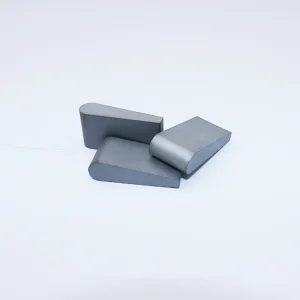
China New shape tungsten carbide tamping tines for railway Manufacturers, Factory
View Specifications
China 2020 Tungsten carbide whole seller Tungsten carbide square thread inserts tools Factory, Factories
View Specifications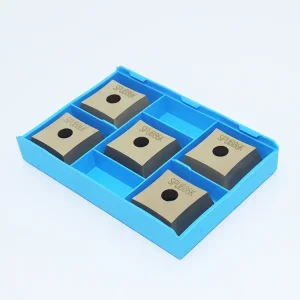
China Best price SPUB86K CVD coating tungsten carbide lathe cutting tool insert Manufacturer, Manufacturers
View Specifications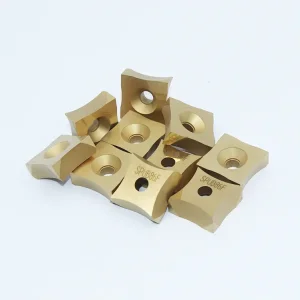
China Factory sale tungsten carbide insert cutting tools turning tool Manufacturer, Supplier
View Specifications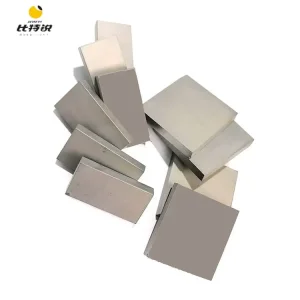
Buy Tungsten Carbide Plate HIP-Sintered Wear-Resistant Flat Blanks in YG6–YG20 Grades Supplier, Suppliers
View Specifications
Industry Whitepaper & Strategic Solutions
Global Landscape of High-Performance Hardmetal Alloys (Tipos De Aleaciones)
A comprehensive technical overview of powder metallurgical matrices, cobalt vs. nickel binder phases, and industrial tribology dynamics across international supply chains.
Microstructural Engineering & WC-Co Phases
Within contemporary material science, tipos de aleaciones (alloy types) in cemented carbide are categorized by grain size distribution—from submicron (0.2–0.5 µm) to extra-coarse (>3.5 µm)—and metallic binder volume fractions. Lower cobalt concentrations (3–6% wt) maximize Rockwell hardness (up to 92.5 HRA) and wear life under abrasive conditions, while higher binder ratios (10–20% wt) provide critical impact toughness for stamping dies, forming punches, and cyclic percussion tooling.
The Sinter-HIP Consolidation Paradigm
Traditional vacuum sintering often leaves residual microscopic pores that compromise transverse rupture strength (TRS). Modern industrial factories employ Hot Isostatic Pressing during sintering (Sinter-HIP) at pressures reaching 60–100 bar and temperatures above 1,400°C. This isobaric environment collapses micro-voids, elevating material density to 99.9% theoretical limits and eliminating premature failure points in deep-hole EDM and precision shearing tools.
Global Strategic Supply Chain Geopolitics
With tungsten designated as a critical mineral across the US, EU, and OECD nations, securing reliable factory-direct manufacturing partnerships has become an operational mandate. Operating out of Nanchang, Jiangxi—the epicenter of global tungsten reserves—our factory guarantees continuous primary ore sourcing, shielding industrial partners from supply bottlenecks and commodity price volatility while maintaining strict purity specifications.
24+
Years Engineering Expertise
5,000 m²
Modern Sintering Facility
80+
Patented Alloy Formulations
< 8 hrs
Rapid Technical CAD Review
Empirical Data & Classification
Standardized Tipos De Aleaciones: Technical Benchmark Table
Cross-referencing chemical composition, mechanical density, Rockwell hardness, and transverse rupture resistance across primary ISO K-class and custom wear grades.
| Alloy Grade (Tipo) | Binder Ratio (% wt) | Density (g/cm³) | Hardness (HRA) | TRS (MPa) | Microstructure Class | Primary Industrial Utility |
|---|---|---|---|---|---|---|
| YG6 / ISO K10–K20 | 6.0% Co | 14.8 – 15.0 | 90.5 – 91.5 | ≥ 1,900 | Fine (0.8–1.2 µm) | Cast iron turning, wear plates, drawing dies, wire guides |
| YG8 / ISO K20–K30 | 8.0% Co | 14.6 – 14.8 | 89.0 – 90.0 | ≥ 2,200 | Medium (1.4–1.8 µm) | Brazed tool tips, core drill bits, rotary burr blanks, scarfing |
| YG15 / ISO K40 | 15.0% Co | 13.9 – 14.1 | 86.5 – 87.5 | ≥ 2,800 | Coarse (2.0–3.0 µm) | Sheet metal stamping, cold-heading punches, roller rings |
| YG20 / High-Impact | 20.0% Co | 13.4 – 13.6 | 84.5 – 86.0 | ≥ 3,100 | Extra Coarse (> 3.0 µm) | Heavy cold extrusion dies, forging dies, deep blanking plates |
| Ni-Bonded (Non-Mag) | 6.0–10.0% Ni | 14.4 – 14.7 | 88.0 – 90.0 | ≥ 1,750 | Engineered Matrix | MWD/LWD oil tools, magnetic component compacting, chemical valves |
Compliance, Traceability & Field Utility
Localized Support, Global Compliance & Operational Application Scenarios
How Jiangxi Zhongfu integrates metallurgical precision with regional environmental certifications, localized technical engineering, and extreme-service deployment.
Railway Infrastructure & Ballast Maintenance
Specially reinforced YG8/YG11C carbide alloy wear plates are vacuum brazed onto ballast tamping tines. In real-world service across North American Class I railways and European high-speed corridors, our custom profile blanks deliver up to 4.2x extended maintenance cycles against granite ballast impact.
Tube & Pipe Heavy Mill Scarfing
Heavy-duty indexable scarfing inserts like SPUB63B, SPUB86K, and SNMX19 require precision-engineered cutting geometries. Coated with specialized CVD/PVD multi-layer nitrides, our inserts continuously shear hot internal and external weld beads at mill speeds exceeding 60 m/min without edge chipping.
Non-Magnetic & Subsea Well Drilling
Standard cobalt matrix carbide is ferromagnetic, causing electromagnetic interference in downhole directional drilling tools. Our proprietary nickel-bonded alloy types (permeability < 1.005 µ) ensure total signal integrity for Measurement-While-Drilling (MWD) pulse housings, subsea choke trims, and precision jewelry pins.
Regulatory ESG & Traceability Compliance
Every shipment is backed by mill test certificates (EN 10204 3.1) and full metallurgical traceability. We rigorously maintain compliance with ISO 9001:2015 quality standards, RoHS, REACH, and the OECD Due Diligence Guidance for Conflict-Free Minerals, ensuring seamless customs clearance for global OEMs.
Standard Operating Procedure & R&D
Engineering Roadmap: Powder Formulation to Micrometric Grinding
An inside look into our fully automated 5-step powder metallurgy lifecycle and ongoing advanced research in functionally graded carbides.
01
Wet Ball Milling
100% virgin tungsten carbide powder and binder elements are milled with high-purity ethanol for 48 hours to achieve uniform grain dispersion without inclusions.
02
Spray Drying (SDP)
Atomized drying towers produce spherical, free-flowing granule clusters ensuring highly uniform compaction density during pressing cycles.
03
CNC Axis Pressing
Multi-action automated mechanical and isostatic hydraulic presses consolidate near-net green blanks with strictly controlled shrinkage ratios.
04
Overpressure Sinter-HIP
Furnaces operate at 1,450°C and 100 bar of argon pressure to eliminate inner micro-porosity, optimizing molecular density and fracture toughness.
05
Micron Finish (h6)
Centerless grinding, surface diamond lapidary finishing, and optical metallurgical microscopy verify strict tolerances down to ±0.002 mm.
Comprehensive Tooling Range
Specialized Tipos De Aleaciones: Products Selection 09–16
Engineered for harsh operating environments: diamond drilling grippers, tube scarfers, high-speed rotary burrs, and non-magnetic micro-components.

Buy Tungsten Carbide Round Rod Blanks for End Mills Manufacturer, Manufacturers
View Specifications
Buy Cemented tungsten carbide gripper inserts/tips for mining and diamond drilling Factory, Factories
View Specifications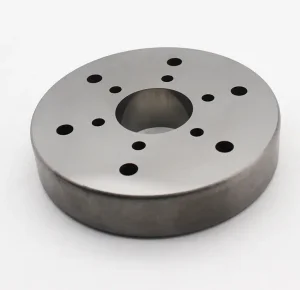
Buy Customized tungsten cemented carbide wear parts for roll crushing Manufacturer, Manufacturers
View Specifications
China tungsten carbide tube scarfing inserts SQ8615WCB Manufacturers, Supplier
View Specifications
Buy SPUB86C customized tungsten carbide cnc diamond metal cutting inserts tools Factory, Factories
View Specifications
China SPUB-63 Steel Pipe Scarfing Tools Tube Scarfing Inserts Supplier, Suppliers
View Specifications
China Factory supply non-magnetic carbide pin for jewelry industry Supplier, Factory
View Specifications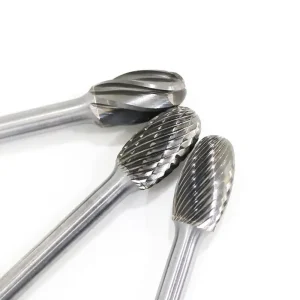
Wholesale Oval cutting tool tungsten carbide rotary file shank diameter Factory, Factories
View Specifications
Technical Clarifications
Frequently Asked Questions Regarding Tipos De Aleaciones Procurement
Comprehensive metallurgical guidance for procurement managers, tool designers, and industrial distributors sourcing direct from China.
How do grain size and cobalt content determine the performance of different tipos de aleaciones?
In cemented tungsten carbide metallurgy, hardness and toughness share an inverse relationship dictated by binder volume and carbide grain size. A lower cobalt fraction (such as 6% in YG6) coupled with submicron WC grains (0.6–1.0 µm) produces extreme hardness (≥90.5 HRA) and abrasive wear resistance, ideal for precision sliding components and finish-turning cast iron. Conversely, increasing cobalt content to 15–20% (as in YG15 and YG20) with coarse WC grains increases the mean free path of the binder phase, boosting fracture toughness (TRS exceeding 3,000 MPa) to resist catastrophic failure under severe shock loading.
What are the key differences between cobalt-bonded and nickel-bonded carbide alloys?
While cobalt provides superior mechanical adhesion and wetting with tungsten carbide during liquid phase sintering, it is naturally ferromagnetic and vulnerable to acid corrosion. Nickel binder formulations yield alloys that are non-magnetic (magnetic permeability approaching 1.0) and possess significantly higher chemical passivity against organic acids, saline solutions, and caustic fluids. Consequently, nickel-bonded alloys are specified for downhole oil exploration (MWD tools), chemical seal rings, and semiconductor manufacturing equipment where zero magnetism is strictly mandatory.
Why is overpressure Sinter-HIP superior to standard vacuum sintering for thick wear plates?
Thick cross-section parts (such as 100×100×60 mm die blocks) often exhibit internal pressure gradients during consolidation. Standard vacuum sintering frequently leaves microporosity rated A04-B04 under ISO 4505 inspection. Sinter-HIP applies 60 to 100 bar of inert argon gas during the final liquid phase stage. This high pressure forces the plasticized binder to backfill internal pores, achieving a porosity rating of A00-B00, improving transverse rupture strength by up to 25%, and preventing pitting or cracking during subsequent electrical discharge machining (EDM).
Can Jiangxi Zhongfu develop custom carbide formulations based on specific operating parameters?
Yes. Custom formulation is a cornerstone of our manufacturing capability. If catalog grades do not meet your operational wear, heat dissipation, or impact requirements, our metallurgical engineers can adjust the primary WC grain size distribution, optimize cobalt/nickel ratios, or incorporate grain growth inhibitors such as vanadium carbide (VC), chromium carbide (Cr3C2), or tantalum-niobium carbide (TaNbC). CAD drawings and specifications submitted to our engineering team receive feedback and feasibility assessments within 8 hours.
What quality assurance documentation is provided with international wholesale export orders?
Every production batch leaves our facility with a comprehensive Inspection & Mill Test Certificate per EN 10204 3.1. This documentation certifies raw material virgin origin, exact chemical composition percentages, density (g/cm³), Rockwell hardness (HRA), coercive force (Hc), magnetic saturation (4πσ), and metallographic microstructure images validating the absence of eta-phase (decarburization) or free graphite. All goods comply with RoHS, REACH, and OECD conflict-free supply directives.