
High-Performance Cemented Carbide Wear Solutions
Explore our flagship precision-sintered products, engineered with pure virgin tungsten carbide powder and advanced Sinter-HIP consolidation for zero internal porosity.








Global Tungsten Carbide Flat Plate Evolution & Market Dynamics
The global demand for high-grade cemented tungsten carbide plates has transitioned from generic tooling blanks to engineered, micro-grain wear preforms capable of withstanding compound abrasive-corrosive forces.
In modern mechanical engineering and severe-service metalworking, tungsten carbide flat plates (cemented carbide sheets, wear strips, and rectangular EDM blocks) represent the pinnacle of wear and impact resistance. Industrially synthesized through powder metallurgy, these components blend refractory tungsten carbide (WC) hard phases within a ductile metallic binder—predominantly cobalt (Co) or nickel (Ni). As manufacturing sectors embrace continuous high-speed automation, the operational threshold for wear parts has become exceptionally unforgiving. Tool designers can no longer tolerate micro-flaking, grain boundary oxidation, or premature fracture caused by residual porosity.
Historically, standard metallurgical operations relied on conventional vacuum sintering. However, the international industrial landscape has made a decisive shift toward Overpressure Sinter-HIP (Hot Isostatic Pressing) technology. By introducing high-pressure argon gas (up to 10 MPa / 100 bar) at the liquid phase sintering stage (1,380°C – 1,480°C), micro-voids, shrinkage cracks, and structural pores are systematically collapsed. For procurement specialists and tooling engineers sourcing from China, validating that a manufacturer operates integrated sinter-HIP cycles rather than atmospheric pressure furnaces is the primary criterion separating aerospace-grade flat plate blanks from commercial-grade alloys prone to EDM wire breakage.
Next-Gen Powder Metallurgy
The transition toward submicron (0.4–0.8 µm) and nano-grain powder formulations. Submicron WC grains coupled with proprietary grain growth inhibitors (VC, Cr3C2) suppress grain enlargement, maintaining hardness above HRA 92 while boosting fracture toughness.
Corrosion-Resistant Binders
Standard cobalt binders degrade rapidly in chemically acidic or humid metal-stamping environments. Modern formulations replace pure cobalt with multi-component Nickel-Chromium-Molybdenum (Ni-Cr-Mo) binders for superior chemical resistance.
Stress-Relieved Semi-Finishing
EDM spark erosion can induce tensile residual stresses on flat plate outer margins, resulting in micro-cracks. Contemporary Chinese manufacturers execute vacuum thermal stress relief cycles prior to surface double-disc grinding.
Cemented Carbide Grade Formulation & Selection Architecture
Selecting the optimal metallurgical grade for tungsten carbide flat plate requires balancing hardness, compressive yield strength, transverse rupture strength (TRS), and impact toughness.
The metallurgical behavior of tungsten carbide flat plates is dictated by two interlinked variables: mean WC grain size and binder weight fraction. As cobalt binder percentages decrease from 20% down to 6%, hardness rises from HRA 85.5 to HRA 92.5+, imparting remarkable resistance to low-stress sliding abrasion and high-velocity abrasive slurry erosion. Conversely, higher cobalt contents (15% to 20%) increase the mean free path of the binder phase, boosting fracture toughness (K1C) to withstand the repeated shock loading found in heavy-gauge metal cold-heading and high-tonnage blanking punches.
| Alloy Grade | Binder (wt%) | Grain Size (µm) | Density (g/cm³) | Hardness (HRA) | TRS (N/mm²) | Primary Industrial Service |
|---|---|---|---|---|---|---|
| YG6X (K10/Micro) | 6.0% Co | 0.6 – 0.8 | 14.90 – 15.05 | 91.5 – 92.8 | 2,600 | Precision shims, electronics stamping dies, non-ferrous thin sheet slitting |
| YG8 (K20/Medium) | 8.0% Co | 1.2 – 1.6 | 14.65 – 14.85 | 89.5 – 90.5 | 2,900 | Wear guide plates, stone cutting segments, concrete scarifier cutter inserts |
| YG15 (K40/Tough) | 15.0% Co | 1.6 – 2.2 | 13.90 – 14.15 | 86.5 – 87.8 | 3,400 | Heavy stamping punch matrices, cold forming dies, severe impact wear liners |
| YG20 (Impact Master) | 20.0% Co | 2.0 – 3.0 | 13.45 – 13.70 | 84.5 – 86.0 | 3,800 | Fastener cold-heading dies, thick steel shearing blades, deep drawing molds |
| YN12 (Non-Magnetic) | 12.0% Ni | 1.0 – 1.4 | 14.30 – 14.50 | 88.0 – 89.5 | 2,700 | Sensor housings, magnetic powder metallurgy compaction dies, MWD components |
| CR08 (Submicron Tool) | 8.0% Co+Cr | 0.4 – 0.6 | 14.70 – 14.90 | 92.5 – 93.5 | 3,600 | Lithium battery separator slitting, titanium profiling, mirror-finish EDM blocks |
China Industry 4.0: Supply Chain Resilience & Production Velocity
How concentrated provincial mineral ecosystems and fully automated, closed-loop powder metallurgy deliver unmatched scale, cost stability, and lead-time certainty for global buyers.
China’s leadership in the global cemented carbide sector is built upon structural advantages that extend beyond raw production capacity. Originating in Jiangxi and Hunan—the global epicenters of tungsten mineral reserves—our production facilities maintain direct mine-to-furnace integration. By sourcing high-purity Ammonium Paratungstate (APT) and converting it into virgin tungsten powder through tightly controlled hydrogen reduction, we prevent recycled scrap contaminants (such as iron, copper, or titanium tramp elements) from destabilizing the alloy matrix.
Under the Industry 4.0 paradigm, our manufacturing flow integrates computerized batching, closed-cycle spray drying towers, multi-axis automated dry presses, and precision German surface grinders. This high degree of automation ensures that every tungsten carbide flat plate exhibits isotropic microstructural properties, minimal thermal distortion during wire EDM, and absolute batch-to-batch repeatability.
Virgin WC Synthesis
Closed-loop synthesis of pure submicron to coarse WC powder via high-temperature carburization. Guaranteed 100% virgin feedstock with zero scrap contamination.
Wet Attritor Milling
High-energy ball milling with alcohol media and organic paraffin binders ensures uniform cobalt dispersion around every individual carbide crystal facet.
Spray Drying & Pressing
Automated inert-gas spray drying produces spherical granules with exceptional flowability, pressed under 500-ton bidirectional CNC hydraulic presses.
100-Bar Sinter-HIP
Thermal dewaxing followed by high-vacuum heating and 100-bar argon isostatic compression at 1,450°C collapses internal micro-porosity to Class A00/B00.
Metrology & Grinding
Automated double-disc surface grinding, wire-EDM dimensional preparation, and C-scan ultrasonic non-destructive testing for subsurface flaw verification.
Engineering Audit & Quality Qualification Framework
Key technical criteria international procurement teams and tool designers must evaluate when specifying and qualifying tungsten carbide flat plate manufacturers.
Combating the Wire-EDM White Layer
When toolmakers cut thick carbide plates using electrical discharge machining (Wire-EDM), the extreme thermal energy can deplete the cobalt binder on the cut boundary, generating tensile stress cracks and a brittle "white layer." Our plates undergo dedicated vacuum de-stressing cycles and incorporate fine, corrosion-resistant binder stabilizers. This ensures clean, fissure-free EDM cutting without edge chipping or spontaneous die splitting under dynamic stamping pressures.
Planarity, Parallelism & Ground Finishes
For high-precision progressive dies, dimensional flatness and parallel tolerances must be maintained within ±0.002 mm per 100 mm of plate span. We provide plates in both as-sintered semi-finished conditions (with optimized grinding stock allowances) and finish-ground configurations. Surface finishes can be brought down to Ra 0.05 µm via precision diamond-wheel surface grinding, minimizing bench assembly and hand-lapping time.
Strict Microstructure & Porosity Standards
Internal metallurgical defects serve as stress-concentration points that cause premature die fracture. Every production batch is certified against ISO 4505 metallographic examination standards, guaranteeing porosity levels below A02, B02, and C00. Our metallurgists verify uniform cobalt distribution and confirm complete absence of uncombined free carbon (graphite rosettes) or embrittling eta-phase (W3Co3C).
Total Cost of Ownership (TCO) Economics
Procurement teams frequently make the mistake of evaluating carbide plates solely on per-kilogram initial purchase price. In continuous stamping or abrasive grinding, true value lies in the wear life-to-downtime ratio. By upgrading from conventional vacuum-sintered blanks to our Sinter-HIP submicron grades, die maintenance intervals are extended from 250,000 cycles to over 1,200,000 cycles, dramatically reducing total cost of ownership.
Engineered Wear Applications Across High-Stress Sectors
From lithium-ion battery electrode slitting to high-speed progressive metal stamping, our carbide flat plates solve critical wear problems across global industries.
Lithium-Ion Battery Manufacturing
Application: Slitter blades, backing plates, and foil cutting dies for cathode (LiCoO2, NCM) and anode copper/aluminum foils.
Engineering Demand: Submicron grain structure (CR08) prevents microscopic edge burrs (< 2 µm) that could puncture separator films and cause battery short circuits.
Semiconductor Lead Frame Stamping
Application: Micro-punch strippers, guide blocks, and progressive matrix dies operating at 1,200 strokes per minute.
Engineering Demand: Ultra-fine grain YG6X plates capable of holding mirror surface finishes (Ra 0.05) and sharp corner radii without micro-chipping under cyclic impact.
Heavy Mining, Rail & Mineral Slag Chutes
Application: Deflector liners, scraper blades, and railway tamping tine center-wear plates.
Engineering Demand: Heavy-duty YG15/YG20 coarse-grain carbide plates that absorb severe gouging abrasion and heavy rock impact without brittle cleavage fracture.
Chemical & Oilfield Choke Components
Application: Fluid control orifice plates, non-magnetic downhole sensor housings, and severe slurry trim.
Engineering Demand: Special nickel-bonded (YN12) formulations that eliminate galvanic corrosion in salt spray and preserve zero-magnetic permeability near directional sensors.
Metal Powder & Ceramic Compaction Tooling
Application: Die liners and punch punches for compacting abrasive neodymium magnets, ferrite cores, and technical ceramics.
Engineering Demand: High compressive strength (>4,500 MPa) to resist lateral expansion stresses while offering superior sliding wear resistance against hard powders.
Woodworking, Biomass & Recycling Shredders
Application: Flat anvil plates, rotary knife counter-blades, and granulator bed knives.
Engineering Demand: YG8/YG11 intermediate grade plates that combine wear longevity against silica-rich wood fiber with toughness against tramp metal contamination.
Technical FAQ: Tungsten Carbide Flat Plate Sourcing & Machining
Direct answers from our metallurgical engineers addressing tolerances, wire EDM behavior, grade choices, and export logistics.
Why is Sinter-HIP processing mandatory for carbide flat plates used in EDM wire cutting?
How do I choose between submicron and coarse grain tungsten carbide plates?
What dimensional tolerances and surface finishes can your factory provide?
What causes spontaneous cracking in tungsten carbide plates after EDM cutting, and how is it prevented?
When should non-magnetic nickel-bonded carbide plates be specified over standard cobalt grades?
Can you manufacture custom-geometry flat plates with pre-formed holes and chamfers?
Specialty Cutting Tools, Plates & Custom Sintered Blanks
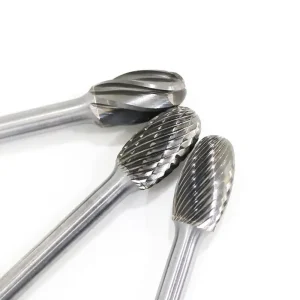
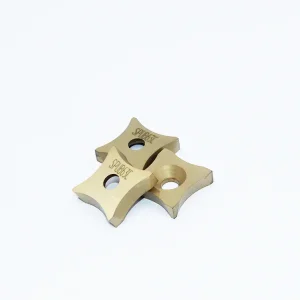
Explore our complete catalog of industrial carbide solutions, including scarifier blades, heavy-duty turning inserts, and wear-resistant blanking plates manufactured to exacting tolerances.






Request Custom Flat Plate Quotation & Grade Advisory
Send your 2D engineering drawings (DWG/DXF/PDF) or 3D STEP models. Our senior metallurgical team provides DFM feedback, shrinkage-optimized sizing, and firm quotations within 8 working hours.