
Primary Sintered Tungsten Carbide Production Portfolio
Engineered tungsten carbide drill bit blanks, high-strength wear sheets, indexing inserts, and heavy-duty rotary cutters manufactured with virgin powder feeds and high-temperature Sinter-HIP densification.

Wholesale Premium Tungsten Carbide Sheet for Stamping Dies Durable P30 Alloy Model 200x200x10mm Manufacturers, Suppliers
Configure Specifications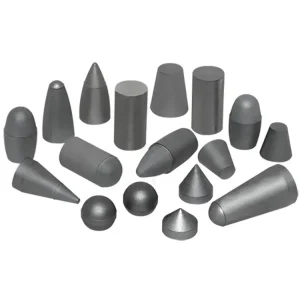
China Round billet metal for high strength cemented carbide tools Manufacturer, Supplier
Configure Specifications
Wholesale Custom 60 knife variable speed fixed gear cast iron truck large metal gear Manufacturers, Factory
Configure Specifications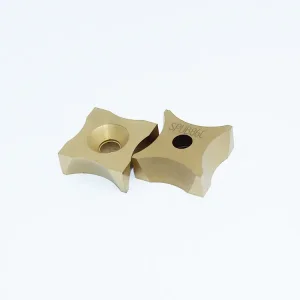
Wholesale SPUB86C customized lathe_ tungsten_carbide_inserts drill bit insert Supplier, Factory
Configure Specifications
Wholesale Customized Cemented Carbide Plate — Factory-Direct Tungsten Carbide Blanks in Any Size, Shape & Grade Factory, Factories
Configure Specifications
Wholesale China best price custom tungsten carbide steel cutters concrete scarifier blade Supplier, Factory
Configure Specifications
Wholesale Cemented carbide metal insert_cutting_tool SPUB86B/86C/86D/86E/86F/86G/86H/86K/86M Manufacturers, Factory
Configure Specifications
China Factory supply non-magnetic carbide pin for jewelry industry Supplier, Factory
Configure SpecificationsGlobal Commercial Dynamics & Macro Industry Solutions
Strategic analysis of tungsten supply lines, deep-hole drilling economics, and metallurgical shifts shaping modern rotary cutting tools.
The Macro-Industrial Transition in Rotary Cutting & Deep-Bore Drilling
The global industrial drilling landscape is undergoing an irreversible transition from high-speed steel (HSS) and cobalt-alloy tools toward sub-micron cemented tungsten carbide (WC-Co/Ni). In high-volume production environments across automotive, aerospace structural manufacturing, and energy extraction, machine cycle rates are bottlenecked by thermal dissipation and edge deformation. Uncoated high-speed steels lose yield strength rapidly beyond 550°C, precipitating catastrophic edge roundedness, micro-chipping, and borehole wall burnishing. In contrast, powder-metallurgic cemented carbide maintains hot hardness upwards of 950°C, facilitating peripheral cutting speeds (Vc) exceeding 120 to 220 m/min in heat-resistant structural steels and nickel superalloys.
As a leading Chinese tungsten carbide drill bits supplier and direct manufacturer based in Nanchang, Jiangxi—the epicenter of the world's most concentrated tungsten ore mining and Ammonium Paratungstate (APT) reduction facilities—Jiangxi Zhongfu Cemented Carbide Co., Ltd. resolves the critical structural vulnerabilities of global tooling supply chains. By controlling virgin APT reduction, carburization into stoichiometric tungsten monocarbide crystals, paraffin-wax ball milling, and closed-loop pressure sintering, Zhongfu eliminates the quality anomalies typically observed when sourcing from secondary brokerages that utilize uncertified recycled scrap.
Deep Geothermal & Mining Exploration
Subsurface rock disintegration in abrasive quartz-rich granite and quartzite formations generates intense impact forces and rapid mechanical wear. Traditional tooling fails due to thermal fatigue and cobalt binder phase leaching.
- Coarse grain WC (3.0–5.5 µm) preventing micro-spalling
- 11% to 15% cobalt content maximizing fracture toughness
- Impact resistance rated up to 14.5 J/cm²
Aerospace Stack Hole Generation
Simultaneous drilling through Carbon Fiber Reinforced Polymers (CFRP) and Grade 5 Titanium (Ti-6Al-4V) stacks requires extraordinary edge acuity without tool pull-out or thermal delamination at the polymer interface.
- Ultrafine WC grain sizes (0.4–0.6 µm) for sharp radii
- High transverse rupture strength (>3,800 MPa)
- Ultra-smooth flutes optimized for chip evacuation
Electronics & Multi-Layer PCB Drilling
Micro-hole generation across high-density interconnect (HDI) substrates involves micro-drills from Ø0.05 mm to Ø0.30 mm turning at 200,000 to 300,000 RPM, where structural runout must stay below 2 micrometers.
- Nano-grained structural formulations (<0.2 µm)
- Homogeneous binder distribution avoiding void bursts
- h6 ground shanks eliminating spindle vibration
Material Science Architecture & Sinter-HIP Thermodynamics
Comprehensive metallurgical data delineating physical properties, cobalt migration thresholds, and microstructural densification parameters.
Sinter-HIP (Overpressure Sintering) at 1,450°C and 100 Bar
The standard vacuum sintering process utilized by budget suppliers routinely leaves micro-pores measuring between 1 µm and 10 µm throughout the bulk carbide matrix. Under the cyclical dynamic loads of twist drilling or downhole percussion, these internal micro-voids act as catastrophic stress-concentration notches where fatigue cracks nucleate and spread along the cobalt binder interface. At the Jiangxi Zhongfu production complex, all carbide rods, drill blanks, and cutting tip inserts undergo unified Sinter-HIP processing.
During the final liquid phase sintering sequence, pure Argon gas is injected into the furnace chamber at pressures between 60 and 100 bar while temperature is maintained at 1,420°C–1,480°C. This omnidirectional pressure crushes any residual internal porosity, redistributes the liquid cobalt uniformly across the polygonal tungsten monocarbide crystals, and elevates density to near-theoretical values (reaching 99.98% relative density). The metallurgical result is an increase of up to 25% in transverse rupture strength (TRS) and an extended cyclic fatigue life, preventing drill point snap-off inside deep-cavity tooling components.
| Alloy Grade | Binder Phase (wt%) | Density (g/cm³) | Hardness (HRA) | Transverse Rupture (MPa) | Dominant Grain Morphology | Primary Industrial Utility |
|---|---|---|---|---|---|---|
| YG6 (ISO K10-K20) | 6.0% Co | 14.85–15.00 | 90.5–91.5 | 2,200–2,400 | Fine (0.8–1.2 µm) | Solid twist drills for cast iron, hard brass, non-ferrous boring |
| YG8 (ISO K20-K30) | 8.0% Co | 14.60–14.80 | 89.5–90.5 | 2,600–2,800 | Medium (1.4–2.0 µm) | Percussion masonry bits, rotary water well tips, brazed cutters |
| YG11C (Mining Class) | 11.0% Co | 14.30–14.50 | 86.5–87.5 | 2,900–3,100 | Coarse (2.5–4.0 µm) | Down-the-hole (DTH) button bits, road planer picks, tricone drills |
| YG15 (ISO K40) | 15.0% Co | 13.90–14.15 | 87.0–88.0 | 3,200–3,400 | Medium-Coarse (1.8–2.5 µm) | Heavy cold-heading dies, extreme shock piercing, core barrels |
| YG20 (Impact Class) | 20.0% Co | 13.40–13.65 | 85.0–86.5 | 3,400–3,800 | Coarse (2.0–3.5 µm) | Stamping thick steel plates, explosive forming dies, scrap shears |
| ZF-Ni10 (Non-Magnetic) | 10.0% Ni/Cr | 14.40–14.65 | 88.5–90.0 | 2,400–2,600 | Fine-Medium (1.0–1.5 µm) | MWD/LWD oilfield logging sensors, chemical valve seats, non-sparking drills |
Localized Support, International Compliance & Quality Assurances
Ensuring end-to-end trace integrity, environmental adherence, and seamless operational compatibility for multinational procurement teams.
Full Supply Chain Traceability
Every shipment from Zhongfu includes comprehensive inspection dossiers, detailing lot-specific metallurgical properties verified via advanced laboratory diagnostics before release.
- ASTM B276 Porosity Grading (Guaranteeing A00-B00)
- Coercive Force (Hc) & Magnetic Saturation (4πσ) checks
- Detailed spectral analysis certifying zero scrap contamination
Global ESG & Chemical Compliance
Western aerospace and defense clients demand complete adherence to global safety and humanitarian guidelines. Zhongfu strictly upholds certified regulatory controls across every production cell.
- 100% Conflict-Free Smelter Initiative (RMI/CMRT) audits
- EU REACH Regulation (EC No 1907/2006) registered
- RoHS Directive compliance for electrical assembly
Localized Engineering Integration
Understanding that tooling procurement demands zero downtime, our engineering desk acts as an extension of your own manufacturing floor, offering design adjustments tailored to your CNC equipment.
- Fast CAD/CAM conversion (STEP, DXF, IGES support)
- Custom pre-forms reducing diamond wheel grinding time
- Stock buffer programs with guaranteed 48-hour ocean dispatch
Localized Application Scenarios: Solving Critical Failure Modes
In-depth technical evaluations of common downhole and factory floor failure modes solved by targeted tungsten carbide grade customization.
Scenario A: Deep-Hole Gundrilling in Automotive Crankshafts (Forged 42CrMo4)
The Failure Mechanism: When drilling lubrication oil galleries spanning depths over 25×D, extreme torsional vibration and high thermal loads lead to catastrophic tool whip, premature flank wear, and inner borehole wall scoring. Standard off-the-shelf carbide drills undergo outer corner breakdown within 45 linear meters of drilling.
The Zhongfu Solution: Implementation of ultrafine-grain carbide blanks possessing an engineered gradient cobalt concentration. The outer surface delivers 92.0 HRA hardness to resist severe rubbing friction against swarf, while the internal core retains higher cobalt content for improved elastic modulus (reaching 600 GPa). Integrated dual spiral coolant channels deliver high-pressure cutting fluid directly to the cutting zone, extending tool life to over 130 linear meters per tool regrind cycle.
Scenario B: Down-the-Hole (DTH) Percussion Drilling in Open-Pit Copper Formations
The Failure Mechanism: In open-pit extraction operations across the Americas and Australia, percussion drill bits encounter sudden changes in geological formation hardness, alternating between soft porphyry and hard diorite. This alternating stress creates shear spalling across the hemispherical dome inserts, fracturing button tips at the brazing junction.
The Zhongfu Solution: Replacement of conventional grades with our coarse-grained YG11C/YG13C formulations. By controlling the free carbon boundary conditions to eliminate brittle eta-phase (W₃Co₃C) precipitates, the transverse rupture strength exceeds 3,000 MPa. Button bases are precision profile-ground to h7 tolerances, ensuring full mechanical contact and uniform braze alloy distribution during induction joining.
Technical Roadmap & Future Outlook: Next-Generation Rotary Tooling
Forward-looking innovations in ceramic binders, nano-diamond composite bonding, and intelligent powder metallurgical monitoring.
Binderless Tungsten Carbide Formulations
Conventional cobalt matrices soften and dissolve when exposed to acidic downhole fluids or chlorine-based cutting coolants. Zhongfu's development roadmap includes near-binderless WC matrices (<0.5 wt% additive) featuring nano-grain sizing that reaches 94.5 HRA hardness with near-zero chemical leaching.
Nano-Crystalline Diamond & CVD Integration
For high-silicon aluminum and composite aerospace drilling, tool longevity is governed by coating adhesion. Our R&D team optimizes surface cobalt etching technologies to allow direct mechanical anchoring of multi-layered CVD diamond coatings, eliminating film spalling at the tool margin.
AI-Assisted Sintering Diagnostics
Implementing real-time furnace telemetry and closed-loop optical pyrometry to monitor real-time grain boundary movement during the liquid phase sintering stage. This automated process control prevents localized grain clustering, ensuring absolute physical consistency across 50,000-piece production batches.
Specialized Tool Blanks, Indexable Inserts & Wear Solutions
Explore our comprehensive industrial inventory of precision-ground blanks, mining cutters, and high-impact die sheets available for global distribution.

Buy Wholesale sintered cemented carbide stone wood diamond cutting tools Supplier, Factories
Configure Specifications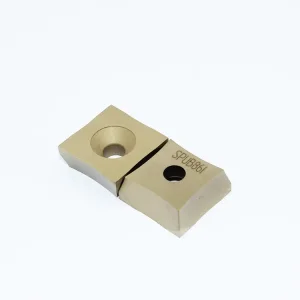
Buy Carbide turning inserts manufacturer square carbide Inserts for milling tools Supplier, Factory
Configure Specifications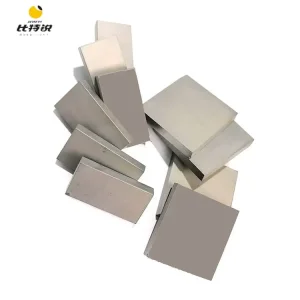
Buy Tungsten Carbide Plate HIP-Sintered Wear-Resistant Flat Blanks in YG6–YG20 Grades Supplier, Suppliers
Configure Specifications
Wholesale Factory sale customized carbide milling jar tungsten carbide bowl/ jar/mortar Manufacturer, Factory
Configure Specifications
China Best price CVD coating tungsten carbide non standard carbide jaw insert cnc Manufacturer, Factory
Configure Specifications
China SPUB86 P40 tungsten carbide scarfing inserts for welded steel pipe Manufacturer, Factory
Configure Specifications
China Wholesale customized high precision hard alloy tungsten carbide cutting tool wear parts Suppliers, Factory
Configure Specifications
China Wholesale carbide insert cutting tools cnc Supplier, Factory
Configure SpecificationsFrequently Asked Questions: Sintered Carbide Drill Engineering
Comprehensive engineering insights addressing material selection, dimensional tolerances, brazing protocols, and custom manufacturing parameters.
What distinguishes sub-micron WC substrates from conventional grades in solid drill bits?
Conventional tungsten carbide grades rely on carbide grain sizes between 1.5 µm and 3.5 µm. While adequate for turning tools and stamping dies, these coarser grains lead to micro-chipping along the ultra-sharp cutting lips of rotary twist drills. Sub-micron and ultrafine grains (0.4 µm to 0.8 µm) significantly reduce the binder mean free path. This structural refinement increases hardness up to 92.5 HRA without sacrificing fracture toughness, enabling cutting edges to retain micron-level sharpness under high shear stresses without edge collapse.
Why is Sinter-HIP technology mandatory for deep-hole drilling rods and drill blanks?
Standard vacuum sintering often leaves residual microscopic pores (classified as A04 to B06 under ASTM B276 standards). Under deep-hole drilling conditions, coolant pressures up to 100 bar and cyclic bending moments cause fatigue cracks to nucleate at these micro-voids, resulting in sudden drill shank failure. Sinter-HIP applies 100 bar of isostatic argon gas pressure at peak liquid sintering temperatures (1,450°C), eliminating all internal voids to achieve A00 porosity and near-zero void defects.
How does Zhongfu handle high-precision h6 tolerances on solid carbide rods?
Sintered carbide blanks shrink up to 18–22% during thermal consolidation. To achieve precise h6 shank tolerances, our facility uses multi-stage CNC centerless wet grinding lines fitted with in-line laser sizing systems and ultra-fine resin-bonded diamond grinding wheels. Roundness is held within 0.001 mm, cylindricity within 0.0015 mm, and surface finish down to Ra 0.1 µm, preventing toolholder runout and slippage under high-torque drilling conditions.
What is the optimal brazing protocol for joining carbide drill tips to steel bodies?
The thermal expansion coefficient of tungsten carbide (5.0–6.0 × 10⁻⁶/K) is approximately half that of alloy tool steel (11–12 × 10⁻⁶/K). Direct brazing causes residual tensile stress in the carbide upon cooling, often leading to transverse cracking. We recommend tri-metal brazing shims (Copper-Silver-Copper sandwich structure, such as BAg-22). The ductile copper core deforms plastically during cooling, relieving interfacial thermal shear stresses and preventing brazing fractures.
Can you manufacture non-standard drills and wear parts from engineering drawings?
Yes. Custom manufacturing accounts for over 65% of our factory production. Clients can submit 2D orthographic drawings (AutoCAD DWG, PDF) or 3D CAD models (STEP, IGES, Parasolid). Our engineering team reviews the geometry, selects the target carbide grade based on operating conditions, calculates shrinkage factors, and builds custom forming dies or uses 5-axis CNC green-state machining before sintering, ensuring fast lead times on complex geometries.
What quality documentation accompanies international tooling shipments?
Every export shipment from Jiangxi Zhongfu includes a formal Certificate of Conformance (CoC) and a complete Metallurgical Inspection Report. This covers density (via Archimedes displacement), Rockwell Hardness (HRA), coercive force (Hc), magnetic saturation (4πσ), and microstructural porosity ratings. We also provide certified material compliance reports including REACH, RoHS, and conflict-free mineral declarations.
Advance Your Tooling Performance with Direct Factory Sintering
Partner directly with China's leading tungsten carbide drill bits supplier and custom engineering foundry. Submit your CAD drawings or material specifications today for a detailed engineering analysis and formal quotation within 8 hours.