
Industrial Tungsten Carbide Catalog: Phase I
Browse precision-sintered components engineered for demanding tooling, heavy wear resistance, and extreme cycle life in mass manufacturing.
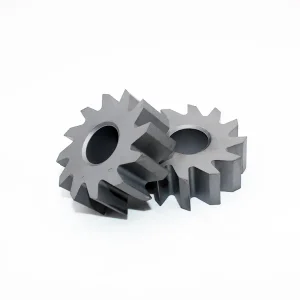
Custom made transmission reverse idle gear starter gear spur gear set
Explore Product Specifications
China Wholesale SPUB63M30 tungsten carbide the cutter indexable cutting tools
Explore Product Specifications
Buy High Hardness High Density Pressureless Sintered Silicon Carbide Plate Polished SiC
Explore Product Specifications
China wholesale square tungsten large chip blank carbide insert
Explore Product Specifications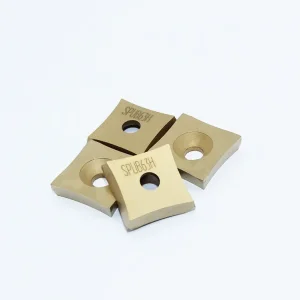
Buy SPUB-63 welding tube scarfing insert, Welding Pipe peeling insert
Explore Product Specifications
China Factory wholesale tungsten cemented tools carbide coated blank inserts
Explore Product Specifications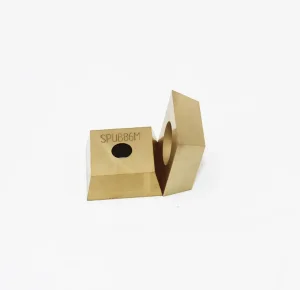
China High quality SPUB86M indexable tungsten carbide inserts
Explore Product Specifications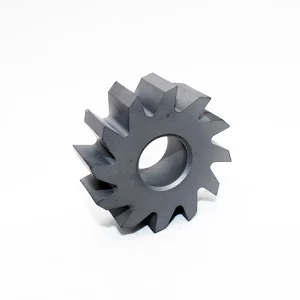
Buy Wholesale custom nonstandard metal worm gears bevel gears pinion gears
Explore Product SpecificationsWhat Is Tungsten Carbide? Engineering Architecture & Synthesis
A comprehensive technical examination of cemented carbide (WC-Co/Ni), its crystal lattice structure, powder consolidation, and why industrial engineers rely on it when high-speed steel reaches its threshold.
Stoichiometric Ceramic Matrix
Tungsten carbide is an inorganic chemical compound containing equal parts of tungsten and carbon atoms (chemical formula WC). In its basic form, it is a fine gray powder characterized by an exceptionally rigid hexagonal crystal lattice that yields Vickers hardness values exceeding 1400–2000 HV30.
Metallic Ductile Binders
Because pure WC ceramic lacks fracture toughness, it is sintered with a metallic matrix—predominantly cobalt (Co) or nickel (Ni). This metal-matrix composite (MMC) structure bridges the gap between brittle super-hard ceramics and tough but softer steels, delivering remarkable tensile resilience under compressive shock.
HIP Sintering Dynamics
Consolidated under Hot Isostatic Pressing (Sinter-HIP) at temperatures above 1400°C under 10 MPa of argon overpressure, the cobalt liquid phase wets the WC grains, effectively closing microscopic voids and achieving near-zero theoretical porosity with high transverse rupture strength (TRS).
Meeting Macro-Industrial Demand Across Global Supply Chains
Strategic sourcing leaders face supply chain volatility, tooling cycle times, and operational downtime. Here is how specialized tungsten carbide engineering solves multi-industry operational bottlenecks.
Energy & Deep Subsurface
Tungsten carbide inserts, MWD/LWD drilling bearings, and non-magnetic valve trim operate reliably under high subterranean pressures, severe erosion, and aggressive corrosive fluids downhole.
Automotive Precision Forming
Progressive stamping dies, cold-heading punches, and reverse idle drive assemblies require superior compressive yield strength to prevent premature deformation during high-speed cycle runs.
Primary Steel & Metallurgy
Heavy-duty tube scarfing inserts (SPUB63, SNMX), hot-rolling guide rolls, and rod peeling cutters withstand severe thermal shock and constant frictional contact without edge breakdown.
Infrastructure & Civil Projects
From tungsten carbide tamping tines stabilizing railway ballasts to rotary road-milling picks, engineered coarse-grain structures resist fracture during high-energy abrasive impacts.
Cemented Carbide Grade Selection & Specifications
Balance your wear resistance and fracture toughness requirements. Review mechanical properties across standard and specialized grades before requesting factory quotations.
| Carbide Grade | Binder (Co/Ni %) | Grain Size (µm) | Density (g/cm³) | Hardness (HRA) | TRS (MPa) | Recommended Industrial Applications |
|---|---|---|---|---|---|---|
| YG6 (ISO K10-K20) | 6.0% Co | 1.2 – 1.6 | 14.90 – 15.05 | 90.5 | ≥ 1900 | Precision finish-turning of cast iron, non-ferrous bars, drawing dies. |
| YG8 (ISO K20-K30) | 8.0% Co | 1.4 – 2.0 | 14.65 – 14.80 | 89.5 | ≥ 2200 | Brazed cutting tips, mining drill crowns, heavy-duty shear knives. |
| YG15 (ISO K40) | 15.0% Co | 1.8 – 2.4 | 13.95 – 14.15 | 87.0 | ≥ 2800 | Cold heading punches, blanking dies, heavy-load structural wear parts. |
| YG20 (Impact Grade) | 20.0% Co | 2.0 – 3.2 | 13.45 – 13.65 | 85.5 | ≥ 3100 | Extreme shock resistance, hot stamping molds, wire drawing rolls. |
| Nano-Grain Solid Rod | 10.0% Co | 0.2 – 0.5 | 14.40 – 14.55 | 92.5 | ≥ 3800 | Micro-endmills, PCB drills, high-speed aerospace composite cutters. |
| Nickel-Bonded (Non-Mag) | 8.0% – 10.0% Ni | 1.4 – 2.0 | 14.50 – 14.75 | 88.5 | ≥ 2100 | Magnetic powder compaction, offshore valves, subsea MWD sensor trim. |
Metallurgical Roadmap: Advanced Sintering & ESG Initiatives
Next-generation cemented carbide blends advanced additive forming with stringent environmental compliance and closed-loop material recovery.
Binder Jet Additive Manufacturing
By blending ultra-fine tungsten carbide with organic photopolymers, 3D binder jetting enables complex conformal cooling channels inside injection mold inserts and drill heads that were previously impossible to mill or press.
Cobalt Alternative Matrices
To reduce dependence on critical raw materials and address workplace exposure limits, high-entropy alloy (HEA) binders, Fe-Ni-Cr formulations, and molybdenum carbide phases deliver improved corrosion resistance without sacrificing hardness.
Closed-Loop Zinc Recycling
Zinc-process reclaimed WC powder reduces carbon emissions by up to 70% compared to primary chemical extraction from scheelite ore, enabling a sustainable, verified supply of circular-grade industrial carbide wear blanks.
Quality Governance & Conflict-Free Compliance
From powder lot analysis to international delivery, our manufacturing lines adhere to stringent technical and ethical compliance frameworks.
Conflict-Free Sourcing
100% compliant with Responsible Minerals Initiative (RMI) standards, guaranteeing scheelite and cobalt powders originate from certified, conflict-free extraction and smelting operations.
Ultrasonic NDT Scanning
Every thick sintered plate and preform block undergoes ultrasonic non-destructive testing (NDT) to verify the internal matrix is free of hairline microcracks and localized cobalt pooling.
CMM Dimensional Reports
Finished ground surfaces, internal threads, and profile inserts are checked with automated coordinate measuring machines (CMM) to maintain h6, P, and M tolerance classes.
RoHS & REACH Compliant
Full documentation, lot-tracked material certificates, and safety datasheets accompany every export consignment across North America, the EU, and Asia-Pacific markets.
Industrial Tungsten Carbide Catalog: Phase II
Explore our selection of round rods, specialized milling bowls, tamping inserts, and custom wear components manufactured to client drawings.

China Best price CVD coating tungsten carbide non standard carbide jaw insert cnc
Explore Product Specifications
China Dia 8 × 330 mm Nano Grain Size Tungsten Carbide Rods for Endmills, Drills
Explore Product Specifications
China Wholesale SPUB-63 series carbide wood insert milling carbide insert
Explore Product Specifications
China Tungsten carbide tamping tines for railway construction equipment
Explore Product Specifications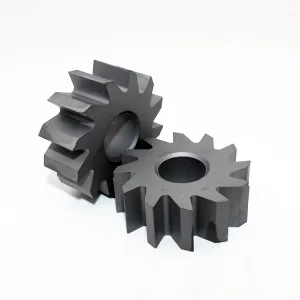
Buy Customize good quality precision metal parts spur gear tiller cultivator parts
Explore Product Specifications
Wholesale Factory sale customized carbide milling jar tungsten carbide bowl jar mortar
Explore Product Specifications
China Square Tungsten special carbide carbide tools button insert
Explore Product Specifications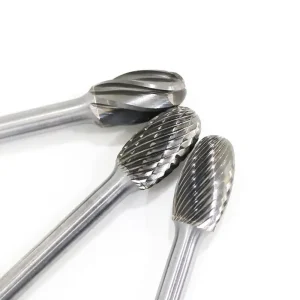
Wholesale Oval cutting tool tungsten carbide rotary file shank diameter
Explore Product SpecificationsFrequently Asked Questions for Sourcing & Engineering Teams
Key technical and procurement details to help evaluate our tungsten carbide factory capabilities, production cycles, and custom engineering options.
What is the key difference between cemented carbide and tungsten carbide?
Strictly speaking, tungsten carbide (WC) is the stoichiometric compound of tungsten and carbon. Cemented carbide is the finished industrial composite material produced by combining tungsten carbide ceramic grains with a metallic ductile binder (such as cobalt or nickel) and sintering it under high temperature and pressure.
How does binder concentration impact mechanical wear performance?
Binder content governs the inverse relationship between hardness and toughness. Low cobalt levels (6% Co, e.g., YG6) yield higher Vickers hardness and abrasion resistance, making them ideal for uninterrupted metal turning and drawing dies. Higher cobalt contents (15–20% Co, e.g., YG15, YG20) maximize impact strength, preventing fracture under shock loads during stamping, punching, and heavy mining operations.
Why is non-magnetic nickel-bonded carbide preferred in downhole tools?
Standard cobalt binders are ferromagnetic, which interferes with sensitive directional sensors used in Measurement While Drilling (MWD) and Logging While Drilling (LWD) downhole tool strings. Nickel-bonded carbide is non-magnetic, allowing accurate telemetry readings while providing exceptional resistance to acid-induced galvanic corrosion in deep oil and gas wells.
Can you produce custom parts directly from CAD drawings?
Yes. Custom manufacturing is our primary service. We produce custom geometry from 2D/3D models (STEP, DWG, DXF, IGES). Our engineering team reviews your drawings, confirms shrinkage factors, suggests suitable grades, and delivers pre-sintering feedback within 8 working hours.
What surface finishes and machining tolerances do you support?
We provide as-sintered blanks with standard tolerances (±0.5% of dimension), as well as precision diamond-ground parts. For ground rods, we routinely maintain h6 and h5 outer diameter limits. For wear plates and stamping dies, our CNC wire EDM and double-sided lapping equipment achieve surface finishes down to Ra 0.05 µm with flatness within 0.002 mm.
What are your typical production lead times for sample and volume runs?
Standard grade stock blanks and solid ground rods ship within 3–5 days. Custom tooling molds and preform sintering typically take 12–18 business days, including precision grinding, CMM inspection, and export packing. Expedited prototype production is available for urgent line trials.