Submicron grain structure with extreme thermal shock threshold for multi-axis CNC finishing.
Explore production-run tungsten carbide wear components, OD scarfing blades, and precision tool blanks engineered with ISO/ASTM-certified metallurgy.
Submicron grain structure with extreme thermal shock threshold for multi-axis CNC finishing.

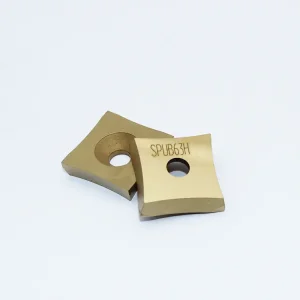
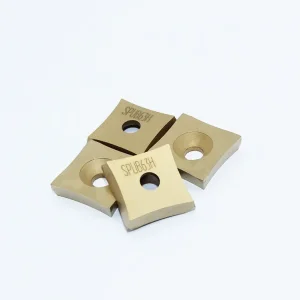
Heavy-duty tube mill de-beading insert built with optimized chip breaker geometries.
Planetary ball mill vessels delivering high chemical inertia and zero batch cross-contamination.
Industrial wood milling indexable button tips featuring multi-layer CVD aluminum oxide coatings.
Ground to h6 tolerance, suitable for high-speed micro-end mills and high-aspect drilling.
High-rigidity square geometries engineered for high-feed roughing of tough alloy steels.
Nickel-base binder matrix ensuring magnetic permeability μ < 1.005 for MWD instrumentation.
Superior acid-alkali corrosion protection and non-interference for precision sensors.
A systematic framework for technical buyers evaluating WC-Co cemented carbides, non-magnetic nickel grades, stellite, and silicon-carbide composites.
The global baseline for extreme abrasion environments. Cemented tungsten carbide relies on hexagonal tungsten monocarbide crystals bound within a ductile cobalt metallic matrix.
Replacing the ferromagnetic cobalt binder with engineered nickel-chromium or nickel-molybdenum matrices creates specialized alloys suited for sensor-critical environments.
Bridging the operational envelope where conventional cobalt cemented hard alloys reach thermal fatigue or weight constraints.
| Alloy Class / Nomenclature | Primary Constituents | Density (g/cm³) | Hardness (HRA / HRC) | Transverse Rupture (MPa) | Target Industrial Use Case |
|---|---|---|---|---|---|
| YG6 (ISO K10-K20) | WC + 6% Co | 14.8 – 15.0 | 90.5 HRA | ≥ 1,900 | Finishing cast irons, wire drawing, ceramic cutters |
| YG8 (ISO K20-K30) | WC + 8% Co | 14.6 – 14.8 | 89.5 HRA | ≥ 2,200 | Rotary mining buttons, tube deburring, chuck jaw grippers |
| YG15 (ISO K40) | WC + 15% Co | 13.9 – 14.1 | 87.0 HRA | ≥ 2,800 | Heavy cold-stamping dies, metal punching, extrusion mandrels |
| Ni-Non-Magnetic | WC + 8-12% Ni-Cr | 14.5 – 14.9 | 88.0 – 90.0 HRA | ≥ 2,100 | MWD drill housings, magnetic compacting tools, subsea valves |
| SSiC Ceramic | SiC Solid Crystal | 3.10 – 3.15 | >72 HRC | ≥ 400 | Mechanical seal rings, abrasive slurry nozzles, armor plating |
| W-Heavy Alloy (Class 3) | 95W-3.5Ni-1.5Fe | 18.0 – 18.2 | 30 – 36 HRC | ≥ 950 | High-density balance weights, collimators, medical shielding |
How direct integration with Jiangxi’s primary tungsten reserves and modernized Sinter-HIP processing yields unmatched cost, volume, and quality predictability.
Located in Nanchang, Jiangxi—the epicenter of global tungsten ore refining. We process 100% virgin ammonium paratungstate (APT) powder without relying on scrap tungsten recycle residues, safeguarding your parts against trace contaminants.
Standard vacuum sintering leaves microscopic voids (A02-B02 porosity). Our factory applies 100-bar argon overpressure during the liquid-phase sintering plateau, collapsing internal micro-cavities to attain 99.98% theoretical density.
Equipped with AgieCharmilles wire EDM units, high-speed centerless grinding rigs, and surface lapping systems capable of delivering mirror surface finishes (Ra 0.05 μm) and h6 cylindrical tolerances directly from CAD models.
Meeting Western quality assurance protocols, supply chain audit standards, and regional manufacturing compliances across North America, Europe, and Asia-Pacific.
Global procurement teams must adhere to Section 1502 of the Dodd-Frank Act. Every metric ton of tungsten feedstock sourced by our facility is accompanied by Responsible Minerals Initiative (RMI) documentation, verifying supply chain traceability from certified, conflict-free smelters.
Our non-magnetic nickel-based alloys and cemented carbide grades undergo strict SVHC (Substances of Very High Concern) screening. Full RoHS laboratory test reports and REACH registration filings ensure frictionless import clearance into the EU and US jurisdictions.
Every overseas export batch is dispatched with complete EN 10204 Type 3.1 Inspection Certificates, covering real chemical assay percentages, density checks, coercive force (Hc), magnetic saturation (4πσ), and micro-Vickers hardness verification.
Addressing the mission-critical uptime requirements of global Tier-1 automotive molders, energy drillers, and automated tube mills.
Field Challenge: In continuous steel pipe welding, the red-hot outer weld seam must be sheared cleanly at feed rates exceeding 120 m/min. Inferior grades micro-chip and weld-galling stops production lines.
Zhongfu Engineering Solution: Heavy-section SDUW and SPUB scarfing inserts forged with micro-grain YG8 substrates and multi-layer Al₂O₃ CVD barriers provide maximum thermal fatigue strength.
Field Challenge: Directional steering tools operate under bottomhole temperatures up to 175°C, abrasive drilling mud slurries, and require zero electromagnetic interference with magnetic compasses.
Zhongfu Engineering Solution: Non-magnetic nickel-matrix tungsten carbide sleeves and flow nozzles providing magnetic permeability below μ < 1.005 while maintaining 89 HRA abrasive wear resistance.
Field Challenge: Progressive punch tooling for EV battery electrodes demands millions of strokes without edge degradation, burrs, or zinc/copper sticking.
Zhongfu Engineering Solution: Sub-micron grain YG15/YG20 cold-heading die inserts HIP-sintered to near-zero porosity, polished to Ra 0.05 μm to maximize lubricity and tool life cycles.
Anticipating the technological shifts reshaping cemented carbide component fabrication over the next decade.
By refining WC grain size below 0.2 μm and incorporating secondary grain growth inhibitors (VC, Cr₃C₂), modern hardmetals break the inverse relationship between hardness and fracture toughness, producing cutters capable of dry-machining hardened steels up to 65 HRC.
Escalating regulatory scrutiny over cobalt handling has accelerated factory R&D into complex multi-element HEA (High Entropy Alloy) and Fe-Ni-Co-Cr binder matrices, delivering equal toughness with lower supply chain vulnerability and enhanced biocompatibility.
Direct Binder Jetting (BAM) of cemented carbide powders allows the creation of conformal cooling channels inside heavy-duty milling cutters and complex draw dies, reducing post-sinter grinding requirements by over 40%.
In-depth answers addressing metallurgical selection, order handling, custom tooling tolerances, and global freight workflows.
The primary determining factor is the dynamic impact ratio of your working condition. If the tool experiences pure sliding abrasion without shock (e.g., fine cast iron turning, wire drawing), YG6 provides maximum hardness (90.5 HRA). If the part withstands intermittent percussive shocks (e.g., tube scarfing, rock boring), YG8 is required. For severe punch stamping and cold extrusion dies, YG15 or YG20 (with 15-20% binder) is mandatory to prevent brittle fracture.
Standard vacuum sintering relies solely on capillary action of the liquid binder phase at 1400°C, frequently leaving sub-surface voids that act as stress concentrators during heavy mechanical loading. Sinter-HIP applies 60 to 100 bar of pressurized argon gas during the final sintering stage, physically collapsing residual pores. This elevates the Transverse Rupture Strength (TRS) by 25-35% and guarantees zero internal porosity for EDM die sinking.
Yes. By replacing cobalt with high-purity nickel binders modified with trace chromium additions, our metallurgical lab controls the austenitic phase stability, keeping magnetic permeability μ below 1.005. These components operate adjacent to high-sensitivity magnetometers in directional MWD drill collars without creating signal distortion.
For precision round rods, our centerless grinding lines routinely deliver ISO h6 diametrical tolerances with circular runout < 0.002 mm. For carbide plates and blocks, our CNC surface grinders achieve thickness tolerances within ±0.005 mm with parallelism and flatness < 0.003 mm across a 200 mm span, prepared with surface finishes down to Ra 0.1 μm or mirror finish Ra 0.05 μm.
Our technical team reviews drawings and delivers manufacturability feedback and price quotations within 8 business hours. Prototype tooling and custom press-mold fabrication typically takes 12 to 15 working days. Once tooling is validated, production runs of sintered blanks ship within 18 to 22 working days via air express (DAP) or sea container (FOB/CIF).
Every shipment is packaged in multi-tier moisture-resistant vacuum barrier foils, lined with impact-absorbing foam inserts, and crated in heavy ISPM-15 compliant export plywood boxes. We manage export documentation including commercial invoices, packing lists with net/gross metal weights, Certificates of Origin (CO), and formal material test reports (MTR).
Explore high-performance peeling inserts, gripper chuck pads, heavy tungsten alloy sheets, and pressureless sintered SiC ceramic plates.
Dedicated welding line scarfing blade delivering uniform deburring on structural tubing.
Standard imperial dimensions with CVD coating tailored for longitudinal ERW weld shaving.
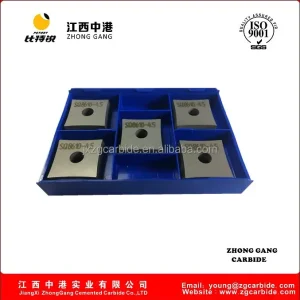
Factory-direct sealed boxes for high-volume automated steel tube manufacturing lines.
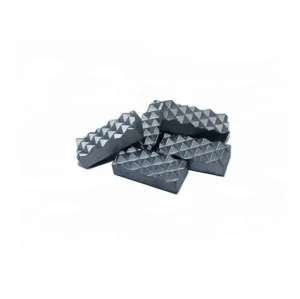
Pyramidal diamond tooth patterns maximizing gripping friction on CNC chuck jaws.
Centerless ground solid round blanks engineered for solid carbide end mills and reamers.
Industrial workholding pads preventing workpiece slippage under aggressive cutting feeds.
Density up to 18.2 g/cm³, mirror-rolled for radiation shields and kinetic dampers.
Pressureless sintered alpha-SiC plates providing Vickers 2200 hardness and thermal shock stability.