
High-Performance Heading Dies & Inserts for Brazilian Modernization
Direct manufacturer supply conforming to DIN/ISO standards for Brazilian stamping hubs in São Paulo, Rio Grande do Sul, and Minas Gerais.

Customized Tungsten Carbide Cold Heading Molds, Punch Dies & Wire Drawing Dies for Brazil Automotive Plants
View Detailed Specs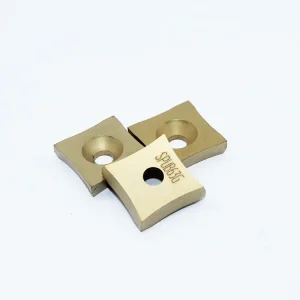
Wear Resistant SPUB 63G Heavy Threading Inserts for Brazil Petrobras OCTG Pipe Threading
View Detailed Specs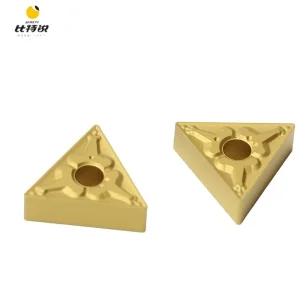
Tungsten Carbide Bar Peeling Inserts & Hard Alloy Cutters for Brazil Centerless Steel Rolling Mills
View Detailed Specs
Nickel-Based Tungsten Carbide Rods with Anti-Corrosive Binder for Brazilian Agro-Machinery & Off-Shore Valves
View Detailed SpecsTungsten Carbide Mold Dynamics Across Brazilian Industrial Hubs
Brazil stands as the industrial powerhouse of Latin America, demanding resilient metallurgical solutions to withstand abrasive high-speed operations.
Automotive & Fastener Stamping
The automotive corridor spanning the ABC region of São Paulo, Betim (Minas Gerais), and Curitiba heavily depends on cold-heading tooling. Sintered carbide heading dies, progressive stamping punches, and high-impact calibration dies allow high-speed fastening lines to produce millions of cycles without micro-spalling or thermal galling.
Agro-Industrial Machinery & Pelletizing
In Mato Grosso, Paraná, and Goiás, Brazil’s massive agribusiness sector drives extensive requirements for wear-resistant ring dies, extrusion bushings, and pelletizing mold inserts. Processing abrasive sugarcane bagasse, mineral feed additives, and soybeans requires extreme binder integrity to prevent catastrophic three-body abrasive degradation.
Pre-Salt Oil & Subsea Tooling
The Santos and Campos basin pre-salt projects involve sour-gas environments and brine-laden depths. Traditional cobalt-bonded carbide molds suffer severe galvanic leaching in these environments; hence, our non-magnetic nickel-based carbide molds and trim choke blanks provide critical erosion-corrosion resilience.
Advanced Sinter-HIP Formulations for Heavy-Duty Tooling
A technical evaluation on grain sizing, cobalt binder optimization, and isostatic pressure consolidation to eliminate internal porosity in die fabrication.
Hot Isostatic Pressing (Sinter-HIP) Integrity
Standard vacuum sintering often leaves microporosities (A04/B02 levels) within thick-walled forming blocks, which lead to premature micro-fracturing under cyclic tensile stress (e.g., in deep drawing or fine blanking). Zhongfu employs high-pressure Sinter-HIP processing (up to 100 bar of argon at 1450°C), closing sub-micron internal voids to achieve A00/B00 porosity ratings. This structural consolidation ensures unmatched transverse rupture strength (TRS > 3200 MPa in YG15/YG20 grades).
Optimized Micro-Grain vs. Sub-Micron Matrices
Balancing hardness and fracture toughness is critical in mold design. For high-speed drawing dies and shaving rings, sub-micron tungsten carbide grains (0.6–0.8 µm) deliver pristine edge retention and resist adhesive wear. Conversely, in cold-forging and heading dies subject to dynamic impact shock, a medium-coarse grain WC skeleton (1.8–2.5 µm) coupled with 15–20% cobalt prevents shear propagation and edge chipping.
| Carbide Grade | Binder % (Co / Ni) | Density (g/cm³) | Hardness (HRA) | T.R.S (MPa) | Recommended Brazilian Tooling Application |
|---|---|---|---|---|---|
| YG6X / K10 | 6% Co | 14.95 | 91.5 | 2100 | Precision wire drawing dies, aluminum extrusion calibrators, small-diameter punches. |
| YG8 / K20 | 8% Co | 14.70 | 89.5 | 2400 | Centerless lathe bar peeling inserts, tube scarfers, light stamping dies. |
| YG15 / G4 | 15% Co | 14.05 | 87.0 | 3100 | High-stress progressive stamping dies, cold-heading inserts, automotive rivet tooling. |
| YG20C / G6 | 20% Co | 13.55 | 84.5 | 3400 | Heavy-impact forging molds, cold nut forming, fastener heading punches. |
| NM-12 (Non-Mag) | 12% Ni | 14.40 | 88.0 | 2600 | Subsea petroleum choke valves, magnetic stator laminations, anti-corrosive forming. |
Cross-Border Procurement, Siscomex & Local Integration
Simplifying the supply chain for Brazilian industrial buyers: navigate customs clearing, reduce Total Cost of Ownership (TCO), and mitigate logistics risks.
NCM Classification & Tariffs
Importing hard alloy tooling into Brazil requires precise tariff classification under Mercosul Mercadorias (NCM 8207.20 / NCM 8209.00). Zhongfu provides fully compliant commercial invoices, packing lists with net/gross metallurgical weights, and Certificates of Origin to expedite customs clearance through Santos and Paranaguá ports.
TCO & Die Longevity Analysis
While initial unit procurement costs for carbide molds exceed standard tool steels (like AISI D2 or H13), production analyses show a 350% to 500% tool-life increase. For stamping facilities in São Bernardo do Campo, this translates directly to reduced machine press downtime, fewer tool changeovers, and superior surface consistency across multi-million-part batches.
Pre-Form EDM Stock & Semi-Finishing
To lower import freights and give local ferramentarias (tool & die shops) flexible control over final geometries, we deliver near-net shape blanks, pre-formed wire-EDM starter holes, and ground blocks with 0.2–0.5 mm finishing allowances, significantly cutting internal machining hours on high-tonnage wire-EDM centers.
Engineering Roadmap: Next-Generation Hardmetal for Brazil
Advancing metallurgical tooling through additive binder design, CVD/PVD nano-coatings, and closed-loop material recycling.
Alternative Binder Phases (Co-Free)
With environmental ESG standards rising among international OEMs operating in Brazil, Zhongfu is actively developing TiC/Fe-Ni-Cr cemented matrices. These eliminate dependence on pure cobalt, lowering toxicity during EDM fluid recycling while demonstrating superior hot-wear stability in high-temperature extrusion lines.
Ultra-Smooth Multi-Layer Coatings
Combining Sinter-HIP carbide substrates with AlTiN and diamond-like carbon (DLC) surface treatments yields surface friction coefficients as low as 0.08. This innovation drastically reduces lubrication dependency in deep-draw sheet metal operations, aligning with dry-stamping green factory initiatives.
High-Precision 3D Micro-Cooling Dies
By mastering complex powder injection molding (PIM) and micro-electrical discharge routing, Zhongfu fabricates internal conformal cooling channels within massive cold heading and punching dies, accelerating heat evacuation and preventing thermal cycle fatigue.
Precision Ground Plates, Custom Tooling & Inserts for Brazilian Industry
Full spectrum tungsten carbide blanks, scarfing tools, and precision wear blanks manufactured to CAD drawings.
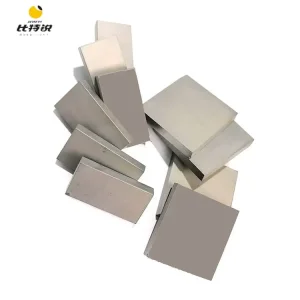
Tungsten Carbide Plate HIP-Sintered Wear-Resistant Flat Blanks in YG6–YG20 Grades for Brazilian Die-Makers
View Detailed Specs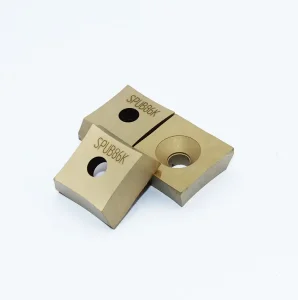
Carbide Scarfing Inserts SPUB86B/86C/86D for Heavy Weld Seam Removal in Brazilian Steel Pipe Plants
View Detailed Specs
Premium Tungsten Carbide Sheet for Stamping Dies Durable P30 Alloy (200×200×10mm) for Brazil Stamping Lines
View Detailed Specs
High Hardness Pressureless Sintered Silicon Carbide Plate Polished SiC Ceramic Plate for Brazil Mineral Liners
View Detailed Specs
CNC Carbide Turning Tool Internal Tungsten Steel Cutting Insert Scraping Blade for Brazil Heavy Machinery
View Detailed Specs
Tungsten Cemented Tools Carbide Coated Blank Inserts for Metal Milling Workshops in Joinville & Caxias do Sul
View Detailed Specs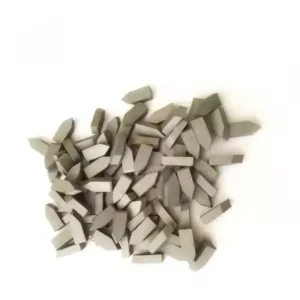
Customized Carbide Welding Tips for Turning & Milling Cutters for Brazilian Industrial Maintenance Lines
View Detailed Specs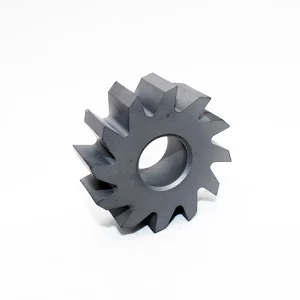
Custom Nonstandard Heavy-Duty Worm Gears, Bevel Gears & Pinions for Brazilian Mining Crushers & Elevators
View Detailed SpecsFrequently Asked Questions: Sourcing Carbide Molds in Brazil
Key technical, logistical, and material details for manufacturing plant managers and tooling procurement departments.
How does Zhongfu ensure dimensional accuracy when exporting pre-ground blanks to Brazil?
We finish critical cylindrical surfaces with high-precision centerless grinders achieving h6 tolerance (within +0/-0.008 mm). For complex mold inserts, we supply pre-formed blocks with grinding stock or wire-EDM lead holes calibrated precisely to CAD specifications, verified with coordinate measuring machine (CMM) inspection reports before dispatch.
What is the standard production and shipping lead time to Brazilian manufacturing plants?
Standard blank pressings and stock plate orders ship within 5 to 10 working days. Customized mold inserts requiring specialized pressing dies take 15 to 20 days. Air express shipments (via DHL/FedEx to Guarulhos Airport) arrive in 5 to 7 days, while consolidated sea freight to Port of Santos arrives in approximately 30 to 35 days.
Why is 100% virgin tungsten powder critical for cold heading and forging dies?
Recycled scrap scrap (zinc-reclaimed powder) contains micro-impurities and unpredictable carbon shifts that form brittle eta-phases (Co3W3C) during sintering. Under Brazilian high-tonnage cold heading stresses, eta-phase precipitates cause catastrophic brittle fracture. Zhongfu uses exclusively 100% virgin ammonium paratungstate (APT) derived powder, guaranteeing structural ductility and high transverse rupture strength.
Can you provide guidance for wire-EDM cutting of carbide blanks to avoid cracking?
Yes. Wire-EDM generates a high-temperature recast layer with tensile residual stresses and cobalt depletion. We provide operational recommendations: always use multi-pass trimming with reduced pulse energies, maintain low fluid conductivity, and apply a stress-relief temper (180°C–200°C for 1 hour) immediately after final skim cuts to prevent delayed surface micro-checking.
Need Custom Carbide Mold Inserts for Your Facility in Brazil?
Send your 2D/3D drawings (DWG, STEP, PDF) to our metallurgical engineering team. We review material suitability and deliver technical quotes within 8 hours.
Send Inquiry Now