
High-Velocity Carbide Tooling Engineered for Kenya Industrial Lines
Factory-direct wear-grade components selected for cold drawing, nail and bolt production, structural pipe profiling, and heavy mechanical fabrication lines across Nairobi Industrial Area, Mombasa, and Athi River EPZ.

Customized Tungsten Carbide Cold Heading Molds & Wire Drawing Dies for Kenya Wire Mills
Heavy-load cold upsetting dies engineered for high-speed continuous nail making, bolt heading, and rebar drawing in East African metallurgy plants.
Explore Die Specifications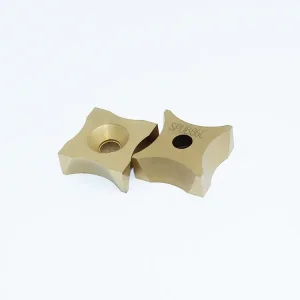
SPUB86C P40 CVD Coating Carbide Scarfing Inserts for Kenya Tube & Pipe Profiling
Specialized outer-weld seam scarfing inserts delivering chip clearance and heat tolerance for high-frequency ERW hollow section pipe lines.
View Scarfing Profiles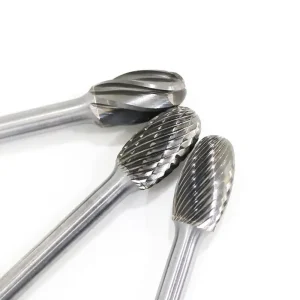
Industrial Oval Cutting Carbide Rotary Files & Burrs for Nairobi Engineering Workshops
Precision deburring, weld seam blend grinding, and cylinder head porting burrs designed for CNC and manual air die grinders across Kenya.
Select Shank Diameters
Heavy-Duty SPUB63J Tube Scarfing Inserts for Kenya ERW Steel Pipe Rolling Mills
Long-cycle internal and external longitudinal weld removal tools built to resist premature micro-chipping during high-temperature run-off.
Inspect Tool GeometriesThe Kenya Industrial Renaissance: Tooling Up Under Vision 2030
Kenya stands as the economic anchor and manufacturing powerhouse of the East African Community (EAC). As infrastructure projects expand and local value-addition takes precedence over raw material exports, the reliance on high-durability tungsten carbide molds is accelerating rapidly.
Structural Steel & Corrugated Roofing
Kenya's building boom, anchored by affordable housing agendas and massive commercial hubs in Nairobi, Kisumu, and Eldoret, has escalated demand for cold roll forming, nail drawing, and tube profiling. Steel makers require tungsten carbide cold heading dies and scarfing inserts that can operate nonstop across multiple shifts without micro-fracturing under intense work hardening.
Quarrying, Cement & Infrastructure
From the Standard Gauge Railway (SGR) rail maintenance to vast basalt and limestone quarry belts in Machakos and Athi River, wear components face severe three-body abrasive degradation. Our cemented tungsten carbide tamping tine inserts, crushing rollers, and drill bit inserts deliver up to 800% longer cycle life than traditional quenched alloy steels.
Agricultural Processing & Agro-Machinery
As Kenya deepens value addition in sugar cane milling (Western Kenya), tea processing (Rift Valley), grain milling, and coffee processing, wear-resistant carbide feed hammers, pelleting dies, and cutting nozzles solve continuous abrasive slurry erosion, lowering downtime during seasonal peak harvesting.
End-to-End Metallurgical Precision Engineered for Global Export
Operating out of Jiangxi—the global center of raw tungsten production—our 5,000 m² smart facility eliminates intermediaries. We control every metallurgical phase from ammonium paratungstate (APT) reduction to sub-micron pressure sintering and 5-axis mirror surface finishing.
100% Virgin Powder & Controlled Grain
We reject recycled scrap tungsten. Every batch utilizes virgin tungsten powder blended with pure cobalt or nickel binders in computer-controlled planetary ball mills. We guarantee grain size homogeneity down to 0.4 µm, preventing premature stress cleavages in high-tonnage cold stamping operations.
Overpressure HIP Sintering Furnaces
Our integrated hot isostatic pressing (Sinter-HIP) technology subjects the carbide matrix to 10 MPa (100 bar) argon overpressure at 1,450°C. This collapses internal micropores completely, raising transverse rupture strength (TRS) to upwards of 2,800–3,800 MPa, essential for cold-heading dies under cyclic shock.
Mirror EDM & Sub-Micron Grinding
With AgieCharmilles slow-wire electrical discharge machining (EDM) and Studer CNC internal and profile grinders, we achieve die inner bore concentricity within 0.002 mm and mirror finishes down to Ra 0.05 µm. This minimizes friction and material pickup during fast nail or wire production.
Cemented Carbide Grade Formulation Matrix for Kenyan Environments
Selecting the optimal tungsten carbide formulation is a calculated metallurgical balance between abrasive wear resistance (Rockwell A Hardness) and impact fracture toughness (Transverse Rupture Strength). Review our engineered baseline grades below.
| Carbide Grade | Cobalt Content (%) | Density (g/cm³) | Hardness (HRA) | TRS (N/mm²) | Best Match Kenyan Application |
|---|---|---|---|---|---|
| YG6X | 6.0 | 14.90–15.00 | 91.5–92.5 | 2,000 | Fine high-speed wire drawing dies, copper/aluminum wire, precision finishing pins. |
| YG8 | 8.0 | 14.60–14.80 | 89.5–90.5 | 2,400 | Brazed rock drilling tips for basalt quarrying, metal cutting blades, lathe weld-on tips. |
| YG15 | 15.0 | 13.90–14.20 | 87.0–88.5 | 3,000 | Standard steel nail cold heading dies, bolt hex punches, rebar straightening rollers. |
| YG20 | 20.0 | 13.40–13.70 | 85.0–86.5 | 3,400 | Severe impact cold heading dies, heavy forging punches, thick plate blanking dies. |
| YG20C | 20.0 (Coarse) | 13.40–13.60 | 83.5–85.0 | 3,600 | Extreme shock cold extrusion dies, heavy mining tamping tines, railway ballast tampers. |
| YN8 (Ni-Bond) | 8.0 (Nickel) | 14.50–14.80 | 88.0–89.5 | 2,200 | Non-magnetic wear components, food/chemical valves, marine pump seal rings (Mombasa Port). |
Seamless Kenya Import Clearance: KEBS, PVoC & Dual Logistic Corridors
Purchasing directly from China must be risk-free, predictable, and compliant. We eliminate customs delays through rigorous adherence to Kenyan trade regulations and direct partnerships with major African freight corridors.
KEBS Pre-Export Verification (PVoC / CoC)
Every shipment bound for Kenya can be fully certified under the Kenya Bureau of Standards (KEBS) Pre-Export Verification of Conformity (PVoC) program. We collaborate directly with authorized international inspection agencies (SGS, Intertek, Bureau Veritas, CCIC) to issue Certificate of Conformity (CoC) documents prior to vessel departure, preventing port penalties and customs impoundments.
Optimized Multi-Modal Logistics (Mombasa & JKIA)
We provide FOB China, CIF Mombasa, and DDP Nairobi options. For standard bulk container shipments (crusher wear parts, full mold tool suites), sea transit via Mombasa Port connects straight into the Nairobi Inland Container Depot (ICD) via the Standard Gauge Railway (SGR). For urgent maintenance breakdowns, direct air cargo lands at Jomo Kenyatta International Airport (JKIA) within 7–10 days.
Next-Generation Carbide Tooling: Pushing the Metallurgical Horizon
As African manufacturing transitions into higher automation and tight-tolerance production, conventional tool steel dies no longer suffice. We invest 8.5% of annual revenues into carbide engineering breakthroughs.
Nanocrystalline & Binderless Grades
Developing ultra-dense nano-grain WC formulations (<0.2 µm) with specialized grain growth inhibitors (VC, Cr3C2). These alloys deliver diamond-like hardness (93+ HRA) combined with superior thermal resistance, designed for optical-grade extrusions and high-temperature wire drawing without lubricant adhesion.
PVD & CVD Multi-Layer Plasma Coatings
Integrating advanced AlTiN, TiAlSiN, and DLC (Diamond-Like Carbon) coatings applied via cathodic arc evaporation. Multi-layered nano-coatings block heat transfer to the carbide core, allowing Kenyan pipe rolling mills to operate high-frequency scarfing operations at feed speeds up to 150 m/min.
Selective Laser Sintering & Near-Net AM
Pioneering additive manufacturing research in 3D-printed tungsten carbide tooling with internal conformal cooling channels. Conformal cooling channels reduce thermal cracking during continuous aluminum and brass gravity die-casting, enhancing mold lifecycle by up to 300%.
Precision Inserts, Heavy Wear Parts & Solid Blanks for East Africa
Explore our complete export catalog of specialized tube scarfing inserts, high-precision h6 ground carbide rods, threading tooling, and railway heavy wear components.
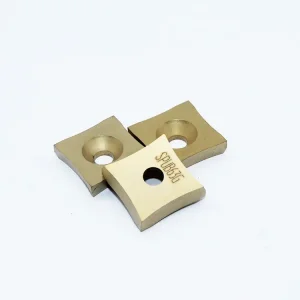
SPUB 63 Series Wear-Resistant Carbide Turning Tube Scarfing Inserts for Kenya Mills
Precision-ground cutting edge for external weld bead deburring across round and square steel structural tubing lines.
Review Insert Geometry
Carbide Square Thread Inserts & Threading Tools for Mombasa Port Ship Repair
Standardized square and trapezoidal threading inserts tailored for turning lead screws, marine shafts, and oil-country pipes.
Inspect Threading Pitches
Solid Carbide Round Rods h6 Ground (Ø1–40 mm) for Nairobi Endmill & Punch Makers
Mirror-finish ground rods with near-zero runout, ideal for manufacturing solid carbide drills, core punches, and reamers.
Select Rod Dimensions
Carbide Tamping Tine Wear Tips for Kenya Railway & Track Ballast Maintenance
Brazed heavy carbide wear plates designed for Plasser & Theurer ballast tamping machines operating along Kenya rail routes.
View Rail Wear Specs
Ø8 × 330 mm Nano Grain Carbide Rods for High-Speed Milling Cutters & Drills
Ultrafine structural blank engineered for grinding 0.25 µm micro-endmills, graphite cutters, and high-hardness die tooling.
Inspect Nano Grade Data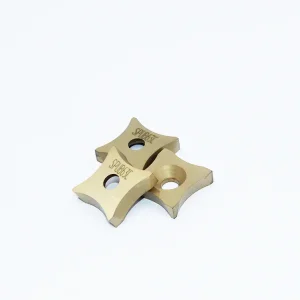
SPUB-63 External Scarfing Inserts for High-Frequency Kenya Pipe Mills
Multi-edge precision cutting geometry providing clean outer flash removal on round pipe sizes from 1/2" up to 8" diameters.
Explore Pipe Tooling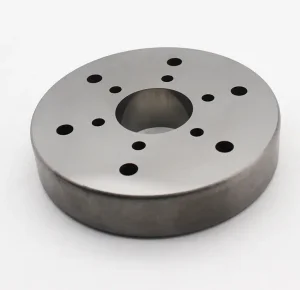
Heavy Tungsten Carbide Wear Studs & Blocks for Kenya Quarry Roll Crushers
Studded roll crusher carbide blocks resisting high-tonnage abrasion in cement clinker, gold mining, and aggregate production.
View Crusher Wear Blocks
SQ8615WCB Tungsten Carbide Tube Scarfing Inserts for Kenya Hollow Section Plants
Heavy square chamfered profile inserts delivering extended tool indexing cycles and smooth finishes on high-tensile structural hollow sections.
Inspect Chamfer ProfilesEngineering Procurement Checklist for Kenyan Buyers
Ensure total fit and maximum return on tooling investment. When submitting technical drawings or RFQs to our engineering office, incorporating these parameters ensures an optimized quote within 8 business hours.
1. 2D/3D Cad Drawings
Provide .DWG, .DXF, or .STP files specifying key geometric tolerances, corner radii, and critical surface finish requirements (e.g., Ra 0.1 µm).
2. Working Dynamics
Indicate workpiece material (e.g., low carbon steel wire, high tensile rebar), machine strike speed (strokes/min), and continuous press tonnage.
3. Steel Casing Match
If ordering carbide mold inserts with outer steel sleeves (40Cr, H13), state interference press-fit or hot shrink-fit tolerances to prevent core extrusion.
4. Batch & Delivery Term
Specify initial prototype or trial batch quantities versus recurring quarterly container contracts, plus preferred Incoterm (FOB Ningbo/Shanghai, CIF Mombasa, or DDP Nairobi).
Frequently Asked Questions: Purchasing Tungsten Carbide Molds from Kenya
Crucial technical, logistics, and quality assurance answers for plant directors, procurement managers, and mechanical engineers in Kenya.
How do tungsten carbide molds compare against D2, Cr12MoV, and SKD11 tool steels in Kenya nail and fastener manufacturing?
Traditional cold heading and wire drawing tools made from hardened tool steels like AISI D2 or SKD11 typically achieve a maximum hardness of 58–62 HRC. Under continuous high-friction cold upsetting of Q195/Q235 steel wire, tool steel dies wear out quickly, requiring frequent re-polishing and casing replacement every 2 to 4 days.
In contrast, our HIP-sintered tungsten carbide molds (YG15, YG20 grades) operate at 85 to 88 HRA (equivalent to ~70+ HRC) with superior compressive strength. Kenyan manufacturing plants routinely report a 500% to 900% increase in tool lifespan, maintaining critical fastener shank tolerances across millions of cycles, significantly lowering hourly machine downtime.
What is your typical production and shipping lead time to Nairobi or Mombasa?
For standard catalog items such as round ground rods (Ø1–40 mm h6), standard SPUB/SQ series tube scarfing inserts, and standard heading die nibs, we maintain ready stock dispatchable within 48 to 72 hours. Custom molds, punches, and engineered dies built to CAD drawings require 15 to 22 business days for pressing, pressure sintering, EDM wire cutting, and mirror grinding.
For urgent air freight to Jomo Kenyatta International Airport (JKIA) in Nairobi via DHL, FedEx, or air cargo carriers, transit requires 5 to 8 days. For sea freight container shipments to Mombasa Port (Kilindini Harbour), typical sea transit from Shanghai or Ningbo port is approximately 22 to 28 days.
Can you manufacture complete mold assemblies with hardened steel outer casings?
Yes. Many Kenyan wire drawing and cold extrusion factories lack the induction heating or high-tonnage hydraulic presses required to safely perform interference shrink-fitting. We provide complete mold assemblies featuring our cemented tungsten carbide cores precisely shrink-fitted into premium alloy steel jackets (AISI 4140, 4340, H13, or 40Cr) heat-treated to 42–46 HRC.
This guarantees the exact circumferential prestress required to prevent carbide core splitting under extreme internal radial pressure during cold heading.
How do you ensure Kenyan import compliance (KEBS CoC certification)?
We work in coordination with licensed inspection authorities (such as SGS, Intertek, and CCIC) authorized by the Kenya Bureau of Standards (KEBS) under the Pre-Export Verification of Conformity (PVoC) regime. We provide complete chemical assay reports, hardness test certificates, density verification, and dimensional inspection sheets to facilitate fast issuance of the Certificate of Conformity (CoC).
This ensures uninterrupted clearance through the Kenya Revenue Authority (KRA) customs systems at Mombasa Port and the Nairobi ICD.
What payment terms and currency options are supported for Kenyan industrial buyers?
We support standard international B2B payment structures, including Telegraphic Transfer (T/T) with deposit terms, and Irrevocable Letters of Credit (L/C at sight) for large-volume contract orders. Quotes can be processed in US Dollars (USD) or Chinese Yuan (RMB) depending on your foreign exchange banking capabilities.
How do you prevent micro-cracking and chipping in high-impact dies?
Chipping in cold heading and blanking tools is primarily caused by internal voids or coarse grain boundaries that act as stress risers. We eliminate this through three stringent controls: (1) We strictly use 100% virgin tungsten carbide powder with grain growth inhibitors; (2) Every batch undergoes 100-bar overpressure Hot Isostatic Pressing (Sinter-HIP) to achieve zero internal porosity; (3) We select higher cobalt binder formulations (such as YG20 or YG20C) featuring elevated Transverse Rupture Strength (TRS > 3,400 N/mm²) specifically engineered to absorb repetitive kinetic shock.
Upgrade Your Production Tooling with Factory-Direct Carbide Molds
Send your 2D/3D part drawings, worn sample dimensions, or target wear specifications. Our metallurgy engineering team delivers custom grade recommendations, tolerance analyses, and competitive direct factory quotations within 8 hours.