
Factory Inventory Dispatch
Precision Carbide Tooling Lineup (Series 01)
Engineered from 100% virgin tungsten ore matrices to endure high thermal deflection, cavitation abrasion, and extreme compressive stress.

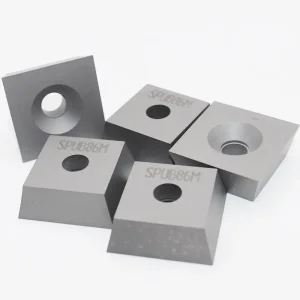
Buy Wholesale tungsten non-magnetic cemented carbide wear parts Supplier, Suppliers
Configure & Inquire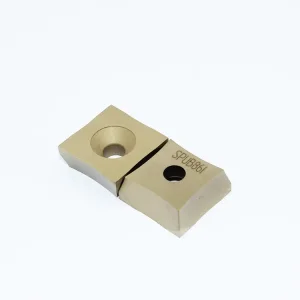
Buy Carbide turning inserts manufacturer square carbide Inserts for milling tools Supplier, Factory
Configure & Inquire
China Tungsten Carbide Plate | OEM Wear-Resistant Cemented Carbide Blank for Tooling & EDM Manufacturers, Supplier
Configure & Inquire
Wholesale Factory direct sale tungsten carbide turning inserts Manufacturer, Factory
Configure & Inquire
China Tungsten Carbide Round Rod H6 Ground Ø1-40mm Solid Carbide Blanks Manufacturer, Supplier
Configure & Inquire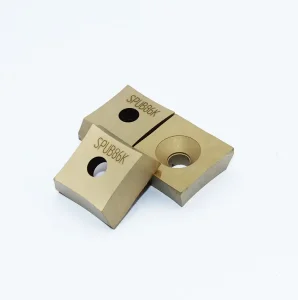
Wholesale Carbide scarfing inserts SPUB86B/86C/86D/86E/86F/86G/86H/86K/86M Manufacturers, Factories
Configure & Inquire
Buy Square Tungsten insert carbide manufacturer threading carbide blank inserts Manufacturer, Manufacturers
Configure & Inquire
Macro Dynamics & Supply Analysis
Global Cemented Carbide Landscape & Supply Resilience
A data-informed evaluation of tungsten carbide's critical role across Tier-1 aerospace, heavy subsea extraction, and high-speed CNC metal removal systems.
Supply Chain Upstream Control
Over 80% of refined ammonium paratungstate (APT) originates in concentrated geological belts. Direct partnerships with source refineries guarantee batch consistency, uncompromised powder purity, and hedge risk against erratic global raw material price swings.
Global Consumption Shifts
Industrial demand is migrating toward micro-grain substrates (<0.5μm) capable of cutting titanium alloys, Inconel, and reinforced carbon composites. Traditional tooling is being rapidly replaced by high-entropy, wear-resistant carbide geometries in EV motor stamping.
Stringent ASTM/ISO Compliance
Global original equipment manufacturers demand comprehensive metallurgical traceability, measuring coercivity, magnetic saturation, and transverse rupture strength (TRS) to ensure zero micro-fractures under high cyclical thermal loads.
24+
Years Metallurgical Foundry Experience
5,000m²
Modern Controlled Production Floor
80+
Formulation & Tooling Utility Patents
<8h
Rapid Technical Feasibility Analysis
Manufacturing Excellence
Why Tier-1 Global Procurement Leverages Jiangxi Zhongfu
Combining primary tungsten supply proximity with state-of-the-art Sinter-HIP furnaces to deliver world-class carbide tooling without Western distributor markups.
100% Virgin Powder Base
No reclaimed scrap matrices. We synthesize virgin tungsten monocarbide with precise cobalt/nickel additions to eliminate void clusters and structural embrittlement at microscopic shear planes.
Overpressure Sinter-HIP
Operating hot isostatic pressing (Sinter-HIP) at up to 10 MPa during liquid phase compaction, delivering 99.99% theoretical structural density, near-zero porosity, and vastly extended tool life.
Sub-Micron CNC Grinding
Utilizing high-precision multi-axis CNC surface, centerless, and profile grinders to achieve strict h6 tolerances on cylindrical blanks, alongside Ra 0.05 mirror surface finishes for metal dies.
Drawing-to-Part Customization
Experienced application engineers review customer CAD files, formulating wear-resistant compounds specifically tailored to complex erosive, corrosive, or high-shock industrial working environments.
Metallurgical Specification
Cemented Carbide Grade Selection & Mechanical Matrix
A clear guide to balancing grain refinement, binder ratios, and wear properties to optimize tool uptime and minimize costly machine maintenance.
| Carbide Grade | Binder (Co/Ni %) | Grain Size (μm) | Density (g/cm³) | Hardness (HRA) | TRS (MPa) | Primary Industrial Field |
|---|---|---|---|---|---|---|
| YG6 (ISO K10-K20) | 6.0% Co | 1.0 – 1.4 | 14.95 | 90.5 | 1,900 | Cast iron machining, wire drawing dies, thin wear plates |
| YG8 (ISO K20-K30) | 8.0% Co | 1.2 – 1.8 | 14.70 | 89.5 | 2,200 | Scarfing inserts, brazed lathe tips, geological drilling bits |
| YG15 (ISO K40) | 15.0% Co | 1.8 – 2.4 | 14.00 | 87.0 | 2,800 | Cold heading dies, metal stamping punches, heavy-duty shear tooling |
| YG20 (Impact Grade) | 20.0% Co | 2.0 – 3.0 | 13.50 | 85.5 | 3,100 | High-impact powder forming, forging dies, thick EDM blocks |
| Ultra-Fine Nano Rod | 10.0% Co | 0.2 – 0.5 | 14.45 | 92.5 | 3,800 | Solid carbide end mills, aerospace drills, micro-boring cutters |
| Ni-Bond Non-Magnetic | 8.0 - 12% Ni | 1.2 – 2.0 | 14.65 | 88.5 | 2,100 | MWD/LWD oil tools, magnetic component dies, corrosive valve seals |
Application Engineering
Mission-Critical Applications for Zhongfu Tooling Solutions
Delivering high wear life and precise performance across tough industrial environments.
ERW Tube & Pipe Scarfing
Our heavy-duty SPUB86 and SPUB63 scarfing inserts clean up outer diameter weld beads on continuous welded steel pipes. Featuring thick CVD/PVD multi-layer coatings, they handle high continuous heat and prevent micro-chipping along the edge.
Aerospace Solid Shank Tooling
Ground to strict h6 tolerances, our ultra-fine round rods serve as the base substrate for solid carbide end mills, reamers, and drills. They cut nickel-based superalloys and stacked carbon-fiber polymers with minimal tool deflection.
Downhole Oil & Gas Non-Magnetic Tooling
By replacing magnetic cobalt with an engineered nickel-alloy binder, our non-magnetic components provide critical erosion resistance inside measurement-while-drilling (MWD) housings without interfering with sensitive magnetic sensors.
Next-Generation Engineering
Tungsten Carbide Tooling: Future Horizons & Industry Drivers
Three core technology trends driving high-performance machining through 2030.
Advanced Multilayer Physical Vapor Deposition (PVD)
The industry is transitioning toward ultra-fine AlTiN, AlCrN, and diamond-like coatings (DLC) applied with high-power impulse magnetron sputtering (HiPIMS), drastically reducing friction when machining without liquid coolant.
Near-Net-Shape Powder Extrusion & Pressing
Electric CNC axial multi-stage pressing minimizes post-sinter grinding stock to mere microns. This helps conserve virgin tungsten resources, lowers electricity usage, and reduces part costs for custom industrial blanks.
Circular Hydrometallurgical Recycling
Modern powder metallurgy is increasingly adopting closed-loop recycling. High-energy zinc recycling and chemical digestive extraction allow reclaimed carbide scrap to match virgin tungsten purity, creating sustainable industrial supply chains.
Factory Inventory Dispatch
Precision Carbide Tooling Lineup (Series 02)
Industrial inserts, solid blanks, and finished wear-resistant components ready for global export.

China SPUB86 P40 tungsten carbide scarfing inserts for welded steel pipe Manufacturer, Factory
Configure & Inquire
China SPUB63J CVD coating tungsten carbide od scarfing insert Manufacturers, Suppliers
Configure & Inquire
Wholesale SPUB63B wholesale ISO TiN tungsten carbide scarfing insert Supplier, Factory
Configure & Inquire
China SPUB86C P40 uncoated blank cemented tools carbide inserts Suppliers, Factory
Configure & Inquire
China High quality SPUB-63 series machine cutter carbide cnc cutting tools turning Manufacturer, Factories
Configure & Inquire
Buy Tungsten Carbide Round Rod Blanks for End Mills Manufacturer, Manufacturers
Configure & Inquire
China Wholesale SPUB-63 series carbide wood insert milling carbide insert Supplier, Suppliers
Configure & Inquire
China Factory wholesale tungsten cemented tools carbide coated blank inserts Factory, Factories
Configure & Inquire
Buyer Guidance
How Global Enterprise Buyers Evaluate Carbide Tooling Suppliers
A practical quality assurance framework for tool distribution hubs, steel mills, and automotive machining facilities.
1. Porosity & Metallographic Verification
Insist on ISO 4505 porosity inspection certificates. Any porosity exceeding A02/B02 levels risks internal fracture during wire electrical discharge machining (EDM) or high-feed face milling operations.
2. Coercivity & Magnetic Saturation
Nondestructive testing of magnetic properties verifies whether carbon stoichiometry is correct. This guarantees that brittle eta-phase (carbon deficiency) and free carbon porosity (carbon excess) are completely eliminated from the sintered matrix.
3. Direct Factory Sourcing & Lead Times
Avoid trading intermediaries with no metallurgical sintering equipment. Working directly with our Nanchang foundry ensures direct formulation adjustments, CAD drawing revisions within 8 hours, and custom mold shipping within 15–20 days.
Procurement Knowledgebase
Frequently Asked Questions Regarding Custom Carbide Sourcing
Key technical and logistics questions addressed by our senior metallurgy and export sales teams.
Can Zhongfu manufacture custom tungsten carbide components directly from engineering drawings?
Yes. Custom precision carbide parts account for more than 70% of our production volume. Send your 2D CAD (DWG, DXF, PDF) or 3D files (STEP, IGES), indicating critical tolerances, target working environment, and surface finish requirements. Our engineering team reviews manufacturability and provides technical suggestions within 8 hours.
What makes non-magnetic cemented carbide parts functionally unique?
Standard tungsten carbide grades utilize cobalt as a binder, which is ferromagnetic and susceptible to galvanic corrosion in chemical environments. Our non-magnetic series replaces cobalt with an engineered nickel-alloy binder. This keeps magnetic permeability below 1.005 μ0, making it ideal for downhole MWD/LWD drilling tools, magnetic component compaction dies, and high-salinity marine environments.
What is your typical production lead time for custom blanks and precision inserts?
Standard stocked items, ground h6 rods, and common ISO/SPUB scarfing inserts ship within 3 to 5 business days. Custom tooling requiring new pressing dies, custom powder formulations, or complex wire-EDM roughing typically ships in 15 to 22 calendar days, supported by expedited DHL, FedEx, or air cargo dispatch.
How does overpressure Sinter-HIP technology improve carbide wear life?
Conventional vacuum sintering can leave micro-voids and residual pores within thicker carbide blanks. Our overpressure Sinter-HIP process injects up to 100 bar of pure argon gas during liquid phase sintering. This eliminates internal micro-porosity, producing near-zero pore density, improving transverse rupture strength (TRS) by up to 25%, and preventing catastrophic cracking under heavy impact.
Which coating types do you offer for your CNC and pipe scarfing inserts?
We provide advanced CVD (Chemical Vapor Deposition) and PVD (Physical Vapor Deposition) coatings, including multi-layer TiCN+Al2O3+TiN, TiAlN, AlCrN, and specialized diamond-like carbon (DLC) coatings. Coating systems are tailored to your cutting parameters, workpiece materials, and whether you run with high-pressure coolant or dry cutting setups.
What quality assurance reports accompany international shipments?
Every export shipment includes a comprehensive Certificate of Analysis (COA) and an inspection dossier containing: chemical composition analysis, density measurements, Vickers/Rockwell hardness (HRA), magnetic saturation and coercivity values, alongside CMM dimensional inspection reports for precision-ground parts.