
High-Performance Cemented Carbide Wear Parts & Tooling Blanks
Explore our core industrial product line engineered with virgin grain matrices, zero internal micro-porosity, and stringent sub-micron tolerances for tooling masters and global equipment manufacturers.

Cemented tungsten carbide gripper inserts/tips for mining and diamond drilling
View Product Details
China Tungsten Carbide Round Rod H6 Ground Ø1-40mm Solid Carbide Blanks
View Product Details
Wholesale tungsten non-magnetic cemented carbide wear parts Supplier, Suppliers
View Product Details
Wholesale Premium Tungsten Carbide Sheet for Stamping Dies Durable P30 Alloy Model 200x200x10mm
View Product Details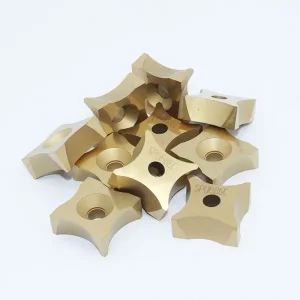
Buy SPUB86C P40 tungsten carbide tube scarfing insert for heavy machining
View Product Details
Buy Tungsten Carbide Round Rod Blanks for End Mills Manufacturer, Manufacturers
View Product Details
China New shape cemented carbide tips for railway track tamping pick center tooth
View Product Details
Wholesale Factory custom tungsten carbide spiral bevel gear milling cutters
View Product DetailsTechnological Evolution of Tungsten Carbide Strips in Modern Tooling
From conventional vacuum furnace sintering to ultra-high pressure Sinter-HIP processing: how metallurgical innovations are eliminating micro-voids, increasing fracture toughness, and addressing severe multi-axial stress.
In high-velocity metal forming, composite woodworking, and continuous slitting of lithium battery electrodes, standard wear materials consistently fail due to premature micro-chipping, thermal stress fracture, and binder leaching. Over the past decade, the global manufacturing landscape has witnessed a definitive transition toward tungsten carbide strips (cemented carbide rectangular flats, wear plates, and cutting edges) manufactured via advanced Powder Metallurgy (PM) routes. The primary technological impetus centers around overcoming the intrinsic metallurgical trade-off between hardness (wear resistance) and transverse rupture strength (impact toughness).
Historically, legacy hydrogen-reduction vacuum sintering left residual microporosities (A04 to B06 rating under ASTM B276 standards), which acted as high-stress concentration zones when carbide strips underwent heavy cyclical clamping or thermal shocks during brazing. Modern manufacturing protocols pioneered by Jiangxi Zhongfu Cemented Carbide Co., Ltd. leverage Overpressure Sinter-HIP (Hot Isostatic Pressing) technology operating at 60 to 100 bar of ultra-pure argon at temperatures up to 1,450°C. This simultaneous thermal-pressure consolidation forces the cobalt or nickel binder phase into every sub-microscopic void, yielding an absolute density approaching 100% of theoretical limits with a pore-free rating of A00-B00.
Crucial Technical Insight: The implementation of sub-micron and nano-grain WC powders (≤ 0.6 μm) coupled with optimized grain growth inhibitors (VC, Cr3C2) ensures that cemented carbide strips achieve hardness exceeding 92.5 HRA without sacrificing Transverse Rupture Strength (TRS > 3,200 MPa). This microstructural stability directly prevents micro-cracking propagation along cobalt channels under extreme cutting loads.
Global Enterprise Purchasing Requirements & Total Cost of Ownership (TCO)
Analyzing the procurement logic of Fortune 500 toolmakers, precision mold builders, and machinery OEMs across Europe, North America, and the Asia-Pacific region.
Microstructure & Virgin Chemistry
Global procurement teams reject recycled scrap-derived carbide due to unpredictable iron/silicon impurities and fluctuating magnetic saturation (4πσ). High-end operations demand 100% virgin ammonium paratungstate (APT) feedstock to ensure predictable grain boundaries, uniform binder migration, and absolute thermal conductivity during high-speed cutting.
- Zero secondary scrap adulteration
- Guaranteed stoichiometric WC carbon balance
- Strict magnetic saturation & coercive force metrics
Geometric Tolerances & Planarity
Long carbide strips (up to 1,050mm) often suffer from bow, camber, and twisting during cooling. Tier-1 mold and die manufacturers specify thickness tolerances within ±0.05 mm for sintered blanks, and ground strips down to ±0.002 mm, requiring specialized multi-axis CNC surface creep-feed grinders to mitigate micro-cracking.
- Flatness & parallelism ≤ 0.005 mm/100mm
- Elimination of residual surface grinding tensile stress
- Pre-chamfered edges to prevent corner spalling
True Lifecycle TCO Optimization
Procurement directors evaluate the Total Cost of Ownership (TCO) rather than simple unit purchase price. A lower-grade strip causing press stoppage, unbrazing, or edge breakage incurs secondary tooling losses 50x higher than the blank's raw cost. Superior carbide wear strips increase tooling service intervals by 300% to 500%.
- Drastic reduction in line changeover downtime
- Lower total diamond grinding wheel consumption
- Stabilized downstream punch life and strip yield
China Industry 4.0: Supply Chain Resilience & Upstream Raw Material Dominance
Capitalizing on Jiangxi Province's primary global tungsten deposits, digitized ball-milling networks, and closed-loop process automation.
Resource Proximity
Located in Nanchang, Jiangxi, Zhongfu sits directly at the epicenter of the world's most concentrated tungsten ore belt. This proximity guarantees instantaneous access to ultra-high-purity APT without international freight disruptions or mineral trade tariffs.
Automated Pressing
Equipped with high-tonnage German and domestic multi-platen hydraulic presses, our forming lines maintain pressure distribution variances under 0.8%, completely mitigating green compact density gradients that cause strip warping during sintering.
Intelligent Sinter-HIP
Multi-zone atmosphere-controlled vacuum furnaces with integrated high-pressure argon injection. Programmable heating segments prevent cobalt pooling and eta-phase (W3Co3C) precipitation, ensuring batch-to-batch metallurgical homogeneity.
100% Quality Assurance
Every batch of carbide strips is validated using Vickers microhardness testing (HV30), optical metallography for cobalt lake detection, ultrasonic non-destructive testing for internal delamination, and X-ray diffraction (XRD) crystal analysis.
Engineering Grade Matrix: Tailored Formulations for Severe Operating Conditions
Cross-referencing ISO, ASTM, and Chinese metallurgical standards to facilitate rapid procurement specification and application validation.
| Carbide Grade | Binder (Co/Ni %) | Grain Size (μm) | Density (g/cm³) | Hardness (HRA) | T.R.S. (MPa) | Primary Industrial Applications |
|---|---|---|---|---|---|---|
| YG6X Sub-Micron | 6.0% Co | 0.6 – 0.8 | 14.90 – 15.05 | 91.5 – 92.5 | ≥ 2,400 | Chilled cast iron finishing, non-ferrous metal strips, PCB router bits, hard wood knives. |
| YG8 Universal | 8.0% Co | 1.2 – 1.6 | 14.70 – 14.85 | 89.0 – 90.0 | ≥ 2,800 | General wear plates, woodworking planer knives, heavy stone processing, brazed gripper jaws. |
| YG15 High-Toughness | 15.0% Co | 1.6 – 2.2 | 13.95 – 14.15 | 86.5 – 87.5 | ≥ 3,200 | Progressive metal stamping dies, cold-heading punches, silicon steel lamination blanking. |
| YG20 Shock-Resist | 20.0% Co | 2.0 – 3.0 | 13.45 – 13.65 | 84.5 – 85.8 | ≥ 3,500 | Severe impact stamping, thick plate shearing blades, fastener header tooling, forming rollers. |
| P30 / YT15 TiC-Enriched | 8.0% Co + TiC | 1.0 – 2.0 | 11.20 – 11.50 | 90.5 – 91.5 | ≥ 2,000 | Steel scarifying plates, heavy pipe scarfing inserts, high-temperature dynamic wear strips. |
| NM-10 (Non-Mag) Ni-Binder | 10.0% Ni-Cr | 1.4 – 1.8 | 14.40 – 14.60 | 88.0 – 89.5 | ≥ 2,600 | MWD/LWD oil tools, sensor wear shoes, magnetic material pressing dies, chemical seal faces. |
Localized Engineering Applications & Wear Mechanics
How tungsten carbide strips overcome specific tribological degradation modes across distinct industrial ecosystems.
Woodworking & MDF Composite Tooling
Degradation Mechanism: Synthetic adhesives, resin polymers, and mineral inclusions in Medium Density Fiberboard (MDF) and HDF cause intense high-temperature abrasive blunting and chemical attack on cobalt binders.
Zhongfu Engineering Solution: Implementation of ultra-fine grain YG6X strips treated with chromium carbide additions. The refined grain matrix inhibits chemical binder leaching, maintaining sharp razor edges 8x longer than traditional high-speed steel (HSS).
Progressive Metal Stamping & Lamination Dies
Degradation Mechanism: High-speed progressive blanking of electrical steel (silicon steel) sheets involves repetitive impact loads exceeding 1,200 strokes/minute, resulting in fatigue chipping along die corners.
Zhongfu Engineering Solution: Specialized high-cobalt Sinter-HIP grades (YG15 & YG20). The elevated cobalt volume fraction creates a cushioning ductile network that arrests micro-fracture propagation, guaranteeing die runs exceeding 50,000,000 punch cycles.
EV Battery Foil Precision Slitting
Degradation Mechanism: Continuous slitting of copper and aluminum current collector foils for lithium-ion battery cells requires mirror-finish edges. Any microscopic edge burr or notch causes electrode separator puncture and catastrophic short circuits.
Zhongfu Engineering Solution: Sub-micron carbide shear blades and rectangular guides polished to Ra ≤ 0.05 μm. Uniform hardness prevents edge rounding, delivering perfectly straight, burr-free electrode cross-sections without metallic dust contamination.
Frequently Asked Questions: Technical & Commercial FAQ
Direct metallurgical and logistical answers prepared by our senior engineering division for international procurement specialists.
What are the definitive dimensional capabilities for custom tungsten carbide strips at Zhongfu?
How does Sinter-HIP processing specifically prevent carbide strip deformation and internal cracks?
Why is virgin tungsten powder mandatory, and how can overseas buyers verify it?
What are the best practices for brazing tungsten carbide strips to steel tool bodies?
What makes non-magnetic tungsten carbide strips suitable for electronics and MWD oil tools?
What is the standard turnaround time for custom strip prototypes versus bulk production?
Specialized Tooling Inserts, Wear Scrapers & Heavy Machining Components
Engineered for high mechanical shock, continuous tube scarfing, threading, and demanding railway maintenance applications.

Buy 1*1*0.375“ CVD coating tungsten carbide tube scarfing insert Supplier, Factory
View Product Details
China CNC Carbide Turning Tool Internal Tungsten Steel Cutting Insert Scraping Blade
View Product Details
China Tungsten carbide whole seller Tungsten carbide square thread inserts tools
View Product Details
Buy Wholesale SPUB63 tungsten carbide insert lathe cutting tools turning
View Product Details
Buy New Shape Tungsten Carbide Tamping Tine Tools for Railway Industry
View Product Details
Buy Square Tungsten insert carbide threading carbide blank inserts Manufacturer
View Product Details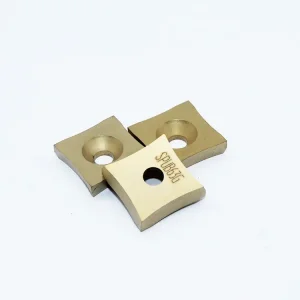
Wholesale Wear resistant SPUB 63 series carbide turning tube scarfing inserts
View Product Details
China Best price YG8 tungsten carbide gripper inserts for chuck jaw Suppliers
View Product DetailsAccelerate Your Tooling Performance With Custom Carbide Metallurgy
Whether you require sintered rectangular blanks, precision ground wear plates, or specialized nickel-bonded non-magnetic strips, our metallurgical engineering team provides rapid CAD manufacturability reviews and grade optimization within 8 hours.