
High-Performance Cemented Carbide Tooling Lineup
Explore our top-tier precision wear components, cold heading blanks, and rotary machining inserts engineered under stringent zero-defect tolerance frameworks.








Engineering Superior Hardmetal: Sinter-HIP Thermodynamics & Microstructure
A technical deconstruction of how grain refinement, stoichiometry balance, and high-pressure consolidation achieve peak fracture toughness and abrasion resilience.
Stoichiometric Carbon Balance
The integrity of cemented tungsten carbide (WC-Co) hinges on strictly managing the carbon balance. Deviations toward carbon deficiency prompt brittle eta-phase (W₃Co₃C to W₆Co₆C) complexes that trigger pre-mature fracture under cyclic stress.
Conversely, excess carbon manifests as unbonded graphite flakes, degrading mechanical hardness. Zhongfu enforces vacuum-monitored carbothermic reactions during solid-state reduction, fixing free carbon variance under ±0.03%.
Sinter-HIP Consolidation
Conventional atmospheric sintering inherently allows microporosity (A04/B02 per ISO 4505). Our manufacturing facility deploys 100-bar Overpressure Sinter-HIP furnaces directly operating at 1,450°C.
By injecting high-purity argon during the liquid cobalt phase, remaining internal voids collapse completely, generating an ultra-dense structure with theoretical density exceeding 99.9%, vastly elevating transverse rupture strength (TRS).
Nano & Ultrafine Grain Refinement
Hall-Petch grain boundary strengthening is harnessed through vanadium carbide (VC) and chromium carbide (Cr₃C₂) grain growth inhibitors. We formulate grain spans down to 0.2–0.5 μm.
This nanoscale morphology yields exceptional room and red hardness (up to 93.5 HRA) while securing superior edge retainment under extreme micro-chipping friction, critical for solid carbide end mills, micro drills, and optical mold cores.
China Factory 4.0: Supply Chain Resilience & Lean Automation
Headquartered in Nanchang, Jiangxi—the global center of the world's upstream tungsten reserves—Zhongfu leverages raw ore dominance paired with automated precision engineering.
Upstream Mineral Integrity
Unfettered access to high-purity ammonium paratungstate (APT) guarantees 100% virgin powder sourcing, eliminating chemical and scrap trace contamination (iron, sulfur, silicon) endemic to recycled alloy brokers.
Automated CNC Green Pressing
Closed-loop, multi-axis computerized hydraulic and mechanical compaction presses deliver uniform green density across deep profiles, minimizing post-sinter warpage and eliminating internal residual stresses.
Real-Time SPC Quality Control
Laser micrometers, Coercimeters, magnetic saturation units, and digital Vickers microhardness testers continuously feed real-time statistical process control (SPC) hubs, ensuring flawless cross-batch traceability.
Agile Supply Buffer
With an extensive raw inventory of standard blocks, h6 centerless-ground rods, and universal blanks, our rapid supply pipeline isolates overseas production floors from global logistics delays and tariff fluctuations.
Macro Industry Solutions: Mission-Critical Field Performance
Tailored tungsten cemented carbide solutions engineered to conquer extreme heat, dynamic shear, corrosive cavitation, and relentless geological abrasion.
Metal Forming & Progressive Dies
Submicron YG15 to YG20 cemented carbide punch pins, extrusion dies, and cold-heading inserts withstand immense compressive cycles up to 4,500 MPa without galling, micro-cracking, or thermal softening.
Steel Mills & Tube Scarfing
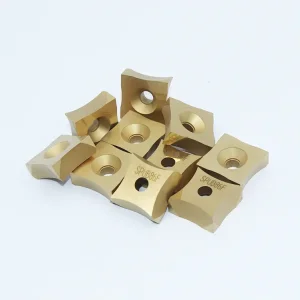
Engineered for hot-rolled weld seam removal, our SPUB63, SPUB86, and SNMX CVD-coated inserts resist excessive thermal shock and aggressive adhesive wear during high-speed heavy tube conditioning.
Downhole Oil & Gas (MWD/LWD)
Nickel-bonded non-magnetic components (relative permeability μr < 1.005) resist sour gas (H₂S), high chlorides, and abrasive mud flows in directional measurement drilling subs.
Railway Infrastructure & Tamping
Heavy-duty, brazeable tungsten carbide tamping tine tips and ballast cutters survive intense continuous dynamic vibration and impact against granite track ballast, multiplying tool maintenance cycles.
Comprehensive Metallurgical Grade Matrix & Selection Reference
Engineered parameters for exact OEM cross-referencing. Match your dynamic impact and friction criteria to certified metallurgical properties.
| ISO Class | Proprietary Grade | Binder (Co/Ni wt%) | Grain Size (μm) | Density (g/cm³) | Hardness (HRA) | TRS (MPa) | Primary Industrial Vector |
|---|---|---|---|---|---|---|---|
| K05-K10 | ZF-05N (Nano) | 6.0% Co | 0.2 - 0.4 | 14.95 ±0.1 | 93.2 - 93.8 | 3,800 | Micro-tooling, PCB drills, optical mold inserts |
| K10-K20 | YG6 (Standard) | 6.0% Co | 1.2 - 1.6 | 14.85 ±0.1 | 90.5 - 91.2 | 2,400 | Cast iron turning, wear plates, ceramic tile cutters |
| K20-K30 | YG8 (Medium) | 8.0% Co | 1.4 - 2.0 | 14.65 ±0.1 | 89.0 - 89.8 | 2,800 | Brazed drill tips, chuck grippers, wood routing |
| G15-G20 | YG15 (Tough) | 15.0% Co | 1.8 - 2.4 | 14.00 ±0.1 | 87.0 - 87.8 | 3,200 | Stamping dies, cold-forging punches, shear cutters |
| G30-G40 | YG20 (Heavy Impact) | 20.0% Co | 2.2 - 3.0 | 13.55 ±0.1 | 85.0 - 85.8 | 3,500 | Fastener heading dies, heavy EDM blocks, rolls |
| Corrosion/Non-Mag | ZF-NM10 | 9.5% Ni-Cr | 1.0 - 1.5 | 14.60 ±0.1 | 88.5 - 89.5 | 2,600 | MWD logging subs, magnetic punch dies, chemical seals |
Overcoming Procurement Headwinds: Global Sourcing Demands
How Zhongfu eliminates procurement bottlenecks for supply chain executives across North America, Europe, and Asia-Pacific.
Total Cost of Ownership (TCO)
Focusing purely on unit piece prices introduces hidden factory floor failure costs. Zhongfu's engineered carbides increase operational runtime between line tooling changes by 30% to 150%, dramatically suppressing expensive machine downtime and scrap rates.
Custom Engineering From Blueprint
We do not constrain your design office to generic catalogs. Our CAD/CAM engineering team interfaces directly with your native STP, DXF, or PDF drawings to formulate specific binder mixtures, green-state profiles, and ground bevels matching exact operational geometries.
Certified Compliance & Metallography
Every industrial consignment ships backed by exhaustive mill test certificates (MTC) detailing physical density, HRA hardness, coercivity (Hc), magnetic saturation (4πσ), and micrographic inclusion reports verifying zero internal porosity.
Technology Roadmap & Next-Generation Hardmetal Horizons
Driving continuous metallurgical progress: integrating sustainable binder matrices, additive 3D carbide printing, and smart coating architectures.
Cobalt-Free Alternative Binders
Anticipating international environmental and REACH regulations, our R&D department is actively pioneering iron-nickel-aluminum (Fe-Ni-Al) and high-entropy alloy (HEA) binders that match traditional cobalt toughness while removing geopolitical supply exposure.
Additive Binder-Jet Printing
Overcoming the geometric constraints of subtractive diamond grinding, our binder-jet 3D printing pilot line generates complex internal spiral conformal cooling channels within solid carbide blanks, redefining end mill performance.
AlTiSiN HiPIMS Nano-Coatings
By pairing high-power impulse magnetron sputtering (HiPIMS) with advanced multi-layer AlTiSiN and CVD diamond crystalline coatings, our finished cutting inserts operate stably at cut-zone temperatures reaching up to 1,150°C.
Closed-Loop Circularity
Implementing eco-efficient zinc recycling protocols that reclaim spent tungsten carbide scrap without generating secondary chemical wastewater, transforming end-of-life customer tooling into premium secondary-grade industrial alloys.
Specialized Wear Parts, Cutters & Solid Round Rods
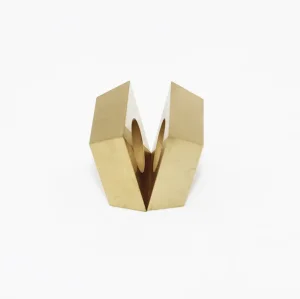
Factory-direct pricing on finished solid carbide blanks, nickel-matrix bars, and precision turning inserts manufactured for immediate export deployment.






Frequently Asked Questions: Technical Engineering & Purchasing
Clear, direct metallurgical and logistical guidance to accelerate your procurement qualification process.
How does Zhongfu guarantee zero internal microporosity on thick carbide blocks?
We deploy industrial-grade 100-bar Overpressure Sinter-HIP systems rather than basic vacuum furnaces. Operating at 1,450°C, argon gas consolidates the molten liquid phase, closing all internal microporosities to meet ISO 4505 class A00/A02 standards, ensuring stability during deep EDM wire processing.
What is the typical manufacturing lead time for custom OEM parts from drawing?
For custom profile parts and special mold blanks, tooling molds require 3 to 5 days, green compaction and Sinter-HIP require 4 to 6 days, and diamond precision CNC finish grinding requires 3 to 5 days. Typical factory-floor turnaround is 12 to 18 business days, with air freight reaching international docks in 3 to 5 days.
Why is nickel binder chosen over cobalt for downhole and chemical applications?
Cobalt is ferromagnetic and dissolves rapidly in acidic or high-chloride environments. Nickel binder provides superior corrosion immunity across broad pH environments while guaranteeing relative magnetic permeability (μr < 1.005), preventing signal interference with sensitive magnetic sensors in MWD/LWD drilling tools.
What grinding precision and surface finishes can your facility achieve?
Equipped with precision CNC profile grinders, centerless grinding lines, and diamond lapping machinery, our factory achieves outer diameter tolerances down to h6 (±0.001 mm), flatness within 0.002 mm, and mirror surface finishes down to Ra 0.05 μm for optical and semiconductor punches.