
Featured Tungsten Bits & Severe-Wear Hard Alloy Components
Explore our primary sintered catalog: high-precision wear tips, hydraulic torque gripper inserts, heavy-impact crushing buttons, and industrial milling blanks precision-engineered for relentless uptime.

China Wholesale customized high precision hard alloy tungsten carbide cutting tool wear parts Suppliers, Factory
View Engineering Details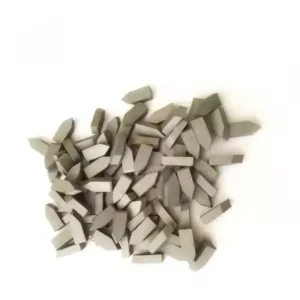
Wholesale Customized carbide welding tips for turning milling cutters Manufacturer, Manufacturers
View Engineering Details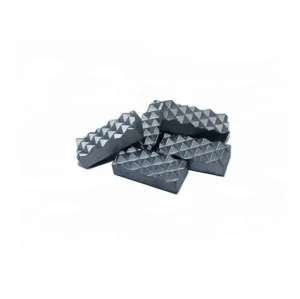
Buy YG8 carbide gripper inserts Manufacturers, Factory
View Engineering Details
China Customized tungsten carbide insert for wear parts crushing roll Manufacturer, Suppliers
View Engineering Details
China New shape cemented carbide tips for railway track tamping pick center tooth Manufacturers, Factory
View Engineering Details
China Wholesale SPUB-63C cemented mining tungsten tools carbide drill insert Supplier, Factories
View Engineering Details
China YG8 Standard tungsten carbide torque gripper inserts for chuck jaws Factory, Factories
View Engineering Details
Buy Cemented tungsten carbide gripper inserts/tips for mining and diamond drilling Factory, Factories
View Engineering DetailsState of the Industry: The Shift Toward Nano-Engineered Tungsten Bits
Industrial drilling, subterranean geotechnical exploration, and metal machining demand unprecedented toughness without sacrificing wear hardness. Today’s tungsten carbide bits represent the culmination of nano-crystalline powder science and Hot Isostatic Pressing (HIP).
Next-Gen Grain Boundary Engineering
Traditional tungsten bits relied on coarse, uniform tungsten carbide (WC) grains varying between 2.0 to 5.0 µm. Modern requirements necessitate bimodal and ultrafine sub-micron grain sizing (<0.8 µm). This structural distribution halts micro-crack propagation through cobalt binder phases, directly suppressing premature spalling during percussion impact.
Low Total Cost of Ownership (TCO)
In downhole exploration and automated high-feed CNC turning, bit replacement cost is dwarfed by operational downtime. Global tier-one mining houses evaluate tungsten bit procurement based on meters drilled per overhaul cycle, mandating metallurgical integrity that prevents catastrophic head shearing under high hydraulic downforce.
Sinter-HIP Porosity Elimination
Atmospheric sintering inevitably leaves microscopic voids (A04/B02 porosity). By integrating Overpressure Sinter-HIP technology at 60–100 bar argon atmospheres during the liquid phase, tungsten bits achieve 99.98% theoretical density, delivering fracture toughness values (K1C) exceeding 14.5 MPa·m½.
What Global Enterprise Procurement Demands from a Carbide Partner
Strategic buyers across North America, Europe, Australia, and Latin America evaluate tungsten bits manufacturers using stringent auditing criteria that extend far beyond initial quotation costs.
Batch-to-Batch Homogeneity
Fluctuations in carbon potential during vacuum sintering lead to detrimental eta-phase (η-phase, Co3W3C) brittleness or free carbon precipitation. Enterprise procurement requires strict coercive force (Hc) and magnetic saturation (4πσ) verification on every production heat.
Conflict-Free Material Ethics
Compliance with the OECD Due Diligence Guidance and the Responsible Minerals Initiative (RMI) is mandatory. Zhongfu guarantees 100% virgin ammonium paratungstate (APT) feedstock directly traceable to conflict-free, environmentally permitted extraction deposits.
Agile Tooling & Prototyping
Modern exploration contracts operate on aggressive timetables. Suppliers must maintain in-house 5-axis CNC electrical discharge machining (EDM) and powder pressing tool-and-die shops capable of turning custom 3D CAD geometries into physical test blanks in <10 business days.
Flexible Commercial Terms
Large-scale EPC engineering contractors require strategic vendor-managed inventory (VMI), safety stock buffering for high-turnover carbide bit geometries (e.g., SPUB63, YG8 brazed tips), and transparent LME/raw wolfram-indexed price hedging agreements.
Industrial Tungsten Carbide Bits & Wear Grade Matrix
Selecting the optimal balance between binder volume fraction (Cobalt / Nickel) and tungsten carbide mean grain size governs hardness, transverse rupture strength (TRS), and thermal fatigue resistance.
| ISO / Grade Classification | Binder Phase (%wt) | Grain Size (µm) | Density (g/cm³) | Hardness (HRA) | TRS (MPa) | Primary Industrial Use-Case |
|---|---|---|---|---|---|---|
| YG6 / K10-K20 | 6.0% Co | 1.2 – 1.6 | 14.90 – 15.05 | 90.5 – 91.5 | ≥ 2,100 | High-velocity continuous cutting, precision ceramic/non-ferrous turning, light wear liners. |
| YG8 / K20-K30 | 8.0% Co | 1.6 – 2.4 | 14.65 – 14.80 | 89.0 – 90.0 | ≥ 2,400 | Rotary drill bits, rock chisels, standard lathe welding tips, diamond core gripper jaws. |
| YG11C / G30 | 11.0% Co | 2.5 – 3.5 (Coarse) | 14.30 – 14.45 | 87.0 – 88.0 | ≥ 2,750 | Heavy geotechnical rotary percussion buttons, DTH drill bits, hard abrasive sandstone drilling. |
| YG15 / K40 | 15.0% Co | 2.0 – 3.0 | 13.95 – 14.15 | 86.5 – 87.5 | ≥ 3,000 | High-impact stamping dies, cold heading dies, railway tamping picks, crushing rolls. |
| YG20 / Severe Shock | 20.0% Co | 2.2 – 3.2 | 13.45 – 13.65 | 85.0 – 86.0 | ≥ 3,250 | Extreme shock resistance, structural armor tiles, scrap metal shearing, heavy cold forging punches. |
| ZF-NM10 (Non-Mag) | 10.0% Ni/Cr | 1.4 – 1.8 | 14.40 – 14.60 | 88.5 – 89.5 | ≥ 2,300 | MWD/LWD directional drilling tools, magnetic slurry valves, subsea non-magnetic exploration. |
Macro Industry Solutions: Mission-Critical Heavy Applications
Our specialized tungsten carbide bits and severe-wear components withstand high sliding friction, dynamic cyclic percussion, and aggressive chemical corrosion across the globe's toughest sectors.
Mining, Geotechnical & DTH Drilling
In down-the-hole (DTH), top-hammer, and rotary blast-hole drilling, drill bits encounter quartz-dense granite, basalt, and iron ore strata. Zhongfu manufactures parabolic, ballistic, and spherical tungsten carbide button inserts formulated in coarse-grain YG11C and YG15 grades. These geometries reduce compressive stress concentrations, maximize penetration rates (ROP), and forestall premature gauge diameter reduction.
Railway Infrastructure & Ballast Tamping
Continuous railway ballast maintenance machines exert massive vibrational and compressive forces on ballast tamping picks. Our multi-facet brazed cemented carbide tamping pick tips utilize specialized shock-absorbent brazing alloys and high-cobalt tungsten formulations. This delivers an operational life exceeding 250,000 tamping insertions, reducing maintenance blockades on high-speed rail corridors.
High-Pressure Grinding Rolls (HPGR) & Crushing
In cement processing and mining comminution, HPGR studded rolls process thousands of tons of ore hourly under intense inter-particle crushing loads. Zhongfu supplies cylindrical tungsten carbide studs and edge protection blocks featuring convex profiles. These metallurgical formulations prevent surface micro-spalling while promoting an autogenous wear layer that shields the roll core.
Localized Quality Control, Metallography & Compliance Assurance
Our Nanchang manufacturing facility operates an in-house metallurgical and dimensional inspection laboratory. We guarantee full compliance with ISO 9001:2015 quality standards and international ASTM powder metallurgy testing procedures.
Metallographic Microstructure Analysis
Each batch undergoes cross-sectional polishing and Murakami’s reagent etching. Optical and electron microscopes inspect cobalt mean free path (MFP), verifying the total absence of eta-phase decarburization and unreacted graphite clusters in accordance with ISO 4499 standard protocols.
Non-Destructive Coercivity Testing
We utilize Foerster coercimeters to measure coercive field strength (Hc) and magnetic saturation (4πσ). This rapid non-destructive check provides absolute confirmation of grain size distribution and chemical stoichiometric equilibrium across 100% of finished production lots.
Micron Coordinate Metrology (CMM)
Ground carbide rods, chuck jaw inserts, and precision drilling bits are checked via automated CNC coordinate measuring machines and optical profile comparators. We routinely deliver tight diametrical tolerances down to ISO h6 (±0.004 mm) and surface roughness below Ra 0.2 µm.
Global On-Site Technical Engineering
We support our overseas distributors and end-users with comprehensive metallurgical consulting. When extreme wear or premature failure occurs in unusual field formations, our metallurgical engineers provide failure mode analyses (FMA) and customized carbide grade reformulations within 8 hours.
Technology Roadmap: Functionally Graded & Binderless Carbides
Cemented carbide innovation continues to advance beyond static binary alloys. Zhongfu is actively pioneering three disruptive manufacturing trajectories to redefine operational longevity.
Functionally Graded Hardmetals (FGM)
Traditional bits force a metallurgical compromise: high surface hardness sacrifices core impact toughness. Our R&D team utilizes controlled nitrogen sintering atmospheres to generate cobalt-depleted, ultra-hard wear surfaces (92+ HRA) coupled to cobalt-enriched, shatter-proof internal cores (87 HRA) within a single monolithic bit insert.
Ultra-Hard Binderless WC & Ceramic Hybrids
In severe chemical environments where standard cobalt binders leach via electrochemical corrosion, Zhongfu manufactures nickel-chromium and quasi-binderless tungsten carbide grades (<0.5% binder). These parts exhibit near-diamond wear characteristics and absolute immunity to acid-gas attack in sour gas well drilling.
3D Binder-Jet Additive Tooling
For intricate wear components featuring internal spiral cooling conduits that cannot be pressed via conventional hydraulic punch tooling, we are actively implementing industrial binder-jet 3D printing of WC-Co powders, followed by high-vacuum densification sintering.
Frequently Asked Engineering & Procurement Inquiries
Find precise metallurgical and logistics answers to common questions posed by global procurement managers, tooling engineers, and geotechnical drilling specialists.
How do you optimize tungsten carbide bits against premature micro-chipping in percussive drilling?
Micro-chipping stems from insufficient fracture toughness or elevated internal residual stress. We counter this by transitioning from fine-grained powders to coarse-grained WC (3.0–4.0 µm) while precisely adjusting the cobalt binder content to between 9% and 11%. Additionally, full Sinter-HIP processing eliminates internal stress risers, while a micro-radius chamfer is ground onto cutting edges to distribute peak dynamic shock loads.
What distinguishes your YG8 gripper inserts from generic commodity carbide grippers?
Commodity chuck jaw grippers often incorporate recycled scrap (zinc process) powder, which introduces non-metallic inclusions, low transverse rupture strength, and erratic tooth geometry. Zhongfu produces gripper inserts using 100% virgin WC-Co powder with uniform serration pitch and induction-hardened tooth geometry, preventing workpiece slip during high-torque CNC machining and diamond wire-line core extraction.
Can you provide custom geometry tungsten tips manufactured directly to 3D CAD step files?
Yes. Custom wear parts and complex bit shapes account for over 60% of our daily production volume. Clients supply 2D drawings or 3D STEP/IGES models. Our engineering department conducts shrinkage rate simulations, manufactures precision EDM tooling, and supplies pre-production prototypes accompanied by full CMM dimensional and metallographic certification reports.
How does Zhongfu guarantee non-magnetic performance in downhole directional drilling tools?
Standard cobalt-bonded carbide is ferromagnetic, causing signal interference in Measurement While Drilling (MWD) and Logging While Drilling (LWD) electromagnetic sensors. Zhongfu substitutes cobalt with a proprietary nickel-chromium-iron-free binder system (ZF-NM grades). This formulation maintains magnetic permeability (µ) strictly below 1.005 while retaining a high hardness of 89.0 HRA.
What brazing protocols do you recommend for mounting tungsten carbide bits onto steel toolholders?
Due to the mismatch in coefficient of thermal expansion between tungsten carbide (5.0–6.0 × 10⁻⁶/K) and steel (11.0–12.5 × 10⁻⁶/K), we recommend silver-based sandwich brazing shims (such as BAg-22 or Tri-foil Ag/Cu/Ag). This structure absorbs thermal contraction stresses during cooling, preventing brazing-induced micro-cracks in the carbide substrate. High-frequency induction heating should be applied evenly.
What are your wholesale lead times, and how do you accommodate emergency rush orders?
Standard production lead time for catalog bits and wear inserts is 15–20 business days. For urgent drilling site shutdowns or machine repairs, we maintain a dedicated fast-track sintering line capable of dispatching standard inserts and ground blanks within 7 business days, with door-to-door worldwide express delivery handled via DHL/FedEx/Air Freight.
Specialized Hardmetal Strips, Milling Jars & Woodturning Cutters
Explore our extended precision line: high-density laboratory pulverizing bowls, metallurgical test billets, ground round rods, and premium indexable woodturning tips.

China High-Quality Tungsten Carbide Strips - Durable Cemented Wolfram Bars Supplier, Suppliers
View Engineering Details
Wholesale Best price woodturning tungsten carbide turning tip inserts and cutter railway Manufacturer, Suppliers
View Engineering Details
Wholesale Factory sale customized carbide milling jar tungsten carbide bowl/ jar/mortar Manufacturer, Factory
View Engineering Details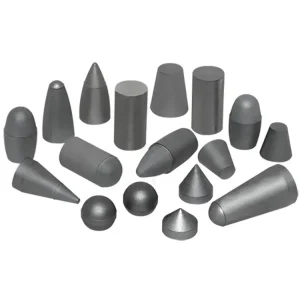
China Round billet metal for high strength cemented carbide tools Manufacturer, Supplier
View Engineering Details
China High-quality tungsten carbide rods for precision drilling and milling Manufacturer, Factories
View Engineering Details
Buy YG8 carbide gripper inserts for chuck jaw Manufacturers, Supplier
View Engineering Details
Buy Wholesale SPUB63 tungsten carbide insert scraps lathe cutting tools turning Supplier, Factories
View Engineering Details