Industrial Catalog
High-Performance Cemented Carbide Solutions
Browse our factory-direct tungsten carbide wear parts, precision tooling inserts, and sintered blanks tailored for severe operational wear environments.
Material Science Deep-Dive
Is Tungsten Truly the Strongest Metal on Earth?
To answer whether tungsten is the "strongest" metal, materials engineers analyze mechanical metrics across four distinct vectors: tensile yield, Mohs hardness, melting threshold, and impact toughness.
Ultimate Tensile Strength
Tungsten boasts the single highest ultimate tensile strength of any pure metal at elevated temperatures (up to 1,510 MPa at room temperature for drawn wire). While brittle in pure unworked bulk states, its atomic bonding energy gives it incomparable resistance against natural shear strain.
Melting Point Supremacy
Pure tungsten features an extraordinary melting threshold of 3,422°C (6,192°F), the highest of all non-alloyed elements, coupled with an exceptionally low coefficient of thermal expansion (4.5 µm/m·K). It retains structural load capacity where titanium and structural steels disintegrate.
Carbide Synthesis (WC)
When combined with carbon atoms into Tungsten Carbide (WC), the resulting cermet matrix reaches a Mohs hardness of 9.0–9.5 and Vickers hardness over 1,600–2,200 HV. Sintered with cobalt or nickel binders, it creates the undisputed baseline for heavy-duty industrial wear resistance.
| Metal / Composite Matrix | Ultimate Tensile (MPa) | Vickers Hardness (HV) | Melting Point (°C) | Fracture Toughness (MPa·m½) | Key Engineering Constraint |
|---|---|---|---|---|---|
| Tungsten (Pure W) | 980 – 1,510 | 350 – 450 | 3,422°C | 3 – 5 (Brittle) | High ductile-to-brittle transition temperature (DBTT) |
| Cemented Carbide (WC-Co) | 1,800 – 2,600 (TRS) | 1,400 – 2,200 | ~2,870°C (Decomp) | 8 – 18 (Tuned via Binder) | Requires specialized diamond/EDM tooling |
| Titanium Grade 5 (Ti-6Al-4V) | 895 – 1,000 | 350 | 1,660°C | 50 – 75 | Inferior abrasive wear thresholds |
| Chromium Metal | 370 – 700 | 1,000 – 1,400 | 1,907°C | Low impact shear | Extreme oxidation cracking at elevated cycling |
Supply Chain Integrity
The Jiangxi Ecosystem: China's Strategic Carbide Leadership
Jiangxi Zhongfu Cemented Carbide Co., Ltd. is positioned at the ground source of the world's most concentrated tungsten mineral belt, transforming primary APT into ultra-clean carbide blanks.
Upstream Ore Proximity
Over 60% of the world's accessible wolframite reserves reside within China's southern corridor. Direct ore access prevents global feedstock volatility and guarantees complete traceability of virgin powder stocks.
Zero-Porosity HIP Tech
We leverage industrial High-Pressure Isostatic Pressing (Sinter-HIP) at 10 MPa overpressure, collapsing internal micro-voids to deliver metallurgical blanks with uniform density and fracture limits.
h6 Tolerance Finishing
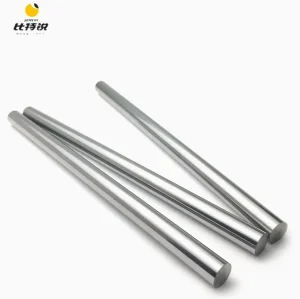
Our facilities house multi-axis CNC optical profile and centerless grinding units, achieving strict h6 diameter tolerance metrics on solid tungsten round rods and polished plate dies.
Cost-Per-Cut Efficiency
By streamlining powder milling, sintering, and finishing under one 5,000 m² factory floor, we eliminate trading layer margins, lowering tool downtime and procurement spend for global OEMs.
24+
Years of Carbide Mastery
5,000 m²
Dedicated Production Facilities
20+
Global Export Nations
< 8 h
Rapid Engineering Feedback
Macro Solutions
Localized Application Scenarios & Sector Solutions
Engineered tungsten carbide products drive essential operations across energy exploration, heavy metallurgy, semiconductor dies, and infrastructure maintenance.
Downhole MWD/LWD & Non-Magnetic Drilling
Directional drilling tools require wear-resistant parts that produce zero magnetic deflection. Our nickel-bonded tungsten carbide bushings, rotor sleeves, and orifice nozzles protect sensor accuracy in high-temperature subsea wells.
Steel Mill In-Line Tube Scarfing
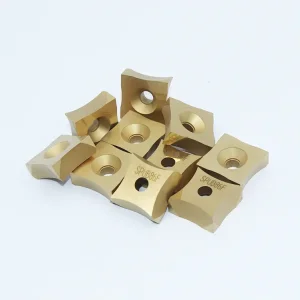
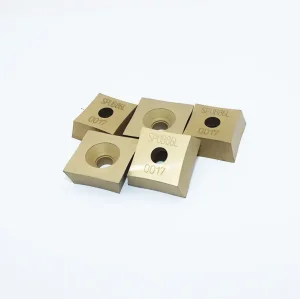
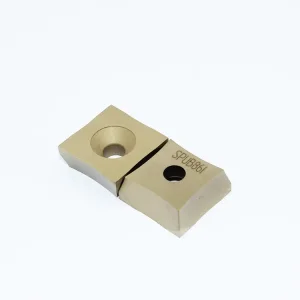
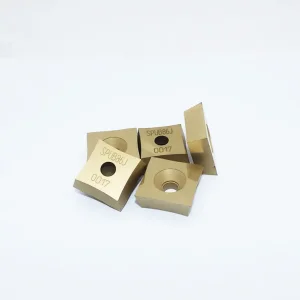
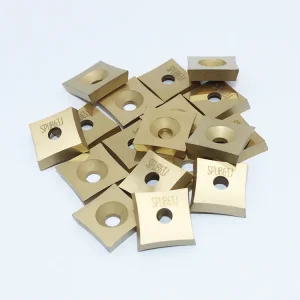
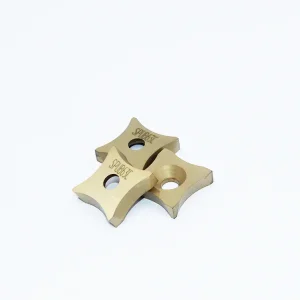
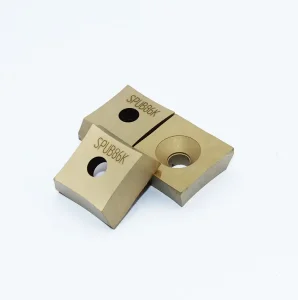
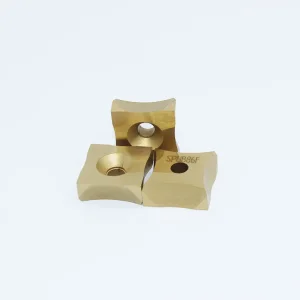
Removing hot weld beads from continuous ERW steel tubes demands extreme thermal shock resistance. Our heavy-duty SPUB63 and SPUB86 series inserts, coated with TiN and AlTiN, operate at 900°C without plastic edge chipping.
Railway Track Tamping & Heavy Earthmoving
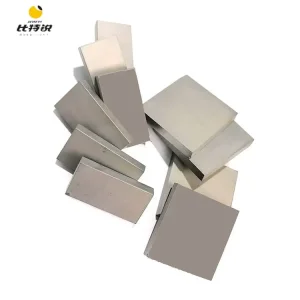
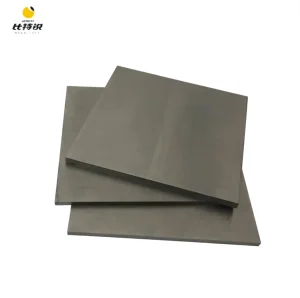
Railway ballast tamping tines experience brutal cyclic aggregate impacts. We braze optimized YG8/YG11C carbide wear plates onto tine tips, multiplying field service intervals by up to 500% over hardened tool steels.
Procurement Insights
Global Sourcing Matrix: Solving Buyer Pain Points
International sourcing directors in the United States, Germany, Australia, and Mexico face unique procurement hurdles when importing cemented carbide stock.
Recycled Scrap Contamination
The Risk: Low-cost suppliers cut corners with zinc-reclaimed scrap powder, causing uneven grain distribution and catastrophic fracturing under shock load.
Our Guarantee: Zhongfu uses 100% virgin tungsten powder, validated by lot-specific metallographic and spectrographic documentation.
Dimensional Tolerance & EDM Distortion
The Risk: Unrelieved sintering stresses inside thick carbide blocks create bow deformation during wire EDM shaping.
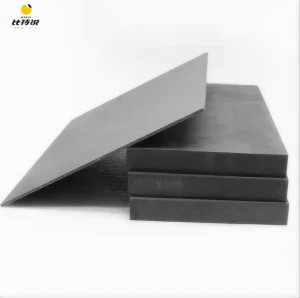
Our Guarantee: Our deep-vacuum sinter-HIP programs and controlled stress-relief cycles ensure blocks up to 100×100×60 mm stay flat and dimensionally stable.
Agile OEM Drawing Customization
The Risk: Catalog distributors cannot modify grain sizing or binder ratios to address unexpected site wear patterns.
Our Guarantee: In-house powder milling allows us to alter cobalt ratios from 6% to 20% within 48 hours to match specific abrasion-impact balances.
Common Questions
Frequently Asked Questions
Key technical insights for metallurgical engineers, plant supervisors, and purchasing agents.
Is tungsten or titanium stronger for industrial wear components?
For abrasive wear, compressive resistance, and cutting tooling, tungsten carbide outperforms titanium by an order of magnitude. Sintered tungsten carbide achieves a Vickers hardness of 1,400–2,200 HV compared to roughly 350 HV for Ti-6Al-4V titanium alloy. However, titanium is favored when high strength-to-weight ratios are needed in structural aerospace skins. When high-load abrasion resistance is required, tungsten is unmatched.
Can Zhongfu manufacture custom tungsten carbide parts from proprietary CAD drawings?
Yes. Custom tooling forms our core OEM volume. Overseas buyers can supply 2D (DWG, DXF, PDF) and 3D (STEP, IGES) files. Our engineering staff assesses the drawing, checks thermal shrinkage allowances, recommends optimal cobalt ratios, and sends formal pricing and production steps within 8 hours.
What is the difference between standard Cobalt-bonded and Nickel-bonded tungsten carbide?
Cobalt (Co) provides strong mechanical bonding and high fracture toughness for wear blocks and cutting inserts, but it is ferromagnetic and susceptible to acid attack. Nickel (Ni) binders create non-magnetic carbide grades suitable for MWD/LWD drilling, semiconductor dies, and corrosive chemical environments.
What role does grain size play in tungsten carbide rods and wear plates?
Grain size controls the trade-off between hardness and impact resistance. Coarse grains (3.0–5.0 µm) deliver superior shock resistance for railway tamping tips and heavy stamping dies. Ultrafine and nano grains (0.2–0.8 µm) yield higher hardness and smooth edge retention, making them ideal for cutting tools used on hardened steel, aerospace composites, and titanium alloys.
What quality assurance measures verify zero internal porosity?
Every production batch undergoes Sinter-HIP processing, metallurgical mount polishing, and microscope inspections according to ISO 4505 standards (A00, B00, C00 porosity ratings). We also confirm mechanical integrity with magnetic saturation testers, coercive force meters, and Rockwell C/A indentation testers prior to export packing.
Factory Inventory
Specialized Carbide Tooling & Wear Components
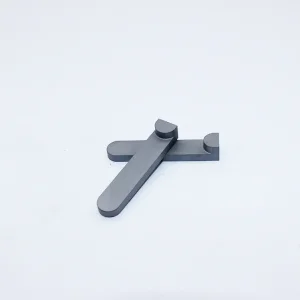
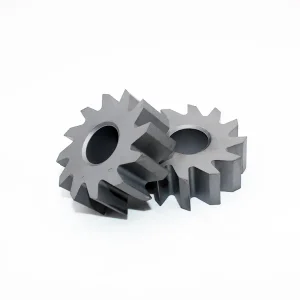
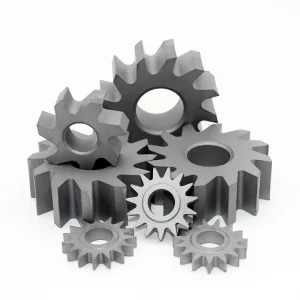
Direct delivery on high-performance carbide blanks, turning tools, and custom mining components.