
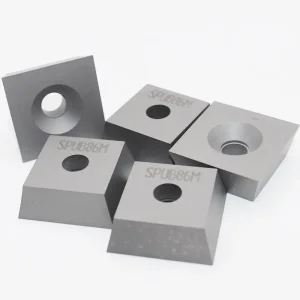
High-Performance Tooling Portfolio
Standard & Engineered Outer Diameter Scarfing Systems
Engineered for high-frequency ERW welding lines, tube rolling operations, and cold drawn finishing plants requiring strict burr removal tolerances.

Wholesale Factory sale customized carbide milling jar tungsten carbide bowl/ jar/mortar Manufacturer, Factory
Explore Product
Buy Wholesale sintered cemented carbide stone wood diamond cutting tools Supplier, Factories
Explore Product
China SPUB63J CVD coating tungsten carbide od scarfing insert Manufacturers, Suppliers
Explore Product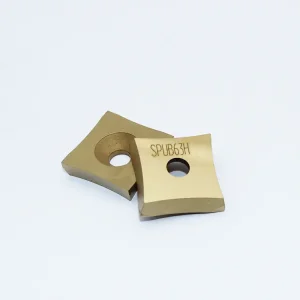
Buy Wholesale SPUB63H square tungsten carbide cemented cutting turning lathe tools Manufacturers, Factories
Explore Product
Buy Tungsten carbide tamping tines use tip wearing part for Railway Industry Supplier, Suppliers
Explore Product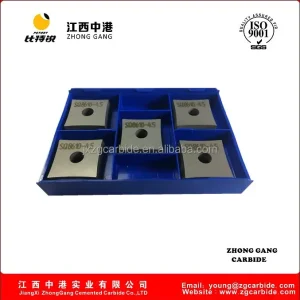
Wholesale carbide OD tube scarfing insert SDUW for weld bead steel tube Manufacturer, Factories
Explore Product
Wholesale Best price woodturning tungsten carbide turning tip inserts and cutter railway Manufacturer, Suppliers
Explore Product
Market Architecture
Global Industrial Landscape: The High-Stakes Metallurgy of OD Scarfing
Why modern longitudinal seam welding requires microstructural carbide consistency over standard cutting tools.
Thermal Shock Resistance
Continuous ERW external scarfing operates between 800°C and 1150°C. Standard carbide grades experience severe thermal cracking. Our proprietary tungsten carbide formulations with optimized cobalt-nickel ratio maintain edge rigidity under extreme cycloid thermal gradients.
API 5L & High-Yield Steel Trimming
As pipeline operators transition to high-strength X70, X80, and proprietary quench-and-temper alloy tubing, scarfing tools must endure dynamic weld flashes containing hard martensitic structures without micro-chipping or catastrophic failure.
Sub-Micron Profile Tolerances
Any scallop or step left by the external scarfing tool leads to costly rejection during ultrasonic testing (UT) and subsequent coating processes (3LPE/FBE). Zhongfu precision-ground radius inserts ensure seamless pipe transitions conforming to strict line-pipe radii.
Localized Application Scenarios
Engineered for Demanding Mill Environments Across Five Continents
Scarfing dynamic parameters vary significantly based on pipe dimensions, base steel grade, and mill feed rates.
Automotive Precision Tube Mills
Used extensively in North American and European tier-one automotive plants for shock absorber casings, drive shafts, and hydroformed tubing. Demands uninterrupted flash trimming down to ±0.05 mm surface variation without heat-affected zone distortion.
Oil & Gas OCTG & Line Pipe
Tailored for Middle Eastern and Gulf Coast API casing and tubing manufacturing. SDUW, SNMX, and SPUB series with high fracture-toughness substrates withstand heavy burr volumes at line speeds up to 120 meters per minute.
Structural Hollow Sections & Scaffolding
Engineered for high-volume structural production lines in Southeast Asia and South America. High wear-resistant multi-edge carbide inserts deliver maximum cuts per edge, lowering replacement frequency and overall machine downtime.
Metallurgical Selection Matrix
Optimized Cemented Carbide Formulations for OD Scarfing
Compare physical and mechanical properties engineered to resolve chipping, crater wear, and thermal fatigue.
| Carbide Grade | Cobalt / Binder (%) | Grain Size (µm) | Hardness (HRA) | TRS (N/mm²) | Primary Industrial Application |
|---|---|---|---|---|---|
| ZF-SC10 (YG6 Class) | 6.0% Co | 1.2 – 1.6 | 91.0 – 91.8 | 2300 | Continuous low-alloy ERW finishing, abrasive cold drawing burr scraping. |
| ZF-SC15 (YG8 Class) | 8.0% Co | 1.4 – 2.0 | 89.5 – 90.5 | 2750 | Universal OD scarfing on medium carbon pipe, SPUB63/86 general line production. |
| ZF-SC25 (Impact Series) | 12.0% Co-Ni | 2.0 – 3.2 | 87.5 – 88.5 | 3200 | Heavy-gauge welded pipes, interrupted seam cuts, high-frequency shock lines. |
| CVD Multi-Layer Coated | 8.5% Co Substrate | Sub-micron + TiCN/Al2O3 | 92.5 (Coating) | 2600 | High-speed stainless and high-yield line pipe (API X65–X80) preventing built-up edge. |
Manufacturing Integrity
China Factory Supply Chain Resilience & Cost-Efficiency Advantages
How Jiangxi Zhongfu leverages upstream raw material access and advanced HIP sintering to protect your delivery timelines and margins.
100% Virgin Tungsten Ore Access
Situated in Jiangxi Province, the epicentre of global tungsten mining, we control source material purity. We strictly utilize 100% virgin APT-derived tungsten powder, rejecting scrap contamination to guarantee zero internal micro-voids during sinter-HIP processing.
End-to-End In-House Route
From ball milling and spray drying to automatic multi-cavity dry pressing, vacuum pressure sintering, 5-axis profile grinding, and CVD/PVD coating: full vertical integration shortens custom lead times to 2–3 weeks while preserving batch consistency.
Superior Total Cost of Ownership
By delivering extended tool life per corner index and reducing unplanned tube mill stoppages, our products lower overall consumption costs by up to 35% compared to Western legacy brands without compromising precision.
Innovation Trajectory
Technology Roadmap: Next-Generation ERW Scarfing Solutions
Addressing the future demands of automated smart steel manufacturing and advanced metallurgical grades.
AlTiSiN Super-Nitride Nano-Coatings
To resist dry-friction wear without cooling lubricants, our R&D center is deploying multi-layered AlTiSiN physical vapor deposition coatings, elevating surface oxidation resistance up to 1200°C for dry ERW scarfing configurations.
Smart Wear Detection Profiling
Integration of radio-frequency identifiable (RFID) tool carriers and pre-calibrated geometric thermal sensors allows continuous feedback on burr clearance, signaling automated turret indexers before tool chipping damages pipe aesthetics.
Gradient Cobalt Substrate Formulations
Engineered functionally graded cemented carbides feature an ultra-hard surface layer low in cobalt for abrasion resistance, combined with an ultra-tough cobalt-enriched core to stop shear cracks during extreme weld seam surges.
Compliance & Assurance
Localized Support & Comprehensive Compliance Framework
Full metallurgical traceability from powder lot to delivered tool container.
EN 10204 3.1 Certified Documentation
Every shipment is delivered with comprehensive chemical and physical inspection sheets, covering exact cobalt fractions, HRA hardness, density verification, and magnetic saturation to confirm complete sinter density.
Custom Engineering & Toolholder Matching
Our engineering support team offers complete reverse-engineering and profile adjustments for all standard mechanical OD scarfing rings, rotary tool blocks, and hydraulic scarfer arms used worldwide.
Global Safety Stock Agreements
To avoid supply chain interruptions for continuous tube mills, we provide localized safety stocking solutions, containerized consignments, and DDP warehouse distribution throughout the Americas, Europe, and Asia-Pacific.
Technical Clarifications
Frequently Asked Questions on Wholesale Scarfing Solutions
Direct metallurgical answers to help procurement managers and tooling engineers select the optimal grade.
What causes chipping on external scarfing insert corners during line start-up?
Corner chipping during weld line start-up typically stems from excessive thermal shock or mechanical vibration during unaligned entry into the red-hot weld seam flash. Switching to an impact-resistant substrate (such as ZF-SC25 with 12% binder) combined with a chamfered hone edge prep significantly eliminates startup micro-chipping.
When should CVD-coated scarfing inserts be selected over uncoated cemented carbide?
CVD-coated inserts (featuring thick layers of TiCN and Al2O3) are strongly recommended when milling high-yield carbon pipes (X60 through X80), austenitic stainless steel, or when line speeds exceed 70 m/min. The ceramic coating acts as a thermal barrier, preventing built-up edge (BUE) formation and crater wear.
Can you manufacture custom radii to match non-standard pipe outer diameters?
Yes. While standard inserts like SPUB63, SPUB86, and SDUW accommodate common circular profiles, we produce specialized custom inserts ground to any exact pipe radius from Ø10 mm to Ø610 mm according to 2D/3D technical drawings, maintaining contour tolerances within ±0.015 mm.
How does sinter-HIP technology enhance tool lifespan compared to vacuum sintering?
Standard vacuum sintering can leave micro-porosity (A04/B02 levels) within the carbide matrix. Sinter-HIP applies up to 60–100 bar of isostatic argon pressure during the liquid phase sintering stage, collapsing micro-voids to achieve theoretical density, resulting in a 30% increase in transverse rupture strength.
Complete Carbide Manufacturing Range
Precision Plates, Tool Blanks & High-Toughness Components
Direct supply from our Nanchang production center to world-leading industrial machining facilities.
Buy Wholesale woodworking blades tungsten carbide insert milling inserts inconel Manufacturers, Suppliers
Explore Product
Buy Customized size style tungsten cemented carbide carbon steel reducer blind plate flange Factory, Factories
Explore Product
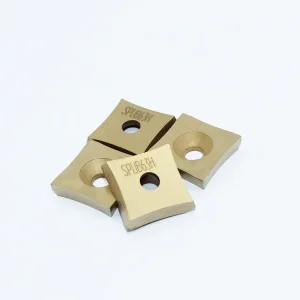
China Factory supply SPUB86 CVD coating radius tungsten carbide tips brazed insert Manufacturer, Factory
Explore Product
China Wholesale insert carbide manufacturer threading carbide blank inserts Manufacturers, Factory
Explore Product
China Tungsten Carbide Plate | OEM Wear-Resistant Cemented Carbide Blank for Tooling & EDM Manufacturers, Supplier
Explore Product
Wholesale Customized Cemented Carbide Plate — Factory-Direct Tungsten Carbide Blanks in Any Size, Shape & Grade Factory, Factories
Explore Product
China Wholesale carbide insert cutting tools cnc Supplier, Factory
Explore Product