Featured Cemented Carbide Components & Tooling
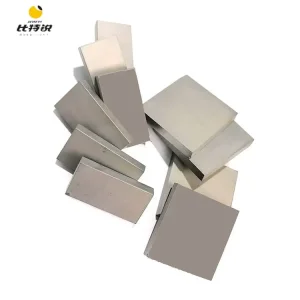
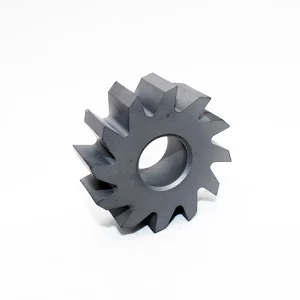
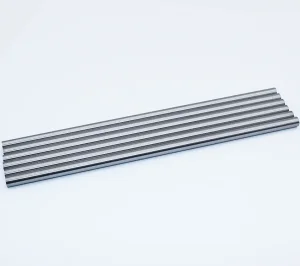
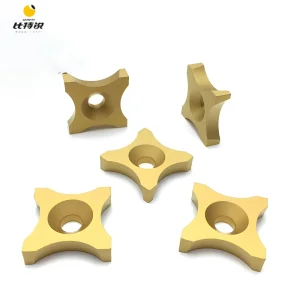
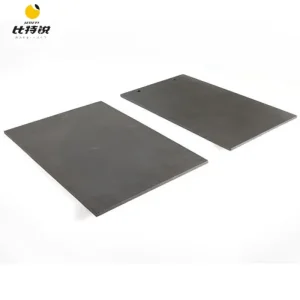
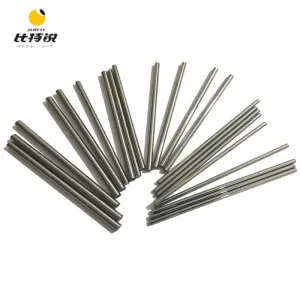
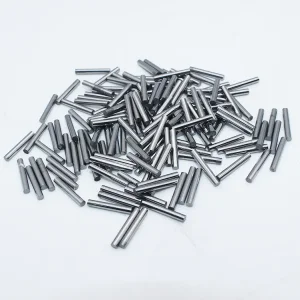
High-density sintered tungsten carbide rods, custom inserts, precision ground blanks, and wear-resistant scraping blades engineered to micron-level repeatability.
The Strategic Value Architecture of Chinese Tungsten Manufacturing
Why international OEM tooling brands, aerospace contractors, and drilling consortia locate primary procurement within China's specialized cemented carbide clusters.
Mine-to-Tool Vertical Lineage
Direct linkage to domestic wolframite and scheelite deposits eliminates currency exchange volatility, maritime freight surcharges, and raw concentrate supply-chain embargoes.
High-Volume Sinter-HIP Capacity
Chinese industrial parks house the world's highest density of 100-bar overpressure Sinter-HIP furnaces, guaranteeing porosity-free blanks classified at strict ISO A00-B00 criteria.
Proprietary Grain Modulation
Advanced ball milling and spray-drying towers allow domestic factories to customize tungsten grain matrices from 0.2 µm nanocrystalline profiles up to 8.0 µm coarse impact grades.
Microstructural Control & Cemented Carbide Characterization
An empirical evaluation of chemical binder fractions, transverse rupture strength (TRS), hardness scaling, and ISO-classified grain uniformity across industrial grades.
| Standard Grade | Binder (Co/Ni %) | Nominal Density (g/cm³) | Hardness (HRA / HV30) | TRS Minimum (MPa) | Mean Grain Size (µm) | Primary Industrial Utility |
|---|---|---|---|---|---|---|
| YG6X (K10/K15) | 6.0% Co | 14.90 - 15.05 | 91.5 - 92.5 HRA | 2,200 MPa | 0.8 µm (Sub-micron) | Chilled cast iron, non-ferrous finishing, PCB micro-drills |
| YG6 (K20) | 6.0% Co | 14.80 - 14.95 | 90.0 - 91.0 HRA | 2,400 MPa | 1.2 - 1.6 µm (Medium) | Wear components, wire drawing dies, internal turning inserts |
| YG8 (K30) | 8.0% Co | 14.60 - 14.75 | 89.0 - 90.0 HRA | 2,800 MPa | 1.6 - 2.2 µm (Medium-Coarse) | Chuck jaw grippers, rock drill inserts, tube scarfing rings |
| YG15 (K40) | 15.0% Co | 13.90 - 14.15 | 86.5 - 87.5 HRA | 3,200 MPa | 2.0 - 3.0 µm (Coarse) | Cold heading dies, punch blanks, heavy stamping punches |
| YG20C (Impact) | 20.0% Co | 13.40 - 13.60 | 82.5 - 84.0 HRA | 3,600 MPa | 3.5 - 5.0 µm (Extra-Coarse) | Heavy-duty impact shearing dies, cold forging dies, roll rings |
| NM-10 (Non-Mag) | 10.0% Ni Matrix | 14.45 - 14.65 | 88.5 - 89.5 HRA | 2,600 MPa | 1.4 - 1.8 µm (Medium) | Downhole MWD/LWD drilling tools, magnetic media compaction |
Technological Frontiers Reshaping Tungsten Production
From closed-loop circular zinc-recovery metallurgy to nanoscale grain inhibition, explore the key R&D vectors driving China's carbide industry forward.
Sub-Micron Grain Refinement
By introducing trace concentrations of transition metal carbides (Vanadium Carbide $VC$ and Chromium Carbide $Cr_3C_2$) as grain growth inhibitors during high-energy attritor milling, modern Chinese factories suppress Ostwald ripening. This creates ultra-fine crystalline structures (<0.4 µm) that exhibit extraordinary hardness (>93 HRA) without compromising micro-fracture resistance.
Green Zinc-Process Recycling
Leading producers have integrated closed-loop Zinc Recovery (reclaiming sintered carbide through chemical dissolution of binder cobalt) alongside pure chemical hydrometallurgical digestion. This circular process preserves virgin tungsten crystal lattices, sharply reduces carbon footprints per metric ton, and stabilizes raw material pricing against geopolitical market shocks.
Mission-Critical Deployment Scenarios Across Global Industry
From high-speed steel mill tube scarfing to subsea energy extraction, discover how precision-graded tungsten carbide extends operational life cycles.
Steel Processing & Tube Scarfing
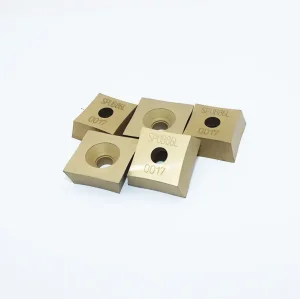
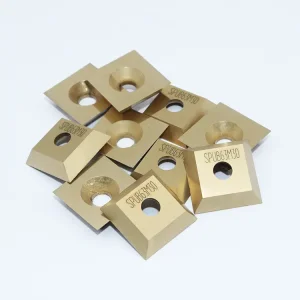
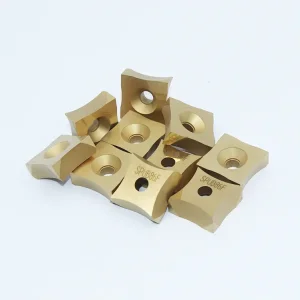
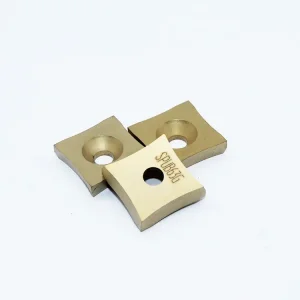
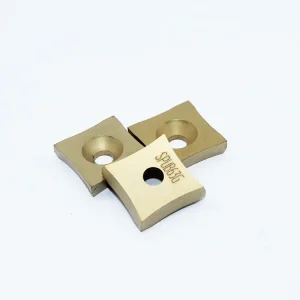
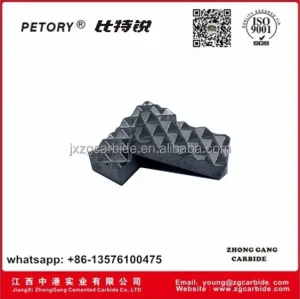
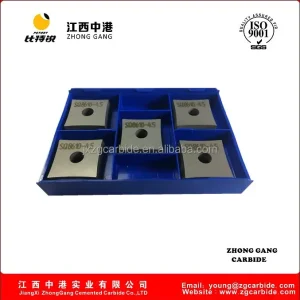
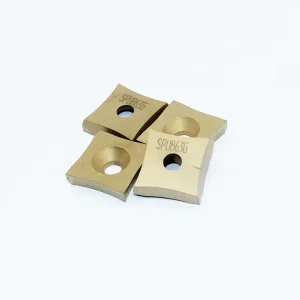
In continuous high-frequency welded (ERW) tube mills, outside diameter (OD) and inside diameter (ID) scarfing inserts—such as the SPUB, SDUW, and SNMX profiles—must operate at red-heat temperatures (>800 °C) without edge spalling. Custom Chinese formulations combine heavy cobalt fractions with micro-grain WC and TiC barrier additions to resist severe mechanical wear and weld-seam shock.
Precision Progressive Die Stamping
In electric vehicle traction motor lamination and consumer electronics stamping, tool life must exceed tens of millions of strokes. Utilizing coarse-grain YG15 and YG20 grades with Sinter-HIP processing yields extreme transverse rupture strength, preventing edge chipping under cyclical impact and Wire-EDM induced thermal stress cracks.
Non-Magnetic MWD / LWD Drilling
Directional drilling instrumentation relies on sensitive magnetometers to navigate subterranean boreholes. Conventional cobalt-bound tungsten carbide creates magnetic field interference. Chinese non-magnetic grades swap cobalt for a specialized Nickel-Chromium matrix ($<1.005$ relative magnetic permeability), offering exceptional corrosion resistance against salty drilling muds.
Navigating Supply Chains: A Guide for Chief Procurement Officers
Balancing supply-line assurance, ESG conflict-free compliance, quality audit regimes, and dual-sourcing resilience in cross-border industrial trade.
1. Traceability & RMAP
Verify that the factory holds valid Responsible Minerals Assurance Process (RMAP) certifications and strictly audits supply-chain origins under international OECD Due Diligence Guidelines for Conflict-Free Smelters.
2. Virgin vs Scrap Auditing
Demand metallographic batch certificates indicating saturation magnetization and coercivity. Excessive scrap inclusion degrades transverse rupture strength due to uncontrolled residual elements ($Fe, Cu, S$).
3. Dimensional Tolerancing
Ensure the facility maintains dedicated temperature-controlled inspection centers featuring Zeiss CMMs, Keyence optical comparators, and surface roughness interferometers capable of verifying Ra 0.05 µm finishes.
Frequently Asked Engineering & Procurement Questions
Clear, authoritative technical answers addressing common questions raised by overseas metallurgists, plant superintendents, and procurement executives.
Industrial Inserts, Wear Plates & Custom Sintered Components
Heavy-duty weld-seam scarfing inserts, precision blank plates, high-wear reducer flanges, and nickel-bonded machinery components available directly from factory lines.