
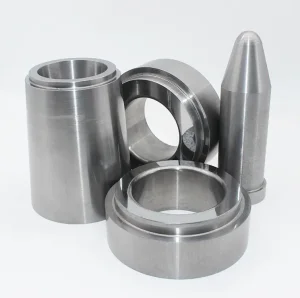
Custom Tungsten Carbide Hardware: Water Jet Nozzle, Seat & Valve
Explore Specification
Direct factory supply of high-yield tungsten carbide tooling, wear parts, and indexable cutting geometries designed for extreme thermal shock, heavy abrasion, and critical dimensional retention.
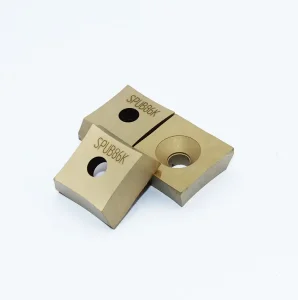
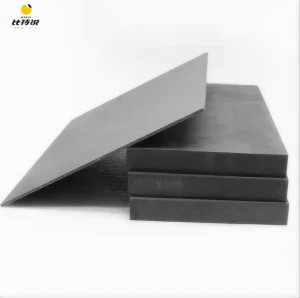
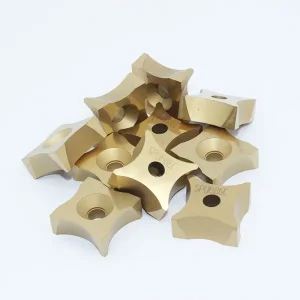
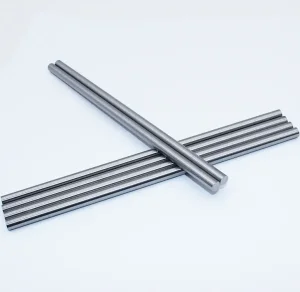
Operating directly within the planetary epicenter of virgin tungsten ore reserves, Jiangxi Zhongfu Cemented Carbide Co., Ltd. integrates 24 years of sintering expertise with automated furnace telemetry to eliminate upstream supply volatility.
Unlike secondary non-integrated converters, our Nanchang facility directly procures refined Ammonium Paratungstate (APT) and pure Cobalt/Nickel binder powders from local deep-mine deposits. This sovereign procurement pipeline secures batch purity, eliminates geopolitical transit latency, and shields tier-one clients from violent raw mineral price swings.
Every structural carbide plate and precision rod undergoes Overpressure Sintering (Sinter-HIP) at up to 100 bar argon gas pressure and 1,450°C. Real-time computerized thermal gradients eliminate internal micro-voids, elevating theoretical material density to >99.95% while preventing the embrittlement caused by the undesirable η (eta) phase.
Post-sinter blanks are finished via high-precision CNC multi-axis profile grinders, centerless grinding rigs, and diamond wire EDM platforms. Round rods reach h6 diameter runout, while flat dies and wear blocks achieve mirror surface Ra ≤ 0.05 μm without subsurface micro-cracks.
Selecting the optimal cemented tungsten carbide grade involves balancing mechanical hardness (wear life) against fracture toughness (impact deflection). The systematic matrix below guides critical engineering design choices for procurement specialists and tooling designers.
| Alloy Grade | Binder Matrix | Grain Size (μm) | Density (g/cm³) | Hardness (HRA) | TRS (N/mm²) | Primary Industrial Use-Case |
|---|---|---|---|---|---|---|
| YG6 ISO K10-K20 | 6% Co | 1.2 - 1.6 | 14.95 ± 0.10 | 90.5 ± 0.5 | ≥ 1,900 | High-speed cast iron turning, non-ferrous milling, wear-resistant wire guides |
| YG8 ISO K20-K30 | 8% Co | 1.4 - 2.0 | 14.70 ± 0.10 | 89.5 ± 0.5 | ≥ 2,200 | Brazed cutting tool tips, core mining button bits, structural percussion chisels |
| YG15 ISO K40 | 15% Co | 1.8 - 2.5 | 14.05 ± 0.15 | 87.2 ± 0.5 | ≥ 2,800 | High-stress metal stamping dies, cold-heading matrices, blanking punches |
| YG20 Impact Die | 20% Co | 2.0 - 3.2 | 13.55 ± 0.15 | 85.5 ± 0.5 | ≥ 3,100 | Heavy-impact forging punches, cold-forming rolls, thick EDM sheet stocks |
| UF-05 Sub-Micron | 10% Co + Cr/V | 0.4 - 0.6 | 14.45 ± 0.10 | 92.5 ± 0.4 | ≥ 3,800 | PCB micro-drills, high-silicon aluminum end-mills, medical orthopedic reamers |
| NM-8N Non-Magnetic | 8% - 10% Ni | 1.0 - 1.8 | 14.65 ± 0.15 | 88.8 ± 0.6 | ≥ 2,100 | MWD oilfield directional probes, magnetic powder molding, jewelry forming dies |
By doping formulations with grain growth inhibitors such as Vanadium Carbide (VC) and Chromium Carbide (Cr3C2), Zhongfu prevents dissolution-reprecipitation Ostwald ripening during high-temperature liquid-phase sintering. The resulting fine-grained tungsten carbide skeleton achieves ultra-sharp cutting edges without micro-chipping, extending tool life in hard turning applications up to 65 HRC workpiece hardness.
Standard cobalt binders degrade rapidly in acid-leaching environments and interfere with magnetometer telemetry. Our custom Nickel-Chromium (Ni-Cr) binder alloy systems eliminate magnetic dipole alignment, yielding relative magnetic permeability μr < 1.005 while providing strong passivation resistance against harsh fluids, marine saltwater, and petrochemical sulfides.
Jiangxi Zhongfu Cemented Carbide Co., Ltd. components operate as mission-critical wear limiters across global operations, reducing unexpected machinery downtime, preventing catastrophic shear fractures, and lowering the total cost of ownership (TCO).
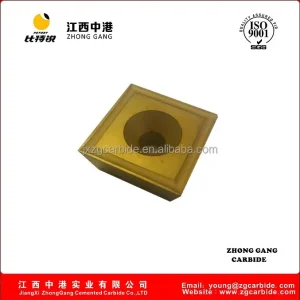
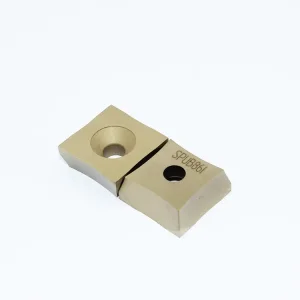
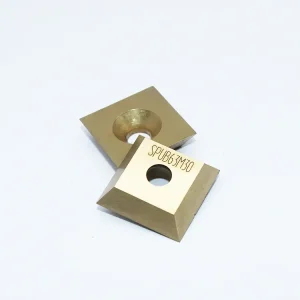
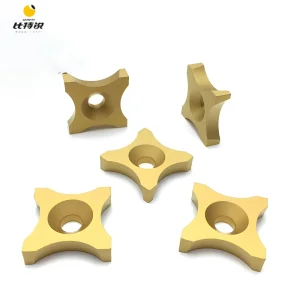
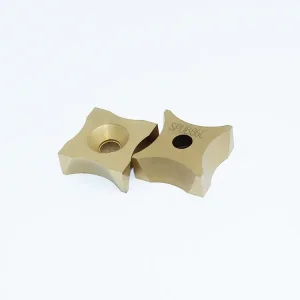
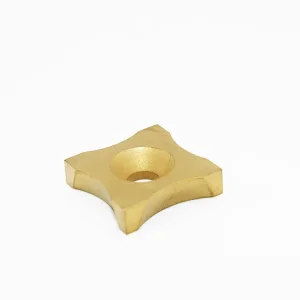
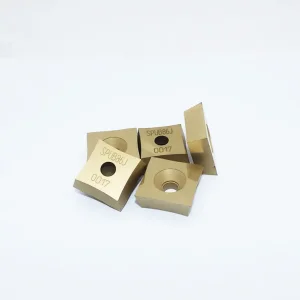
Seamless and ERW welded pipe mills encounter immense thermal shock and high-friction weld bead removal. Our TiN/CVD-coated external scarfing inserts (SPUB63, SPUB86, SNMX series) maintain continuous edge geometry across high-temperature flash lines, eliminating bead peeling failures and minimizing tool change intervals.
Deep-well drilling exposes directional tools to abrasive drilling muds, intense torque, and high-pressure fluid dynamics. We manufacture ultra-durable valve seats, nozzles, choke trim inserts, and downhole non-magnetic collars that resist cavitational erosion and chemical embrittlement down to 10,000 psi operations.
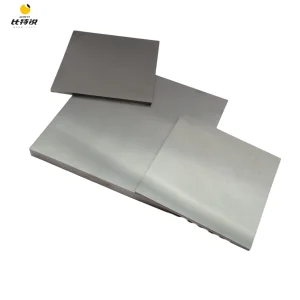
The rise of ultra-high-strength steels (UHSS) and aluminum alloys in modern vehicle manufacturing accelerates adhesive wear in tool sets. Zhongfu YG15 and YG20 precision ground sheets, EDM blocks, and punches withstand high-cycle cold-heading stresses without spalling or micro-cracking across millions of strike cycles.
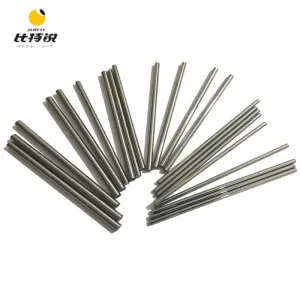
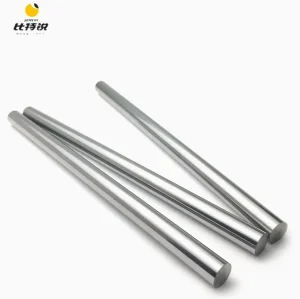
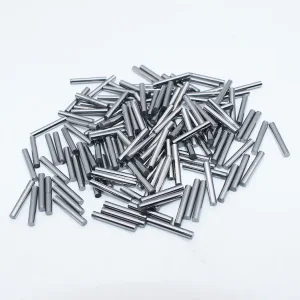
Machining carbon fiber reinforced polymers (CFRP), titanium alloys, and Inconel demands high material rigidity and thermal conductivities. Our ultrafine solid carbide round rods provide maximum anti-vibration damping for end-mills and gun-drills, preventing harmonic deflection and ensuring tight aero-structural tolerances.
For international supply chain managers and Chief Procurement Officers, qualifying an overseas tungsten carbide supplier requires objective verification of metallurgical consistency, dimensional conformance, and financial security.
Tooling downtime is often caused by micro-voids, excessive porosity, or unequal cobalt distribution. Zhongfu issues detailed 3.1 Inspection Certificates with every production batch, detailing exact density, coercive force (Hc), magnetic saturation (4πσ), and micro-Vickers hardness ratings.
Our engineering department reads standard 2D and 3D CAD/CAM models (STEP, IGES, DXF, DWG). For custom wear components, we produce custom-pressed near-net tooling within 7 working days, enabling fast validation cycles without long lead-time commitments.
Exporting to over 20 destination nations—including North America, Europe, Australia, and ASEAN—we maintain seasoned shipping partnerships. We provide complete Incoterms coverage (FOB, CIF, DDP) alongside clear customs classification under HS Code 8209.00 to prevent import delays.
Modern industrial supply chains require complete regulatory alignment. Jiangxi Zhongfu operations adhere to international chemical, environmental, and ethical labor conventions.
Our raw material intake complies fully with Responsible Minerals Initiative (RMI) protocols. We verify that all tungsten concentrates trace directly to certified non-conflict domestic mines in Jiangxi, avoiding disputed mineral regions and upholding strict Dodd-Frank Act Section 1502 expectations.
Zhongfu sintered tungsten carbide products undergo regular third-party chemical laboratory assessments (SGS/TUV). We confirm zero concentrations of hazardous heavy metals, banned plasticizers, or unregulated REACH Substances of Very High Concern (SVHC), simplifying your import and environmental audits.
Precision carbide components are susceptible to micro-chipping during long transoceanic transit if packaged improperly. We utilize vacuum-sealed, anti-oxidation barriers, impact-absorbing EPE slotted cell frameworks, and reinforced wooden crates to ensure your products arrive in pristine operational condition.
Comprehensive answers to help technical buyers, machinists, and procurement officers make informed sourcing choices.
Specialized carbide materials, sub-micron endmill rod blanks, CVD-coated woodworking inserts, and precision stamping sheets engineered for tough working environments.
Submit your 2D/3D part drawings or technical wear requirements. Our senior application engineers will deliver an actionable manufacturability review, grade recommendation, and comprehensive pricing schedule within 8 hours.