Precision Engineering
Engineered Tungsten Carbide & Sheet Metal Components
High-density blank stock, CNC inserts, brazed tips, and wear tooling direct from Jiangxi Zhongfu production lines.
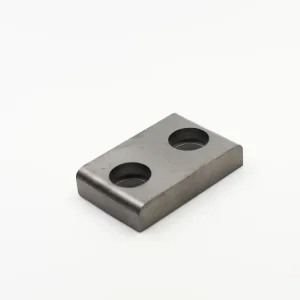
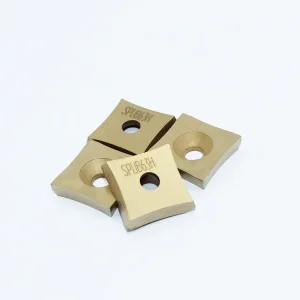
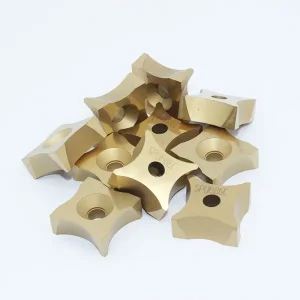
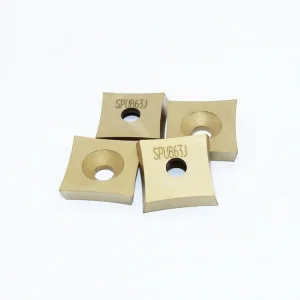
Global Commercial Landscape
Global Strategic Importance of Tungsten Sheet Metal & Carbide Plates
How refractory metallurgical engineering drives semiconductor manufacturing, vacuum furnace hot zones, aerospace propulsion, and extreme wear tooling.
In modern industrial engineering, pure tungsten sheet metal and cemented tungsten carbide plate represent the pinnacle of refractory performance. Possessing the highest melting point of any elemental metal (3,422 °C), an exceptionally high density of 19.25 g/cm³, a modulus of elasticity surpassing 400 GPa, and extraordinary radiation shielding capabilities, tungsten sheet metal is not merely a structural alloy—it is an enabling baseline for clean-energy physics, aerospace ion thrusters, medical radiotherapy collations, and advanced electronic wafer fabrication.
Concurrently, the heavy metal fabricating landscape is bifurcated between chemical pure wrought sheet (ASTM B760) and powder metallurgical tungsten carbide (WC-Co/Ni) wear sheets. Global original equipment manufacturers (OEMs) in North America, Western Europe, and East Asia are confronting elevated procurement volatility due to regional resource controls and specialized sintering bottlenecks. Securing stable, high-metallurgical-integrity sheet and plate supplies has transcended basic procurement—it has evolved into a strategic supply chain risk mitigation initiative.
Refractory Vacuum Hot Zones
Tungsten sheets serve as internal thermal radiation shields, heating elements, and charging trays in high-temperature vacuum sintering furnaces operating between 1,600 °C and 2,400 °C where conventional molybdenum or graphite fail to withstand vapor pressures.
Semiconductor Ion Implantation
Micro-rolled tungsten sheets function as cathode emission shields, ion chamber liners, and beam slit apertures in sub-5nm chip manufacturing, demanding purities of 99.95% to 99.999% to completely eliminate heavy-metal contamination during dopant delivery.
Nuclear Physics & Medical Shielding
Offering lead-free gamma and X-ray absorption density, precision-sliced tungsten leaves build multileaf collimators (MLC) for intensity-modulated radiation therapy (IMRT) oncology units and shielding canisters for radioactive isotope transport.
Manufacturing Hegemony
The Operational Advantage of Chinese Tungsten Metallurgy
From raw ammonium paratungstate (APT) ore concentration to advanced hot-isostatic-pressing (Sinter-HIP) fabrication lines.
China commands over 80% of global primary tungsten reserves and extracted output, predominantly concentrated across the Nanling mountain belt spanning Jiangxi and Hunan provinces. Jiangxi Zhongfu Cemented Carbide Co., Ltd. sits within this dense industrial core in Nanchang, capitalizing on direct mine-to-refinery supply routes that bypass international transport tariffs and export intermediary premiums. This geographic concentration gives Chinese factories unmatched operational velocities, powder metallurgy innovation cycles, and pricing resilience.
100% Virgin Powder Sourcing
Direct APT and blue tungsten oxide (WO2.9) refining ensures strictly traceable virgin powder stock. Complete elimination of contaminated scrap eliminates structural pitting and sub-surface micro-voids in finished sheets.
Sinter-HIP Overpressure
Our integrated pressure sintering furnaces run combined vacuum dewaxing and 100-bar argon consolidation, closing porosity to ISO 4505 A00-B00 levels for ultra-high transverse rupture strength.
Warm Cross-Rolling Tech
Rolling tungsten ingots requires strict multi-pass warm rolling at 1,000 °C–1,400 °C. Our automated tandem rolling mills produce uniform grain orientations, mitigating brittle directional splitting.
Turnaround & Response
Rapid mold fabrication, automated powder blending, and on-site metallographic laboratories allow production of custom prototypes within 10-15 business days, compared to 12 weeks in Western ecosystems.
24+
Years Industry Heritage
5,000 m²
Factory Floor Footprint
< 8 h
Engineering Response
20+
Global Export Markets
Technical Reference Guide
Tungsten & Cemented Carbide Plate Grade Matrix
Precise chemical formulation selection guidelines for engineers, metallurgists, and tool designers.
| Material / Grade | Composition (wt%) | Density (g/cm³) | Hardness (HRA / HV) | TRS (MPa) | Primary Industrial Working Conditions |
|---|---|---|---|---|---|
| Pure Tungsten Sheet (W1) | ≥ 99.95% W | 19.20 – 19.25 | ≥ 350 HV10 | 800 – 1,100 | Furnace heat shielding, semiconductor ion targets, vacuum evaporation boats |
| YG6 (ISO K10-K20) | 94% WC, 6% Co | 14.80 – 15.00 | 90.5 HRA | 1,900 – 2,200 | Cast iron finish-machining, non-ferrous trimming, precision wire guide dies |
| YG8 (ISO K20-K30) | 92% WC, 8% Co | 14.60 – 14.80 | 89.5 HRA | 2,200 – 2,500 | Brazed cutting inserts, quarry saw blades, rock drill wear faces, scrapers |
| YG15 (ISO K40) | 85% WC, 15% Co | 13.90 – 14.10 | 87.0 HRA | 2,800 – 3,100 | Cold heading dies, sheet stamping molds, high-stress punches, extrusion tooling |
| YG20 (Impact Grade) | 80% WC, 20% Co | 13.40 – 13.60 | 85.5 HRA | 3,100 – 3,400 | Heavy-impact stamping punches, thick plate cold-forging, EDM cavity blocks |
| Non-Magnetic (Ni-Bond) | 90-94% WC, Ni/Cr | 14.50 – 14.90 | 88.0 – 90.0 HRA | 2,100 – 2,400 | Magnetic powder mold dies, downhole MWD/LWD drilling tools, chemical seal rings |
Future Trends
Industry Megatrends Shaping Global Purchasing
Analysis of the technological and ESG transformations influencing global tungsten purchasing mandates over the coming decade.
Sub-Micron Grain Refinement
Global demand is migrating rapidly toward ultrafine (0.5–0.8 μm) and nano-grain (< 0.2 μm) tungsten carbide structures. By inhibiting grain growth using vanadium and chromium carbides (VC/Cr3C2), sheets achieve extreme hardness without compromising structural impact resistance.
Corrosion-Resistant Non-Cobalt Binders
With cobalt classified under stricter workplace exposure regulations and exhibiting poor galvanic corrosion resistance in aggressive aqueous or petrochemical fluids, nickel-chromium (Ni-Cr-Mo) binders are increasingly specified by Western engineering departments.
RMI & Conflict-Free Traceability
Tier-1 procurement directives mandate compliant chain-of-custody documentation under the Responsible Minerals Initiative (RMI). Chinese premier producers provide fully audited smelter traceability to ensure seamless compliance with EU and US trade standards.
Engineering Help Desk
Frequently Asked Technical & Sourcing Questions
Actionable answers addressing tolerance precision, grade selection, machining feasibility, and trade shipping.
What is the fundamental difference between pure tungsten sheet metal and cemented carbide plate?
Pure tungsten sheet metal (ASTM B760) is rolled from chemically pure sintered ingots (≥ 99.95% W) without a binder, chosen specifically for extreme melting temperatures (3,422 °C) and high-vacuum electronic or radiation shielding environments. Cemented carbide plate is a metal-matrix composite composed of tungsten carbide (WC) grains bound by cobalt (Co) or nickel (Ni). Carbide plate is engineered for mechanical wear resistance, extreme compressive strength, and cutting tool endurance.
Can Zhongfu manufacture custom-dimensioned carbide plates directly from customer CAD drawings?
Yes. Custom fabrication is our primary engineering specialty. You can submit 2D (DWG/PDF) or 3D (STEP/IGES) CAD models specifying final tolerances, surface roughness (Ra), and operating conditions. Our metallurgists evaluate shrink-factor allowances during die pressing, configure CNC EDM profile cutting, and execute surface grinding to achieve geometric tolerances within ±0.005 mm.
Why is non-magnetic nickel-bonded carbide preferred over cobalt-bonded grades in certain applications?
Standard cemented carbide relies on cobalt as the liquid-phase sintering binder, which is naturally ferromagnetic. When components operate adjacent to sensitive directional instrumentation—such as downhole MWD/LWD drilling tools, magnetic sensor housings, or neodymium magnet stamping dies—cobalt introduces critical magnetic interference. Nickel binders eliminate magnetic permeability (μ ≤ 1.005) while providing superior corrosion resistance against acids.
How does Zhongfu prevent structural delamination and internal porosity in thick plate stock?
We utilize Sinter-HIP (Hot Isostatic Pressing) overpressure furnaces. Unlike atmospheric vacuum furnaces, our systems introduce high-purity argon gas at up to 100 bar pressure during the final sintering stage. This collapse mechanism eliminates micro-voids, consolidates internal micro-porosity to ISO A02/B02 standards or better, and guarantees zero sub-surface fracturing during wire EDM processing.
What is the typical manufacturing lead time and overseas shipping protocol?
Standard blank plates and catalog inserts are dispatched within 3-5 business days. Custom-pressed or ground plates take 12-18 business days, including tooling mold preparation, pressure sintering, and metallographic micro-inspection. Shipments are packed in protective vacuum-sealed anti-oxidation barrier films with shock-absorbing wooden crating, fulfilled via DHL/FedEx Express or ocean container freight (FOB/CIF/DDP).
How do I determine whether to choose YG6, YG8, or YG15 for my wear components?
The decision is governed by the operational trade-off between abrasive wear resistance and mechanical impact shock. YG6 (6% Co) has higher hardness (90.5 HRA) and is optimal for continuous sliding friction without heavy shock loads. YG8 (8% Co) balances toughness and hardness for rock sawing and general metal scraping. YG15 (15% Co) exhibits superior transverse rupture strength (≥ 2,800 MPa), preventing edge chipping under heavy stamping or high-impact blanking blows.
Complete Sourcing Catalog
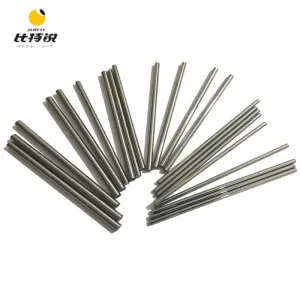
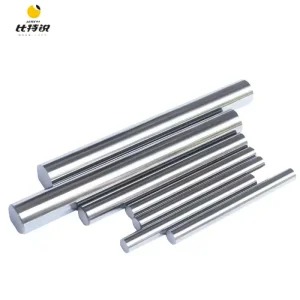
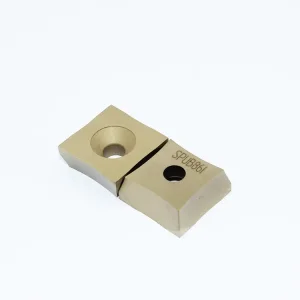
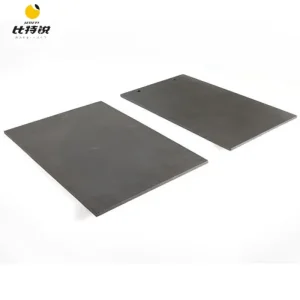
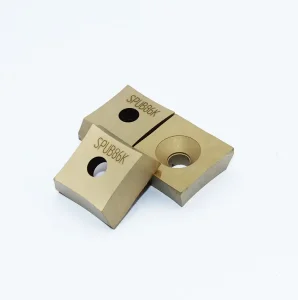
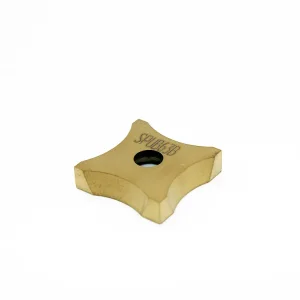
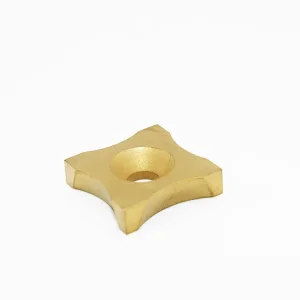
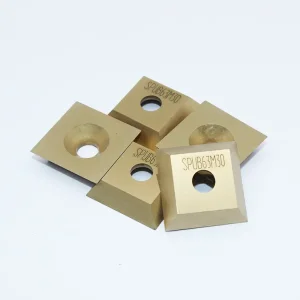
Industrial Tungsten Carbide Rods, Plates & Scarfing Inserts
Factory-direct tungsten wear components manufactured to international industrial standards.