
Precision Engineered Carbide Components (Batch 1)
Industrial-grade tungsten carbide solutions manufactured in China with metallurgical consistency.
-
-
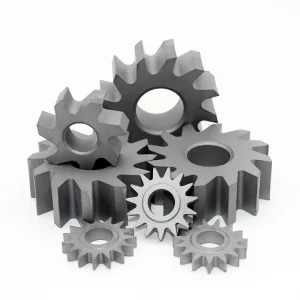
China Factory wholesale tungsten cemented tools carbide coated blank inserts Factory, Factories
-
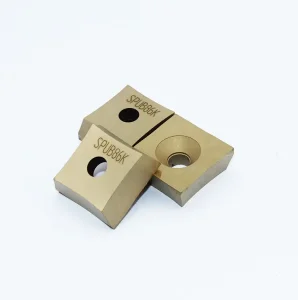
Buy Carbide turning inserts manufacturer square carbide Inserts for milling tools Supplier, Factory
-
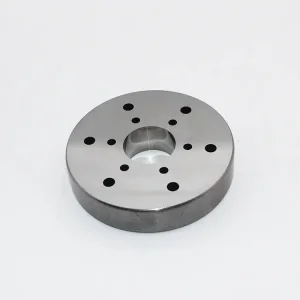
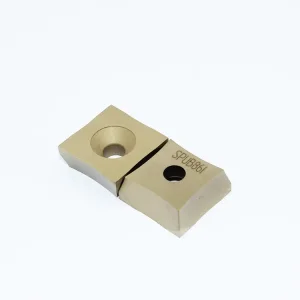
China Customized tungsten carbide fitting elbow tee cap reducer pipe flanges Suppliers, Factories
-
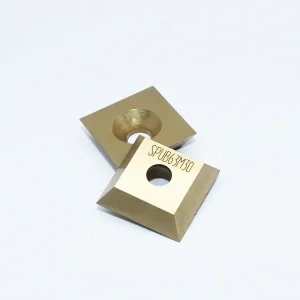
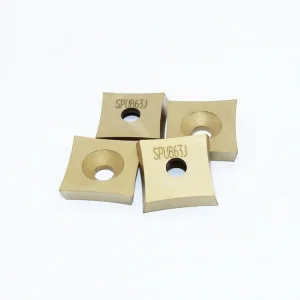
Buy Wholesale SPUB63 tungsten carbide insert scraps lathe cutting tools turning Supplier, Factories
-
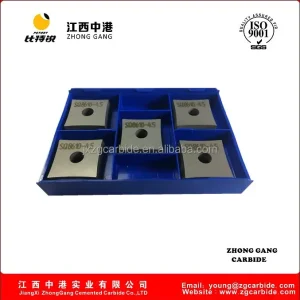
Wholesale carbide OD tube scarfing insert SDUW for weld bead steel tube Manufacturer, Factories
-
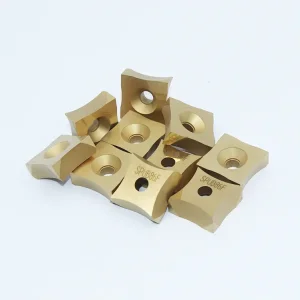
China Factory sale tungsten carbide insert cutting tools turning tool Manufacturer, Supplier
-
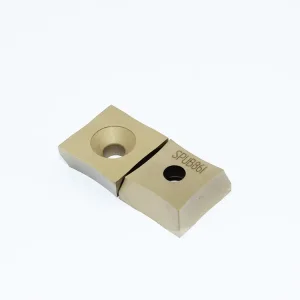
Comprehensive Engineering Analysis of China Tricone Drill Bit Manufacturing
Unlocking Information Gain: Understanding metallurgical physics, IADC classification systems, bearing kinematics, and tungsten carbide integration in modern rotary drilling.
1. Fundamentals of Tricone Rock Bit Engineering & Cutting Mechanics
In the field of geo-resource extraction, civil foundation construction, and deep geothermal well development, selecting the optimal rotary drilling bit is a critical determinant of Rate of Penetration (ROP) and Total Cost of Drilling (TCD). As a leading China Tricone Drill Bit Manufacturer, our engineering paradigm revolves around balancing three-dimensional rock mechanics with tribological bit endurance.
Tricone drill bits operate via a combination of crushing, gouging, and scraping actions. The bit assembly comprises three cone cutters mounted on precision-machined journal or roller bearings, rotating about their individual axes while the whole body turns on the drill string. The fundamental mechanical divergence lies between Tungsten Carbide Insert (TCI) Bits and Steel Tooth (Milled Tooth) Bits:
Tungsten Carbide Insert (TCI) Bits
Designed for medium-hard to ultra-hard abrasive rock formations (such as granite, quartzite, basalt, and hard limestone). TCI bits incorporate hot-isostatically pressed (HIP) tungsten carbide compacts pressed into precision-drilled cone holes. The carbide grade vary in binder content (Cobalt 6% to 16%) and grain size (nano-grain to coarse) to maximize impact toughness or wear resistance depending on formation compressive strength.
Steel Tooth (Milled Tooth) Bits
Optimized for soft to medium-soft formations (unconsolidated sands, shales, and soft clays). Teeth are forged directly out of alloy steel legs and hardfaced with atomic-layer deposition of tungsten carbide particle matrices (PTA hardfacing). This ensures a self-sharpening effect as softer core metal wears behind the hardfaced crest.
2. IADC Code Matrix & Bearing Dynamics
International Association of Drilling Contractors (IADC) codes standardize tricone bit selection. Understanding these classifications enables global procurement managers to specify precise structural attributes:
| IADC Class | Tooth Type | Formation Compressive Strength | Bearing System Type | Typical Application |
|---|---|---|---|---|
| 111 – 137 | Steel Tooth | Low (< 35 MPa) / Soft Shales | Standard Open Roller Bearing | Shallows Water Wells, Top-Hole Drilling |
| 211 – 247 | Steel Tooth | Medium (35 – 70 MPa) / Lime & Shales | Air Cooled / Sealed Roller Bearing | Mining Blast Holes, Oilfield Intermediate |
| 417 – 537 | TCI (Carbide) | Soft to Medium (40 – 90 MPa) | Elastomer Sealed Journal Bearing | Oil & Gas Production Wells, HDD River Crossing |
| 617 – 837 | TCI (Carbide) | Hard & Abrasive (> 150 MPa) Granite | Premium Metal-to-Metal Seal Journal | Deep Geothermal, Hard Rock Mining, Ultra-Deep Drilling |
China Factory Supply Chain Advantages & Manufacturing Depth
Why global drilling operators and OEMs are centralizing their tricone bit procurement with premier Chinese manufacturers.
Upstream Raw Material Integration
China controls over 80% of the world's primary tungsten ore reserves (scheelite and wolframite) located in regions such as Jiangxi and Hunan. By sourcing virgin APT (Ammonium Paratungstate) directly from native refining nodes, our factory guarantees zero impurity contamination, optimal tungsten powder particle morphology, and immune stability against global price shocks.
Advanced Forging & Machining Ecosystem
Our industrial production facilities utilize multi-directional die-forging presses (up to 10,000 tons) to form high-density AISI 4820H and 9310 alloy steel bit bodies. Paired with 5-axis CNC machining centers and automated heat-treatment carburizing furnaces, case hardness is controlled to HRC 58-62 while retaining core ductility.
Total Cost of Ownership (TCO) Dominance
By streamlining metallurgy, precision grinding, silver-plated floating bearing ring assembly, and PTA hardfacing under one centralized manufacturing roof, Chinese suppliers reduce lead times by 40% and provide superior per-foot drilling economy compared to European or North American legacy brands.
Localization Support, Global Compliance & Quality Assurance
De-risking international procurement through stringent API standards, customized field support, and multi-tier quality control systems.
API Spec 7-1 & ISO Quality Protocol
Every tricone bit engineered in our facility complies strictly with API Spec 7-1 rotary drilling equipment standards. Thread connections (REG, IF, FH, NC) are cut using CNC threading lathes and inspected with API certified master gauges. Non-destructive testing protocols include:
- Ultrasonic Flaw Detection: Verifying zero internal voids within forged leg blanks.
- Magnetic Particle Inspection (MPI): Inspecting cone pin welds and thread roots for micro-cracks.
- CMM Dimensional Verification: Precision coordinate mapping of insert hole interference fits.
Field Application & On-Site Engineering
Localization goes beyond product delivery. We deploy field applications specialists directly to drilling sites across North America, the Middle East, Central Asia, and Latin America. We provide tailored support including:
- Custom hydraulics and nozzle sizing (center jet + side jets) to optimize bottom-hole cleaning.
- Dull bit grading according to IADC guidelines to refine drilling parameters (WOB & RPM).
- Local stocking hubs for fast delivery to drilling rigs in regional mining basins.
Engineering Versatility Across Heavy Application Scenarios
Tailor-made tricone bit configurations optimized for specific geological formations and industrial projects.
Oil & Gas Exploration
Deep directional and vertical drilling through complex interbedded shale, sandstones, and anhydrites. Features synthetic rubber HNBR journal seals withstand high mud circulation temperatures (> 150°C) and extreme hydrostatic pressures.
Geothermal Deep Well Drilling
Operating in ultra-high ambient temperatures and hostile igneous rock formations. Utilizing premium metal-to-metal seals, heat-resistant synthetic lubricants, and heavy tungsten carbide gauge protection compacts to prevent gauge wear.
Open-Pit Mining Blast Holes
Continuous rotary blast-hole drilling in iron ore, copper, and coal surface mines. Equipped with air-blast bearing cooling channels, aggressive chisel or spherical carbide inserts, and leg skirt hardfacing to withstand severe reverse cuttings abrasion.
Horizontal Directional Drilling (HDD)
Trenchless utility installation under major rivers, highways, and urban corridors. Engineered reaming hole-opener tricone assemblies with specialized back-reaming cone angles and high-flow fluid ports to clean sticky clays.
Water Well & Foundation Piling
Economical steel tooth and mid-range TCI tricone bits designed for water well drilling rigs and large-diameter bridge foundation shafts. Optimized for fast penetration rate in soft alluvial layers and fractured gravel beds.
Industry Trends & Next-Generation Drilling Innovations
How intelligent metallurgy, hybrid bit architectures, and sustainable manufacturing are shaping the future of rotary rock tools.
1. Hybrid Tricone + PDC Bit Architecture
The industry is rapidly adopting hybrid bit concepts that integrate rolling tricone cones with stationary Polycrystalline Diamond Compact (PDC) cutters. This layout combines the impact resistance of roller cones in hard rock with the shear-cutting efficiency of PDC cutters in softer streaks, minimizing downhole vibration and stick-slip cycles.
2. Smart Sensored Downhole Telemetry
Integrating micro-electronic IoT temperature, pressure, and vibration sensors embedded inside the bit shank lubricant reservoir. Real-time telemetry data allows automated surface rigs to optimize Weight on Bit (WOB) and Revolutions per Minute (RPM) dynamically, extending bearing seal life by preventing thermal degradation.
3. Cobalt-Lean & Nano-Structured Tungsten Matrices
Environmental regulations and supply chain ethics drive the development of low-cobalt and nickel-bonded tungsten carbide grades. Advanced spark plasma sintering (SPS) techniques yield sub-micron WC grain sizes, boosting transverse rupture strength (TRS) past 3000 MPa while maintaining superior hardness (HRA 92.5+).
4. Circular Economy & Metal Reclamation
Pioneering Chinese manufacturers are implementing closed-loop scrap carbide reclamation programs. By re-refining worn inserts via zinc process technology, reclaimed tungsten carbide powder is recycled back into non-critical wear parts with zero compromise on mechanical performance.
Frequently Asked Questions (FAQ) – Procurement & Field Operation
Everything global enterprise buyers need to know when sourcing tricone drill bits from China.
How do I select the right IADC code for my drilling project?
What is the difference between open bearing, sealed roller bearing, and journal bearing?
Sealed Roller Bearings: Protected by O-ring seals and grease lubrication reservoirs; suitable for high RPM drilling in medium depths.
Journal Bearings: Feature precision silver-plated floating bushings with solid surface contact; designed for heavy Weight-on-Bit (WOB), high mud temperatures, and deep directional oil/gas wells.
Can China manufacturers produce customized tricone bits based on my drawing or samples?
What quality inspection reports are provided before export shipment?
What is the typical production lead time and minimum order quantity (MOQ)?
Precision Engineered Carbide Components (Batch 2)
Industrial wear solutions, non-magnetic parts, carbide rods, plates, and customized tooling blanks.
-
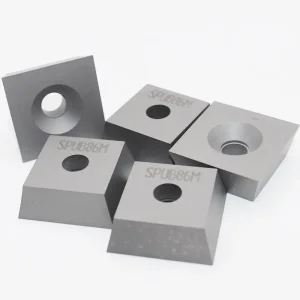
China Factory wholesale boxes tungsten woodworking carbide button inserts Supplier, Factories
-
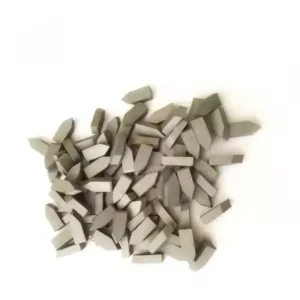
Wholesale Customized carbide welding tips for turning milling cutters Manufacturer, Manufacturers
-
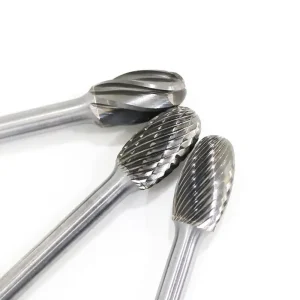
Wholesale Oval cutting tool tungsten carbide rotary file shank diameter Factory, Factories
-
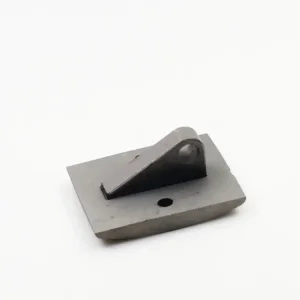
Buy Wholesale tungsten non-magnetic cemented carbide wear parts Supplier, Suppliers
-
-
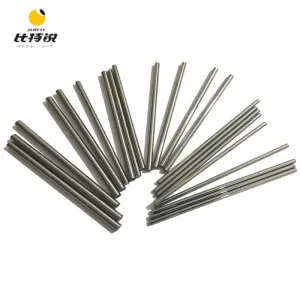
Buy Tungsten Carbide Round Rod Blanks for End Mills Manufacturer, Manufacturers
-
-
Partner with a Premier China Tricone Drill Bit & Carbide Manufacturer
Request a customized technical quotation, CAD drawings review, or field trial samples for your upcoming drilling and mining procurement contracts.