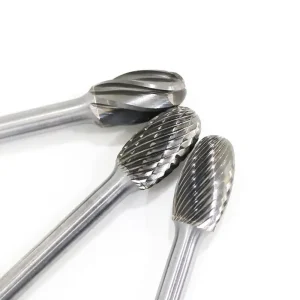
Featured Sintered Carbide Components & Assemblies
Engineered from premium virgin micro-grain powders and high-purity recycled metallurgical streams for superior hardness, extreme wear resistance, and long-life industrial tooling.
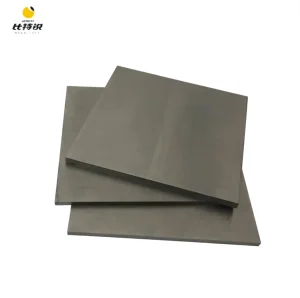
Wholesale Customized Cemented Carbide Plate — Blanks in Any Size, Shape & Grade
View Product Details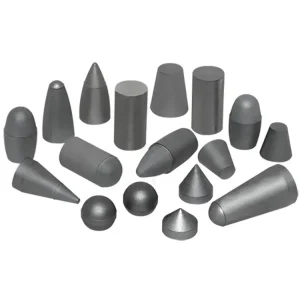
China Round Billet Metal for High Strength Cemented Carbide Tools Manufacturer
View Product Details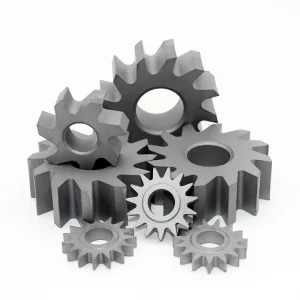
Wholesale Custom Tungsten Carbide Spiral Bevel Gear Milling Cutters
View Product Details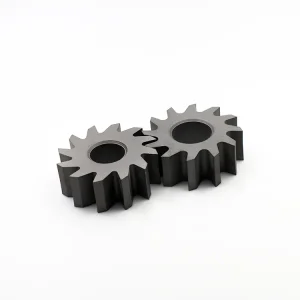
Wholesale China Best Price Straight Toothed Steel Small Pinion Gears
View Product Details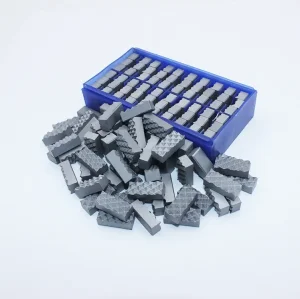
China Best Price YG8 Tungsten Carbide Gripper Inserts for Chuck Jaw
View Product Details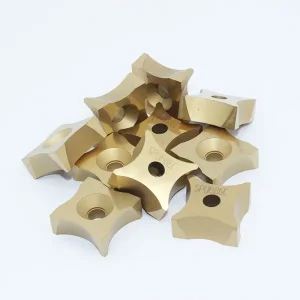
SPUB86 CVD Coating Tungsten Carbide Turning Inserts Manufacturers
View Product Details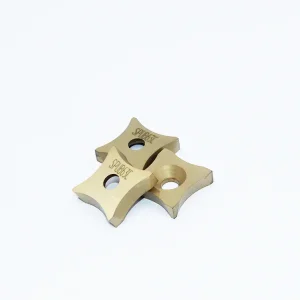
SPUB-63C Tungsten Scrap Brake Lathe Carbide Cutting Inserts Tools
View Product Details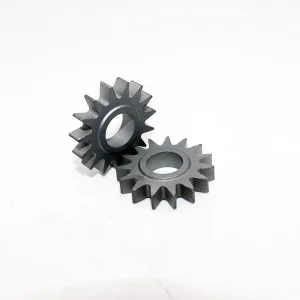
Custom 60 Knife Variable Speed Fixed Gear Cast Iron Large Metal Gear
View Product DetailsChina Scrap Carbide Prices: Industrial Drivers & Refining Economics
Understanding the macro determinants behind tungsten scrap pricing, secondary raw material yields, zinc recycling versus chemical digestion, and export parity indexes.
Ammonium Paratungstate (APT) Indexation
Global scrap tungsten carbide prices are intrinsically tethered to primary market APT spot benchmarks. Sintered carbide scrap (WC-Co blanks, end mills, inserts, and sludge) fluctuates based on elemental W concentration, cobalt market indexes, and processing yield efficiency at direct hydrometallurgical refineries.
Zinc Process vs. Chemical Digestion
Scrap carbide recycling paths drastically determine value. The Zinc Reclamation Process preserves original grain size for direct press-ready powders at lower conversion cost, whereas Hydrometallurgical Chemical Digestion digests scrap into pure sodium tungstate and APT, commanding strict virgin-equivalent premiums.
Closed-Loop Circular Economy Audits
Top-tier industrial buyers utilize closed-loop scrap buyback schemes with Chinese manufacturers. By establishing traceable scrap credit programs, heavy machining and drilling plants offset raw virgin tooling procurement costs by up to 28% while meeting modern Corporate ESG and decarbonization mandates.
Global Scrap Flow & Sintered Alloy Price Parity
Evaluating international cross-border logistics, refining tariffs, grade classification benchmarks, and downstream industrial consumption across primary markets.
| Material Category / Scrap Classification | WC-Co Purity (%) | Primary Industrial Source | Processing Route | Relative Pricing Index |
|---|---|---|---|---|
| Solid Carbide Scrap (Inserts, End Mills) | 88% - 94% WC, 6-12% Co | CNC Machining, Mold Shops, Automotive | Direct Zinc Melting or Chemical Extraction | Benchmark Tier-1 (90-95% APT) |
| Heavy Wear Plates & Mining Compacts | 85% - 91% WC, 8-15% Co | Downhole Drilling, Rock Excavation, Mineral Mining | Hydrometallurgical Dissolution | Tier-2 High Toughness |
| Carbide Grinding Sludge / Swarf | 65% - 80% Dry Basis WC | Tool Grinding Facilities, Flute Polishing | Roasting, Acid Leaching, APT Conversion | Secondary Refining Grade |
| Non-Magnetic / Corrosion Resistant Scrap | 85% - 92% WC, Ni/Cr Binder | Petrochemical Valves, Magnetic Tool Dies | Specialized Chemical Extraction (Cobalt-Free) | Custom Segregated Value |
Virgin vs. Reclaimed Sintering Metallurgy
Jiangxi Zhongfu Cemented Carbide ensures that whether engineered from virgin tungsten matrix or verified recycled streams, every batch adheres to strict ASTM B777 and ISO standard metallographic parameters.
Microstructure Purity
High-resolution scanning electron microscopy (SEM) monitors verify zero unreacted elemental inclusions, eta-phase embrittlement, or parasitic iron contamination in our Sinter-HIP furnaces.
Transverse Rupture Strength
Our pressure-sintered products exhibit TRS values reaching 2,600 to 4,200 MPa, providing exceptional resistance against mechanical chipping during ultra-high feed rate milling operations.
HIP Densification
All blanks undergo hot isostatic pressing (Sinter-HIP) at 1,400°C under 10 MPa argon pressure, closing micro-voids to achieve porosity ratings superior to ISO A02-B00-C00 standards.
Formulation Customization
From standard YG6, YG8, YG15, and YG20 grades to specialized non-magnetic nickel and cobalt-free binder compositions engineered for deep-well MWD sensors and corrosive wear liners.
Localized Heavy-Industry Application Deployments
Matching cost-optimized scrap-derived raw materials and premium sintered grades to heavy mechanical manufacturing sectors across global industrial corridors.
Tube & Pipe Scarfing Inserts
Custom SPUB-63, SPUB-86, and SNMX inserts designed specifically for longitudinal weld seam peeling on ERW high-frequency structural pipes, providing prolonged edge endurance against continuous red-heat friction.
Precision Die & Stamp Tooling
Large-format tungsten carbide blocks (up to 100×100×60 mm) designed for wire EDM processing into silicon steel lamination progressive dies, metal can stamping punches, and cold-heading fastener tooling.
Geotechnical & Downhole Drilling
Heavy-duty YG8 and YG11C brazed buttons and gripper tips tailored for roller cone bits, diamond PDC backing substrates, foundation trenching scarifiers, and railway ballast tamping tines.
Global Logistics, Export Compliance & ESG Traceability
Mitigating commercial procurement risk through strict dual-use trade compliance, conflict-free mineral vetting, and dedicated multilingual engineering support.
Dual-Use Trade & Customs Clearance
Full export documentation including MOFCOM dual-use export declarations, standardized HS code classifications (8101.99, 8209.00), and transparent certificates of origin for swift customs processing across US, EU, and Asia-Pacific ports.
Conflict-Free & RMI Certified Material
Rigorous adherence to the Responsible Minerals Initiative (RMI). Every batch of tungsten concentrate and scrap carbide undergoes upstream chemical verification to ensure 100% ethical, conflict-free metallurgical sourcing.
On-Site Metallurgy & Consignment Warehousing
Flexible commercial procurement frameworks including bonded warehouse stocking, buffer inventories for standard rod blanks (h6 ground Ø1–40 mm), and customized scrap buy-back valuation credit terms.
2026–2030 Roadmap: Advanced Sintering & Zero-Carbon Refining
Strategic investments in hydrometallurgical closed loops, low-emission microwave sintering, and nano-composite refractory grain engineering.
0.2 µm Ultra-Fine Nano Blanks
Refining secondary tungsten carbides into sub-micron powder fractions without recrystallization grain growth, delivering unprecedented hardness (>93 HRA) for micro-machining of titanium aerospace alloys.
Direct Zero-Emission Scrap Extraction
Pioneering electrochemical leaching methods that recover tungsten carbide directly from scrap tool heads with 40% lower kilowatt-hour consumption compared to traditional chemical oxidation cycles.
Predictive AI Formulation Modeling
Leveraging computational metallurgy to predict thermal expansion and toughness gradients across heterogeneous carbide-to-steel brazing interfaces, substantially reducing interface shearing stress in service.
Frequently Asked Questions on Scrap Carbide & Production
Direct answers to common questions regarding scrap valuation metrics, quality assurance, minimum order quantities, and custom component manufacturing.
How are China scrap carbide prices calculated on a transactional basis?
Pricing is fundamentally derived from the domestic and international Ammonium Paratungstate (APT) index, adjusted for the net weight of tungsten carbide (WC) content, cobalt binder percentages, contamination factors (such as brazing alloy residues or steel shanks), and processing energy costs.
Does Zhongfu utilize 100% virgin powder or recycled scrap for new tools?
We strictly segregate production lines. For our premium h6 ground rods, micro-end mills, and high-precision stamping dies, we utilize 100% virgin micro-grain powders. For specific cost-sensitive wear components, industrial scarifiers, and standard mining inserts, refined reclaimed alloys can be specified by mutual contract agreement.
Can you manufacture custom components directly from customer CAD drawings?
Yes. Custom manufacturing accounts for over 65% of our factory production. Our engineering department can interpret 2D/3D models (STEP, IGES, DXF) to press, Sinter-HIP, and wire-cut or grind components to sub-micron dimensional tolerances.
What is the standard turnaround time for technical engineering reviews?
Our engineering team provides comprehensive manufacturability reviews, metallurgical grade recommendations, and competitive commercial quotes within 8 working hours from initial drawing submission.
Precision Carbide Rods, Gauges & Specialized Wear Parts
Browse our factory-direct selection of round solid rods, non-magnetic plug gauges, elbow fittings, and lathe peeling inserts exported globally to over 20 countries.
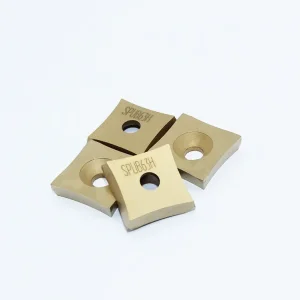
Buy SPUB-63 Welding Tube Scarfing Insert, Pipe Peeling Insert Manufacturer
View Product Details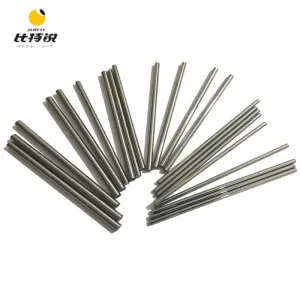
Buy Tungsten Carbide Round Rod Blanks for End Mills Manufacturer
View Product Details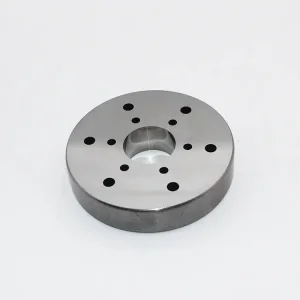
China Customized Tungsten Carbide Fitting Elbow Tee Cap Reducer Pipe Flanges
View Product Details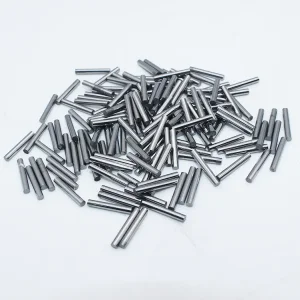
Wholesale China Non-Magnetic Solid Cemented Carbide Pin Plug Gauges Rod
View Product Details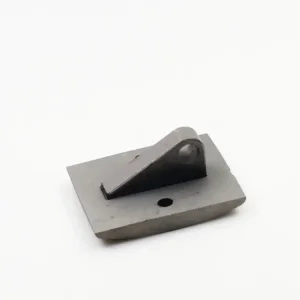
Buy Wholesale Tungsten Non-Magnetic Cemented Carbide Wear Parts
View Product Details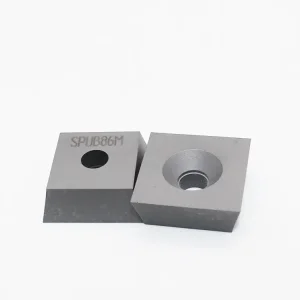
Wholesale Factory Direct Sale Tungsten Carbide Turning Inserts
View Product Details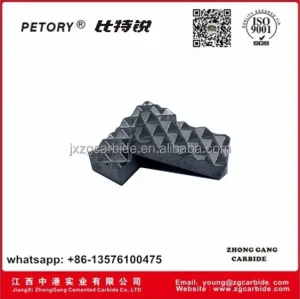
Buy YG8 Carbide Gripper Inserts for Chuck Jaw Manufacturers, Supplier
View Product Details