
High-Performance Scarfing & Tungsten Carbide Solutions (Part I)
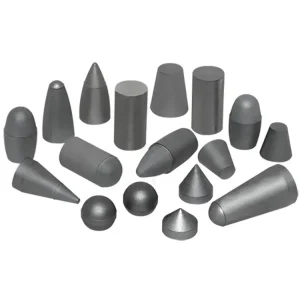
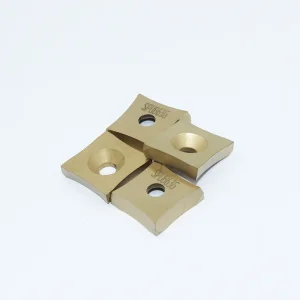
Explore precision-machined cemented carbide cutting tips, wear-resistant plates, and OD/ID scarfing inserts fabricated by leading Chinese manufacturing centers under strict metallurgical quality control.






Engineering Principles of Weld Seam Scarfing Inserts
A rigorous examination of continuous mechanical deburring, thermal shocking phenomena, and microstructural optimization in electric resistance welded (ERW) and high-frequency welded (HFW) tubular production.
Thermal-Mechanical Shocks
During HFW tube manufacturing, the weld bead reaches plastic or semi-molten states ranging between 1100°C and 1380°C. Outside diameter (OD) and inside diameter (ID) scarfing inserts endure continuous mechanical shearing coupled with violent thermal cycling, requiring substrates with ultra-high transverse rupture strength (TRS > 2800 N/mm²).
Substrate Microstructure Control
Premature chipping in scarfing tools occurs when coarse cobalt pools or unbound carbon (eta-phase) trigger fatigue crack propagation. Leading Chinese factories deploy sub-micron tungsten carbide grains with regulated cobalt binder phases (9%–13% Co) sintered in high-pressure Sinter-HIP autoclaves at 60–100 bar argon gas pressure.
Edge Preparation Geometry
A razor-sharp cutting edge inevitably fails under the violent hydrodynamic impact of moving steel beads. Controlled micro-honing (radius r = 0.03–0.06 mm) combined with negative chamfers (T-land) redistributes cutting stresses away from the extreme cutting tip, elevating cumulative linear meter cutting capacity by 240%.
“In high-speed API OCTG casing and pipeline mills running at over 90 meters per minute, tool downtime directly costs thousands of dollars per hour. Sourcing scarfing inserts from qualified Chinese manufacturing hubs requires verifying grain phase purity, vacuum HIP consolidation, and precision radius grinding rather than purchasing standard off-the-shelf turning geometries.”
Global Enterprise Procurement Demands & Technical Metrics
How Tier-1 steel conglomerates, line pipe manufacturers, and cold-drawn precision tubing mills evaluate Chinese tungsten carbide insert vendors against stringent OEM standards.
1. Notch & Chipping Resistance
Steel pipe flashes exhibit unpredictable thickness and localized martensitic slag inclusions. Buyers demand carbide grades exhibiting fracture toughness (K1c) > 11.5 MPa·m½ to eliminate sudden cataclysmic failure that damages the ID mandrel or scarfing arbor.
2. Arc Radius Conformity
The insert's concave scraping radius (R-groove) must conform accurately to the outer pipe contour (e.g., R15mm–R180mm). Tolerances exceeding ±0.02mm lead to 'undercutting' (reducing pipe wall thickness below API standards) or 'secondary flashing' requiring secondary grinding.
3. Coating Thermal Barrier
Medium-temperature chemical vapor deposition (MT-CVD) multi-layer architectures combining TiCN, Al₂O₃, and TiN establish a chemical barrier against iron affinity wear and micro-welding at cutting temperatures surpassing 900°C.
4. Supply Chain Directness
Procurement directors increasingly bypass secondary domestic distributors to interface directly with primary Chinese sintering factories like Zhongfu Carbide. Eliminating trading layers provides direct metallurgical batch traceability and 30%–45% direct unit savings.
| Standard Model | Cutting Application | Standard Dimensions (mm) | Recommended Grade | Coating Technology | Target Substrate Material |
|---|---|---|---|---|---|
| SPUB-63 / SPUB-63J | OD Longitudinal Tube Scarfing | 19.05 × 19.05 × 6.35 (R6-R25) | YG11X / K30 | CVD TiCN + Al₂O₃ + TiN (Yellow) | Low Carbon, Mild Steel, Q235, St37 |
| SPUB-86 / SPUB-86C | Heavy-Duty Line Pipe Scarfing | 25.4 × 25.4 × 8.00 (R12-R50) | YG12 / P30-P40 | CVD MT-TiCN + Thick Al₂O₃ | API 5L X52, X65, X70 Gas Pipelines |
| SNMX-1507 / 1907 | Square Chamfer Weld Trimming | 15.87 × 15.87 / 19.05 × 19.05 | YG8N / M25 | PVD AlTiSiN Nano-Composite | Stainless Steel (304, 316L), Duplex 2205 |
| SNMG-1907-R / L | Internal ID Scarfing Mandrels | 19.05 × 19.05 × 7.94 (Concave) | YG15C / High TRS | Uncoated or Thin CVD TiN | Hydraulic Cylinder Tubes, Cold Drawn DOM |
| Round Button / R-Type | Rail Flash Butt Weld Dressing | Ø16mm to Ø32mm Discs | YG20 / Extreme Impact | Gradient Multilayer PVD TiAlN | High Carbon Rail Steels (U71Mn, U75V) |
Macro-Industry Solutions Powered by Cemented Carbide Tooling
Beyond standard mechanical tube deburring, Chinese advanced carbide engineering powers foundational infrastructure, metal forming, and severe wear protection.
1. Oil & Gas API OCTG Line Pipe
Longitudinal high-frequency welding of API 5L line pipe grades (X65 to X100) generates thick, work-hardened beads. Our SPUB-86 and custom curved scarfing inserts provide uninterrupted cuts of up to 4,500 meters of continuous weld line without chatter marks or tool edge spalling, preventing critical pipe rejection during ultrasonic testing.
2. Automotive Precision ERW & DOM Tubing
Hydroformed structural chassis tubes and automotive shock absorber barrels require near-zero ID inner bead remnants (under 0.05mm step height). We manufacture miniaturized internal scarfing cutter rings and multi-radius concave indexable inserts ground to optical tolerances.
3. Heavy Railway Flash Butt Welding
Continuous welded rail (CWR) installations fuse 100-meter rail sections into seamless track. Following flash-butt welding, hydraulic rail trimmers equipped with heavy-duty tungsten carbide rail trimming blades strip white-hot extruded flash along rail profiles without disrupting base metal integrity.
Standardization, ESG & Global Compliance Framework
Operating from Jiangxi province—the epicentre of global tungsten reserves—Chinese industrial leaders align production with international environmental, ethical, and mechanical criteria.
Full Spectrum Metallurgical QA Protocol
Every powder blending lot undergoes comprehensive metallographic verification before sintering, eliminating chemical inconsistencies. Our laboratory conducts:
- Porosity & Uncombined Carbon Testing: Conforming to ISO 4505 (A02, B00 ratings).
- Coercive Force & Magnetic Saturation (4πσ): Ensuring the exact optimal cobalt stoichiometric phase.
- Microstructure SEM Analysis: Verification of sub-micron grain sizing according to ASTM B390.
- Transverse Rupture Strength (TRS) Bending Checks: Exceeding 2,800 N/mm² for high-impact scarfing grades.
ESG Accountability & Supply Chain Resilience
Modern international procurement demands rigorous chain-of-custody verification. We adhere to global trade and environmental benchmarks:
- 100% Conflict-Free Tungsten: Sourced strictly from audited mines adhering to Responsible Minerals Initiative (RMI) guidelines.
- RoHS & REACH Compliance: Certified absence of banned hazardous heavy metal substances across all coatings.
- Zero Virgin Material Contamination: Zero incorporation of reclaimed zinc-scrap powder in high-precision scarfing items.
- Direct Engineering Support: English-speaking metallurgists providing rapid drawing reviews and failure mode analysis within 8 hours.
Technological Roadmap & Next-Gen Scarfing Innovations
Examining emerging frontiers in tooling substrates, adaptive chip-breaker geometry, and intelligent sensor-integrated tube conditioning systems through 2026–2030.
Functionally Graded Carbides (FGC)
Development of cobalt-gradient substrate structures combining an ultra-hard, cobalt-depleted outer cutting rim (HRA 93.0) with an ultra-tough, high-cobalt ductile interior core to withstand violent seam ruptures.
Nano-Laminated HiPIMS Thin Films
High-Power Impulse Magnetron Sputtering (HiPIMS) synthesizing AlTiSiN/CrN nanolayers with extreme oxidation resistance up to 1150°C and near-zero residual stress, dramatically lowering thermal fatigue micro-cracking.
CFD-Designed Chip Breakers
Computational fluid dynamics and finite-element modeling of weld flash evacuation paths, generating 3D-sculpted chip gutters that curl continuous red-hot ribbon chips away from rotating tube surfaces safely.
Integrated Wear Monitoring
Collaborative research integrating acoustic emission sensors and thermographic feedback loops into scarfing arbors, enabling real-time index warning systems before edge breakage damages pipe surfaces.
Precision Ground Carbides, Tooling & Scarfing Inserts (Part II)
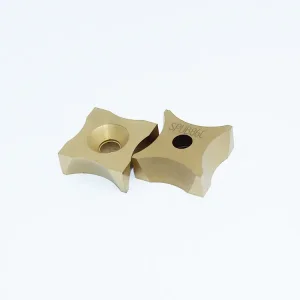
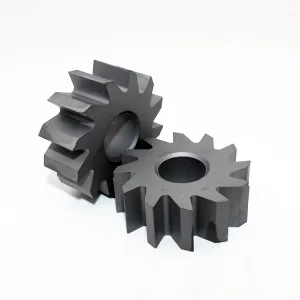
Complete your supply chain requirement with our extensive catalog of threading inserts, solid ground round rods, standard SPUB-63 blades, and heavy-duty wear components.






Frequently Asked Questions on Scarfing Inserts & Sourcing
In-depth responses regarding grade selection, dimensional compatibility, failure mode analysis, and OEM custom production.
What primary factors determine whether to use SPUB-63 or SPUB-86 inserts?
Why do scarfing inserts suffer from thermal fatigue micro-cracking ('comb cracking')?
Can Jiangxi Zhongfu manufacture non-standard radius profiles according to customer drawings?
What is the advantage of Sinter-HIP over conventional vacuum sintering for scarfing inserts?
What delivery times and MOQ are standard for export orders to North America and Europe?
Request Custom Scarfing Profile Quotations & Technical Consultation
Collaborate directly with our sintering metallurgists and tooling application engineers. Send your pipe diameter specifications, steel grade criteria, and operating speed for rapid grade optimization within 8 hours.