Featured Precision Non-Magnetic Pins & Carbide Components
Explore high-wear industrial tool blanks, non-magnetic dowel substrates, and metallurgical wear solutions manufactured under strict ISO 9001:2015 process controls.

China OEM Customizable HIP Processed Square Tungsten Carbide Plate, Polished Flat Blank
View Specifications
China Wholesale Custom Tungsten Carbide Module Gear Milling Shaper Cutters
View Specifications
China Dia 8 × 330 mm Nano Grain Size Tungsten Carbide Rods for Making Tools
View Specifications
China Wholesale SPUB63M30 Tungsten Carbide Cutter Indexable Tools
View Specifications
Buy Tungsten Carbide Round Rod Blanks for End Mills Manufacturer
View Specifications
China SPUB63B Wholesale Lathe Round Carbide Turning Inserts
View Specifications
Wholesale Customized Tungsten Non-Magnetic Carbide Scarifier Cutter & Wear Parts
View Specifications
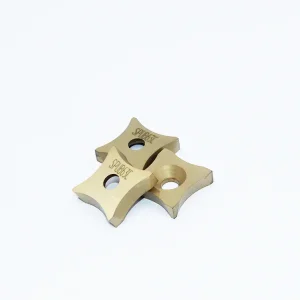
China SPUB86F TiN Coating Tungsten Carbide Tube Scarfing Insert
View SpecificationsMetallurgical Foundations of Non-Magnetic Tungsten Carbide Pins
Overcoming ferromagnetic interference in extreme tribological environments: The chemistry, crystal structure, and sintering physics of modern cemented non-magnetic carbide pins.
Nickel-Chromium Binder Chemistry
Conventional cemented carbide utilizes Cobalt (Co) as a ductile binder matrix. However, Cobalt's inherent ferromagnetism creates magnetic hysteresis loops and eddy currents that distort high-frequency electromagnetic sensors. Our Chinese foundry formulates proprietary Ni-Cr-Mo austenitic binder matrices that neutralize magnetic dipole orientation, guaranteeing magnetic permeability μr down to 1.001–1.005 while maintaining high wettability with tungsten carbide grains.
Overpressure Sinter-HIP Synthesis
Micro-porosity and grain boundary precipitation can induce localized parasitic magnetism and fatigue failure. Through computerized 10 MPa Sinter-HIP (Hot Isostatic Pressing) furnaces, we sinter non-magnetic pins at 1,420°C in pure argon atmospheres. This closes micropores, achieves ISO Class A00 porosity, prevents carbon-deficient eta-phase (η-phase Co3W3C or Ni3W3C) formation, and enhances transverse rupture strength beyond 2,600 MPa.
Sub-Micron Dimensional Stability
Operating environments requiring non-magnetic locator pins, guide shafts, and ejector dowels demand exact geometrical tolerances. Our facility deploys Japanese CNC centerless grinding, optical curve grinding, and ultra-sonic micro-lapping to reach cylindrical roundness of ≤ 0.0005 mm, diametrical tolerances of h5 / h6 (±0.001 mm), and optical mirror surface finishes down to Ra 0.02 μm without subsurface microcracking.
| Carbide Grade Designation | WC Grain Size (μm) | Binder Composition (wt%) | Density (g/cm³) | Hardness (HRA / HV10) | TRS (MPa) | Magnetic Permeability (μr) | Primary Industrial Purpose |
|---|---|---|---|---|---|---|---|
| NM-06 (Ultra-Hard) | 0.6 – 0.8 | 6.0% Ni-Cr | 14.95 ± 0.05 | 92.5 HRA / 1750 HV | 2,300 | < 1.002 | Semiconductor Chuck Locators, Optical Probes |
| NM-10 (Balanced Precision) | 0.8 – 1.2 | 10.0% Ni-Cr-Mo | 14.65 ± 0.05 | 90.2 HRA / 1520 HV | 2,750 | < 1.003 | MWD Downhole Telemetry, MRI Surgical Dowels |
| NM-12 (Toughness Focus) | 1.2 – 1.6 | 12.0% Ni-Mo-Cr | 14.40 ± 0.05 | 88.8 HRA / 1380 HV | 3,100 | < 1.005 | Heavy Impact Forming Dies, Magnetic Media Stamping |
| NM-15 (Corrosion-Wear) | 1.0 – 1.4 | 15.0% Ni-Cr-Special | 14.15 ± 0.05 | 87.4 HRA / 1260 HV | 3,350 | < 1.001 | Offshore Borehole Telemetry, Subsea Sensor Pins |
Specialized Applications & Mission-Critical Operating Scenarios
Where traditional cobalt-bonded carbide fails due to magnetic clamping, electromagnetic deviation, or electrochemical galvanic cell formation, non-magnetic pins deliver unimpeded uptime.
Semiconductor & IC Packaging
In high-density wafer dicing, vacuum suction pick-and-place arms, and wire-bonding capillary guides, magnetic remanence causes microscopic silicon debris to adhere to alignment pins. Using non-magnetic carbide guide dowels eliminates dust attraction, prevents electrostatic-magnetic discharge, and prevents wafer scratching across millions of high-speed index cycles.
MWD / LWD Downhole Telemetry
Measurement-While-Drilling (MWD) and Logging-While-Drilling (LWD) drill collars house sensitive fluxgate magnetometers and directional compass sensors. Our non-magnetic locating pins, erosion sleeves, and flow valve pins withstand 180°C downhole mud, high H2S/CO2 sour gas, and abrasive silica slurries without inducing magnetic drift or directional heading false positives.
Medical MRI & Surgical Robotics
Under 3.0-Tesla to 7.0-Tesla ultra-high-field MRI resonance environments, standard metallic components experience lethal projectile attraction forces and extreme image artifact blooming. Our non-magnetic tungsten carbide pins provide high young's modulus (E > 580 GPa) rigidity for surgical puncture guides, robotic catheter joints, and biopsy positioning mechanisms with total magnetic transparency.
Magnetic Material Forming Dies
During the automated dry-pressing and sintering alignment of NdFeB (Neodymium-Iron-Boron) and SmCo rare-earth permanent magnets, the intense external alignment electromagnetic fields will magnetize normal tool steels and cobalt carbides. Our non-magnetic tungsten core pins prevent demolding seizure, eliminate tool stickiness, and ensure consistent magnetic powder orientation.
Technology Roadmap & Future Outlook for Non-Magnetic Alloys
How our R&D engineering divisions in Jiangxi are revolutionizing multi-principal component binders, nanostructured grain boundaries, and additive hybrid geometries.
Phase 1: High-Entropy Alloy (HEA) Binders
Current research combines equiatomic Fe-Co-Ni-Cr-Mn or Ti-Zr-Nb-Ta-Mo non-magnetic high-entropy binders. By shifting from standard single-metal nickel solutions to complex concentrated multicomponent systems, we increase lattice distortion energy. This yields a 35% jump in micro-hardness and suppresses grain coarsening during high-temperature thermal cycling without introducing magnetic susceptibility.
Phase 2: Additive Binder-Jet 3D Tooling
To accommodate conformal cooling internal passageways in semiconductor hot-embossing and molding pins, our factory is deploying high-speed Binder Jetting (BJM) alongside selective laser micro-cladding. Post-densification via Hot Isostatic Pressing guarantees 99.9% theoretical density, enabling internal spiral cooling channels within 2.0 mm diameter non-magnetic pins that shorten cycle times by 42%.
Phase 3: Diamond-Like Nanocoatings (DLC)
While tungsten carbide is inherently hard, dry high-speed sliding can introduce micro-adhesion. Integrating atomic-layer deposited tetrahedral amorphous carbon (ta-C) and CrN-DLC nanocomposite multilayer coatings creates an ultra-low friction coefficient (COF < 0.08). This completely prevents adhesive pickup in non-lubricated vacuum chambers and extreme cleanroom operations.
China Factory Supply Chain Resilience & Production Efficiency
Jiangxi Province holds the world's most concentrated tungsten ore deposits. Understanding how vertically integrated manufacturing unlocks unmatched delivery speed and price-performance advantages.
Mine-to-Microinch Integration
Unlike Western tool finishers dependent on volatile raw material imports, our Nanchang production hub controls the entire continuum: Ammonium Paratungstate (APT) reduction, carbonization to WC powder, sub-micron spray drying, automated pressing, HIP sintering, and high-precision grinding under one roof.
Rapid Prototype-to-Scale Lead Times
With over 232 in-house technical personnel and a massive bank of 50+ electric spark wire EDMs, multi-axis Swiss turn-mills, and centerless grinders, customized non-magnetic pins can transition from 3D CAD step files to sintered prototypes within 5 to 7 business days, slashing time-to-market.
100% Virgin Powder Integrity
Recycled scrap carbide often introduces erratic tramp cobalt traces that cause unexpected magnetic hotspots and premature pin failure. We strictly enforce a virgin-only raw material standard. Every production heat is metallographically analyzed and verified via vibrating sample magnetometer (VSM).
TCO Optimization for Global OEMs
By cutting intermediary trading layers and optimizing thermodynamic furnace cycles, our factory delivers up to a 30%–45% Total Cost of Ownership (TCO) advantage over European or Japanese carbide suppliers, while exceeding international dimensional and magnetic performance standards.
Global Commercial & Industrial Landscape for Non-Magnetic Hardware
Strategic comparative analysis of regional procurement, engineering validation hurdles, and international supply chain realignment.
North American Market Drivers
Demand in the United States and Canada is largely anchored by unconventional horizontal shale extraction (Permian, Bakken), requiring ruggedized non-magnetic MWD sensor housings, and advanced aerospace navigation gyroscopes. Procurement managers prioritize supply chain redundancy, ITAR-compliant non-defense commercial exemptions, and guaranteed micro-yield consistency to prevent catastrophic drill-string downhole retrieval costs.
European High-Precision Engineering
German, Swiss, and Northern European buyers in medtech and high-end automotive sensor manufacturing mandate complete trace metallurgical accountability, RoHS, and REACH hazardous material conformity. Their inspection centers emphasize stringent grain-size standard deviation (EBSD analysis) and long-term cyclic wear behavior under chemical exposure (acidic washdowns and cryogenic biological sterilizations).
Asia-Pacific Microelectronics Hub
Taiwan, South Korea, Japan, and Southeast Asian assembly plants dictate rapid volume scalability for sub-millimeter micro-pins (diameters < 0.5 mm). Pins must feature ultra-sharp corner radii (< 0.01 mm) and flawless mirror polishes to run in automated 24/7 lead-frame stamping dies without causing burr generation or silicon die micro-cracking.
Localization Support, Quality Metrology & Compliance Assurance
Every non-magnetic pin is validated with advanced metrology equipment to guarantee complete zero-defect zero-magnetism shipments.
Permeability Testing (VSM & Severn Gauge)
We verify non-magnetic integrity down to 10-5 emu sensitivity using Vibrating Sample Magnetometry (VSM) and low-field Severn permeability indicators, guaranteeing that no localized magnetic poles or cobalt segregation exist within the finished dowels.
ZEISS CMM & Laser Scanning
Critical geometric features including concentricity, perpendicularity, circular runout, and cylindrical profile are measured on temperature-controlled ZEISS 3D Coordinate Measuring Machines and Mitutoyo non-contact laser micrometer benches.
Material Test Reports (EN 10204 3.1)
Each lot is shipped with comprehensive inspection documentation including metallographic SEM micrographs, hardness test records (HRA/HV), chemical spectroscopy breakdown, and magnetic permeability verification certificates for effortless incoming QA auditing.
Global Multilingual Engineering
Our dedicated bilingual engineering application specialists provide direct DFM (Design for Manufacturability) design consultations within 8 hours. We accommodate European ISO metric standards, North American imperial prints, and Japanese JIS drawing conventions with seamless precision.
Frequently Asked Technical Questions (FAQ)
Comprehensive answers addressing magnetic threshold stability, mechanical machining parameters, binder selection, and custom order tolerances.
Extended Carbide Tooling, Inserts & Milling Hardware
Complementary precision components manufactured in our Nanchang production facility, including pipe scarfing tools, indexable inserts, and specialty carbide vessels.

China Customized Tungsten Carbide Insert for Crushing Roll Wear Parts
View Specifications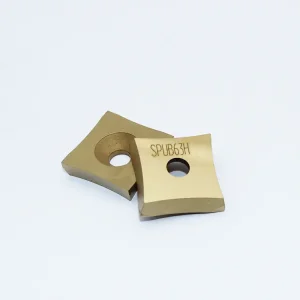
Buy Wholesale SPUB63H Square Tungsten Carbide Cemented Cutting Lathe Tools
View Specifications
Wholesale SPUB63 Tungsten Indexable Carbide Brazing Inserts Woodworking Tools
View Specifications
Wholesale Factory Sale Customized Carbide Milling Jar, Tungsten Carbide Bowl & Mortar
View Specifications
China SPUB-63 Steel Pipe Scarfing Tools Tube Scarfing Inserts
View Specifications
China Wholesale Square Tungsten Large Chip Blank Carbide Insert
View Specifications
Buy Wholesale SPUB63 Tungsten Carbide Insert Scraps Lathe Cutting Tools Turning
View Specifications