
Engineered Tungsten Carbide Turning & Milling Solutions
Explore standardized and custom-machined carbide substrates, sub-micron solid blanks, and indexable inserts designed for demanding metal-removal processes.







Metallurgical Grade Classifications: Balancing Hardness and Fracture Toughness
In modern precision machining, cold heading, and downhole wear protection, selecting the correct tungsten carbide (WC) grade depends on the trade-off between wear resistance and mechanical shock absorption.
Low-Binder Micro-Grain (YG6 / ISO K10–K20)
Featuring 6% Cobalt (Co) binder and sub-micron grain sizing (0.6–1.0 µm), YG6 provides Rockwell hardness above 90.5 HRA. Ideal for abrasive casting machining, thin-sheet cutting knives, non-ferrous profiling, and wear plates subjected to constant sliding friction.
General Tooling & Impact (YG8 / ISO K20–K30)
With an 8% Cobalt matrix and medium WC crystallites, YG8 balances edge retention with dynamic shock resistance. Recognized across mining, rock drilling tools, brazed turning bits, and tube scarfing inserts handling cyclic load reversals.
High-Toughness Forming (YG15–YG20 / ISO K40)
Formulated with 15% to 20% Cobalt binder, these structural grades prevent catastrophic chipping during heavy cold heading, stamping, wire drawing dies, and deep drawing punches facing severe hydraulic pressure.
Corrosion & Non-Magnetic (Nickel-Bonded WC)
Eliminating ferromagnetic Cobalt, this class replaces the matrix with engineered Nickel (Ni-Cr). Designed for measurement-while-drilling (MWD/LWD) collars, subsea directional valves, magnetic powder compaction molds, and aggressive acid-saline wash environments.
Industrial Grade Engineering Reference Matrix
Review baseline mechanical metrics for proper engineering selection. Customized binder mixtures and grain inhibitors are adjusted to meet specific drawings.
| Alloy Grade | Binder Composition | Nominal Density (g/cm³) | Hardness (HRA) | Transverse Rupture (TRS - N/mm²) | Grain Size (µm) | Primary Industrial Use-Case |
|---|---|---|---|---|---|---|
| YG6 ISO K10 | 6.0% Co | 14.90 – 15.00 | 90.5 – 91.0 | ≥ 1,900 | 0.8 – 1.2 | Finishing cast irons, wear guides, non-ferrous slitting knives |
| YG8 ISO K20 | 8.0% Co | 14.65 – 14.80 | 89.0 – 90.0 | ≥ 2,200 | 1.2 – 1.6 | Scarfing inserts, percussion rock drill tips, heavy roughing |
| YG11C Impact Coarse | 11.0% Co | 14.30 – 14.45 | 86.5 – 87.5 | ≥ 2,600 | 2.2 – 3.2 | Rotary drill bits, blast-hole drilling, geological excavation |
| YG15 ISO K40 | 15.0% Co | 13.95 – 14.15 | 87.0 – 88.0 | ≥ 2,800 | 1.4 – 1.8 | Stamping punches, cold header dies, fasteners, drawing dies |
| YG20 Deep Forming | 20.0% Co | 13.40 – 13.60 | 85.0 – 86.0 | ≥ 3,100 | 1.6 – 2.2 | High-impact forging punches, progressive die assemblies |
| WN-10 (Ni) Non-Magnetic | 10.0% Ni Matrix | 14.50 – 14.70 | 88.5 – 89.5 | ≥ 2,300 | 1.0 – 1.4 | MWD downhole directional sleeves, magnetic stampers |
Global Procurement Dynamics: Mitigating Risk in High-Performance Tungsten
International industrial buyers navigate fluctuating ammonium paratungstate (APT) prices, tight dimensional tolerances, and environmental reporting. Successful sourcing requires selecting an integrated manufacturing partner that uses virgin powder and maintains full traceability.
100% Virgin Tungsten Assurance
Secondary or scrap tungsten blends introduce tramp elements that cause internal micro-porosity and sudden edge fracturing under thermal shock. Sourcing verified virgin powders sintered under Hot Isostatic Pressing (HIP) protects against downtime in multi-station CNC environments.
Total Cost of Ownership (TCO)
While initial purchase price is a clear metric, premature tooling replacement and line stops during changeovers drive up total production expenses. Engineered carbide substrates that retain tool geometry reduce finishing passes and extend continuous runtime.
Supply-Chain Traceability & Certification
Global Tier-1 manufacturers require detailed chemical analysis, magnetic saturation measurements, and ISO 9001:2015 documentation. Our factory supplies full metallographic inspection reports with every production batch to support downstream compliance.
From Micron Formulation to Precision Finishing: The HIP Route
Review the production phases involved in converting raw tungsten carbide powder into dense, pore-free components ready for demanding field applications.
01. Wet Ball Milling & Spray Drying
Virgin tungsten carbide powder is milled with cobalt or nickel binders in alcohol-based solutions using paraffin wax plasticizers. Automated spray drying towers produce uniform, free-flowing spherical granules for precise mold cavity filling.
02. High-Precision Compaction
Using multi-axis CNC dry pressing and cold isostatic pressing (CIP) for large plates and rods, our process maintains consistent density across each part, minimizing shrinkage variation during the subsequent thermal sintering stage.
03. Overpressure Sinter-HIP
Parts undergo high-temperature liquid-phase sintering integrated with 60–100 bar argon gas overpressure (Hot Isostatic Pressing). This collapses internal voids, yielding near-zero structural porosity (rated A02/B00) and maximizing transverse rupture strength.
04. Diamond Grinding & h6 Polishing
Equipped with high-precision centerless grinders and profile grinding machines, we finish carbide round rods to h6 diametrical runouts and surface finishes down to Ra 0.2 µm, ensuring runout-free performance in high-speed micro-end-mills.
-
24+Years Sintering Experience
-
5,000 m²Modern Production Facility
-
20+Export Destination Markets
-
< 8 hrsEngineering Drawing Review
Engineered Sector Solutions: Where Substrate Chemistry Meets Real-World Stress
Different production lines present unique mechanical and chemical challenges. We supply wear-resistant components tailored to specific industrial environments.
Steel Mills & Welded Pipe Conditioning
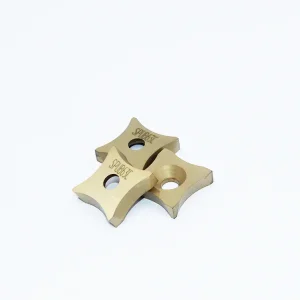
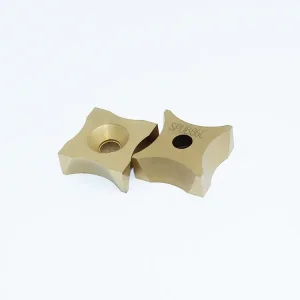
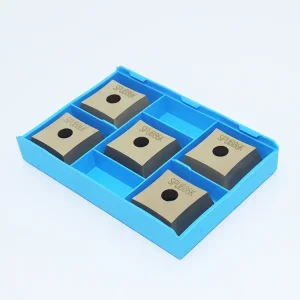
Heavy weld seam deburring and continuous pipe scarfing demand extreme thermal crack resistance. We supply SPUB63, SPUB86, SNMX, and SNMG inserts engineered to peel hot flashing reliably without chipping or breaking.
Downhole Oil & Gas Drilling Assemblies
Operating in deep boreholes involves severe abrasion and corrosive drill muds. We manufacture nickel-bonded radial bearing rings, mud motor nozzle sleeves, and valve trim assemblies designed to perform under high fluid pressure.
Precision Solid Toolmakers & Regrinders
For solid end mill and drill shank producers, we provide h6 tolerance polished and ground carbide rods in sub-micron and nano-grain configurations. These ensure stable tool core strength during high-speed machining of hardened aerospace steels and titanium.
Specialized Tungsten Inserts, Plates & Ceramic Solutions
Explore our full manufacturing range, including wear-resistant flat blocks, silicon carbide ceramic plates, tube scarfing tooling, and coated grooving inserts.






Frequently Asked Technical & Sourcing Questions
Find clear answers to key engineering and commercial questions about tungsten carbide production, quality validation, and supply chain logistics.