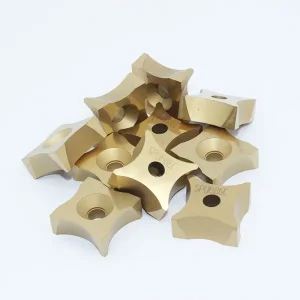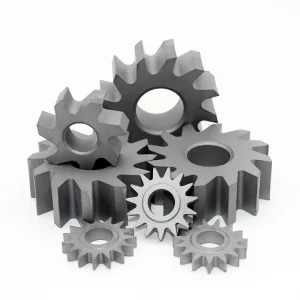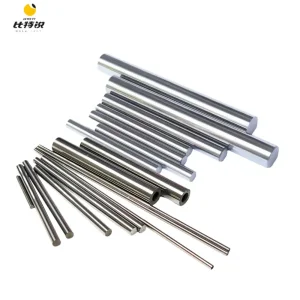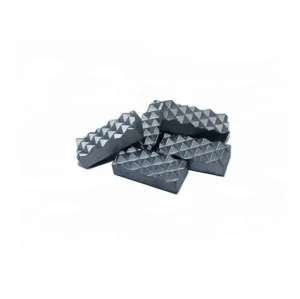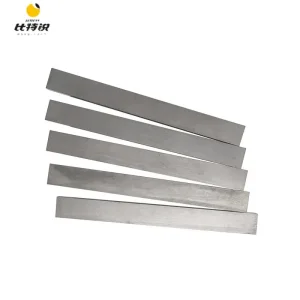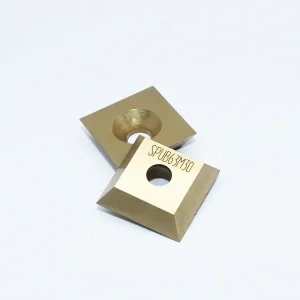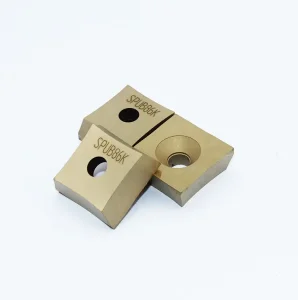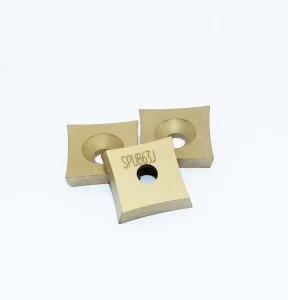
Featured Sintered Blanks & Indexable Inserts
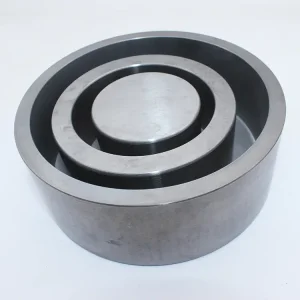
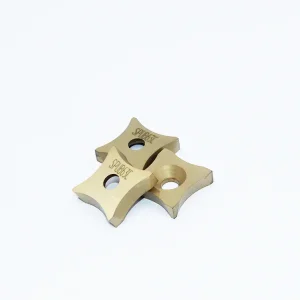
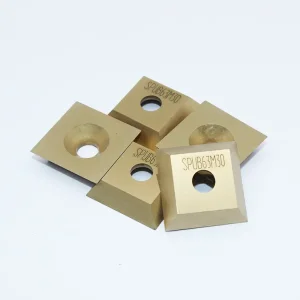
Engineered via strict metallurgical quality controls using virgin tungsten carbide and secondary recycling formulations optimized for wear, turning, and heavy scarfing.

Macro Landscape: The Strategic Metallurgy of Secondary Tungsten
Understanding supply tightness, circular economics, and refining routes across international powder metallurgy corridors.
Critical Resource Security and Global Scrap Dynamics
Tungsten (W) is officially classified as a strategic critical raw material across the European Union, the United States, and Japan due to its irreplacability in metalcutting, defense ballistics, and heavy construction tools. With virgin primary ore deposits (wolframite and scheelite) subject to depleting grades and stringent environmental mining quotas, Scrap Tungsten Carbide (secondary WC-Co material) has evolved from basic metal recycling into a critical geopolitical supply pillar.
Secondary raw material feeds satisfy over 30% to 35% of total international tungsten consumption. Sourced largely from spent milling inserts, decommissioned mining drill bits, broken solid carbide round rods, and sludge generated during precision grinding, industrial scrap commands strict metallurgical categorization. Procuring scrap tungsten carbide is no longer a localized transaction; it is an industrial necessity evaluated on cobalt leach efficiency, contamination thresholds, and purity of reconstituted Ammonium Paratungstate (APT).
Hydrometallurgical Refining
Chemical processing converts low-grade, contaminated, or mixed scrap into pure APT via caustic digestion, ion exchange, and crystallization. Guarantees 99.95%+ tungsten purity comparable to virgin mined wolframite, eliminating tramp elements.
Direct Zinc Recycling Process
Utilizes molten zinc to react with the cobalt matrix, expanding the crystal structure. The zinc is distilled off in vacuum furnaces, leaving a sponge-like WC-Co agglomerate that is milled into direct-sinter powder without chemical dissolution.
Oxidative Thermal Conversion
Used predominantly for oily sludges and soft carbide waste. Scrap is roasted into crude tungsten oxide (WO3), pulverized, and subsequently treated chemically or reduced under high-temperature hydrogen flow to formulate standard sub-micron WC powders.
Industrial Efficiency: The Chinese Integrated Supply Chain
Why procurement directors leverage direct Jiangxi and Hunan factory networks for raw carbide reclamation and finished sintering.
Upstream Mine Proximity Meets Sinter-HIP Technological Scale
China holds roughly 60% of the world’s tungsten reserves and accounts for more than 80% of global intermediate supply. Jiangxi Zhongfu Cemented Carbide Co., Ltd., based in Nanchang, Jiangxi, sits directly inside the world's most concentrated tungsten corridor. This physical proximity eliminates cross-border logistics tariffs, freight delays, and intermediary broker margins on primary and secondary tungsten stock.
Chinese modern manufacturing operations bridge the traditional divide between raw scrap sorting and finished tooling synthesis. With in-house ball milling, spray drying towers, multi-axis automated dry pressing, and Hot Isostatic Pressing (HIP) sintering systems operating under positive pressure argon gas (up to 100 bar), factories produce finished carbide blanks with near-zero microscopic internal porosity (ISO A00, B00, C00), offering exceptional transverse rupture strength (TRS > 3200 MPa).
Rapid Sintering Turnaround
Integrated supply chains allow prototyping custom powder formulations in under 72 hours, with batch sintering and precision grinding delivered in 2 to 3 weeks.
Economies of Scale
Massive domestic processing capacity enables deep raw material inventory buffers, mitigating the volatile international APT spot price fluctuations for end buyers.
Strict Virgin Formulation
Tier-1 factories guarantee strict separation: premium precision tooling is engineered solely from 100% virgin powder, while recycled grades are targeted for structural wear shoes.
Direct Engineering Support
Procurement teams communicate directly with metallurgical engineers rather than brokers, aligning hardness (HRA), cobalt content, and grain size precisely to the tool load.
Localized Application Scenarios: Where Reclaimed & Precision WC Thrives
Specific metallurgical grade allocations matching mechanical shock, thermal cycling, and severe abrasion resistance.
Steel Mill Slab & Tube Scarfing
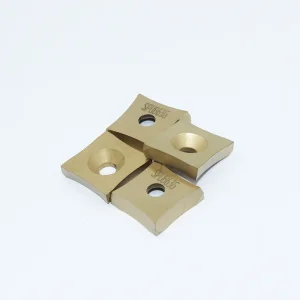
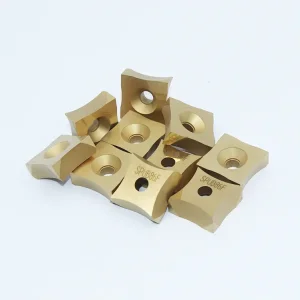
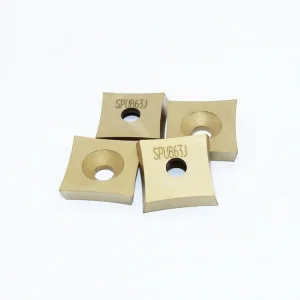
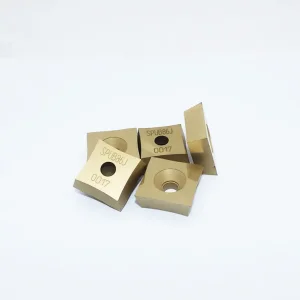
Heavy square and octagonal inserts (such as SPUB63, SPUB86, and SNMX series) operate under violent thermal shock removing continuous welding beads and scale from hot billets. High-toughness, medium-grain WC-Co formulations provide critical impact stability, resisting chipping under intermittent heavy-cut conditions.
Mining, Trenching & Foundation Drilling
Down-The-Hole (DTH) hammer bits, rock roller cutters, and road planer picks endure catastrophic continuous abrasion. Direct recycled zinc-process powders are frequently blended for construction wear shoes, while high-cobalt virgin grades (e.g., YG11C, YG15) protect the primary chisel and button impact tips.
Non-Magnetic Downhole MWD & Directional Tools
Directional drilling for petrochemical exploration requires wear parts that do not distort electromagnetic telemetry sensors. Zhongfu engineers specialized nickel-bonded (Ni) cemented carbide formulations, substituting magnetic cobalt to deliver 100% non-magnetic, corrosion-resistant drilling stabilizers and seal rings.
Emerging Trends & Procurement Strategies
How corporate ESG mandates, trace impurity control, and Total Cost of Ownership (TCO) dictate modern procurement behavior.
Shift Toward Closed-Loop Buyback and Closed Supply Chain Agreements
Major tool makers and industrial end-users across North America and Western Europe are no longer treating carbide disposal as scrap salvage. They are entering into structured toll-conversion and buyback contracts with qualified Chinese factories. Under this model, spent solid carbide endmills, worn punches, and carbide turnings are shipped back to certified refiners to be chemically reconstituted into Grade-A micro-grain powders (0.2–0.6 µm) and re-sintered into brand-new h6 ground rods.
This closed circular economy satisfies corporate Scope 3 carbon reduction metrics—reclaimed tungsten saves up to 75% in energy consumption compared to processing virgin scheelite rock—while insulating the purchasing budget from wild market swings in raw metal spot rates.
Trace Impurity Thresholds
Buyers scrutinize ICP-MS spectroscopic assays to prevent tramp elements (Fe, Cr, Ti, Ta) from contaminating premium re-sintered alloys. Low-binder precision tools require iron contamination under 0.05% to avoid micro-void fracture points.
Batch TRS & Porosity Verification
Every manufacturing heat run must be documented with metallographic cross-sections. ISO 4499 evaluation confirms that grain growth inhibitors (VC and Cr3C2) have prevented abnormal crystal clustering during sintering cycles.
TCO Metric Prioritization
Procurement teams evaluate total cost per cut or ton processed rather than piece purchase price. Sub-micron HIP-sintered blanks cut cycle downtime, tool breakage, and tool indexing frequency by more than 40% on demanding steel turning lines.
Technical & Procurement FAQ
Authoritative technical answers addressing tungsten carbide scrap purity, sintering chemistry, and custom manufacturing inquiries.
What is the difference between virgin cemented carbide and recycled scrap carbide?
How do factory engineers control cobalt leaching and grade hardness?
Can Jiangxi Zhongfu manufacture non-standard carbide blanks from custom CAD drawings?
Why is HIP (Hot Isostatic Pressing) sintering critical for wear-resistant components?
How does the non-magnetic tungsten carbide formula work?
What documentation and quality certifications accompany overseas shipments?
Industrial Rods, Strips & Specialty Cutting Tools
Explore precision ground h6 solid carbide rods, high-hardness strips, and specialized heavy-duty milling cutters directly from the manufacturing workshop.