
Direct-from-Source Cemented Carbide Stock & Wear Components
Premium factory-direct lots featuring indexable milling blanks, high-cobalt scrap lots, precision turning inserts, and sintered substrate wear plates for immediate international fulfillment.

Global Scrap Carbide Landscape: Economics, Scarcity & Recycling Dynamics
Strategic tungsten resource management is no longer merely a recycling operation—it is a critical macro-industrial hedge against raw material volatility and supply chain disruption across heavy manufacturing sectors.
The Criticality of Strategic Tungsten (W) Reserves
Tungsten maintains an exceptional ranking on critical mineral lists issued by the European Union, the US Department of the Interior, and Japan’s METI. With ore extraction concentrated in localized geological corridors, recycled cemented carbide scraps—often containing over 88% to 94% pure tungsten carbide (WC) alongside 6% to 12% cobalt (Co) matrix—represent an essential above-ground mineral resource.
- Significantly lower carbon footprint compared to virgin ammonium paratungstate (APT) extraction.
- Reduces reliance on complex primary mining logistics and geopolitical trade constraints.
- Protects commercial milling and tool production economics from extreme volatility.
Classification of Recoverable Carbide Scrap Lots
Not all scrap carbide carries the same metallurgical value. Professional manufacturing facilities categorize scrap carbide into distinct operational tiers depending on structural integrity, chemical uniformity, and binder composition:
- Class A Solid Substrates: Intact scrap inserts, peeling cutters, and solid round end-mill shanks without brazing braze residues.
- Class B Mixed Production Scraps: Brazed drill tips, rock drilling button bits, and scarfing heads containing traces of bronze or silver alloy solder.
- Class C Grinding Sludge & Swarf: Sub-micron particulate slurry requiring specialized thermal and chemical leaching.
Secondary Remanufacturing vs. Chemical Leaching
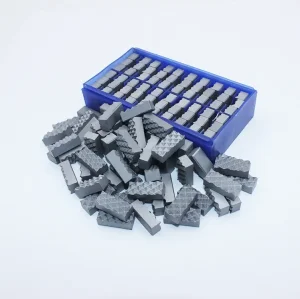
Direct sourcing buyers choose between utilizing mechanically sorted solid carbide scrap for re-grinding into customized turning blanks or consigning lots to pyrometallurgical and hydrometallurgical zinc-recovery processes. Sourcing intact factory-direct scrap inserts offers unmatched cost-efficiency for secondary wear surfacing, downhole reaming inserts, and jaw grip replacements.
Localized Heavy Industry Application Scenarios
Engineered scrap carbide inserts and remanufactured blanks offer proven wear protection and cutting efficiency across extreme mechanical operating environments worldwide.
Mining, Tunneling & HDD Boring
High-cobalt solid scrap carbide (such as YG8, YG11, and YG15 grades) is sorted and hard-faced onto trenching picks, water-well drill bits, and Horizontal Directional Drilling (HDD) reamers. Their superior impact toughness and wear life reduce cutter replacements through dense granite and abrasive sandstone strata.
Steel Mills: Tube Scarfing & De-Beading
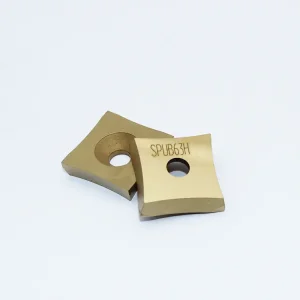
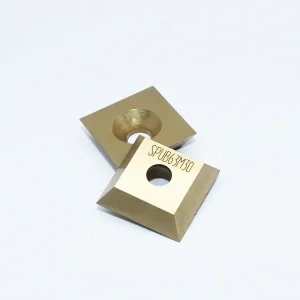
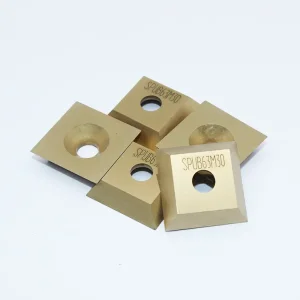
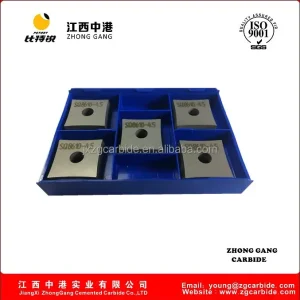
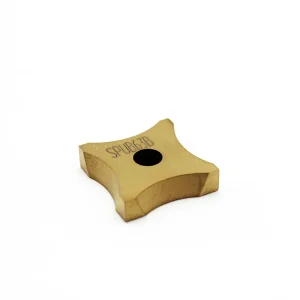
Square indexable inserts (SPUB63, SPUB86, SNMX) offer exceptional structural volume. Sourced scrap lots from primary CNC tooling are widely repurposed in steel production for outer diameter (OD) tube weld seam scarfing and slab conditioning, providing high edge durability under high thermal loads.
Agricultural Tillage & Earthmoving
Soil abrasion wears down unprotected plowshares, subsoiler points, and trencher teeth within days. Scrap carbide tiles and inserts brazed along high-wear edges multiply field service life by 5 to 8 times compared to hardened steel, dramatically reducing tractor maintenance downtime.
Metal Forming, Stamping & Workholding
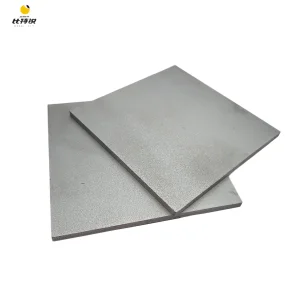
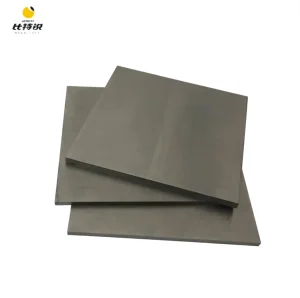
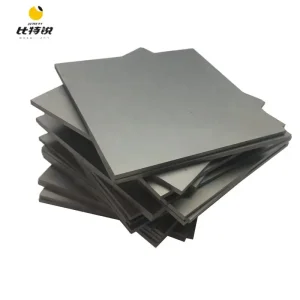
Sorted scrap blocks and plates are re-profiled via wire-cut EDM into gripper pads, chuck jaw inserts, cold-heading punch bushings, and wire drawing die cores. These components retain uniform hardness up to 90.5 HRA, minimizing tooling deflection and workpiece galling.
Supply Chain Resilience & Jiangxi Factory Manufacturing Directness
Direct sourcing from Jiangxi Zhongfu eliminates multi-layered broker markups, guarantees verified metallurgical assays, and provides end-to-end trace control from powder metallurgy to final packaging.
Upstream Proximity to Jiangxi Tungsten Hub
Situated in Nanchang, Jiangxi Province, our manufacturing facilities operate in the primary global center of tungsten mining, smelting, and ammonium paratungstate (APT) processing. This proximity provides stable access to raw tungsten feedstock, enabling consistent pricing and rapid batch processing during global supply disruptions.
Rigid Metallographic Assays & Sorting
Every lot of secondary carbide, scrap inserts, or sintered blanks undergoes strict laboratory screening. We deploy handheld XRF analyzers, benchtop density meters (Archimedes method), and Vickers/Rockwell hardness testers to ensure scrap materials match order grades without hazardous contaminants, ceramics, or low-density foreign alloys.
Export Infrastructure & Rapid Clearance
With more than two decades exporting to over 20 industrial economies—including the United States, Germany, Canada, Australia, and Mexico—our export operations adhere to international packaging, dual-use documentation standards, and custom HS code classifications (HS 8209.00 / 8101.99), ensuring seamless customs clearance.
Cemented Carbide Technical Roadmap & Metallurgy Matrix
A reference guide to WC-Co binder compositions, mechanical parameters, and remanufacturing paths for engineering, tooling, and procurement teams.
Spectral XRF Sorting
Optical recognition and automated spectroscopy sort solid carbide scrap lots by geometry and binder type (Cobalt vs. Nickel binder systems).
Chemical De-Coating
Thermal stripping and chemical baths remove CVD/PVD coatings (TiN, TiAlN, AlCrN) and brazing flux residues without micro-fracturing the WC substrate.
Hot Isostatic Pressing
Secondary powder mixtures undergo 1400°C sintering in Hot Isostatic Pressing (HIP) furnaces at 10 MPa, eliminating micro-porosity to standard Class A02 levels.
h6 Precision Grinding
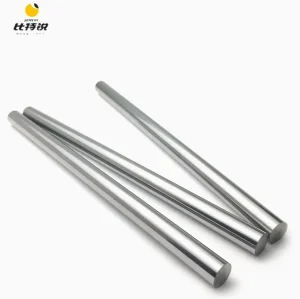
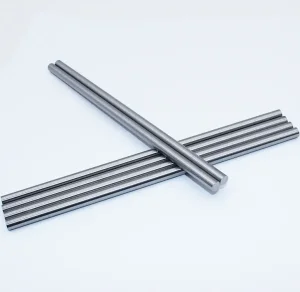
Diamond-wheel centerless grinding finishes blanks to tight engineering tolerances (h6 on solid rods, ±0.01 mm on ground wear plates and indexable inserts).
| Alloy Grade Class | Binder Ratio (Co/Ni %) | Theoretical Density (g/cm³) | Nominal Hardness (HRA) | Transverse Rupture Strength (TRS MPa) | Primary Industrial Use & Application Case |
|---|---|---|---|---|---|
| YG6 / K10 | 6.0% Co | 14.90 – 15.00 | 90.5 | ≥ 1,900 | Cast iron turning, wear plates, ceramic tile cutting wheels, drawing dies. |
| YG8 / K20–K30 | 8.0% Co | 14.60 – 14.80 | 89.5 | ≥ 2,200 | Brazed drill tips, rock drilling button bits, scarifier scrapers, chuck jaws. |
| YG11C / Mining | 11.0% Co (Coarse) | 14.30 – 14.50 | 87.0 | ≥ 2,600 | Heavy impact rotary percussion drills, road planers, agricultural plow tiles. |
| YG15 / Tooling | 15.0% Co | 13.90 – 14.15 | 86.5 | ≥ 2,800 | Stamping dies, cold heading punches, thick EDM wire cutting blank plates. |
| YG20 / Forming | 20.0% Co | 13.40 – 13.60 | 85.0 | ≥ 3,100 | High shock stamping, heavy cold forming molds, shear blades for rebar cutting. |
| NM-10 (Non-Magnetic) | 10.0% Ni Matrix | 14.45 – 14.70 | 88.5 | ≥ 2,000 | MWD/LWD oilfield downhole collars, non-magnetic sensors, corrosion valves. |
Localized International Support, Compliance & ESG Standards
Fulfilling industrial procurement requirements through strict trace documentation, conflict-free mineral transparency, and dependable logistical pathways.
Conflict-Free Mineral & ESG Alignment
All virgin powder formulations and recycled scrap streams sourced and processed by Jiangxi Zhongfu comply with OECD Due Diligence Guidance and the Responsible Minerals Initiative (RMI). Purchasing remanufactured scrap and secondary carbide directly advances corporate ESG targets by lowering overall scope-3 lifecycle emissions.
Complete Material Certification Packages
Every bulk shipment includes complete Mill Test Certificates (MTC) in accordance with EN 10204 Type 3.1. Documentation includes precise chemical assays (WC, Co, Ni, Cr, TaC content), density measurements, Rockwell HRA tests, and microscopic metallographic porosity ratings.
Global DDP Delivery & Customs Support
We provide full-service incoterms ranging from standard FOB/CIF to Delivered Duty Paid (DDP) for customers throughout North America, Europe, Australia, and Asia. Our logistics team handles tariff documentation, solid scrap classification certificates, and insured multimodal sea-air transit safely and compliantly.
Comprehensive Buyer Technical & Sourcing FAQ
Detailed engineering and procurement insights addressing scrap sorting, grade matching, purity verification, and cross-border commercial terms.
Can Zhongfu manufacture custom tungsten carbide parts from my drawing?
Which cemented carbide grades do you supply?
What makes non-magnetic carbide different from standard carbide?
How fast will I receive an engineering and price quotation?
Which markets do you export tungsten carbide products to?
How do you verify the purity and grade integrity of scrap carbide lots?
What is the difference between solid carbide scrap and recycled sludge?
Can sorted scrap carbide inserts be reused without re-sintering?
Engineered Blanks, Sintered Plates & Specialized Tooling Inventory
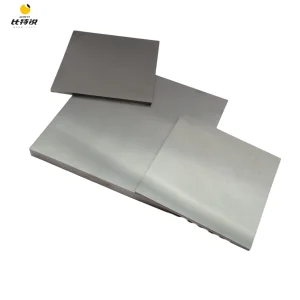
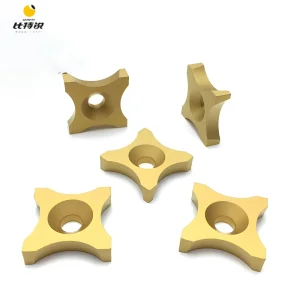
Explore our heavy-duty wear blanks, scarfing inserts, stamping die blocks, and solid rods produced in full compliance with ISO 9001 and ASTM testing protocols.
Accelerate Your Tungsten Carbide Procurement Today
Whether you require continuous shipments of sorted scrap inserts for wear components or custom-engineered virgin HIP-sintered blanks manufactured to tight tolerances, our engineering team is ready to assist.