
Precision Engineered Inserts & Submicron Tooling Blanks
Explore our factory-calibrated indexable inserts, scarfing tools, and high-durability wear components engineered for harsh machining environments, metallurgical consistency, and micron-level repeatability.

China Hot sale SPUB63M30 tungsten carbide odinternalexternal tube scarfing insert Manufacturer, Factories
View Specifications
China New shape cemented carbide tips for railway track tamping pick center tooth Manufacturers, Factory
View Specifications
China High-quality tungsten carbide rods for precision drilling and milling Manufacturer, Factories
View Specifications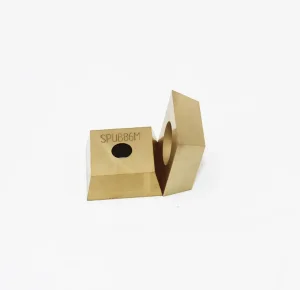
China High quality SPUB86M china indexable tungsten carbide_inserts Manufacturer, Supplier
View Specifications
Wholesale Custom 60 knife variable speed fixed gear cast iron truck large metal gear Manufacturers, Factory
View Specifications
Wholesale Customized Cemented Carbide Plate — Factory-Direct Tungsten Carbide Blanks in Any Size, Shape & Grade Factory, Factories
View Specifications
China SPUB63B wholesale lathe round tungsten carbide turning inserts Supplier, Factory
View Specifications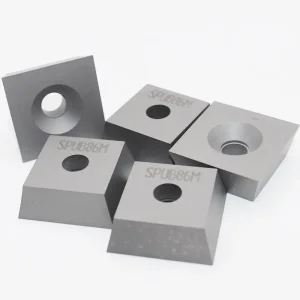
China Factory wholesale boxes tungsten woodworking carbide button inserts Supplier, Factories
View SpecificationsMacro-Industrial Dynamics & Modern Indexable Tooling Trends
The global CNC metal cutting ecosystem is undergoing an aggressive technological paradigm shift. Driven by advanced superalloys, the electric vehicle transition, and automated lights-out machining facilities, indexable cutting inserts are no longer evaluated as mere consumable items, but as core strategic enablers of machining economy.
Aggressive Near-Net-Shape Sintering
Traditional manufacturing suffered from excessive post-sinter grinding waste. Today's state-of-the-art CNC insert factories leverage multi-axis automated CNC hydraulic powder presses coupled with computerized cavity-fill systems. This produces near-net-shape blanks featuring integrated multi-tier chipbreakers, drastically minimizing diamond wheel grinding requirements and reducing mechanical stress within the sintered core.
- Elimination of internal macro-porosity via pressure sintering
- Optimized peripheral edge consistency (≤ 12 μm)
- Cost-effective high-volume batch runs for OEM buyers
Multi-Component Nanostructured Thin Films
The standard single-layer TiN or TiCN coating is no longer adequate for modern heat-resistant superalloys (HRSA) and hardened steels. Global insert production is now dominated by nanolaminate PVD coatings (such as AlTiN, AlCrN, and TiAlSiN) and thick multi-layer CVD coatings with textured α-Al2O3 outer barriers, capable of withstanding temperatures exceeding 1,150°C without phase transformation.
- Superior thermal barrier insulation at extreme cutting feeds
- Micro-hardness values reaching 3,300 to 3,800 HV
- Controlled pre- and post-coating stress micro-blasting
Optimized Grade Formulation for Workpieces
Material science in cemented carbide focuses directly on tailoring the WC-Co (Tungsten Carbide - Cobalt) matrix to specific ISO workpiece categories (ISO P, M, K, N, S, H). Controlling the mean grain size from ultrafine (0.5 μm) to coarse (3.0 μm) while introducing grain growth inhibitors (such as VC, Cr3C2, and TaC/NbC) enables factories to deliver bespoke balances of compressive hardness versus transverse rupture strength.
- Submicron WC grades for titanium alloy aerospace milling
- Cobalt-enriched gradient sintering for heavy interrupted turning
- Nickel-binder compositions for non-magnetic corrosion resistance
Substrate Science: Grade Selection & Tribological Matrix
In-depth metallurgical reference guide for plant managers, tooling engineers, and procurement directors. Matching the indexable insert substrate, binder content, and coating matrix directly to the specific machining load case eliminates premature flank wear, edge built-up, notch wear, and thermal cracking.
| ISO Material Group | WC Grain Matrix | Co Binder (%) | Hardness (HRA / HV) | Coating Architecture | Primary Industrial Applications |
|---|---|---|---|---|---|
| ISO P (Carbon & Alloy Steel) | 1.2 - 2.0 μm Medium Grain | 6.0% - 9.0% | 90.0 - 91.5 HRA | CVD TiCN + α-Al2O3 | High-speed continuous turning, heavy face milling, pipe scarfing, automotive transmission shafts. |
| ISO M (Stainless Steels) | 0.8 - 1.2 μm Fine Grain | 8.0% - 10.5% | 89.5 - 91.0 HRA | PVD AlTiN / AlCrN | Austenitic/duplex stainless, valve bodies, food machinery components, anti-notch wear milling. |
| ISO K (Cast Irons & Nodular) | 1.5 - 2.5 μm Coarse/Med | 4.5% - 6.0% | 91.5 - 93.0 HRA | Thick CVD α-Al2O3 | Brake discs, engine blocks, large gear hubs, wind turbine housings; extreme abrasive wear resistance. |
| ISO N (Non-Ferrous & Al-Alloys) | 0.4 - 0.8 μm Submicron | 5.0% - 8.0% | 92.0 - 93.5 HRA | Mirror Polished / DLC | Aerospace structural ribs, automotive EV battery trays, mirror finishing, elimination of built-up edge (BUE). |
| ISO S (HRSA, Inconel & Titanium) | 0.5 - 0.7 μm Ultrafine | 10.0% - 12.0% | 90.5 - 92.0 HRA | Nano-Composite TiAlSiN | Aero turbine disks, jet engine casings, oil & gas subsea downhole components, high mechanical stress cutting. |
| ISO H (Hardened Steels >45 HRC) | < 0.5 μm Nano-Grain | 6.0% - 8.0% | 92.5 - 94.0 HRA | PVD TiSiN / CrAlN | Die and mold finishing, hardened guide rails, bearing ring internal profiling, direct hard turning. |
High-Impact Engineering Applications Across Core Industries
Our carbide inserts and solid wear components are customized from powder synthesis through edge preparation to address the unique metallurgical and physical stresses found in heavy manufacturing.
Aerospace & Power Generation
Machining titanium Ti-6Al-4V, Inconel 718, and Rene 41 requires extreme thermal fatigue resistance. Our submicron grain carbide substrates feature high thermal conductivity, directing cutting heat into the chip while high-adhesion PVD coatings prevent catastrophic notch breakout.
Automotive & EV Manufacturing
The transition from traditional ICE engine blocks to electric drive motor casings and battery structural enclosures demands high-feed face milling and high-speed dry aluminum machining. Customized chipbreaker geometries deliver zero chip entangling in automated robotics cells.
Railway Infrastructure & Mining
Tamping pick center teeth and railway maintenance inserts experience massive cyclic impact coupled with silica gravel abrasion. Our proprietary shock-resistant YG15 to YG20 grades withstand deep subterranean shock loads without catastrophic brittle fracture.
Tube & Pipe Scarfing Operations
Inside and outside diameter (ID/OD) weld seam removal on longitudinal high-frequency ERW steel pipes requires continuous red-hardness. Standard inserts quickly develop thermal cratering; our heavy SPUB63 and SPUB86 series inserts provide extended continuous cutting runs.
End-to-End Manufacturing Process Roadmap
From virgin chemical precursor reduction to final metallographic validation, our factory enforces rigorous statistical quality control protocols under ISO 9001:2015 standards to guarantee zero micro-porosity and absolute dimensional repeatability.
Virgin Powder Synthesis & Ball Milling
We use 100% virgin ammonium paratungstate (APT) derived tungsten carbide powder. Strict wet ball-milling with cobalt and grain growth inhibitors prevents contamination, ensuring uniform grain distribution without recycled carbide impurities.
Automated Multi-Cavity Pressing
Computerized multi-action electric and hydraulic presses compact spray-dried carbide granules into high-precision green bodies with complex 3D chipbreakers, maintaining equal density distribution across all axes.
Overpressure Sinter-HIP Consolidation
Blanks are loaded into ultra-high vacuum sinter-HIP furnaces operating at 1,450°C and up to 100 bar of argon pressure. This closes all internal micro-voids, elevating density to near-theoretical maximum and maximizing transverse rupture strength.
Edge Preparation, Coating & CMM Verification
Automated brush/micro-abrasive blasting applies controlled micro-radius hone (K-factor) to cutting edges before advanced PVD/CVD deposition. Full optical profilometry and metallographic microscope checks confirm thickness, adhesion, and core microstructure.
Frequently Asked Questions by Industrial Tooling Buyers
Direct answers from our senior materials engineers regarding insert customization, tooling life optimization, coating selection, and supply chain logistics.
Can you produce custom carbide inserts directly from customer 2D/3D CAD drawings?
What is the practical difference between PVD and CVD coatings for indexable inserts?
How do you prevent built-up edge (BUE) and chipping in interrupted turning?
What are standard production lead times and Minimum Order Quantities (MOQ)?
Heavy-Duty Turning, Scarfing & Wear-Resistant Solutions
Complete your supply line with specialized lathe turning scraping blades, blank tooling substrates, carbide strips, and wear components built for maximum tool life and low total cost of ownership.

China CNC Carbide Turning Tool Internal Tungsten Steel Cutting Insert Scraping Blade for Steel Workpiece Manufacturers, Factory
View Specifications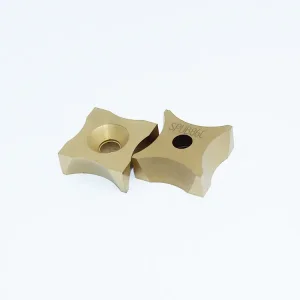
Wholesale SPUB86C customized lathe_ tungsten_carbide_inserts drill bit insert Supplier, Factory
View Specifications
China SPUB86C P40 uncoated blank cemented tools carbide inserts Suppliers, Factory
View Specifications
China High-Quality Tungsten Carbide Strips - Durable Cemented Wolfram Bars Supplier, Suppliers
View Specifications
China Best price YG8 tungsten carbide gripper inserts for chuck jaw Suppliers, Factories
View Specifications
Buy Tungsten carbide tamping tines use tip wearing part for Railway Industry Supplier, Suppliers
View Specifications
Wholesale Wholesale Steel Pipe Scarfing Tools SPUB63J Tube Scarfing Inserts Supplier, Factories
View Specifications