

Primary Engineering Selection
Featured High-Stress Carbide Mold & Blank Formulations
Engineered to deliver extreme fracture toughness, sub-micron wear-resistance, and structural integrity across cold heading, drawing dies, and EDM tooling for Poland's manufacturing clusters.

High-Precision SPUB86C P40 Uncoated Blank Cemented Tools Carbide Inserts for Heavy Tube & Die Operations in Poland
View Details & Spec Sheet
Industrial Wholesale Steel Pipe Scarfing Tools SPUB63J Tube Scarfing Inserts for Polish Structural Mill Systems
View Details & Spec Sheet
Heavy-Duty Tungsten Carbide Plate 100×100×60 mm Thick Block Stock for EDM Stamping & Forming Tooling in Poland
View Details & Spec Sheet
Industrial Ecosystem
Tungsten Carbide Mold Dynamics in Poland & Global Tooling Markets
An in-depth metallurgical analysis on how Central European re-industrialization drives the adoption of advanced cemented carbide tooling solutions.
6.8%
Global Carbide Tooling CAGR
100%
Virgin Powder (No Recycled Scrap)
< 8 Hrs
CAD Drawing Engineering Feasibility
±0.002mm
Micron Tolerance Finish Capability
Local Market Focus
The Polish Manufacturing Landscape
Poland has solidified its position as Central and Eastern Europe’s undisputed powerhouse for automotive manufacturing, aerospace components, structural white goods, and heavy fastener production. Industrial regions such as Silesia (Katowice, Gliwice), the Aviation Valley (Dolina Lotnicza in Rzeszów), and major assembly clusters in Wrocław and Poznań run high-throughput progressive stamping lines and cold-heading operations round the clock.
These severe-service environments subject tool steel dies to unacceptable thermal fatigue, edge chipping, and frequent abrasive failure. Consequently, Polish production engineers are rapidly migrating from high-speed steel (HSS) to ultra-dense HIP-sintered tungsten carbide molds. Carbide cold heading dies, progressive stamping punches, and powder metallurgy compaction dies provide the hardness (up to 92 HRA) and modulus of elasticity required to maintain micron-level consistency over multi-million stroke cycles.
Silesia Automotive Hub
Aviation Valley Tooling
Cold-Heading Reliability
Macroeconomics & Geopolitics
Global Carbide Economics & Nearshoring Pressures
Globally, cemented carbide tooling is experiencing unprecedented demand fueled by electric vehicle (EV) lightweighting, high-strength low-alloy (HSLA) steel processing, and precision electronics miniature stamping. However, European toolmakers face soaring industrial energy costs, raw material bottlenecks, and lengthened production cycles for specialized sintering blanks.
To remain competitive against global automotive suppliers, Polish tooling enterprises require dual-source supply resilience. Partnering directly with high-volume, vertically integrated manufacturers offers a sustainable hedge against hyper-inflated European conversion margins, without forfeiting tight metallurgical tolerances or grain refinement standards.
Nearshoring Strategy
Energy Inflation Hedge
Dual-Sourcing Advantage
Operational Excellence
The Jiangxi Zhongfu Advantage: Direct Supply from China’s Tungsten Capital
Combining primary ore provenance with world-class Hot Isostatic Pressing (HIP) and precision sub-micron CNC grinding for Central European partners.
Full Ore-to-Part Integration
Situated in Nanchang, Jiangxi—the epicenter of global tungsten reserves—Jiangxi Zhongfu controls the supply route directly from high-purity virgin Ammonium Paratungstate (APT) reduction down to precision carbide sintering. We never introduce recycled scrap powder into critical mold grades, guaranteeing zero internal inclusion risks.
Pressure Sintering (Overpressure HIP)
Every carbide mold blank and EDM die block undergoes 100-bar Hot Isostatic Pressing (HIP) during the sintering phase. This process virtually eliminates structural microporosity (exceeding ISO 4505 Class A02 standards), mitigating cracking risks during Wire EDM roughing and ultra-fine mirror polishing operations.
Agile Prototyping & Rapid Logistics
With an engineering team answering European technical drawings within 8 hours, prototype blanks can be pressed, sintered, and air-freighted directly to Poland’s major airports (Warsaw Chopin, Katowice) within 7–10 working days, streamlining the entire mold qualification cycle.
| Carbide Mold Grade | Co % Binder | WC Grain Size (µm) | Density (g/cm³) | Hardness (HRA) | Transverse Rupture Strength (TRS MPa) | Primary Industrial Application |
|---|---|---|---|---|---|---|
| ZF-YG11C | 11.0% | 2.2 – 3.0 (Coarse) | 14.35 | 87.5 | 2,950 | Cold heading dies, bolt and nut punches, heavy forging tools |
| ZF-YG15C | 15.0% | 2.5 – 3.5 (Coarse) | 14.00 | 86.5 | 3,200 | Severe impact heading, fastener forming dies, tube expanding plugs |
| ZF-YG20C | 20.0% | 2.8 – 4.0 (Extra Coarse) | 13.55 | 85.0 | 3,450 | Extreme shock stamping dies, cold extrusion molds, heavy blanking |
| ZF-MG10 | 10.0% | 0.6 – 0.8 (Sub-Micron) | 14.45 | 91.8 | 3,800 | Progressive stamping dies for motor laminations, lead frames |
| ZF-NM12 (Non-Mag) | 12.0% (Ni-Cr) | 1.2 – 1.6 (Medium) | 14.30 | 88.5 | 2,600 | Non-magnetic powder compaction, sensor encapsulation, corrosive media |
Application Engineering
Localized Applications Across Polish Industrial Clusters
Targeted carbide metallurgical solutions aligned with the stringent operational demands of Poland’s key industrial sectors.
Automotive & Fasteners
Cold Heading & Nut Forging Dies
In Silesian tier-1 fastener plants, presses cycle at up to 300 strokes per minute, producing high-tensile chassis bolts. Our coarse-grained YG15C and YG20C tungsten carbide dies provide the dynamic yield strength needed to prevent radial splitting under massive triaxial stress.
Electrical & EV Drive
Rotor-Stator Progressive Stamping
As EV powertrain manufacturing escalates around Wrocław, electric motor lamination stamping dies demand sub-micron carbide inserts (ZF-MG10). These tooling components maintain razor-sharp punch edges through millions of cuts in abrasive silicon electrical steel sheets without burrs.
Steel & Non-Ferrous Tubes
Tube Drawing & Weld Scarfing
Poland's premier steel pipe and tube drawing mills in Dąbrowa Górnicza rely on our SPUB-series and SNMX heavy-duty scarfing inserts and draw dies, engineered to strip inner/outer weld beads and calibrate tube outer dimensions at continuous elevated thermal loads.
Need Drawing Review & Customized Grade Recommendations?
Our application engineering team is ready to analyze your 2D/3D CAD files (.step, .dwg, .pdf), calculate optimal cobalt ratios, and configure custom carbide pre-forms to minimize EDM wire machining time.
Talk to a Technical Specialist
Quality Assurance
Global Procurement Specifications for Critical Carbide Mold Tooling
How Tier-1 OEM toolrooms audit, specify, and verify cemented carbide shipments for zero-defect operations.
Strict Metallographic & Density Verification
Every production heat at Jiangxi Zhongfu is cataloged and subjected to full metallographic scrutiny. We assess coercive force (Hc) to ensure balanced magnetic saturation and inspect microstructure under 1500x magnification to confirm the complete absence of free graphite flakes or brittle eta-phase (W6Co6C / W3Co3C). Density is measured via Archimedes water displacement to within ±0.02 g/cm³ accuracy.
Near-Net Preforms to Slash Wire EDM Costs
Toolrooms across Poland spend considerable hours machining complex profiles into massive solid carbide blocks. We manufacture custom pre-formed internal geometries, countersunk holes, wire-threading lead slots, and stepped outer contours in the green state before sintering. This approach reduces wire erosion time by up to 60%, delivering substantial cost savings.
Full Product Portfolio
Precision Carbide Inserts, Tool Blanks & EDM Blocks for Poland
Explore our complete catalog of industrial wear components, scarfing inserts, micro-grain solid rods, and high-impact forming blanks.

Industrial SPUB63 Tungsten Indexable Carbide Brazing Inserts for Polish Wood & Metalworking Tools
View Details & Spec Sheet
Heavy Duty SPUB63B Tungsten Carbide Indexable Milling & Scraping Inserts for Polish Heavy Machinery
View Details & Spec Sheet
SPUB86 CVD Coating Radius Tungsten Carbide Tips Brazed Insert for Polish Heavy Machining Lines
View Details & Spec Sheet
Dia 8 × 330 mm Nano Grain Size Tungsten Carbide Rods for High-Speed Milling Cutters in Poland
View Details & Spec Sheet
Engineered SPUB63J CVD Coating Tungsten Carbide OD Scarfing Insert for Tube Mills in Poland
View Details & Spec Sheet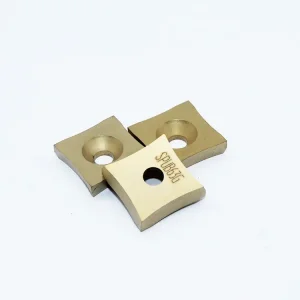
Premium Wear Resistant SPUB 63 Series Carbide Turning Tube Scarfing Inserts for Polish Heavy Mills
View Details & Spec Sheet
Reliable SPUB86 P40 Tungsten Carbide Scarfing Inserts for Welded Steel Pipe Lines in Poland
View Details & Spec Sheet
Solid Tungsten Carbide Round Rod Blanks for End Mills & Drills Toolmaking in Poland
View Details & Spec Sheet
Technical Knowledge Hub
Frequently Asked Questions (FAQ) for Polish Tooling Engineers
In-depth answers addressing metallurgy, Wire EDM machining guidelines, delivery logistics, and custom manufacturing processes.
How does Hot Isostatic Pressing (HIP) prevent catastrophic die fracture during progressive stamping?
Standard vacuum sintering often leaves residual microscopic voids (micropores) within the cemented carbide matrix. Under severe, repeated mechanical shock—such as in automotive stamping or cold heading—these voids act as prime stress-concentration notches where micro-cracks nucleate and propagate, leading to premature die fatigue or catastrophic splitting. Overpressure HIP sintering applies up to 100 bar of inert argon gas pressure at peak sintering temperatures (around 1,400°C–1,450°C), closing internal microporosities to near-theoretical density (ISO 4505 porosity rating < A02, B00). This substantially improves transverse rupture strength (TRS) and fatigue endurance limits.
Can Jiangxi Zhongfu deliver pre-formed internal die profiles to minimize Wire EDM cutting times in Poland?
Yes. Wire EDM machining of dense tungsten carbide blocks is time-consuming and risks introducing recast (white) surface layers with high residual tensile stresses and micro-cracking if discharge parameters are misaligned. We routinely produce custom pre-formed blanks (near-net-shape) featuring internal starting holes, complex hexagonal or spline profiles, countersinks, and stepped cavities directly during green pressing and pre-sintering green machining. This cuts finishing EDM time in half and minimizes tool material waste.
What are typical delivery schedules, Incoterms, and customs procedures for shipments to Poland?
We offer flexible shipping terms including DAP (Delivered at Place) and DDP (Delivered Duty Paid) to Warsaw, Katowice, Wrocław, Gdańsk, and other industrial destinations across Poland. For urgent tooling orders, air freight delivery through DHL or FedEx Express reaches Polish locations within 5 to 7 business days following quality-control release. Bulk and production inventory can be shipped via consolidated sea-rail lines (e.g., China-Europe Railway Express directly into Małaszewice or Łódź hub) within 18–22 days, optimizing freight costs.
How should Polish toolmakers address the white layer (recast zone) after Wire EDM machining on carbide molds?
During Wire Electrical Discharge Machining (WEDM), intense localized thermal sparks melt and quench the carbide surface, altering the cobalt binder matrix and leaving a brittle white recast layer filled with micro-cracks. If not treated, this zone can initiate early failure under impact. We recommend utilizing trim-cut skimming passes with lower energy pulses, followed by mechanical diamond paste polishing (or chemical-mechanical polishing) to remove at least 0.010–0.020 mm of material. Applying a stress-relief thermal temper at 180°C–200°C for 1–2 hours also aids in stabilizing the surface.
When should non-magnetic nickel-bonded carbide grades be selected over cobalt-bonded grades?
Standard cobalt binder (WC-Co) is ferromagnetic and susceptible to leaching in acidic environments. For applications such as permanent magnet powder compaction, precision sensor casing forming, electronics stamping, or setups involving corrosive coolant additives, our nickel-bonded grades (e.g., ZF-NM12) are ideal. They offer total non-magnetic permeability (magnetic relative permeability μr < 1.005) and superior corrosion resistance across a broad pH spectrum.
How do you verify batch-to-batch metallurgical consistency for OEM automotive supply agreements?
We operate an in-house metallurgical testing center certified under ISO 9001. Each production batch is tested for density (using high-precision Archimedean balances), Rockwell Hardness (HRA testing verified across multiple face points), Coercive Force (Hc to confirm proper cobalt distribution), and Magnetic Saturation (Com to eliminate free carbon or eta-phase defects). Microstructure is examined via scanning electron microscopy (SEM) and metallographic analysis. Inspection certificates (3.1 type) are provided with every delivery.
Accelerate Your Tooling Operations with Jiangxi Zhongfu
Whether you require standard SPUB scarfing inserts, h6 precision ground rods, or fully customized progressive carbide mold blanks for operations in Poland, our metallurgical team is ready to assist.