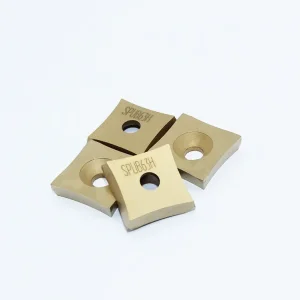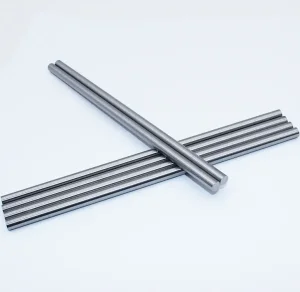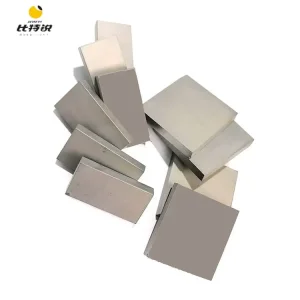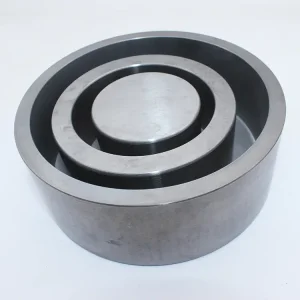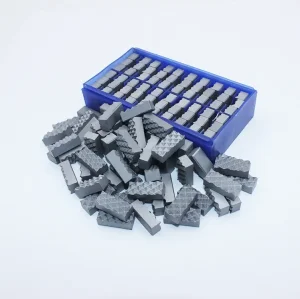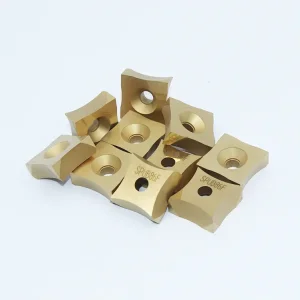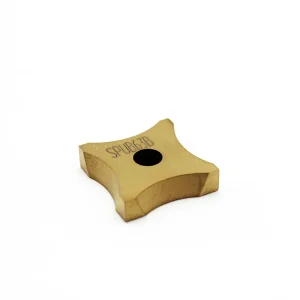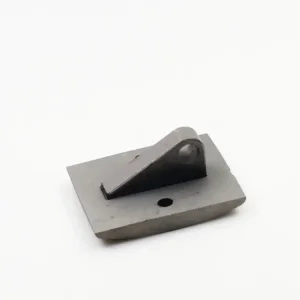
Featured Precision Tungsten Carbide Inserts & Blanks
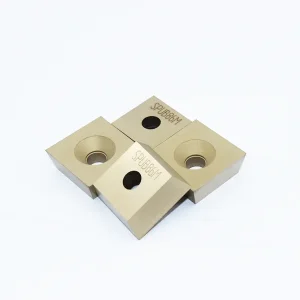
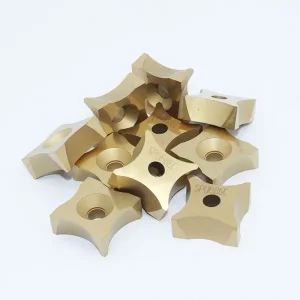
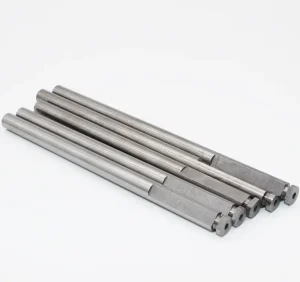
Direct-from-factory sintered blanks, heavy-duty pipe scarfing cutters, and woodworking indexable inserts meeting strict ISO & ANSI mechanical tolerances.
Essential Tungsten Facts: Science, Sintering & Mechanical Integrity
Tungsten (Wolfram, W, atomic number 74) features the highest melting point among non-ferrous metals at 3,422°C (6,192°F), accompanied by an ultra-high density of 19.25 g/cm³. When carburized into Tungsten Monocarbide (WC) and bonded via liquid-phase sintering with Cobalt (Co) or Nickel (Ni), it delivers hardness profiles second only to diamond, exhibiting extreme resistance to abrasion, erosion, and mechanical deflection.
Liquid Phase HIP Sintering
Standard atmospheric sintering can leave micro-voids that induce fracture propagation. Our state-of-the-art Sinter-HIP (Hot Isostatic Pressing) furnaces apply up to 10 MPa of inert argon gas at temperatures between 1,350°C and 1,480°C. This closes internal porosity, driving microstructural theoretical density above 99.9% and preventing chipping under dynamic load cycles.
Grain Size Engineering
Hardness and fracture toughness exhibit an inverse relationship determined by grain morphology. By modulating pure WC powder sizes from nano/sub-micron (0.2–0.6 µm) for mirror-finish finishing tools to coarse (2.5–5.0 µm) for high-impact rock drilling tips, our manufacturing lines deliver optimized abrasion index ratios custom-matched to client specifications.
Binder Metallurgy: Co vs. Ni
While Cobalt provides optimal mechanical clamping and high transverse rupture strength (TRS) up to 4,200 MPa, it remains ferromagnetic. We synthesize specialized Nickel-binder grades (<1.002 µ magnetic permeability) specifically for downhole drilling telemetry (MWD/LWD), magnetic inductor dies, and hostile acidic/alkaline environments.
China Factory Supply Chain Dominance in Tungsten Processing
China controls over 80% of global tungsten reserves, with primary reserves concentrated in Jiangxi and Hunan provinces. Jiangxi Zhongfu Cemented Carbide Co., Ltd. sits at the core of this cluster in Nanchang, offering direct supply chain integration from ammonium paratungstate (APT) smelting through powder synthesis to multi-axis grinding.
100% Virgin Powder Supply
Our direct procurement of premium APT allows complete raw material traceability. Unlike suppliers utilizing reclaimed low-grade scrap, our formulations utilize virgin powder, guaranteeing absence of unwanted trace elements like lead, sulfur, or iron that degrade fatigue limits.
Buffer Against Market Volatility
Consolidated mining relationships protect wholesale buyers from international APT spot market fluctuations. We provide contract pricing stability and long-term raw material reserve guarantees for OEM partners across North America, Europe, and Asia-Pacific.
End-to-End In-House Tooling
By hosting electrical discharge machining (EDM), CNC optical profile grinding, and metallurgical microscopy laboratories under one roof, we reduce prototyping lead times by up to 45% compared to fragmented manufacturing networks.
Volume Scalability
Our multi-station automatic presses output uniform batches of plates, rods, inserts, and die components with dimensional repeatabilities within ±0.002 mm (h6 tolerances), scaling seamlessly from pilot testing runs to hundreds of thousands of units.
Compliance, Export Controls & Local Technical Support
International industrial buyers require more than high-spec products; they require strict regulatory transparency, customs ease, and verified conflict-free supply chains.
Conflict-Free & RMI Auditing
All tungsten ore sourced for our operations adheres to the Responsible Minerals Initiative (RMI) standards. We supply full CMRT (Conflict Minerals Reporting Template) documentation, ensuring seamless compliance under Dodd-Frank Act Section 1502 and EU Regulation 2017/821 for multinational corporate buyers.
Dual-Use & Customs Clearance
Certain high-density tungsten formulations and heavy components fall under dual-use export classifications. Our in-house freight logistics department holds direct licenses and standardized export codes, facilitating frictionless clearing at US, European, and Australian customs checkpoints.
Localized Technical Consultation
With engineering communication teams supporting English, German, and Spanish, we provide full FEA stress simulations and grade optimization assistance tailored to your localized environmental demands (e.g., Arctic permafrost drilling, offshore deep-water gas extraction, high-speed automated milling).
Standard Cemented Carbide Mechanical Grade Selection
Select the optimal tungsten carbide formulation based on empirical binder composition, Rockwell hardness, and transverse rupture strength.
| Carbide Grade | Binder (Co/Ni %) | Grain Size (µm) | Density (g/cm³) | Hardness (HRA) | TRS (MPa) | Key Application Vectors |
|---|---|---|---|---|---|---|
| YG6 (ISO K10-K20) | 6.0% Co | 1.2 – 1.6 | 14.80 – 15.00 | 90.5 | 2,100 | Cast iron machining, wire drawing dies, wear plates, light-impact finish inserts. |
| YG8 (ISO K20-K30) | 8.0% Co | 1.4 – 2.0 | 14.60 – 14.80 | 89.5 | 2,400 | Brazed cutting tips, rotary drilling bits, planer blades, scrapers, steel scarfing. |
| YG15 (ISO K40) | 15.0% Co | 2.0 – 3.0 | 13.90 – 14.10 | 87.0 | 3,000 | Stamping dies, cold heading punches, high-impact hydraulic valve stems. |
| YG20 (Heavy Impact) | 20.0% Co | 2.2 – 3.5 | 13.40 – 13.60 | 85.5 | 3,400 | Forging dies, heavy cold forging tools, high-shock rock drill buttons. |
| NM-10 (Non-Magnetic) | 10.0% Ni Binder | 1.0 – 1.8 | 14.40 – 14.60 | 88.5 | 2,300 | Magnetic powder compacting dies, LWD/MWD drill string tools, acid valve trim. |
Demanding Deployment Scenarios Across Key Sectors
Where standard high-speed steel and Stellite alloys fail under thermal shock and severe friction, cemented tungsten carbide ensures sustained MTBF (Mean Time Between Failures).
Steel Mill Tube & Pipe Scarfing
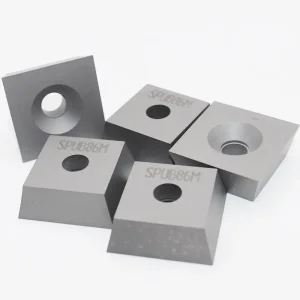
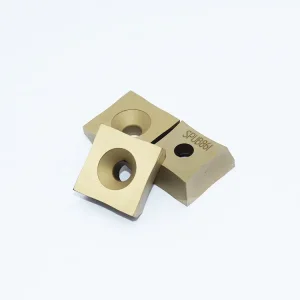
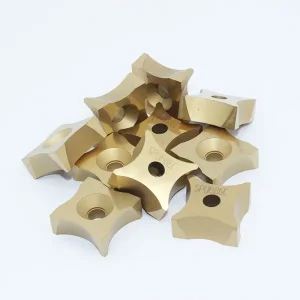
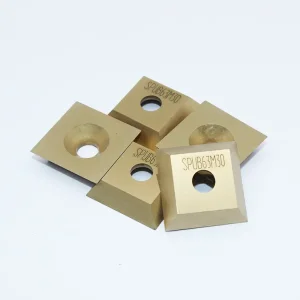
During electric resistance welded (ERW) and high-frequency welded pipe manufacturing, continuous glowing seams must be trimmed instantly. Our SPUB63, SPUB86, and SNMX series scarfing inserts maintain sharp shearing profiles at red-heat temperatures (>800°C), eliminating flash burrs without premature crater wear.
Downhole Energy & Directional Drilling
Deep-well drilling encounters severe subterranean abrasion and cyclic shocks. Non-magnetic tungsten carbide stabilizer sleeves, flow nozzles, and valve seats prevent magnetic sensor telemetry interference while resisting high-velocity drilling mud slurries containing quartz sands.
High-Volume Sheet Metal Stamping
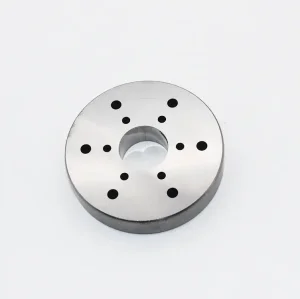
Progressive die systems for automotive components, battery casings, and motor laminations rely on fine-grained YG15 and YG20 punch plates. Their superior compressive modulus prevents tooling deflection, ensuring multi-million stroke operations without burring or punch galling.
Next-Generation Trends Shaping the Hard Metal Industry
The tungsten carbide sector is transitioning rapidly toward additive manufacturing, environmental recyclability, and intelligent nanostructured coatings.
Additive Manufacturing (Binder Jetting)
While traditional powder metallurgy remains superior for high-volume standard shapes, 3D binder jetting of tungsten carbide allows cooling channels within cutting tool cores that were previously impossible to machine, boosting thermal dissipation in high-speed machining centers.
Zinc Recycling vs. Chemical Digestion
The industry is expanding zinc-reclamation processes for carbide inserts, transforming end-of-life tools back into usable WC-Co powders with a 75% lower carbon footprint compared to primary smelting, fulfilling European Corporate Sustainability Due Diligence requirements.
High-Entropy Binder Alloys
To reduce dependence on volatile cobalt markets and address workplace exposure limitations, researchers are pioneering Fe-Ni-Co-Cr multi-element high-entropy alloy (HEA) binders that provide improved oxidation resistance at temperatures exceeding 900°C.
Frequently Asked Questions: Global Industrial Sourcing
Everything you need to know before initiating an order with Jiangxi Zhongfu Cemented Carbide Co., Ltd.
Can Zhongfu manufacture customized tungsten carbide parts from my engineering drawing?
Which cemented carbide grades are standardly manufactured and supplied?
What makes non-magnetic tungsten carbide different from standard grades?
What is your typical technical inquiry and quotation turnaround time?
To which international markets do you routinely export your tungsten carbide products?
Specialized Tungsten Wear Plates, Rods & Industrial Assemblies
Engineered for high-impact stampings, precision centerless tooling, non-magnetic downhole tools, and high-abrasion milling systems.