
Engineered Cemented Carbide Solutions: Part I
Direct factory wholesale carbide inserts, high-speed turning blanks, ground rods, and specialized wear parts manufactured under ISO 9001:2015 and advanced Sinter-HIP metallurgy.

Buy YG8 carbide gripper inserts for chuck jaw Manufacturers, Supplier
View Specifications
China Factory wholesale tungsten cemented tools carbide coated blank inserts Factory, Factories
View Specifications
Wholesale Factory direct sale tungsten carbide turning inserts Manufacturer, Factory
View Specifications
Wholesale Wholesale SPUB63B tungsten carbide insert box used carbide inserts price Supplier, Factories
View Specifications
China Carbide Cutting Rods for Tungsten Alloy Cutting Tool Components Suppliers, Factories
View Specifications
China Best price SPUB86J CVD coating boxes woodworking tungsten carbide button insert Manufacturer, Supplier
View Specifications
Wholesale Custom 60 knife variable speed fixed gear cast iron truck large metal gear Manufacturers, Factory
View Specifications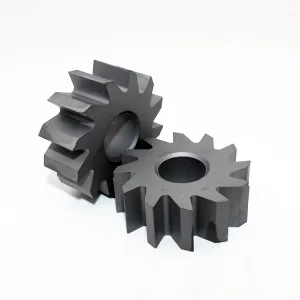
Buy Customize good quality precision metal parts spur gear tiller cultivator parts back gear Manufacturer, Manufacturers
View SpecificationsTungsten Carbide Vs. Generic "Carbide": A Critical Metallurgical Distinction
In B2B industrial procurement, casual terminology often breeds expensive manufacturing discrepancies. Clarifying the material spectrum between chemical carbides and cemented tungsten carbide.
The Broad "Carbide" Family
Chemically, a carbide is any compound composed of carbon and a less electronegative element. This includes covalent ceramics like Silicon Carbide (SiC) and Boron Carbide (B4C), interstitial interstitial carbides like Titanium Carbide (TiC), and ionic salts like Calcium Carbide (CaC2).
While SiC boasts exceptional thermal tolerance and hardness up to 2800 HV, it lacks the fracture toughness required for dynamic cutting or high-impact tooling. Conflating generic carbide with tungsten carbide can cause catastrophic brittle failures under torsional stress.
Cemented Tungsten Carbide (WC-Co/Ni)
True industrial "Carbide" in cutting tools and wear parts refers specifically to Cemented Tungsten Carbide—a metal matrix composite (cermet). Hard mono-tungsten carbide (WC) grains (80–95 wt%) are liquid-phase sintered with a ductile metallic binder, predominantly Cobalt (Co) or Nickel (Ni).
This dual-phase microstructure yields an extraordinary synergy: extreme hardness approaching diamond (85–93 HRA) paired with high fracture toughness (K1c 8–18 MPa·m½), making it the premier choice for extreme wear and impact tooling.
Procurement Specifier Checklist
When drafting engineering drawings and RFQs, specifying simply "Carbide" leaves your bill of materials vulnerable. Qualified enterprise purchasing agents must insist on specific metallurgical criteria:
1. Grade designation (e.g., YG6, YG8, YG15, YG20, or ISO P/M/K/H classes).
2. Grain sizing (Submicron, fine, medium, coarse).
3. Sinter-HIP processing certification with zero microporosity rating (ISO 4505 A00 B00 C00).
| Material Class | Chemical Identity | Vickers Hardness (HV) | Fracture Toughness (MPa·m½) | Young's Modulus (GPa) | Primary Industrial Utility |
|---|---|---|---|---|---|
| Cemented Tungsten Carbide | WC + 6–20% Co / Ni | 1,300 – 2,200 | 9.0 – 17.5 | 550 – 650 | Milling, turning inserts, blank plates, cold heading, stamping dies, scarfing blades |
| Silicon Carbide (SiC) | SiC (Reaction / Sintered) | 2,400 – 2,800 | 3.0 – 4.5 | 390 – 430 | Mechanical seal rings, abrasive blast nozzles, semiconductor thermal processing |
| Titanium Carbide (TiC Cermet) | TiC + Ni-Mo / Co | 1,500 – 1,900 | 5.0 – 8.5 | 400 – 450 | High-speed light finishing of steels, high oxidation resistance cutting tools |
| Boron Carbide (B4C) | B4C (Black Diamond) | 2,900 – 3,500 | 2.5 – 3.5 | 450 – 470 | Ballistic armor plate, nuclear reactor control rods, refractory abrasives |
Global Enterprise Sourcing Trends & Total Cost of Ownership (TCO)
In modern high-speed CNC manufacturing, heavy mining, and cold-forming environments, raw purchase price represents less than 15% of total tool operating costs. True value lies in uptime economics.
The Macroeconomic Reality of Tooling Procurement
Global original equipment manufacturers (OEMs) across North America, the European Union, Australia, and East Asia are aggressively optimizing their supplier matrices. Escalating energy expenses, localized machine operator shortages, and astronomical downtime costs ($500 to $4,500 per idle hour on automated CNC transfer lines) have radically shifted buying criteria.
Procurement directors no longer ask "What is the cheapest box of inserts?" Instead, technical purchasing committees ask "Which carbide factory guarantees microstructural homogeneity to eliminate premature tool chipping and unpredictable tool changeovers?"
"A 10% price concession on an inferior grade of carbide is wiped out by a single catastrophic fracture during an unmonitored night shift. Homogeneous grain sizing and pressure-sintered density govern modern profitability."
Our 24 years of manufacturing empirical data confirms that transitioning from conventional vacuum sintering to proprietary 100-bar Sinter-HIP processing increases component transverse rupture strength (TRS) by 25–40%, slashing downtime across global high-speed stamping operations.
Key Drivers for Global Enterprise Contracts
- 100% Virgin Powder Commitment: Total prohibition of reclaimed or scrap tungsten, ensuring predictable tool life curves without erratic carbon-deficiency brittle zones.
- Microstructure Traceability: Batch-by-batch metallographic reporting confirming free carbon, eta-phase absence, and magnetic saturation (4πσ) validation.
- Supply Chain Elasticity: High factory floor capacity (over 5,000 m²) capable of stabilizing raw material buffer stocks against geopolitical flux.
- Fast Engineering Feasibility: 8-hour turnaround on CAD/CAM manufacturability analysis for custom wear plates, scarfing blades, and downhole components.
China Factory 4.0: Supply Chain Resilience, Upstream Hegemony & Precision
Why sourcing cemented tungsten carbide directly from Jiangxi Zhongfu delivers unprecedented metallurgical consistency and structural cost advantages to international buyers.
Jiangxi: The Global Tungsten Epicenter
Jiangxi Province harbors the richest tungsten deposits on Earth, accounting for over half of global upstream ammonium paratungstate (APT) processing. Zhongfu operates in Nanchang, the technological core of this vertical cluster.
By securing virgin tungsten directly from mine-mouth reduction facilities, we eliminate intermediary speculation, secure priority allocation during global export crunches, and ensure unmatched batch purity with negligible trace contaminants.
Advanced 100-Bar Sinter-HIP Technology
Unlike outdated vacuum furnaces, Zhongfu utilizes multi-atmosphere Overpressure Sintering (Sinter-HIP) units operating up to 10 MPa (100 bar) of pure Argon gas at 1,450°C.
This immense thermodynamic pressure collapses internal submicron pores before the binder phase solidifies. The result is a structure boasting near 100% theoretical density, zero internal voids (ISO A00 porosity rating), and maximum transverse rupture strength (TRS).
Submicron Precision Grinding & Metrology
Our workshop integrates CNC centerless grinding, continuous surface grinders, optical profile grinders, and wire EDM slicing. We achieve diametrical tolerances down to h6 (0.006 mm) on solid carbide rods and mirror surface finishes down to Ra 0.05 µm.
Every shipment is verified through metallographic microscope imaging, coercive force magnetic testing, and digital hardness gauges to guarantee unwavering conformity.
Cemented Carbide Grade Selection: Balancing Hardness and Toughness
A comprehensive engineering breakdown of Zhongfu proprietary and ISO-standard metallurgical formulations. Use this reference matrix to pair your mechanical duty cycle with optimal powder chemistry.
| Carbide Grade | Binder % (Co/Ni) | Grain Size (µm) | Density (g/cm³) | Hardness (HRA) | TRS (MPa) | Primary Industrial Application Spectrum |
|---|---|---|---|---|---|---|
| YG6 (K10–K20) | 6.0% Co | 1.2 – 1.8 | 14.90 – 15.00 | 90.5 – 91.5 | ≥ 1,900 | Roughing cast iron, non-ferrous alloys, wire drawing dies, thin wear strip inserts |
| YG8 (K20–K30) | 8.0% Co | 1.4 – 2.2 | 14.65 – 14.80 | 89.5 – 90.5 | ≥ 2,200 | Brazed tool tips, water well drill bits, chuck jaw grippers, wood planer knives |
| YG11C (Heavy Duty) | 11.0% Co | 2.4 – 3.2 | 14.30 – 14.50 | 86.5 – 87.5 | ≥ 2,600 | Railway track ballast tamping tines, mining pick teeth, hard rock chisel inserts |
| YG15 (ISO K40) | 15.0% Co | 1.6 – 2.4 | 13.95 – 14.15 | 87.0 – 88.0 | ≥ 2,800 | Cold heading molds, punch press punches, stamping dies, heavy blanking dies |
| YG20 (Impact Grade) | 20.0% Co | 2.0 – 3.0 | 13.40 – 13.60 | 85.0 – 86.5 | ≥ 3,100 | High-impact forging punches, cold extrusion dies, thick wire drawing, EDM blocks |
| ZF-Ni10 (Non-Magnetic) | 10.0% Ni | 1.0 – 1.8 | 14.40 – 14.60 | 88.5 – 89.5 | ≥ 2,100 | MWD/LWD oilfield telemetry, magnetic powder compacting dies, corrosion seal rings |
| Nano-Grain (End Mill) | 10.0% Co (Cr/V doped) | 0.2 – 0.5 | 14.35 – 14.50 | 92.5 – 93.5 | ≥ 3,800 | Solid carbide micro-endmills, titanium/Inconel aerospace routers, PCB drills |
The Fundamental Rule of Powder Metallurgy: Cobalt acts as the ductile binder cementing the brittle, ultra-hard tungsten carbide particles. Lower cobalt content (YG6) yields superior abrasive wear resistance and hot-hardness at the sacrifice of impact resilience. Conversely, higher cobalt content (YG20) imparts profound impact toughness, withstanding thousands of tons of dynamic stamping loads without spalling.
Localized Application Scenarios: Engineered for Hostile Working Conditions
How Zhongfu cemented tungsten carbide parts are customized to overcome extreme wear, thermal shock, corrosion, and high-frequency cyclical fatigue in mission-critical environments.
Steel Tube Scarfing & Hot Mill Conditioning
Tube scarfing inserts like our SPUB63, SPUB86, and SDUW series endure horrific operating conditions. When stripping internal/external flash weld beads from continuous ERW steel pipe, the carbide edge experiences 900°C thermal shocks, severe intermittent shock, and hot scale abrasion.
Our specialized thick CVD multilayer Al2O3/TiCN coatings, bonded onto shock-resistant substrate formulations, ensure continuous peeling runs without edge chipping, reducing costly mill line stops.
Geotechnical, Railway & Mining Impact Tools
Railway track maintenance requires tamping pick teeth to plunge into granite track ballast at high frequency. Our YG11C/YG15 tamping tine inserts utilize engineered coarse-grained tungsten carbide (3–5 µm) that arrests propagating micro-fractures.
In water well drilling and rotary percussive mining bits, our YG8 brazed tips guarantee metallurgical adhesion during oxy-acetylene or high-frequency induction brazing without thermal micro-cracking.
Downhole Oil & Gas MWD/LWD Telemetry
Standard cobalt binders possess high magnetic permeability, which catastrophically scrambles sensitive navigational sensors during directional drilling. Zhongfu engineers formulate Non-Magnetic Nickel-Bonded Carbides with relative magnetic permeability (µr) strictly under 1.005.
These components resist corrosive sour gas (H2S), carbonic acid, and aggressive drilling mud cavitation while preserving sensor accuracy in deep offshore wells.
High-Precision Stamping Dies & Thick EDM Stock
Progressive die toolmakers producing motor laminations, lead frames, and beverage can ends demand zero stress-relief deflection during wire electrical discharge machining (EDM). Our thick block carbide stocks (e.g., 100×100×60 mm) are stress-relieved via proprietary thermal cycling.
Formulations with sub-micron grain sizing eliminate cobalt leaching during dielectric submersion, preserving keen punch edges over millions of stamping strokes.
Engineered Cemented Carbide Solutions: Part II
Explore our heavy-duty wear plates, nano-grain end mill blanks, tube scarfing inserts, railway tamping tips, and pure tungsten heavy alloy plates shipped direct from our manufacturing facility.

China Tungsten Carbide Plate | OEM Wear-Resistant Cemented Carbide Blank for Tooling & EDM Manufacturers, Supplier
View Specifications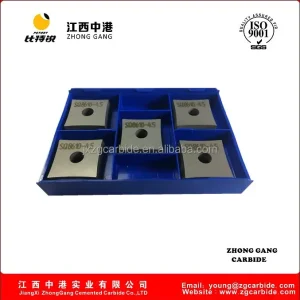
Wholesale carbide OD tube scarfing insert SDUW for weld bead steel tube Manufacturer, Factories
View Specifications
Wholesale Factory wholesale SPUB86 CVD coating tungsten carbide turning inserts Manufacturers, Factories
View Specifications
China Dia 8 × 330 mm Nano Grain Size Tungsten Carbide Rods for Making 0.25 µm Endmills, Drills and Boring Tools Manufacturer, Suppliers
View Specifications
China 2020 wholesale square tungsten large chip blank carbide insert Suppliers, Factories
View Specifications
China New shape cemented carbide tips for railway track tamping pick center tooth Manufacturers, Factory
View Specifications
China SPUB86C P40 uncoated blank cemented tools carbide inserts Suppliers, Factory
View Specifications
Buy Premium Bright Surface Tungsten Heavy Alloy Sheets & Pure Tungsten Plates for Industrial Applications Manufacturer, Factories
View SpecificationsFrequently Asked Questions: Global Industrial Purchasing & Specifications
Authoritative metallurgical answers addressing tolerances, quality certifications, powder origin, wire EDM handling, and export logistics for procurement executives.
What is the core metallurgical difference between "Carbide" and "Cemented Tungsten Carbide"?
Can Zhongfu produce custom cemented carbide components according to CAD drawings?
Why is 100% virgin tungsten raw material critical compared to recycled (scrap) powder?
What dimensional tolerances and ground surface finishes can your factory maintain?
What causes micro-cracking in tungsten carbide during Wire EDM, and how do you prevent it?
What are the properties and advantages of Non-Magnetic Nickel-Bonded Carbides?
How does Zhongfu guarantee lot-to-lot consistency for enterprise OEM supply chains?
What are your export lead times, packing standards, and overseas shipping protocols?
Request a Technical Consultation or Custom Tooling Quote
Connect directly with Zhongfu's metallurgical engineering staff. Send your component drawings, mechanical wear parameters, or volume replenishment schedules for an in-depth review within 8 hours.