
Precision Engineering Portfolio (Part I)
High-Precision Tungsten Carbide Flat Stock & Wear Solutions
Explore our hot-selling, direct-from-factory carbide plates, EDM blocks, precision rods, and tailored mechanical components optimized for high-impact industrial operations.
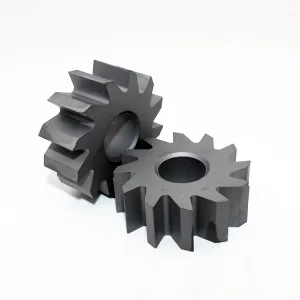
Precision Metal Parts Spur Gear Tiller Cultivator Back Gear
View Specifications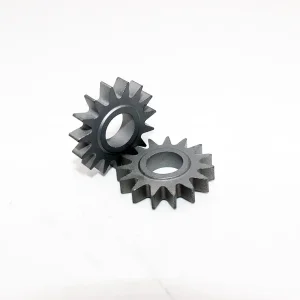
Wholesale Custom Tungsten Carbide Module Gear Milling Shaper Cutters
View Specifications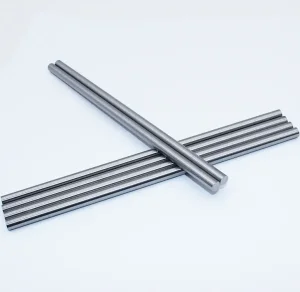
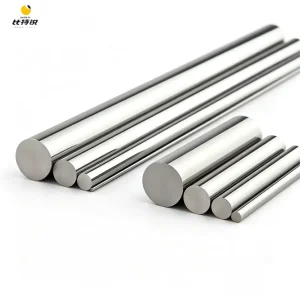
Nickel Non-Magnetic Cemented Carbide Rods with Nickel Binder
View Specifications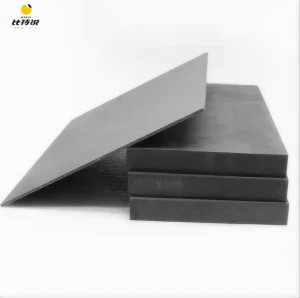
Tungsten Carbide Plate 100×100×60 mm — Thick Block Stock for EDM
View Specifications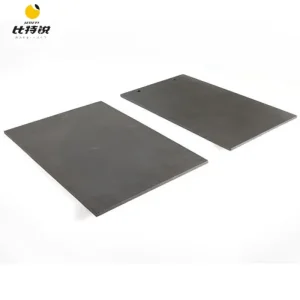
Pressureless Sintered Silicon Carbide Plate Polished SiC Ceramic Plate
View Specifications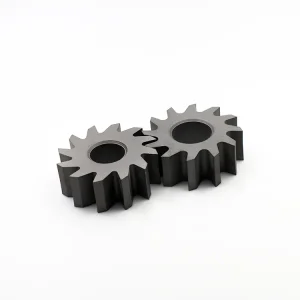
Precision Wholesale Straight-Toothed Steel Small Pinion Gears
View Specifications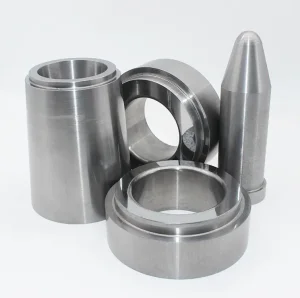
Tungsten Cemented Carbide Water Jet Nozzle Seat Valve Parts
View Specifications
Advanced Materials Engineering
Evolutionary Trends in Cemented Tungsten Carbide Plate Metallurgy
A technical overview of grain structure refinement, Sinter-HIP densification, and modern wear-resistant plate manufacturing.
In high-stress tooling, progressive stamping, and aggressive wear environments, industrial manufacturers face escalating performance demands. The global tungsten carbide plate industry has transitioned from conventional vacuum-sintered coarse structures to thermodynamically balanced, sub-micron and ultrafine-grained metallurgical composites. At Jiangxi Zhongfu Cemented Carbide Co., Ltd., our twenty-four years of foundational research focus on controlling WC (tungsten carbide) grain boundaries, eliminating microporosity, and formulating cobalt and nickel matrix binders that withstand extreme tribological wear, heavy mechanical impact, and chemical oxidation.
Overpressure Sinter-HIP Technology: The Benchmark of Modern Density
Standard vacuum sintering often leaves residual microscopic voids (classified under ISO 4505 as B04–B08 porosity) which trigger catastrophic brittle fracture during electrical discharge machining (EDM) or cyclic micro-impact stamping. Zhongfu employs proprietary overpressure Sinter-HIP furnaces operating at 1,450°C under 10 MPa (100 bar) of high-purity argon gas. This simultaneous application of heat and isostatic pressure collapses internal micro-voids, producing carbide plates with theoretical density exceeding 99.95%, virtually zero A00/B00 porosity, and a transverse rupture strength (TRS) exceeding 3,800 MPa.
Modern progressive dies and slitting blades also require customized binder metallurgy. While cobalt binders (YG6 to YG20) remain the gold standard for fracture toughness and shock absorption in heavy blanking dies, specialized industrial applications demand chemically inert alternatives. Our development of nickel-bonded, non-magnetic cemented carbide plates provides corrosion resistance against galvanic chemical attack while remaining completely non-magnetic (µ < 1.005 μ0)—an essential property for magnetic sensor manufacturing, semiconductor processing, and high-frequency induction tooling.
100% Virgin Powder
Formulated exclusively with virgin ammonium paratungstate (APT) derivatives, ensuring zero contaminated scrap, minimal trace element impurities, and uniform grain-size distributions.
Sub-Micron Microstructure
Precision grain growth inhibitors (VC, Cr3C2) stabilize carbide crystals at 0.4–0.8 μm, resulting in surface hardness ratings up to HRA 93.5 with exceptional edge retention.
Crack-Resistant EDM Stock
Specially treated stress-relieved plates designed for high-precision wire electrical discharge machining, preventing heat-affected boundary fractures or delamination.
Zero Residual Stress
Multi-stage computerized vacuum annealing profiles dissolve thermal gradients within thick stock slabs (up to 100mm), ensuring dimensional stability during multi-axis machining.
B2B Supply Intelligence
Global Sourcing Demands & Total Cost of Ownership (TCO)
How international procurement managers assess raw material longevity, tooling life-cycles, and precision machining economics.
For multinational procurement teams across the United States, Germany, Japan, Mexico, and Australia, purchasing tungsten carbide wear plates is rarely about the initial purchase price per kilogram. Instead, the true economic indicator is the Total Cost of Ownership (TCO), determined by downtime costs, die regrinding frequency, scrap rates caused by burrs, and the component's mean time between replacement (MTBR).
In high-speed blanking of electrical silicon steel sheets or lithium-ion battery cathode foils, a standard cold-work tool steel die might yield 200,000 to 500,000 strokes before burr formation necessitates costly disassembly, re-sharpening, and alignment. Upgrading to a premium Sinter-HIP tungsten carbide plate blank (such as our fine-grained YG15 or YG20 grade) scales continuous production to over 5,000,000 to 12,000,000 strokes per sharpening cycle. Even when compared to sub-par recycled-powder carbide plates, Zhongfu's virgin sub-micron plates demonstrate a 300% to 450% increase in operational service life.
24+
Years In Carbide R&D
5,000m²
Smart Factory Facility
80+
Patents & Formulations
< 8h
Engineering Response Time
Strategic Procurement Quality Checklist
When qualifying an OEM tungsten carbide plate manufacturer, enterprise procurement departments rely on quantifiable laboratory metrics over catalog marketing claims:
- Grain Size Homogeneity: Electron microscope verification (≥ 1,500x magnification) verifying uniform tungsten carbide grain distribution without abnormal coarse grain cluster growth (η-phase free).
- Magnetic Saturation & Coercivity: Rigorous non-destructive testing confirming exact carbon balance; avoidance of carbon deficiency (which causes brittle eta-phase formation) and free graphite precipitation (which reduces hardness).
- Geometrical Tolerances: Strict thickness parallelism (< 0.005mm), ground flatness (< 0.003mm), and surface roughness capabilities reaching mirror-level Ra 0.05 μm for zero-friction metalforming dies.
Industry 4.0 Integration
China Factory 4.0: Supply Chain Resilience & Upstream Synergy
Leveraging prime domestic tungsten mineral reserves and automated digital manufacturing for agile global delivery.
Upstream Mineral Synergy
Located in Jiangxi Province—the world's richest tungsten ore basin—Zhongfu commands immediate, untrammeled access to high-purity virgin APT raw materials, eliminating overseas mineral supply volatility.
Automated Compaction Cells
Equipped with multi-action CNC automated powder presses that regulate compaction pressures with ±0.5% load precision, eliminating density gradients across large surface area plate blanks.
Closed-Loop QC Systems
Real-time optical coordinate measuring (CMM), ultrasonic flaw detection, and metallographic phase analysis monitor every sintered batch from formulation powder to final dispatch.
Rapid Delivery Cadence
Standard grade plate blanks (100x100mm, 150x150mm, 200x200mm) remain stocked for same-day shipment, while fully custom sintered-to-drawing geometries ship within 10 to 14 working days.
Engineering Metallurgy Datasheet
Tungsten Carbide Plate Grade Selection & Property Matrix
Compare mechanical characteristics, cobalt content, hardness, and application parameters to specify the ideal grade for your tooling requirement.
| Grade | ISO Range | Binder Content (%) | Density (g/cm³) | Hardness (HRA) | TRS (MPa) | Primary Application Profile |
|---|---|---|---|---|---|---|
| YG6X | K10 | 6.0% Co | 14.95 | 92.5 | ≥ 2,800 | Precision wear plates, thin slitter knives, fine blanking of non-ferrous foils. |
| YG6 | K20 | 6.0% Co | 14.90 | 90.5 | ≥ 3,000 | Cast iron wear guides, drawing die inserts, light-load high-abrasion wear parts. |
| YG8 | K30 | 8.0% Co | 14.70 | 89.5 | ≥ 3,200 | General-purpose wear liners, rock drill inserts, wood processing blades. |
| YG12 | G30 | 12.0% Co | 14.30 | 88.0 | ≥ 3,400 | Progressive stamping dies, cold-heading die inserts, moderate impact tooling. |
| YG15 | G40 | 15.0% Co | 14.00 | 87.0 | ≥ 3,600 | Heavy stamping dies, thick sheet blanking, multi-layer laminated core dies. |
| YG20 | G50 | 20.0% Co | 13.55 | 85.5 | ≥ 3,800 | Extreme impact cold-heading, heavy-section stamping, thick EDM block stock. |
| NM12 (Ni) | Special | 12.0% Ni | 14.45 | 88.5 | ≥ 2,900 | Non-magnetic wear plates (μ<1.005), chemical valve seats, sensor trim tooling. |
Field-Tested Reliability
Localized Engineering Application Scenarios & Case Studies
Real-world integration of Zhongfu cemented carbide flat blanks across modern high-wear industrial sectors.
Automotive Progressive Stamping
In high-speed stamping of automotive electrical connectors and stator/rotor core laminations, Zhongfu YG15 Sinter-HIP carbide plates are fabricated into multi-station punches and die inserts. Operating continuously at 600–900 strokes per minute, our customers report an 8x service life multiplier compared to D2 and ASP23 tool steels, maintaining strict edge burr thresholds below 0.015mm over millions of continuous hits.
Semiconductor Packaging & Lead Frames
Micro-electronic lead frame trimming and IC mold components demand ultrafine grain (0.5 μm) tungsten carbide plates capable of sustaining razor-sharp corners without micro-chipping. Zhongfu UF06 sub-micron plates deliver HRA 93.0 hardness and mirror-like surface ground finishes (Ra ≤ 0.05 μm), preventing micro-burrs and safeguarding high-density gold/copper interconnect pins from deformation.
EV Battery Slitting & Foil Conversion
Slitting ultra-thin copper and aluminum anode/cathode battery foil requires plates with exceptional compressive yield strength and zero edge spalling. Our customized fine-grained WC-Co plates allow rotary and guillotine slitter blades to cut continuously without generating metallic dust or microscopic tears—minimizing the risk of internal short circuits in electric vehicle battery pack cells.
Severe Abrasive Wear Liners & Mining
For chemical pump impellers, downhole oil drilling chokes, and aggregate transfer chutes, coarse-grain YG8/YG11 carbide wear plates deliver unyielding resistance against severe slurry impingement and gouging abrasion. In severe industrial comparative trials, our tungsten carbide wear blocks outlasted abrasion-resistant AR400/AR500 quench-and-tempered steel plates by a factor of 14 to 1.
Precision Engineering Portfolio (Part II)
High-Performance Tooling Inserts, Wear Parts & Rod Blanks
Explore our secondary lineup of precision scarfing inserts, welding tips, industrial lathe tools, and non-magnetic components built to strict tolerances.
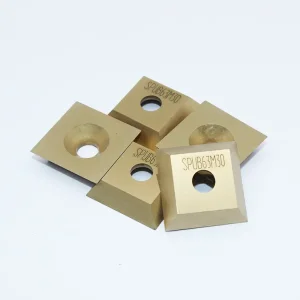
SPUB63M30 Tungsten Carbide Welding Inserts Square for Needle Holders
View Specifications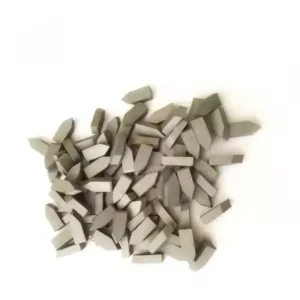
Customized Carbide Welding Tips for Turning Milling Cutters
View Specifications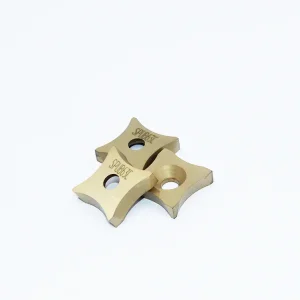
SPUB-63 External Scarfing Inserts for Tubes Machining & Pipes
View Specifications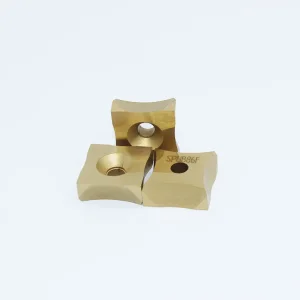
SPUB86F TiN Coating Tungsten Carbide Tube Scarfing Insert
View Specifications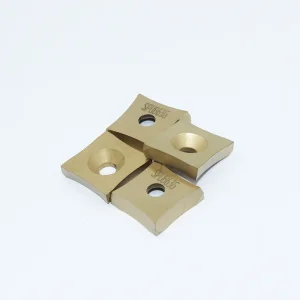
Wear Resistant Technical Round Tungsten Lathe Carbide Inserts
View Specifications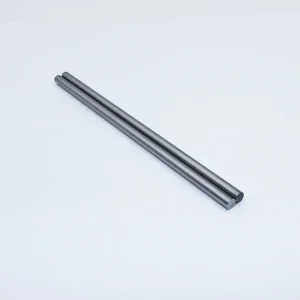
Non-Magnetic Cemented Carbide Rods for Water Meter Shaft
View Specifications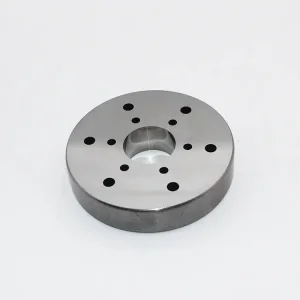
Customized Tungsten Carbide Fitting Elbow Tee Cap Pipe Flanges
View Specifications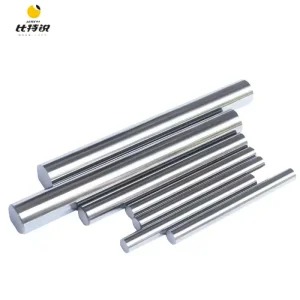
High-Quality Tungsten Carbide Rods for Precision Drilling & Milling
View Specifications
Authoritative Engineering FAQ
Frequently Asked Questions on Wholesale Carbide Plates
In-depth metallurgical insights addressing wire EDM machining, cobalt leaching, grade selection, and precision tolerances.
How does Sinter-HIP processing prevent micro-cracking during Wire EDM machining?
Wire Electrical Discharge Machining (WEDM) induces rapid thermal cycling, melting workpiece surfaces via localized electrical spark discharge. In conventional vacuum-sintered carbide plates containing micro-porosities, thermal stresses concentrate around internal voids, precipitating subterranean micro-cracks that compromise cutting edges. Zhongfu's 10 MPa overpressure Sinter-HIP process fully closes micro-porosities (guaranteeing A00/B00 ratings). Combined with specialized vacuum stress-relief annealing, our plates withstand extreme WEDM spark discharges without flaking, delamination, or heat-affected micro-crack propagation.
When should tooling designers specify a Nickel binder over a Cobalt binder?
Cobalt remains the superior binder for pure mechanical shock absorption and fracture toughness (TRS up to 3,800 MPa). However, cobalt is ferromagnetic and susceptible to rapid electrochemical leaching in acidic, alkaline, or deionized water environments (such as during slow-wire EDM with non-deionized dielectric fluids or exposure to corrosive chemical slurries). A nickel binder (as used in our non-magnetic series) should be specified when tooling must be completely non-magnetic (μ < 1.005) or operate in pH < 6 corrosive conditions to prevent surface pitting and premature structural breakdown.
What dimensional tolerances and surface finishes can Zhongfu achieve on custom ground plates?
While our standard sintered blanks maintain uniform machining allowances (+0.5mm / +1.5mm), our precision grinding department utilizes high-precision surface grinders and double-disc lapping machines. We routinely achieve finished thickness tolerances of ±0.002 mm, parallelism and flatness under 0.003 mm across a 200x200mm span, and surface finishes ranging from standard ground Ra 0.2 μm to optical mirror-polished Ra 0.05 μm.
How do you verify internal structural integrity and grade authenticity prior to export?
Every production batch undergoes comprehensive laboratory verification documented by an EN 10204 3.1 Inspection Certificate. Our quality assurance protocol includes: (1) Archimedian immersion density balance testing, (2) Rockwell HRA hardness measurement across multiple face points, (3) Magnetic saturation (4πσ) and coercive force (Hc) testing to ensure precise stoichiometric carbon control, (4) Transverse Rupture Strength (TRS) test bar analysis, and (5) High-magnification metallographic microscope examination to verify total absence of graphite nests or brittle η-phase formations.
Can Zhongfu formulate custom grades for proprietary, highly specialized wear applications?
Yes. Beyond standard ISO K10–K40 and G-series grades (YG6, YG8, YG15, YG20), our in-house metallurgical engineers routinely develop bespoke grain-binder recipes. By manipulating grain growth inhibitors (vanadium carbide VC, chromium carbide Cr3C2, tantalum-niobium carbide TaNbC) and adjusting binder matrix proportions from 3% to 25%, we engineer custom hardness, corrosion resistance, and thermal fatigue resistance profiles tailored to your specific application.