
Featured Tungsten Carbide High-Temperature Solutions (Part I)
Factory-direct sintered blanks, precision h6 rods, and CVD-coated hot-shearing inserts fabricated from 100% virgin submicron tungsten carbide powder.

China Dia 8 × 330 mm Nano Grain Size Tungsten Carbide Rods for Making 0.25 µm Endmills, Drills and Boring Tools Manufacturer, Suppliers
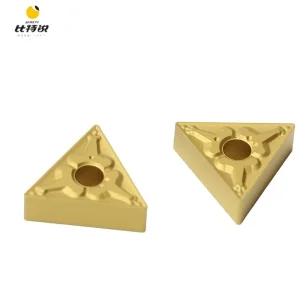
China Tungsten Carbide Bar Peeling Insert Hard Alloy Cutting for Centerless Lathe Steel Rod Manufacturer, Suppliers

Wholesale Best price woodturning tungsten carbide turning tip inserts and cutter railway Manufacturer, Suppliers
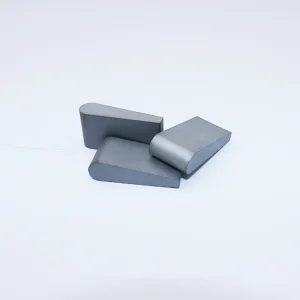
China New shape tungsten carbide tamping tines for railway Manufacturers, Factory

China Best price SPUB86J CVD coating boxes woodworking tungsten carbide button insert Manufacturer, Supplier

China SPUB63J CVD coating tungsten carbide od scarfing insert Manufacturers, Suppliers

Wholesale Customized tungsten non-magnetic carbide scarifier cutter/through hole wear parts Manufacturers, Factories

Wholesale Customized Cemented Carbide Plate — Factory-Direct Tungsten Carbide Blanks in Any Size, Shape & Grade Factory, Factories
Demystifying Tungsten Carbide Melting Point: Pure WC vs. Cemented Hardmetal Alloys
When engineering procurement teams search for Tungsten Carbide Melting Point, they navigate a critical metallurgical distinction between pure stoichiometric tungsten monocarbide (WC) and commercial cemented carbide composites bonded by cobalt or nickel.
Pure Tungsten Carbide (WC): 2,870 °C (5,198 °F)
Pure stoichiometric WC exhibits an ultra-refractory congruent melting point at approximately 2,870 °C ± 50 °C. In its pure crystalline state, covalent-metallic tungsten-carbon bonds provide exceptional theoretical thermal resistance, a high Young's modulus of 530–700 GPa, and a low thermal expansion coefficient of 4.5–7.1 × 10⁻⁶/K. However, pure WC cannot be conventionally sintered to 100% density without binder phases or extreme spark plasma sintering.
WC-Co Eutectic Liquid Phase: 1,320 °C – 1,450 °C
Commercial cemented carbide (hardmetal) employs metallic binders, predominantly cobalt (Co melting point: 1,495 °C) or nickel (Ni melting point: 1,455 °C). During vacuum pressure sintering (Sinter-HIP), a pseudo-binary eutectic reaction (WC + liquid) occurs between 1,320 °C and 1,380 °C. This liquid phase wets the WC grains, pulling them into zero-porosity compaction via capillary force, establishing structural integrity for heavy industrial service.
High-Temperature Plastic Deformation Limits
Under operational stress, the functional upper thermal ceiling of cemented carbide is not defined by the 2,870 °C grain melting point, but by the binder's hot softening point. Uncoated standard WC-Co tools begin binder phase creep and softening at 800 °C to 950 °C. By integrating solid-solution cubic carbides (TiC, TaC, NbC) and multi-layer nano-composite CVD/PVD coatings, Jiangxi Zhongfu elevates continuous thermal stability up to 1,150 °C under aggressive cutting forces.
| Material Formulation | WC Grain Melting Point | Eutectic Liquid Phase Initiation | Continuous Operating Temp Ceiling | Thermal Expansion (×10⁻⁶/K) | Critical Failure Mechanism at High Temp |
|---|---|---|---|---|---|
| Pure Stoichiometric WC (Binderless) | 2,870 °C | N/A (No Binder Phase) | 1,200 °C (Vacuum) / 600 °C (Oxidation) | 4.5 – 5.2 | Oxidative sublimation to WO₃ / Grain cleavage |
| Standard WC-6Co (e.g. YG6 / ISO K10) | 2,870 °C | 1,320 °C – 1,350 °C | 850 °C (Continuous Metalcutting) | 5.4 – 5.8 | Binder phase softening, crater wear & micro-chipping |
| Heavy Duty WC-15Co (YG15 / Tooling Grade) | 2,870 °C | 1,340 °C – 1,380 °C | 750 °C (High Shock / Impact) | 6.2 – 6.8 | Plastic deformation of high-binder matrix |
| Non-Magnetic WC-Ni Alloy | 2,870 °C | 1,360 °C – 1,410 °C | 900 °C (Corrosive / Sensor Environment) | 5.6 – 6.1 | Intergranular chemical dissolution in acid/brine |
| WC-TiC-TaC-Co + Multi-CVD Coating | 2,870 °C | 1,350 °C (Matrix Core) | 1,150 °C (High-Speed Dry Turning) | 5.1 – 5.5 | Thermal barrier coating delamination / Substrate creep |
Global Procurement Demands: Addressing High-Thermal Industrial Pain Points
Procurement executives and plant directors across North America, Europe, and Asia-Pacific require more than standard dimensional tolerances. They face severe operational friction where temperature surges accelerate tool failure, unbudgeted downtime, and scrap rates.
Steel Processing & Hot Mill Scarfing
Continuous casting steel mills require scarfing inserts (e.g., SPUB63, SPUB86, SNMX) capable of shearing red-hot welded seams and slabs at surface temperatures exceeding 950 °C. Standard carbide experiences sudden plastic edge roll-over. Zhongfu’s enriched solid-solution cubic carbide grades combined with thick CVD Al₂O₃/TiCN barrier layers prevent cobalt thermal migration, delivering a 40% increase in linear square meters scarfed per tool indexing.
High-Speed Dry Centerless Peeling
Bright steel bar manufacturers utilize centerless lathes peeling high-strength alloy rods (e.g., 42CrMo4, 316Ti). Friction-induced chip generation drives temperatures at the cutting zone beyond 800 °C. In dry cutting environments, tool life decays exponentially. Zhongfu’s h6 ground carbide blanks and peeling inserts utilize fine-grained YG6X with TaC grain-growth inhibitors to resist thermal cratering without relying on coolant flooding.
Subsurface MWD / LWD Drilling Equipment
Directional drilling tools operating in deep shale formations operate under geothermal gradients exceeding 180 °C combined with severe friction and high abrasive sand loads. Standard ferromagnetic cobalt binders perturb sensitive geomagnetic guidance sensors. Zhongfu supplies customized non-magnetic nickel-bonded tungsten carbide wear bushings and valve trim maintaining ultra-low magnetic permeability (µr < 1.005) while resisting high-temperature erosion.
From Submicron Powders to Sinter-HIP Blanks: Precision Process Engineering
Attaining maximum thermal stability and density requires strict adherence to lean metallurgical practices. Over 24 years, Jiangxi Zhongfu has refined five tightly regulated production gates ensuring consistent microstructure from grain-boundary nucleation to final diamond profile grinding.
Formulation & Wet Milling
100% virgin submicron WC powder wet-milled with pharmaceutical-grade Cobalt or Nickel binders in horizontal attritor mills using ethanol slurry, achieving homogeneous grain dispersal without lattice degradation.
Spray Drying & Granulation
High-tower centrifugal nitrogen spray drying creates spherical granules with superior flow characteristics and uniform bulk density, preventing porosity and internal density gradients during compaction.
CNC Compaction Pressing
Ultra-precise hydraulic and multi-axis CNC mechanical presses produce net-shape and near-net-shape green compacts with calculated shrinkage allowances verified through finite element sintering simulation.
60-Bar Sinter-HIP Treatment
Integrated vacuum dewaxing followed by high-pressure Sinter-HIP sintering at 1,420 °C under 6 MPa (60 bar) argon overpressure. Eliminates microscopic voids to achieve ISO Class A00 porosity and theoretical 100% density.
Diamond Profile Grinding & QA
CNC 5-axis profile grinders, centerless grinding to h6 tolerance (0.004 mm), metallurgical microscope phase checks, and coercivity testing guaranteeing flawless batch-to-batch structural integrity.
Global Commercial Landscape: Regulatory Compliance & Total Cost of Ownership (TCO)
Securing high-reliability hardmetal partners is a strategic risk mitigation measure for Western procurement heads navigating supply disruptions, raw material volatility, and evolving compliance standards.
100% Conflict-Free Sourcing & Traceability
Located in Jiangxi Province—the premier tungsten corridor globally—Jiangxi Zhongfu maintains direct mine-to-furnace custody. We comply fully with the OECD Due Diligence Guidance and the Dodd-Frank Act Section 1502. Every shipment is guaranteed 100% virgin conflict-free material, backed by certified material safety certificates (MSDS), RoHS compliance declarations, and full REACH regulation clearances.
Lowering TCO Through Thermal Longevity
The true procurement cost of tungsten carbide components is rarely defined by invoice price per kilogram; it is governed by downtime hours, line stoppages, index cycle intervals, and grinding wheel consumption. By selecting carbide grades optimized specifically for high melting point retention and plastic deformation threshold, our global partners record an average 28% to 42% reduction in annualized tool spend.
Direct Engineer-to-Engineer Localization Support
Our customer relationship model bypasses commission-based intermediaries. Overseas OEM buyers interface directly with seasoned hardmetal engineers who evaluate CAD models, tolerance limits, and operational stress regimes. With an under 8-hour technical turnaround, custom formulations and rapid prototyping cycles are seamlessly deployed across North America, Europe, Australia, and Latin America.
Grade Selection Reference: Matching Thermal Load with Alloy Chemistry
Optimizing the balance between hardness (wear resistance) and transverse rupture strength (impact toughness) under elevated thermal environments.
| Carbide Grade | Cobalt Binder % | Grain Size Class (µm) | Density (g/cm³) | Hardness (HRA) | TRS (N/mm²) | Thermal Shock Resistance | Primary Industrial Use Case |
|---|---|---|---|---|---|---|---|
| YG6 (ISO K10-K20) | 6.0% | 1.2 – 1.6 | 14.90 – 15.05 | 90.5 | 1,900 | Moderate | Precision wear plates, finishing cast iron, wire drawing dies |
| YG6X (Submicron) | 6.0% | 0.6 – 0.8 | 14.95 – 15.10 | 92.0 | 2,100 | High Hardness | PCB micro-drills, high-speed endmills, centerless bar peeling |
| YG8 (ISO K20-K30) | 8.0% | 1.4 – 2.0 | 14.65 – 14.85 | 89.5 | 2,300 | Balanced | Brazed lathe tips, rock drilling buttons, woodturning knives |
| YG15 (ISO K40) | 15.0% | 2.0 – 3.0 | 13.95 – 14.15 | 87.0 | 2,900 | High Shock | Heavy stamping punches, cold heading dies, hydraulic valve trim |
| YG20 (Heavy Impact) | 20.0% | 2.2 – 3.5 | 13.45 – 13.65 | 85.5 | 3,200 | Extreme Impact | Thick plate stamping, high-tonnage cold extrusion dies, railway tines |
| YN8 (Non-Magnetic Ni) | 8.0% Ni | 1.0 – 1.8 | 14.60 – 14.80 | 89.0 | 2,200 | Corrosion Proof | MWD drill stems, magnetic media stamping, chemical pump seals |
Featured Tungsten Carbide High-Temperature Solutions (Part II)
Heavy-duty cold heading blanks, CVD scarfing blades, and precision gear milling cutters engineered to endure intensive thermal friction and abrasive mechanical fatigue.

China SPUB63B wholesale lathe round tungsten carbide turning inserts Supplier, Factory

Buy Customized Tungsten Carbide Cold Heading molds/punch dies/wire drawing dies Manufacturers, Suppliers

Wholesale Industrial Tungsten Alloy Rod Tungsten Material For Stainless Steel Machining Wear‑Resistant Solid Tungsten Bar Supplier, Suppliers
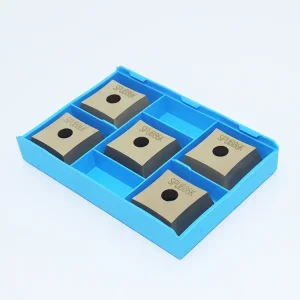
China Best price SPUB86K CVD coating tungsten carbide lathe cutting tool insert Manufacturer, Manufacturers

China Wholesale custom tungsten carbide module gear milling shaper cutters Manufacturers, Suppliers
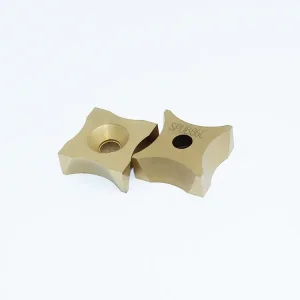
China SPUB86C P40 CVD coating tungsten carbide scarfing insert Manufacturers, Suppliers

China 2020 wholesale square tungsten large chip blank carbide insert Suppliers, Factories

China SPUB86C P40 uncoated blank cemented tools carbide inserts Suppliers, Factory
Technology Roadmap: Pushing the Thermal Frontiers of Tungsten Hardmetals
As extreme manufacturing environments emerge in aerospace hypersonics, EV rotor winding dies, and advanced dry machining, conventional metallurgy must evolve. Jiangxi Zhongfu invests 8.5% of annual revenue into breakthrough thermal endurance research.
Nano-Grained Binderless Hardmetals
Eliminating cobalt binders removes the low-melting-point eutectic weakness (1,320 °C) entirely. Utilizing Field-Assisted Sintering Technology (FAST/SPS), our laboratory produces 99.8% dense binderless WC blanks capable of continuous operation in corrosive and thermal environments up to 1,200 °C with zero oxidation degradation under inert conditions.
High-Entropy Alloy (HEA) Binders
Replacing traditional pure cobalt with FeCoNiCrAl High-Entropy Alloy binder systems. HEA-bonded tungsten carbide exhibits phenomenal sluggish diffusion kinetics, raising the matrix plastic deformation threshold by over 180 °C while maintaining superior fracture toughness under severe mechanical shock regimes.
AlTiSiN Multi-Nanocomposite Coatings
Next-generation cathodic arc physical vapor deposition creates self-adaptive AlTiSiN / CrAlSiN coatings. When temperatures reach 900 °C during dry high-feed milling, a dense amorphous silicon oxide (SiO₂) / aluminum oxide (Al₂O₃) protective barrier precipitates on the insert surface, halting oxygen penetration up to 1,150 °C.
Frequently Asked Questions for Industrial Procurement Teams
Direct metallurgical and logistical clarifications to support your engineering qualification and supplier onboarding processes.