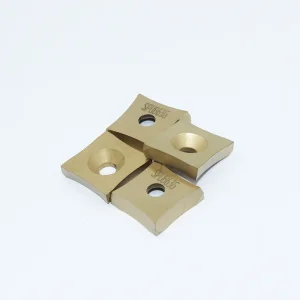
Primary Tungsten Carbide Tooling & Drill Rod Series
Direct-from-factory sintered blanks, micro-grain solid round carbide rods, and indexable cutting geometries manufactured under ISO 9001 quality management protocols.








Global Commercial Dynamics of Wholesale Tungsten Carbide Drills
An exhaustive review of market consolidation, raw material supply security, and evolving manufacturing capabilities in high-hardness rotary tooling.
Supply Chain Upstream Integration
Tungsten (W) represents one of the most geopolitically critical metals, with more than 80% of global reserves and mining concentrates routed through specialized chemical processing nodes into Ammonium Paratungstate (APT). As a premier wholesale tungsten carbide drill supplier, direct proximity to Jiangxi's primary smelting corridor guarantees absolute material traceability, virgin powder consistency, and insulation against international raw material price shocks.
Defect Elimination via Sinter-HIP
Modern high-feed CNC holemaking leaves zero room for structural micro-voids. Standard atmospheric vacuum sintering leaves residual sub-surface microporosities (class A04/B04). Advanced suppliers utilize simultaneous Hot Isostatic Pressing (Overpressure Sinter-HIP at 60–100 bar Ar) to achieve complete densification near theoretical limits (14.5–15.0 g/cm³), eliminating tool breakage under heavy torsional loads.
Total Cost of Ownership (TCO) Economics
Procurement directors are shifting valuation metrics from pure unit purchase price to Hole Production Unit Cost (HPUC). In mass automotive powertrain production, a tool life improvement of 35% reduces CNC downtime, indexing cycles, and quality control scrap rates, lowering net operating expenditure by up to 22% compared to cheaper low-binder or uncontrolled grain-growth alternatives.
State-of-the-Art Technology Trends in Carbide Holemaking
How grain refinement, multi-component PVD coatings, and CFD-optimized internal coolant geometries are rewriting productivity benchmarks in deep-hole drilling.
Sub-Micron and Nano-Grain WC
Traditional carbide relied on 1.0–2.5 µm WC grains. Next-generation drills utilize ultra-fine (0.4–0.6 µm) and nano-grain (<0.2 µm) WC powders doped with grain growth inhibitors such as Vanadium Carbide (VC) and Chromium Carbide (Cr3C2). This prevents anomalous crystal coalescence during liquid phase sintering, generating a simultaneous spike in hardness (up to 93.5 HRA) and fracture toughness (K1C > 10.5 MPa·m1/2).
Nanocomposite PVD/CVD Hard Coatings
High-speed drilling generates interfacial contact temperatures exceeding 900°C. Modern drill bit blanks are coated using cathodic arc physical vapor deposition with multi-layered architectures: AlTiN, AlCrN, and TiSiN nanocomposites. The creation of an amorphous Si3N4 phase embedding nanocrystalline TiN forms an ultra-hard thermal barrier (36–38 GPa hardness) that promotes oxidation resistance up to 1,100°C.
Helical Internal Coolant Duct Geometries
Deep-hole drilling beyond 8xD demands rapid chip evacuation and instantaneous thermal dissipation. Through continuous screw-extrusion pressing, carbide rods are manufactured with twisted twin or triple helical internal coolant holes (15° to 40° helix angles). Computational Fluid Dynamics (CFD) optimizes coolant channel diameters to prevent pressure drops, supplying high-pressure coolant (up to 70 bar) right to the chisel edge.
Sector-Specific Field Engineering & Drill Geometries
Targeted substrate grade formulation and macro-edge hone preparation designed for the world's most demanding workpiece alloys.
Aerospace: CFRP & Titanium Multi-Stacks
Drilling alternating layers of Carbon Fiber Reinforced Polymer (CFRP) and Titanium alloy (Ti-6Al-4V) causes rapid abrasive flank wear and interlaminar delamination. Our specialized CVD Diamond-coated and dual-angle chisel drills maintain sharp cutting edges while balancing toughness, eliminating exit burrs in titanium and fiber pull-out in composite skins.
E-Mobility: High-Silicon Aluminum Housings
Electric vehicle motor casings and battery enclosures require thousands of high-speed coolant holes in hypereutectic aluminum (AlSi12). DLC (Diamond-Like Carbon) coated ultrafine-grain carbide drills feature mirror-polished flutes (Ra < 0.05 µm) to prevent built-up edge (BUE) and ensure rapid swarf extraction at cutting speeds exceeding 400 m/min.
Electronics: PCB Micro-Drilling (Ø 0.05–0.30mm)
High-density interconnect (HDI) circuit boards require sub-millimeter holemaking at spindle speeds up to 300,000 RPM. Zhongfu provides customized nano-grain carbide micro-drill blanks offering unmatched elastic modulus (>630 GPa), virtually zero runout (TIR < 0.001 mm), and exceptional resistance to high-frequency bending fatigue.
Heavy Mining & Geological Exploration
Rotary percussion drilling through abrasive granite, quartz, and basalt formations requires superior impact fracture toughness. For deep-hole exploration and mining drills, we manufacture heavy-duty cemented carbide inserts (such as SPUB-63C and spherical button tips) using coarse-grained YG11C and YG15 formulations that resist high-impact spalling.
Medical Grade Tooling: Titanium & Co-Cr Implants
Orthopedic bone screws and prosthetic hip joints use biocompatible Ti-Grade 5 and Cobalt-Chromium alloys characterized by severe work hardening. Our rigid, sub-micron grade drill bits feature reinforced split-point web designs to minimize thrust force, preventing work hardening and maintaining surgical dimensional repeatability.
Standard Drill Grade & Property Specification Guide
Direct comparative reference table for tool grinders, distributors, and CNC production managers selecting optimal solid carbide drill blanks.
| Carbide Grade | WC Grain Size (µm) | Cobalt Content (%) | Density (g/cm³) | Hardness (HRA) | TRS (N/mm²) | Recommended Holemaking Operation |
|---|---|---|---|---|---|---|
| ZF-Ultra04 | 0.4 (Ultra-Fine) | 8.0% Co | 14.65 | 93.2 ± 0.3 | 3,800 | Cast iron, hardened steels (≤55 HRC), titanium alloys |
| ZF-Nano02 | 0.2 (Nano-Class) | 10.0% Co | 14.45 | 92.8 ± 0.3 | 4,200 | High-feed deep-hole drills (15xD to 30xD), micro-drilling |
| ZF-Standard06 | 0.7 (Sub-Micron) | 10.0% Co | 14.50 | 91.8 ± 0.4 | 3,600 | General purpose ISO P/M/K materials, structural steels |
| ZF-Tough12 | 1.2 (Medium) | 12.0% Co | 14.25 | 89.5 ± 0.4 | 3,400 | Interrupted cut drilling, severe weld-overlay penetration |
| ZF-CorrosionNi | 0.8 (Sub-Micron) | 9.0% Ni Binder | 14.70 | 90.5 ± 0.4 | 3,100 | Non-magnetic MWD oilfield tools, corrosive chemical valves |
Macro-Industry Engineering & Turnkey Supply Strategies
How Tier-1 tooling brands and large machine shops establish reliable supply contracts with Jiangxi Zhongfu Cemented Carbide Co., Ltd.
Pre-Formed Near-Net Step Drill Blanks
Reduce diamond wheel wear and grinding cycle times up to 60% by utilizing customized step-drilled blanks. Zhongfu manufactures multi-diameter blanks pressed and pre-sintered to exact tolerances (±0.10 mm), ready for final profile flute grinding. This significantly lowers production costs for complex chamfering drills.
Standardized Blanket Orders & Consignment
To combat global shipping bottlenecks, we provide annual frame contracts with buffer stock stored in our temperature-controlled warehouses. Ground carbide rods from Ø1.0 mm to Ø40.0 mm in h6 tolerance can be shipped on demand within 48 hours, shielding machine shops from sudden lead-time disruptions.
Full Batch Metallographic Traceability
Every export consignment is paired with a comprehensive Certificate of Analysis (CoA). Testing includes magnetic saturation (Cobalt magnetic balance), coercive force (Hc in kA/m to confirm grain boundaries), specific gravity, Vickers hardness (HV30), and optical micro-structure images documenting zero free graphite or eta-phase embrittlement.
Frequently Asked Questions for Wholesale Carbide Drill Buyers
Authoritative insights directly from our metallurgical engineers regarding ordering, grade selection, tolerances, and custom blanks.
What is the standard tolerance and surface finish for your solid carbide drill blanks?
How do you prevent micro-chipping on cutting edges during high-speed deep drilling?
Can Zhongfu manufacture custom step-drill rods and special internal coolant geometries?
What is the difference between solid carbide drills and indexable/brazed carbide tip drills?
What are the minimum order quantities (MOQ) and lead times for export shipments?
Specialized Cemented Carbide Tools & Drill Inserts
Indexable carbide inserts, scarfing blades, mining drill inserts, and specialized tungsten alloy components engineered for harsh operating environments.