
Precision Carbide Substrates & Plotter Tool Blanks
Direct supply from high-capacity ISO-certified manufacturing workshops. Every component features strictly certified metallographic density, mirror micro-finishes, and strict dimensional tolerances.
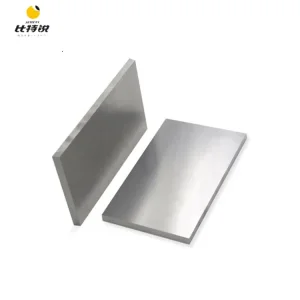
China Tungsten Carbide Plate | OEM Wear-Resistant Cemented Carbide Blank for Tooling & EDM Manufacturers, Supplier
View Specs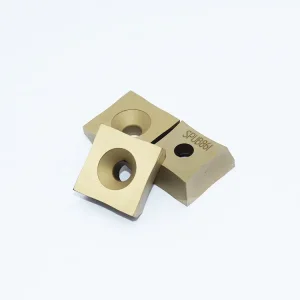
China Tungsten tool holder lathe cemented carbide cutting tool inserts for chian saw Manufacturer, Suppliers
View Specs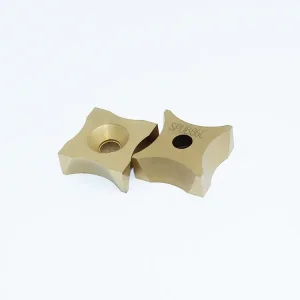
China SPUB86C P40 CVD coating tungsten carbide scarfing insert Manufacturers, Suppliers
View Specs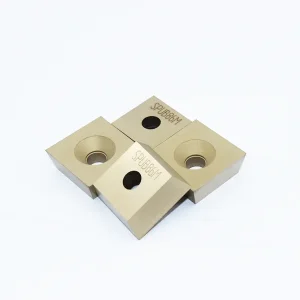
China SPUB86 P40 tungsten carbide scarfing inserts for welded steel pipe Manufacturer, Factory
View Specs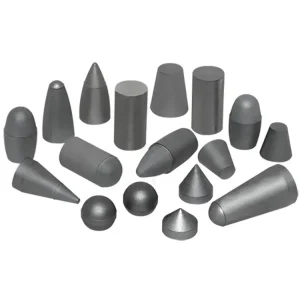
China Round billet metal for high strength cemented carbide tools Manufacturer, Supplier
View Specs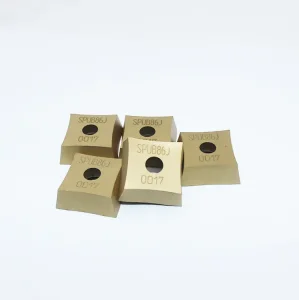
China Best price CVD coating tungsten carbide non standard carbide jaw insert cnc Manufacturer, Factory
View Specs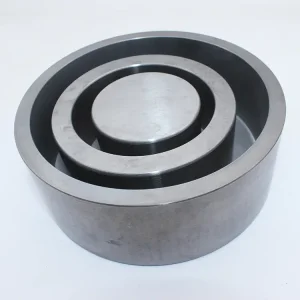
Wholesale Factory sale customized carbide milling jar tungsten carbide bowl/ jar/mortar Manufacturer, Factory
View Specs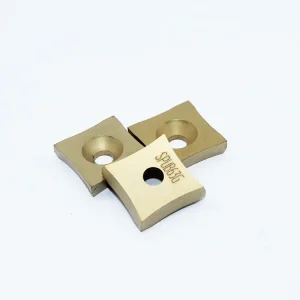
Wholesale Wear resistant SPUB 63G customize imported carbide threading inserts Factory, Factories
View SpecsGlobal Enterprise Sourcing Architecture for Roland Plotter Blades
In high-speed roll-to-roll and flatbed CNC plotting systems, the cutting edge is the ultimate physical touchpoint where precision converts to profitability. Understanding micro-metallurgy and precision blade manufacturing drives procurement success.
Eliminating Blade Chipping & Deflection
Modern sign vinyls, reflective films, fluoropolymers, and automotive Paint Protection Films (PPF) demand ultra-rigid blade geometries. Conventional high-speed steel tools flex and dull rapidly under lateral resistance. Sourcing sub-micron cemented tungsten carbide (grain size < 0.5 µm) ensures edge fidelity, clean corners without burrs, and minimal weeding labor.
Total Cost of Ownership (TCO) Optimization
While low-cost stamped blades appear economical, frequent machine stoppages for recalibration, material damage caused by edge drag, and adhesive residue buildup drastically escalate operational expenditures. Factory-direct wholesale partnerships provide consistent hardness tolerances (≥ 92.5 HRA), extending single-blade service life by over 320%.
Supply Chain Redundancy & JIT Delivery
Global plotting workshops cannot tolerate stockouts. Partnering directly with high-capacity carbide processing factories like Jiangxi Zhongfu guarantees raw material traceability (100% virgin WC-Co powder), automated precision centerless grinding, and strategic safety stock allocation for international distribution hubs.
Standardized Roland Plotter Blade Cutting Angle Matrix
Selecting the optimal blade angle is critical to balancing cutting drag, tip velocity, and edge endurance across multi-substrate industrial cutting applications.
| Blade Angle | Blade Offset (mm) | Hardness Rating | Target Substrates | Key Operational Advantages |
|---|---|---|---|---|
| 30° Fine Angle | 0.25 mm ± 0.02 | 92.5 - 93.0 HRA | Ultra-thin cast vinyl, window tinting, gold leaf, silk film (< 50 µm) | Lowest cutting drag; prevents film bunching and tearing on intricate micro-lettering. |
| 45° Standard Universal | 0.25 mm ± 0.02 | 92.8 - 93.5 HRA | Calendered vinyl, thermal transfer PU/PVC, matte laminates, flock | Balanced shear resistance; workhorse standard for high-throughput commercial sign graphics. |
| 60° Deep Cut / Heavy Duty | 0.50 mm - 0.75 mm | 93.2 - 94.0 HRA | Reflective diamond-grade sheeting, sandblast stencil, PPF, magnetic rubber | Steep cutting approach clears thick media; reinforced wedge profile prevents edge micro-chipping. |
| Custom Bevel / Micro-Coated | Configured per OEM | Up to 3,000 HV (Coating) | Multi-layer carbon fiber weaves, abrasive adhesives, ballistic polycarbonates | Nano-TiAlN or DLC layer stops chemical bonding with adhesive backings; extended longevity. |
24 Years of Precision Metallurgy & Manufacturing Infrastructure
Operating from a modern 5,000+ m² production complex in Nanchang, Jiangxi, we integrate the complete industrial line: raw powder formulation, vacuum HIP sintering, automatic optical grinding, and micron-level CMM validation.
100% Virgin Powder Sourcing
We reject recycled scrap tungsten. Every batch uses pure ammonium paratungstate (APT) derived tungsten carbide blended with precise metallic cobalt binders, yielding defect-free crystalline structures free of metallurgical voids.
Pressure Sinter-HIP Technology
Our over-pressure vacuum sintering furnaces reach temperatures up to 1,500°C with isostatic argon pressure up to 10 MPa, eliminating micro-porosity to ensure the cutting edge remains unyielding under continuous impact.
Optical In-Line Inspection
Blades undergo rigorous batch sampling using 1000x metallographic microscope projection and automated laser interferometry. We check concentricity (≤ 0.005 mm), blade offset, and edge sharpness to the sub-micron level.
Technology Roadmap: Next-Generation Digital Cutting Tools
The fast-evolving graphic display, aerospace prepreg, and electric vehicle battery separator industries demand groundbreaking improvements in plotter blade metallurgy and edge mechanics.
Diamond-Like Carbon (DLC) & TiAlSiN
Applying cathodic arc physical vapor deposition to create high-adhesion nanostructured coatings. DLC layers deliver an ultra-low friction coefficient (≤ 0.08) against aggressive acrylic adhesives, eliminating edge buildup and frequent cleaning intervals.
Grain Refinement < 0.2 µm
By integrating rare Earth grain growth inhibitors (VC, Cr3C2), our R&D engineering division produces nanocrystalline WC-Co substrates exhibiting extraordinary transverse rupture strength (≥ 4,200 N/mm²) and near-diamond edge retention.
Smart Plotting & Real-Time Telemetry
Collaborating with high-end CNC plotter builders to engineer micro-shank geometry profiles that support acoustic emission and vibration-monitoring sensors, anticipating blade tip wear before cut quality drops.
International Compliance & Seamless Sourcing Channels
Serving over 20 global territories including the USA, Germany, Mexico, Canada, and Australia with complete regulatory traceability and localized procurement packaging.
Conflict-Free Raw Material Certification
100% compliant with global standards including REACH, RoHS, and Dodd-Frank Section 1502. Full mineral chain of custody guarantees all tungsten and cobalt elements originate from non-conflict audited smelters.
Custom OEM Packaging & Labeling
From 5-pack color-coded spring silicone protective boots to blister clamshell enterprise packaging with custom barcode printing (EAN-13, UPC, DataMatrix), we deliver private-label ready products for global tool distributors.
Dedicated Engineering SLA Support
Procurement teams receive direct technical assistance from metallurgical engineers. Inquiries, drawing evaluations, and custom shank tooling quotes are systematically fulfilled within an 8-hour turnaround window.
Frequently Asked Questions on Plotter Blades & Carbide Sourcing
Technical and procurement clarifications direct from our manufacturing engineers.
What is the standard shank diameter for Roland-compatible plotter blades?
Standard Roland cutting systems (including CAMM-1, TrueVIS, VersaSTUDIO, and compatible vinyl plotters) require a 2.0 mm (±0.01 mm) shank diameter with an overall blade length of approximately 23.5 mm. We grind shanks using precision centerless machinery to ensure smooth rotation inside bearing-supported blade holders without vibration or play.
Why is sub-micron tungsten carbide superior to conventional carbide grades?
Standard carbide grades have grain sizes between 1.0 µm and 3.0 µm. When sharpened down to a razor-thin apex, coarse grain structures can chip along the cobalt binder boundaries. Sub-micron grains (< 0.5 µm) allow razor sharpening without chipping, giving long blade life and smooth cuts along intricate curves.
Can you provide custom blade angles and non-standard geometries?
Yes. Custom carbide wear parts are our core specialty. We manufacture custom angles (such as 35°, 50°, or 75°), modified offsets, offset tips, and custom-diameter tool shanks from customer 2D/3D CAD drawings or physical reference samples.
What is the standard minimum order quantity (MOQ) for wholesale supply?
For standard 30°, 45°, and 60° Roland plotter blades, the MOQ starts at 500 units, supplied with custom color-coded rubber caps and protective multi-pack casing. For fully customized carbide blades or specialized coatings, the initial prototype run typically starts at 200 units.
Precision Carbide Cutting Inserts, Rods & Wear Components
Explore our broader tungsten carbide industrial inventory, including metallurgical scarfing inserts, high-purity alloy plates, and precision-ground cutting rods.
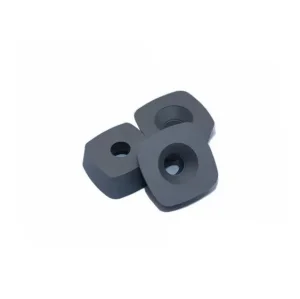
Buy 1*1*0.375“ CVD coating tungsten carbide tube scarfing insert Supplier, Factory
View Specs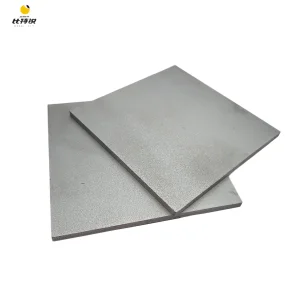
Buy Premium Bright Surface Tungsten Heavy Alloy Sheets & Pure Tungsten Plates for Industrial Applications Manufacturer, Factories
View Specs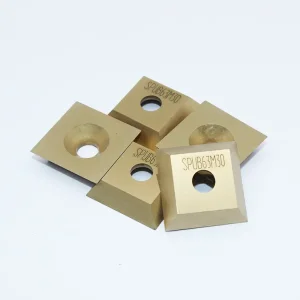
Buy Wholesale SPUB63M30 tungsten carbide welding inserts square for needle holders Suppliers, Factory
View Specs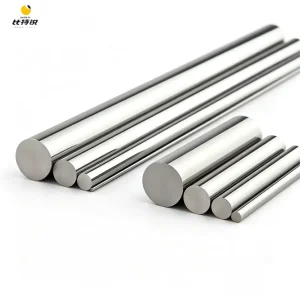
China Carbide Cutting Rods for Tungsten Alloy Cutting Tool Components Suppliers, Factories
View Specs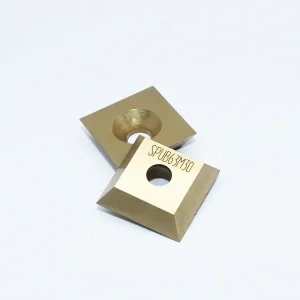
China Wholesale SPUB63M30 tungsten carbide the cutter indexable cutting tools Supplier, Suppliers
View Specs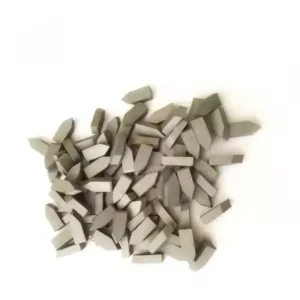
Wholesale Customized carbide welding tips for turning milling cutters Manufacturer, Manufacturers
View Specs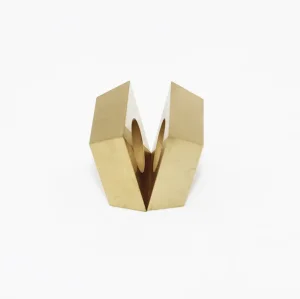
Wholesale Carbide hard alloy blade square Carbide Cutting Inserts for Metal Processing Suppliers, Factories
View Specs