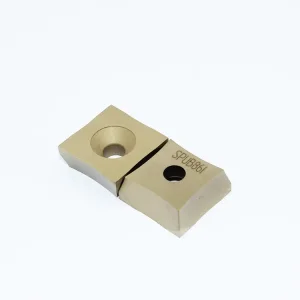
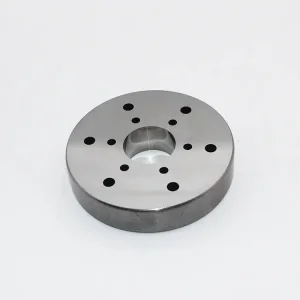
China 2020 Tungsten carbide whole seller Tungsten carbide square thread inserts tools Factory, Factories
Configure Spec
Direct-from-factory carbide tooling blanks, high-shear thread inserts, and severe-service wear components manufactured to sub-micron geometric tolerances.





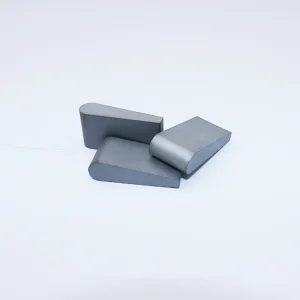
High-precision radius end mills (bull-nose cutters) serve as the backbone for complex 3D contouring, deep cavity die sinking, and trochoidal milling across Tier-1 supply chains.
Corner radius geometry distributes chip thinning forces along the toroidal edge profile, drastically mitigating thermal concentration when milling Inconel 718, Ti-6Al-4V, and Rene alloys. This prevents corner chipping and delivers up to a 280% cycle life extension over sharp square end mills in high-pressure turbine manufacturing.
High Thermal DissipationFor stamping dies, plastic injection molds, and forged tooling up to 65 HRC (NAK80, SKD11, Stavax), radius end mills allow aggressive step-over values during semi-finishing. The tangent arc creates a uniform scallop height, reducing secondary bench polishing by up to 60% in automated CNC cells.
Scallop OptimizationPrecision miniature bull nose cutters down to Ø0.5 mm with R0.05 mm corner radii machine cobalt-chromium femoral knee joints, titanium bone plates, and surgical stainless steel without burr formation. Ultra-fine grain substrates ensure biocompatible surface finishes with Ra values under 0.15 µm.
Mirror Micro-FinishFrom pure virgin ammonium paratungstate (APT) reduction to hot isostatic pressing (Sinter-HIP), our manufacturing guarantees defect-free microstructure and edge stability.
In standard flat end mills, the acute 90-degree outer corner is the weakest link in high-dynamic milling. Under heavy radial cut depth ($a_e$) or erratic entry angles, micro-chipping at the sharp vertex propagates catastrophic flute fracture. A radius end mill introduces a continuous tangential arc ($R$) linking the peripheral edge and face cutting teeth. This geometry resolves mechanical shock waves into two compressive vectors, allowing feed rates ($f_z$) to increase by 25% to 50% without risking tooth failure.
At Jiangxi Zhongfu Cemented Carbide Co., Ltd., located at the core of the global tungsten belt in Nanchang, Jiangxi, we enforce a strict 100% virgin tungsten carbide policy. Our in-house powder metallurgy controls cobalt binder redistribution, suppressing eta-phase brittle precipitates and preventing anomalous grain growth through doped vanadium and chromium carbide inhibitors ($VC / Cr_3C_2$).
| Substrate Grade Class | Grain Size (µm) | Co / Binder (%) | Hardness (HRA) | TRS (MPa) | Primary CNC Operation |
|---|---|---|---|---|---|
| UF-04 Micrograin | 0.4 – 0.6 µm | 8.0% | 92.8 – 93.4 | 4,100 | Hardened steels (55–68 HRC), high-speed finish profiling |
| UF-06 Submicron | 0.6 – 0.8 µm | 10.0% | 91.8 – 92.5 | 4,350 | Universal general milling, stainless steels, pre-hardened dies |
| Nano-Grain NG-02 | 0.2 – 0.4 µm | 12.0% | 93.2 – 94.0 | 4,600 | High-impact trochoidal roughing, titanium alloys, interrupted cutting |
| Ni-Bond Non-Magnetic | 1.0 – 1.5 µm | 8.5% (Ni) | 89.0 – 90.5 | 3,200 | Corrosive environments, magnetic mold inserts, MWD sensors |
Full traceability from mined ore to packaged CNC cutter, backed by rigorous metrology inspections, international environmental compliances, and agile technical support.
Comprehensive production quality verification adhering to strict ISO protocols. Complete lot inspection certificates include metallographic cross-sections, magnetic saturation ($4\pi\sigma$), and coercive force ($Hc$) values for lot-to-lot repeatability.
Audited FacilitiesFull conformance to European REACH (EC 1907/2006) and RoHS directives. Completely conflict-free mineral sourcing adhering to the Responsible Minerals Initiative (RMI), with zero trace hazardous elements in raw binders or coatings.
Conflict-Free RMIApplication engineering teams provide direct CAD/CAM consultation, customized tooling prints, and cutting data ($V_c$, $f_z$, $a_p$, $a_e$) optimization within 8 hours across North American, European, and Asia-Pacific time zones.
Agile EngineeringSupplying Tier-1 and Tier-2 machine shops across more than 20 countries, including the United States, Germany, Mexico, Canada, and Australia, backed by insured DDP/DAP logistics and bonded warehousing options.
20+ NationsHarmonic chatter suppression and high-temperature oxidation resistance designed for modern dry milling, MQL, and high-pressure cryogenic cooling.
Resonance vibration (chatter) during deep-cavity profile milling destroys surface integrity and fractures carbide flutes. Our wholesale radius end mills feature proprietary variable helix geometries (e.g., 35°/38° or 42°/45°) paired with unequal peripheral indexing.
Thermal stability at the cutting zone is paramount when machining abrasive or low thermal conductivity alloys. We apply state-of-the-art cathodic arc and HiPIMS physical vapor deposition (PVD) coatings directly in cleanroom chambers.
Pioneering the intersection of artificial intelligence, ultra-short pulse laser ablation, and cryogenic machining to define the next decade of solid carbide tools.
Finite element modeling (FEM) powered by machine learning algorithms simulates real-time chip formation and heat distribution. Tool geometries are dynamically tailored to eliminate chip re-cutting in narrow mold channels and pocket corners.
Algorithmic FlutesTransitioning beyond traditional diamond wheel grinding, ultrashort pulse laser micro-machining sculpts intricate rake face micro-textures that trap solid lubricants and channel cooling fluids directly to the shear zone under 150-bar pressure.
Laser Micro-TexturingNext-generation radius end mills feature internal through-coolant helices capable of delivering liquid nitrogen ($LN_2$) or supercritical carbon dioxide ($scCO_2$) directly to the radius corner, enabling rapid milling of titanium without thermal oxidation.
Cryogenic ChannelsClear, authoritative technical answers addressing tool geometry, substrate selection, custom fabrication, and international B2B logistics.
Engineered for extreme wear, railway track conditioning, metallurgical tube scarfing, and high-volume industrial turning and boring.