
Precision Cemented Carbide Tools & Industrial Blanks
Explore high-density wear components and cutting tools engineered from 100% virgin tungsten ore, featuring ultra-low porosity and consistent grain microstructures.
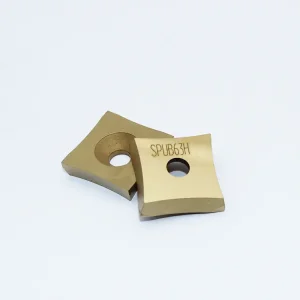
Buy Wholesale SPUB63H square tungsten carbide cemented cutting turning lathe tools Manufacturers, Factories
Request Wholesale Quote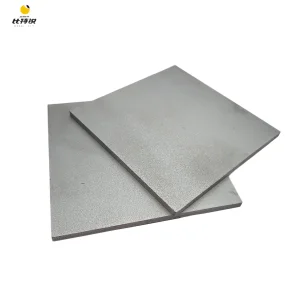
Buy Premium Bright Surface Tungsten Heavy Alloy Sheets & Pure Tungsten Plates for Industrial Applications Manufacturer, Factories
Request Wholesale Quote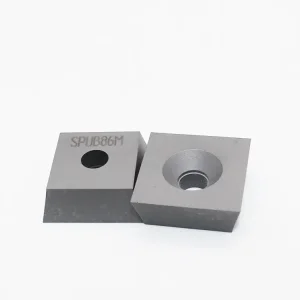
China 2020 Tungsten carbide whole seller Tungsten carbide square thread inserts tools Factory, Factories
Request Wholesale Quote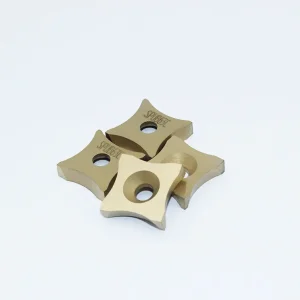
China Wholesale SPUB-63C cemented mining tungsten tools carbide drill insert Supplier, Factories
Request Wholesale Quote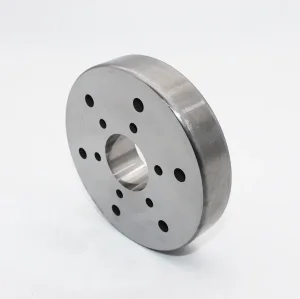
China Customized tungsten carbide insert for wear parts crushing roll Manufacturer, Suppliers
Request Wholesale Quote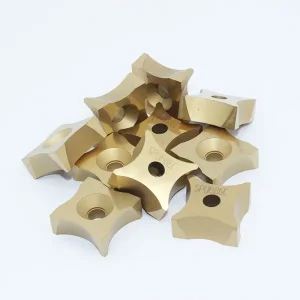
China SPUB86C P40 uncoated blank cemented tools carbide inserts Suppliers, Factory
Request Wholesale Quote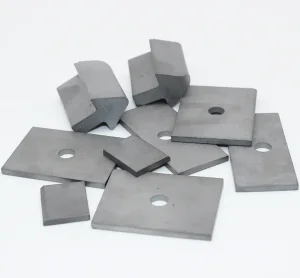
China New shape cemented carbide tips for railway track tamping pick center tooth Manufacturers, Factory
Request Wholesale Quote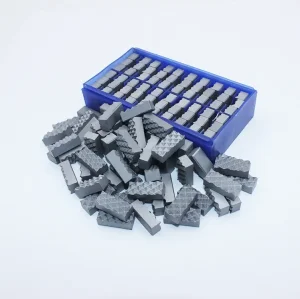
China Best price YG8 tungsten carbide gripper inserts for chuck jaw Suppliers, Factories
Request Wholesale QuoteMacro Dynamics Driving Wholesale Tungsten Pricing
Understanding supply-side concentration, raw Ammonium Paratungstate (APT) indices, and energy conversion costs across the metallurgical value chain.
APT Benchmark Fluctuations
Wholesale pricing for sintered tungsten carbide is fundamentally indexed to the international market price of Ammonium Paratungstate (APT), quantified in metric ton units (mtu). Because upstream tungsten mining quotas in China govern over 80% of global primary production, seasonal environmental inspections, processing energy tariffs, and domestic resource taxes directly propagate downstream to finished tool blanks.
Cost Breakdown Anatomy
A true manufacturer price of tungsten carbide comprises raw powder (WC + Co/Ni binders), ball milling energy, precision tooling, and Hot Isostatic Pressing (Sinter-HIP) cycles. Virgin WC powder accounts for 60% to 75% of total gross manufacturing costs. Secondary recycling routes (zinc process or chemical reclamation) yield cheaper scrap powders, but jeopardize structural integrity in heavy-impact applications.
Supply Chain Volatility
Procurement teams navigating volatile shipping rates and export licensing mechanisms must prioritize direct mill partnerships over intermediary trading brokers. By securing annual production allocation contracts, industrial consumers insulate their supply chains from spot-market speculative spikes and secure predictable component pricing across multi-quarter manufacturing runs.
Enterprise Sourcing Strategies & Total Cost of Ownership (TCO)
Evaluating tool wear rate, unplanned machine downtime, and scrap reduction over unit purchase price.
The Unit Price Paradox vs. Production Uptime
In industrial wear applications—such as steel tube scarfing, rotary geological drilling, and precision cold heading dies—the unit acquisition cost of an insert or plate represents less than 8% of total operational expenditure. The true financial liabilities lie in premature tool chipping, thermal cracking, machine recalibration downtime, and damaged production batches.
Procuring low-cost carbide fabricated from chemically degraded scrap powder leads to micro-porosities (A04/B04 levels) and uneven cobalt lake dispersion. Under cyclic mechanical shock, these micro-voids propagate into cataclysmic fractures. Zhongfu eliminates this failure mode via vacuum pressure sintering up to 10 MPa (100 bar), resulting in virtually zero porosity (A02/B00 rating) and maximizing continuous cutting life.
Procurement Quality Qualification Checklist
- Raw Material Origin: 100% virgin crystalline powder verification.
- Sintering Method: Sinter-HIP overpressure furnace vs. atmospheric vacuum.
- Microstructure Density: Metallographic inspection confirming uniform grain boundaries.
- Dimensional Tolerances: Precision ground OD to ISO h6, flatness within 0.005mm.
- Binder Phase Control: Co or Ni dispersion analysis preventing brittleness.
Cemented Carbide Grades, Physical Properties & Pricing Impact
Select the optimized metallurgical matrix balancing hardness, transverse rupture strength (TRS), and raw material cost factors.
| Grade Designation | Binder Content (%) | Density (g/cm³) | Hardness (HRA) | TRS (MPa) | Wholesale Cost Factor | Primary Industrial Application |
|---|---|---|---|---|---|---|
| YG6 (ISO K10-K20) | 6.0% Cobalt | 14.80 – 15.00 | 90.5 – 91.5 | ≥ 1900 | Baseline (Standard) | Chilled cast iron machining, wire drawing dies, wear strips. |
| YG8 (ISO K20-K30) | 8.0% Cobalt | 14.60 – 14.80 | 89.0 – 90.0 | ≥ 2200 | Moderate (+5%) | Brazed tips, stone dressing tools, rock drill insert buttons. |
| YG15 (ISO K40) | 15.0% Cobalt | 13.90 – 14.10 | 86.5 – 87.5 | ≥ 2800 | High Cobalt Index | Heavy cold stamping punches, fasteners heading dies, impact rollers. |
| YG20 (Impact Master) | 20.0% Cobalt | 13.40 – 13.60 | 84.5 – 86.0 | ≥ 3100 | Specialty Surcharge | Cold heading of bolts, thick blanking dies, extreme vibration tooling. |
| NM-10 (Non-Magnetic) | 10.0% Nickel-Cr | 14.40 – 14.65 | 88.5 – 90.0 | ≥ 2100 | Premium Alloy (+25%) | MWD/LWD oilfield tools, semiconductor magnetic mold components. |
| UF-06 (Ultrafine 0.4µm) | 6.0% Co + VC/Cr3C2 | 14.85 – 15.05 | 92.5 – 93.5 | ≥ 3800 | Advanced Nano (+30%) | Solid carbide end mills, micro-drills, titanium alloy milling. |
End-to-End Solutions for Extreme Wear & Impact Demands
Tailored powder engineering and thermal processing delivering custom performance across demanding sectors.
Steel Tube Scarfing & Rolling
Heavy-duty square scarfing inserts (such as SPUB63, SPUB86, and SNMX series) with specialized edge preparations to remove continuous weld beads at high temperatures without catastrophic chipping.
Downhole Drilling & Mining
High-toughness YG8 and YG11C buttons, parabolic inserts, and tamping tine teeth designed to absorb intense shock loads during granite drilling, railway tamping, and rock crushing.
Non-Magnetic Tooling
Proprietary Nickel-alloy binder matrices exhibiting magnetic permeability below 1.005 µr, eliminating magnetic interference in precision sensor housings, MWD directional tools, and electronic stamping dies.
Precision Solid Rods (h6)
Ultrafine grain solid carbide rods (Ø1.0 to 40.0mm) precision-ground on centerless grinding lines to mirror surface finishes (Ra 0.1) and strict h6 tolerance limits for shank tooling manufacturers.
Localized Support, ESG Standards & Export Verification
Ensuring complete regulatory compliance, certified conflict-free mineral sourcing, and reliable international logistics across 20+ countries.
Conflict-Free Sourcing (RMI)
All raw tungsten inputs sourced by Jiangxi Zhongfu are audited in full alignment with the OECD Due Diligence Guidance for Responsible Supply Chains. We provide certified Conflict Minerals Reporting Templates (CMRT) verifying non-conflict origin, fulfilling critical tier-1 compliance requirements for automotive, defense, and multinational electronic manufacturers.
RoHS & REACH Compliance
Our finished cemented carbide components conform strictly to European Union REACH regulations and RoHS directives. Every production batch of plates, rods, and inserts undergoes rigorous optical emission spectrometry (ICP-OES) testing to guarantee zero hazardous substances, toxic inclusions, or unlisted binder additives.
Export Licensing & Logistics
Tungsten products, classified under dual-use customs tariff headers, require specialized international trade documentation. Zhongfu maintains active export authorizations, delivering seamless DDP, CIF, and FOB shipments to the United States, Germany, Canada, Mexico, and Australia with complete customs brokerage transparency.
Tungsten Industry Technology Roadmap (2025–2030)
Anticipating next-generation metallurgical transformations, additive sintering advances, and wholesale price trajectories.
Nano-Grain Transition & High-Entropy Binders
Traditional WC-Co matrices are being augmented by submicron (0.2–0.4µm) grain configurations stabilized with chromium carbide (Cr3C2) and vanadium carbide (VC) grain-growth inhibitors. Furthermore, research into cobalt-free High-Entropy Alloy (HEA) binders (Fe-Ni-Cr-Mn) is accelerating to mitigate reliance on volatile cobalt pricing while improving corrosion resistance at 800°C+ operational thresholds.
Binder Jetting Additive Manufacturing (3D Cemented Carbide)
Complex internal cooling channels for deep-hole drilling inserts and conformal hydraulic wear nozzles—previously impossible to press via conventional uniaxial presses—are entering serial production via Binder Jet 3D Printing followed by secondary Sinter-HIP densification. This dramatically reduces material waste, lowering the wholesale pricing penalty on complex custom geometries.
Closed-Loop Hydrometallurgical Recycling Integration
By 2028, leading suppliers will establish closed-loop "scrap buyback and chemical reconstitution" agreements. Unlike crude mechanical crushing, modern chemical reclamation converts spent carbide back into crystalline APT of 99.95% purity, decoupling finished component prices from primary mining bottlenecks and shielding wholesale consumers from geopolitical supply constraints.
Frequently Asked Questions on Wholesale Tungsten Sourcing
Authoritative technical and commercial responses to assist your engineering and purchasing decisions.
What determines the wholesale price of tungsten carbide components from a factory?
How can buyers differentiate between 100% virgin tungsten carbide and recycled scrap carbide?
What is the minimum order quantity (MOQ) for custom carbide parts and OEM blanks?
What makes non-magnetic tungsten carbide distinct, and how does it influence pricing?
How fast can Jiangxi Zhongfu review technical drawings and provide a binding wholesale quotation?
What international quality certifications and shipping terms are offered?
Wear-Resistant Rods, Blanks & Tube Scarfing Inserts
Specialized solid carbide round stock, brazed tool blanks, and high-impact scarfing inserts engineered for extreme duty cycles.
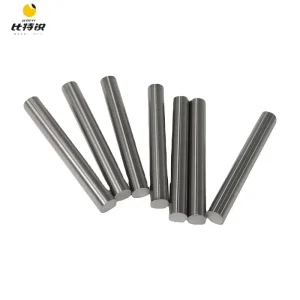
Wholesale Industrial Tungsten Alloy Rod Tungsten Material For Stainless Steel Machining Wear‑Resistant Solid Tungsten Bar Supplier, Suppliers
Request Wholesale Quote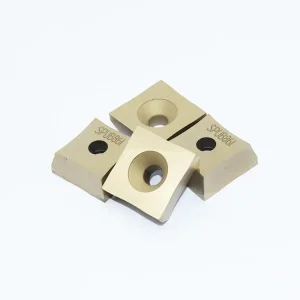
China Wholesale insert carbide manufacturer threading carbide blank inserts Manufacturers, Factory
Request Wholesale Quote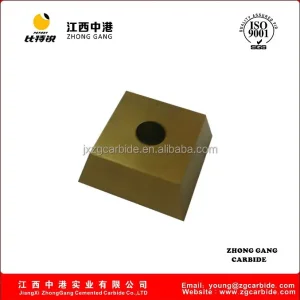
Wholesale tungsten carbide scarfing insert SQ8615WCB Supplier, Factory
Request Wholesale Quote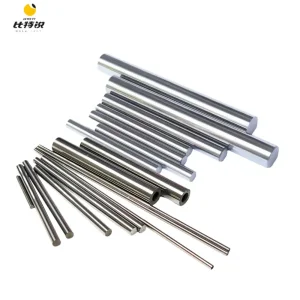
China Tungsten Carbide Round Rod H6 Ground Ø1-40mm Solid Carbide Blanks Manufacturer, Supplier
Request Wholesale Quote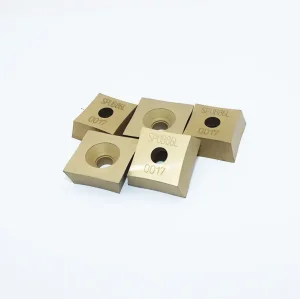
China 2020 wholesale square tungsten large chip blank carbide insert Suppliers, Factories
Request Wholesale Quote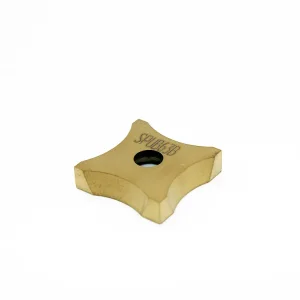
China SPUB63B wholesale lathe round tungsten carbide turning inserts Supplier, Factory
Request Wholesale Quote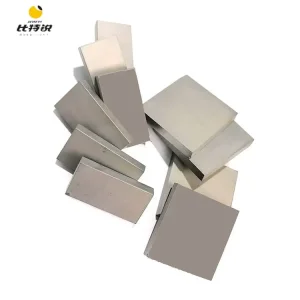
Buy Tungsten Carbide Plate HIP-Sintered Wear-Resistant Flat Blanks in YG6–YG20 Grades Supplier, Suppliers
Request Wholesale Quote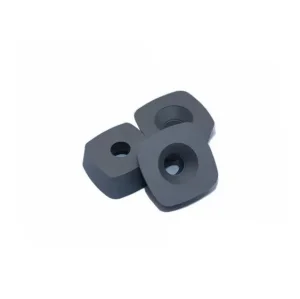
Buy 1*1*0.375“ CVD coating tungsten carbide tube scarfing insert Supplier, Factory
Request Wholesale QuoteRequest Direct Wholesale Pricing & Engineering Consultation
Send your 2D/3D part drawings or standard grade specifications to our metallurgical engineering group. Receive a comprehensive feasibility evaluation, grade recommendation, and tiered volume price quotation within 8 hours.