
High-Performance MWD & Tungsten Carbide Components
Direct factory supply of ultra-wear-resistant solid carbide rods, non-magnetic sub-components, precision gauge pins, chuck inserts, and scarfing blades manufactured for severe environments.

Non-Magnetic Solid Cemented Carbide Pin Plug Gauges Rod
View Specifications
Tungsten Non-Magnetic Scarifier Cutter & Through-Hole Wear Parts
View Specifications
YG8 Tungsten Carbide Gripper Inserts for Chuck Jaws
View Specifications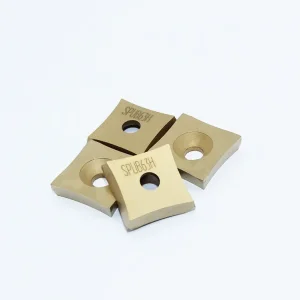
SPUB-63 Welding Tube Scarfing & Pipe Peeling Carbide Insert
View Specifications
High-Quality Tungsten Carbide Wear Strips & Wolfram Flat Bars
View Specifications
Cemented Carbide Gripper Inserts & Tips for Diamond Drilling
View Specifications
Straight-Toothed Small Pinion Transmission Gears
View Specifications
SPUB63M30 TiN Coating Scarfing Insert for Tube OD Processing
View SpecificationsEngineering Downhole Endurance: The Science of Non-Magnetic MWD Carbide Components
Measurement-While-Drilling (MWD) and Logging-While-Drilling (LWD) tool assemblies operate in one of the planet's most aggressive tribological, hydrodynamic, and thermodynamic regimes. Suspended thousands of meters below the surface, bottom-hole assemblies (BHAs) encounter abrasive drilling mud loaded with high-density barite, hematite, and quartz sands pumped under extreme pressures reaching up to 20,000 psi (138 MPa). Simultaneously, dynamic temperatures often surpass 175°C to 200°C in deep geothermal and High-Pressure High-Temperature (HPHT) hydrocarbon wells.
In this hostile sub-surface environment, standard metallurgical alloys fail rapidly due to particle impingement erosion, cavitation pitting, and fluid shear washouts. Furthermore, directional drilling telemetry relies on triaxial fluxgate magnetometers and directional survey instruments housed directly inside non-magnetic drill collars. Standard ferromagnetic cobalt-bonded carbides interfere with these directional guidance systems, producing magnetic azimuth deviations that jeopardize wellbore trajectory accuracy.
Critical Metallurgical Mandate: MWD and LWD downhole wear parts require non-magnetic cemented carbide formulations characterized by relative magnetic permeability (μr) of strictly less than 1.005, combined with sub-micron grain densification achieving Vickers hardness (HV30) over 1500 and fracture toughness (K1c) superior to 10.5 MPa·m1/2.
Jiangxi Zhongfu Cemented Carbide Co., Ltd. has specialized for over 24 years in proprietary powder formulation, Hot Isostatic Pressing (HIP) sintering, and ultra-precision sub-micron CNC grinding. We engineer OEM and replacement downhole components including mud pulser rotors, stators, poppets, orifice restrictors, bottom sleeves, and non-magnetic erosion rings that directly prevent catastrophic telemetry signal loss and eliminate expensive Non-Productive Time (NPT) for global drilling contractors.
China Factory Advantages in Downhole MWD Hardware Manufacturing
How Jiangxi Zhongfu leverages localized mineral resources, vertically integrated powder metallurgy, advanced Sinter-HIP technology, and micron-level precision CNC machining to supply world-class MWD components.
Integrated Tungsten Supply Chain
Situated in Jiangxi Province—the historic epicenter of global tungsten reserves—our facility secures primary, 100% virgin ammonium paratungstate (APT) and tungsten carbide powder without secondary recycled scraps, ensuring zero trace iron contamination and total batch consistency.
- Direct raw wolframite mineral sourcing
- Complete grain size control: 0.4μm to 8.0μm
- Impervious to international spot price shocks
Overpressure Sinter-HIP Consolidation
Our facility operates modern, high-capacity overpressure Hot Isostatic Pressing furnaces (10 MPa argon gas atmosphere). Sinter-HIP closes internal micro-voids, eliminating microporosity (A00, B00, C00 ratings) to dramatically reduce crack propagation under cyclically pulsed mud loads.
- Near-theoretical metallurgical density (>99.9%)
- Superior transverse rupture strength (TRS)
- Flawless optical mirror polishing achievable (Ra < 0.05μm)
Sub-Micron Multi-Axis Finish Machining
Tungsten carbide cannot be cut by conventional tooling. We employ high-precision Wire Electrical Discharge Machining (WEDM), CNC cylindrical, internal bore, and profile optical curve grinders to hold sub-micron tolerances on intricate hydrofoil profiles and orifice venturis.
- Bore runouts and concentricity within 0.005mm
- Custom thread grinding and micro-taper profiling
- Automated Zeiss CMM dimensional verification
Downhole Cemented Carbide Metallurgical Grade Selection Guide
Engineered formulations comparing ferromagnetic cobalt binder grades versus non-magnetic nickel-chromium binder solutions specifically deployed in directional drilling and MWD mud-pulsers.
| Alloy Grade | Binder Composition | Density (g/cm³) | Hardness (HRA) | TRS (MPa) | Magnetic Permeability (μr) | Ideal Application Scenario |
|---|---|---|---|---|---|---|
| NM-06 (Ultra-Low Mag) | 6% Ni-Cr-Mo | 14.85 ± 0.10 | 92.0 ± 0.5 | ≥ 2,600 | μr ≤ 1.002 | MWD Pulser Poppets, Orifice Restrictors, Telemetry Housings |
| NM-10 (Tough Non-Mag) | 10% Ni-Cr-Mo | 14.50 ± 0.10 | 89.8 ± 0.5 | ≥ 2,900 | μr ≤ 1.004 | Turbine Flow Restrictors, Downhole Bearings, Wear Rings |
| YG6X (Sub-Micron) | 6% Co (Standard) | 14.95 ± 0.10 | 92.5 ± 0.5 | ≥ 2,400 | Ferromagnetic | Choke Valve Trim, High-Velocity Nozzles, Sand Jetting Tips |
| YG8 (Impact Hardened) | 8% Co (Standard) | 14.70 ± 0.10 | 89.5 ± 0.5 | ≥ 2,800 | Ferromagnetic | Gripper Jaws, Drilling Bit Inserts, Heavy-Impact Wear Plates |
| YG15 (Structural Toughness) | 15% Co (Heavy Impact) | 14.05 ± 0.15 | 87.0 ± 0.5 | ≥ 3,300 | Ferromagnetic | Stamping Dies, Downhole Hydraulic Piston Sleeves, Chuck Jaws |
Why Nickel-Based Binder Formulations Prevent Magnetic Survey Distortion
In conventional cemented carbide, Cobalt (Co) serves as the ductile binder cementing the ultra-hard hexagonal tungsten carbide (WC) crystals together. However, cobalt is intrinsically ferromagnetic at wellbore operating temperatures (Curie temperature of cobalt is approximately 1115°C). In directional steering assemblies, telemetry probes incorporate sensitive triaxial magnetometers to measure the Earth's natural magnetic vector to establish magnetic tool face and azimuth readings.
When fluid pulser components manufactured with cobalt-bearing carbide are positioned within proximity of the sensor array, their residual magnetic field produces local compass distortion known as "compass error" or "magnetic interference." This produces erroneous dogleg severity calculations, missed pay-zone targets, or risk of wellbore collision.
By executing vacuum powder doping utilizing an austenitic Nickel-Chromium-Molybdenum matrix, Jiangxi Zhongfu eliminates spontaneous magnetic domain alignment. The resulting sintered carbide retains an absolute non-magnetic baseline while chromium additions generate a self-passivating chromium-oxide surface film that provides robust immunity against chloride stress-corrosion and acid wash downhole.
Downhole Application Scenarios & Macro Engineering Solutions
Real-world downhole operating conditions where premium carbide MWD parts reduce catastrophic failure, optimize flow modulation, and lower cost-per-foot drilling metrics.
Extended-Reach Horizontal Drilling
Drilling multi-kilometer lateral sections in unconventional shale basins (e.g., Permian, Montney, Sichuan) subjects BHAs to continuous lateral vibration and severe mud turbulence. Our non-magnetic guide bushings, through-hole wear components, and centralizer wear pads maintain dimensional integrity over 300+ circulating hours, mitigating washouts.
- Vibration dampening up to 35G shock loads
- Continuous mud flow > 1,200 GPM
- Zero azimuthal sensor distortion
Deepwater & Offshore Exploration
Offshore rig spread costs exceed $500,000 to $1,000,000 per day. A single pulser wash-out or poppet failure demands an immediate, multi-million-dollar round trip. Zhongfu's zero-porosity HIP-sintered pulser orifices and poppets deliver predictable, fatigue-proof life cycles that eliminate premature tool pulls.
- Hydrostatic pressures exceeding 15,000 psi
- Zero micro-crack propagation under pulsing
- Drastic reduction in offshore Non-Productive Time
HPHT Geothermal & Sour Gas Formations
Encountering elevated levels of hydrogen sulfide (H2S), carbon dioxide (CO2), and concentrated brines rapidly leaches the metal binder from standard carbide wear rings. Our specialized Ni-Cr-bonded grades provide exceptional corrosion passivation while retaining hardness at continuous 200°C+ temperatures.
- Resistant to binder leaching in pH 3-11 muds
- Thermal shock resistance under cold mud injection
- NACE MR0175 sour service compliance ready
Industry Trends Shaping MWD/LWD Hardware Metallurgy
The transition toward high-data-rate continuous mud pulsers, rotary steerable system (RSS) integration, and nano-engineered carbide microstructures.
Continuous Wave Mud Pulsers
Moving from conventional positive or negative mud pulse telemetry (0.5 to 1.5 bits/sec) to high-speed continuous wave sirens (up to 24 bits/sec). Siren rotors and stators rotate against each other at high RPM within abrasive fluid streams, requiring extreme dimensional symmetry and micro-inch hydrofoil surface profiles.
Rotary Steerable Wear Inserts
Modern Push-the-Bit and Point-the-Bit RSS tools demand high-wear contact pads, internal dynamic steering valve sleeves, and hydraulic piston seals made from non-magnetic tungsten carbide to avoid jamming from crushed rock cuttings and fine silts.
PCD-Carbide Hybrid Interfaces
Advancements in vacuum braze cladding and diffusion bonding polycrystalline diamond (PCD) segments onto tungsten carbide carrier bodies, providing near-diamond erosion defense in high-shear choke valves and primary mud throttle gates.
Ultra-Fine Grain Powder Systems
Transition toward nano-grain carbide matrix structures (grain size < 0.5μm). By minimizing binder mean free path, nano-matrix formulations prevent solid particle micro-grooving and binder washouts under acute 90-degree impingement.
Enterprise Sourcing & Quality Qualification Protocols
Rigorous quality inspection standards governing wholesale MWD downhole parts procurement for multinational oilfield service corporations.
Magnetic Permeability Verification
Every non-magnetic lot is evaluated using calibrated Low-Mu Permeability Indicators and digital fluxgate magnetometers. Test certificates verify that individual components demonstrate magnetic permeability strictly below 1.005 μr, with total magnetic hot-spot residual field gradient less than 2 nanoteslas.
NDT Ultrasonic & Metallographic Checks
Destructive metallographic cross-sectioning verifies uniform carbide grain distribution and zero unreacted free carbon (graphite) or detrimental brittle eta-phases (η-phase Co3W3C). Full 100% immersion ultrasonic testing (UT) guarantees components are free of sub-surface sintering inclusions.
Traceability & Material Certifications
In accordance with ISO 9001 and API standards, each component is laser-etched with batch serialization linked directly to mill raw powder chemistry, vacuum HIP sintering run thermal charts, and final mechanical inspection dossiers (EN 10204 Type 3.1).
Frequently Asked Questions: Wholesale MWD Downhole Hardware
Comprehensive engineering, metallurgical, and commercial inquiries answered by our senior downhole tool manufacturing team.
Precision Ground Carbide Tooling & Specialized Wear Inserts
Explore our extended series of precision-ground solid rods, indexable tube scarfing inserts, transmission gears, and mining inserts engineered for continuous industrial operations.

High-Quality Tungsten Carbide Rods for Drilling & Milling
View Specifications
SPUB63B Tungsten Carbide Tube Scarfing Inserts
View Specifications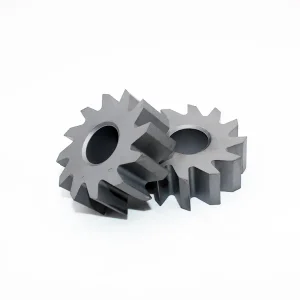
Transmission Reverse Idle & Spur Gear Assembly Set
View Specifications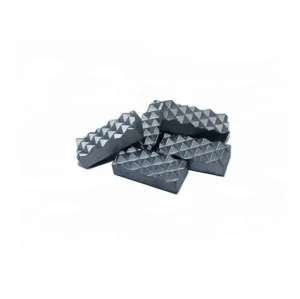
YG8 Cemented Carbide Gripper Inserts for Clamping Tools
View Specifications
Solid Carbide Cutting Rods for Tungsten Alloy Components
View Specifications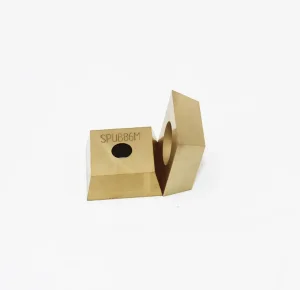
SPUB86M Indexable Tungsten Carbide Scarfing Inserts
View Specifications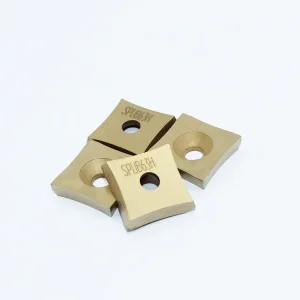
Woodworking Blades & Inconel Milling Carbide Inserts
View Specifications