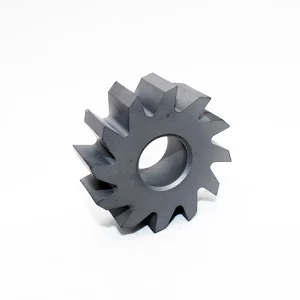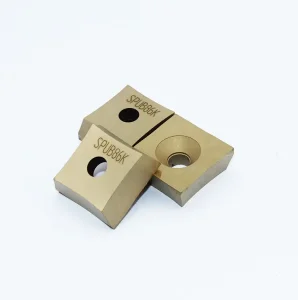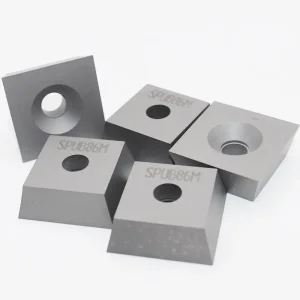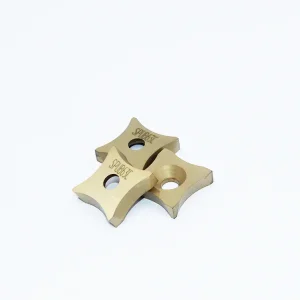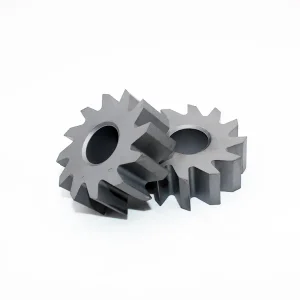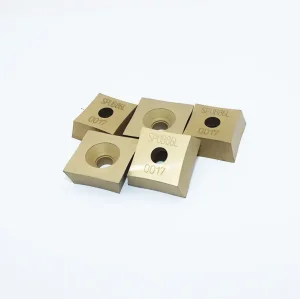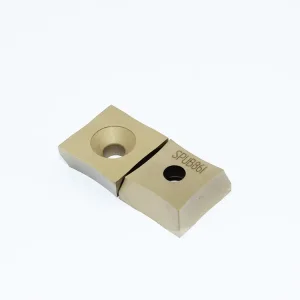
High-Performance Cemented Carbide Mining Components
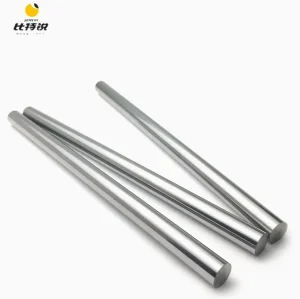
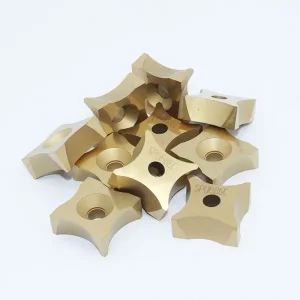
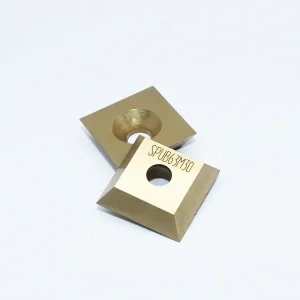
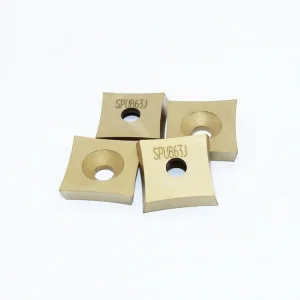
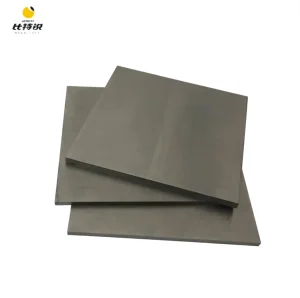
Explore precision-engineered wear-resistant flat blanks, blanks for drilling tools, and micro-grain carbide rods direct from China's primary manufacturing facility.
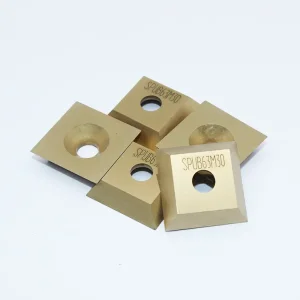
Global Mining Bit Architecture: Commercial & Industrial Realities
In modern mineral extraction and heavy civil engineering, rock-breaking tooling represents a critical leverage point in total operating expenditure (OpEx).
The Cost-Per-Meter Drill Metric
Global mining operations across Australia, South America, and North America evaluate drill string consumables based on true Cost-Per-Meter (CPM). Premature abrasive wear or mechanical fracturing creates cascading downtime, rig idling costs, and logistical strains in remote extraction sites.
Metallurgical Demands
Subterranean exploration confronts high uniaxial compressive strength (UCS) geological formations exceeding 250 MPa. Mining bits require a fine balance between surface macro-hardness (HRA 88–91) and deep transverse rupture strength (TRS) to withstand cyclical shock loads.
Geological Site Specialization
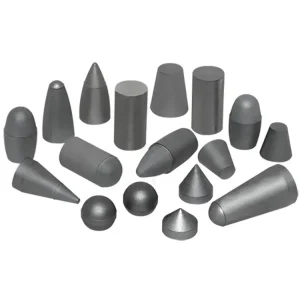
Rotary blasthole bits require abrasion-resistant conical inserts, top-hammer percussion bits demand ballistic profiles with high fracture toughness, and continuous miners require heavy-duty picks with thick cobalt-rich binder matrices to resist impact spalling.
Integrated Supply Chain & Chinese Factory Efficiencies
Located in Jiangxi, the center of Chinese tungsten mineral production, Zhongfu leverages end-to-end integration from raw APT powder to precision ground carbide inserts.
100% Virgin Powder Formulations
Zero recycled scrap ensures uniform tungsten carbide grain distribution. Precision wet ball-milling and spray-drying towers produce press-ready granules with narrow grain size distribution curves, preventing micro-voids in finished tools.
Overpressure Sinter-HIP Technology
Equipped with modern Hot Isostatic Pressing furnaces operating at up to 10 MPa argon pressure during liquid-phase sintering. This eliminates internal porosity down to A02/B00 levels, maximizing structural integrity under cyclical impacts.
Agile Tooling & Rapid Prototyping
In-house precision mold-making workshops enable customized insert geometries and carbide grades within 7 to 10 working days, backed by a technical engineering response time under 8 hours for global procurement teams.
Localized Applications & Site Selection Matrices
Carbide formulation must correspond directly to rock strata, tool velocity, and coolant flush medium. Standard formulations fail when mismatching hard rock impact with abrasive shearing.
| Rock Strata / Domain | Predominant Wear Mechanism | Recommended WC-Co Grade | Typical HRA | Optimized Geometry |
|---|---|---|---|---|
| Banded Ironstone & Granite (Hard, High-UCS) | Chipping, high-impact fracturing, macro-spalling | YG11C / YG15 (Cobalt 11–15%) | 86.5 – 88.0 | Spherical / Ballistic Heavy Dome |
| Quartzite & Abrasive Sandstone (Abrasive) | Micro-cutting, severe binder washout, gauge loss | YG8 / YG8C (Cobalt 8%) | 89.0 – 90.5 | Conical / Parabolic Aggressive Shear |
| Underground Soft Coal & Potash | Thermal cracking, steady abrasive wear | YG6X / YG8 (Cobalt 6–8%) | 90.0 – 91.5 | Point Attack Chisel / Pick Tip |
| Rotary Reverse Circulation (RC) | Heavy matrix erosion, continuous velocity load | YG13C (Co-Enriched Coarse) | 87.5 – 89.0 | Step-Profile Gauge Buttons |
| Directional Horizontal Trenching | High friction, torsional shock, mixed geology | Custom Ni-Cr-WC Non-Magnetic | 88.0 – 89.5 | Brazed Wedge / Scraper Profile |
Emerging Trends Reshaping Industrial Mining Bits
The transition toward autonomous deep-shaft extraction and automated blast-hole patterns requires tooling designed for longer service life and reduced environmental impact.
Nano & Functionally Graded Materials (FGM)
Transitioning from uniform cobalt distribution to dual-property structures featuring a harder, wear-resistant outer shell with a tough, cobalt-enriched core. This reduces face fracture risks while tripling gauge life during high-impact drilling.
IoT Integration & Real-Time Diagnostics
Next-generation drill strings feature embedded non-magnetic carbide housings that integrate downhole acoustic and vibration sensors, enabling automated drill rigs to adjust weight-on-bit (WOB) dynamically before bit damage occurs.
Closed-Loop Circularity
Global mining consortia enforce strict ESG traceability requirements. Chemical recycling of worn carbide scrap through zinc-recovery processes yields virgin-grade ammonium paratungstate (APT), lowering the carbon footprint per manufactured piece.
Global Enterprise Sourcing Criteria & Factory Auditing
Tier-1 exploration operators, drilling tool makers, and procurement directors rely on objective auditing metrics to pre-qualify long-term cemented carbide partners.
Microstructural Uniformity
High-resolution metallographic verification (SEM testing) ensures no free graphite inclusions or brittle Eta-phase (W3Co3C) compounds, which are primary failure points under heavy cyclic percussion.
Tolerance & Surface Metallurgy
Downhole interference fits require outer diameters ground to precision tolerances (ISO h6 or ground to ±0.005 mm) to guarantee hydraulic bit body retention without braze joint cracking.
Production Reliability & Scale
Consistent batch-to-batch powder formulation, monitored by certified quality assurance labs, provides the repeatable hardness and density required for multi-site supply contracts.
Engineering Inquiries & Technical Responses
Clarifications on metallurgy, custom specifications, tolerances, and supply agreements for technical buyers and mechanical engineers.
How does Zhongfu prevent button insert popping and thermal cracking in high-impact top-hammer bits?
Can custom button geometries and proprietary grades be produced from customer drawings?
What is the typical operational lifespan difference between virgin powder and recycled scrap carbide?
What quality documentation accompanies international wholesale shipments?
What are standard lead times and minimum order quantities (MOQs) for export tooling?
Gears, Structural Preforms & Production Tooling
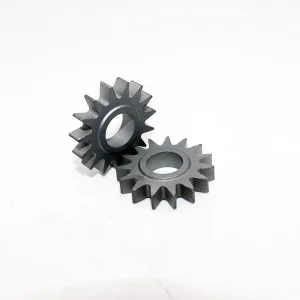
Factory-direct high-strength gear units, nonstandard drive parts, and sintered blanks built for continuous mechanical service.