
Featured Machining Carbide Solutions (Series I)
Precision-sintered blanks, indexable threading inserts, tube scarfing cutters, and micro-grain carbide sheets produced from 100% virgin sub-micron tungsten raw material.

Wholesale Premium Tungsten Carbide Sheet for Stamping Dies Durable P30 Alloy Model 200x200x10mm Manufacturers, Suppliers
Explore Specification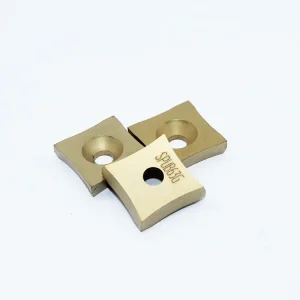
Wholesale Wear resistant SPUB 63G customize imported carbide threading inserts Factory, Factories
Explore Specification
China SPUB63J CVD coating tungsten carbide od scarfing insert Manufacturers, Suppliers
Explore Specification
Buy 1*1*0.375“ CVD coating tungsten carbide tube scarfing insert Supplier, Factory
Explore Specification
China SPUB86C P40 uncoated blank cemented tools carbide inserts Suppliers, Factory
Explore Specification
China 2020 Tungsten carbide whole seller Tungsten carbide square thread inserts tools Factory, Factories
Explore Specification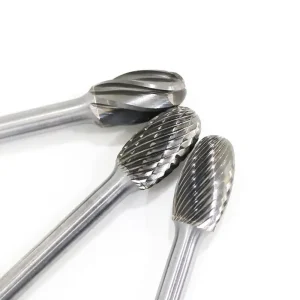
Wholesale Oval cutting tool tungsten carbide rotary file shank diameter Factory, Factories
Explore Specification
Wholesale Factory wholesale custom tungsten carbide spiral bevel gear milling cutters for sale Suppliers, Factory
Explore SpecificationMicrostructural Dynamics of Machining Carbide in High-Stress Tooling
Understanding the thermodynamics of sub-micron grain sizing, carbon stoichiometry, and vacuum Sinter-HIP processing for extreme tool longevity.
In modern chip-removal and metal-forming operations, machining carbide functions as the foundational material substrate separating continuous high-speed production from catastrophic thermal failure. Industrially designated as cemented carbide or tungsten carbide (WC-Co/WC-Ni), this metal matrix composite (MMC) derives its extraordinary Vickers hardness (>1600 HV30) and compressive strength from ceramic tungsten carbide refractory crystallites bound chemically within a ductile transition metal binder. For global machine tool manufacturers, punch-and-die builders, and automated production managers, specifying cemented carbide requires far more than quoting catalog dimensions; it demands comprehensive oversight over thermodynamic phase equilibrium, stoichiometry control, and near-net-shape shrinkage mechanics.
At Jiangxi Zhongfu Cemented Carbide Co., Ltd., 24 years of manufacturing empirical data reveal that the wear resistance, transverse rupture strength (TRS), and chipping resistance of machining carbide are dictated during the pre-sintering powder synthesis. When the carbon balance deviates by as little as ±0.05 wt.%, brittle tertiary phases precipitate. Under-carburization prompts the dangerous Eta-phase (Co3W3C or Co6W6C), causing premature micro-cracking and edge flaking during heavy roughing cuts. Conversely, hyper-carburization promotes free graphite inclusion clusters that act as internal notch sites, reducing the fatigue threshold during cyclic stamping. Our factory strictly utilizes vacuum reduction from virgin ammonium paratungstate (APT), entirely avoiding unrefined scrap reclamation powders to guarantee pristine grain boundaries.
By doping the formulation with sub-percentage grain growth inhibitors such as vanadium carbide (VC) and chromium carbide (Cr3C2), our metallurgists arrest grain coalescence during the liquid-phase sintering phase. The resulting sub-micron matrix (0.4 µm to 0.8 µm grain diameter) delivers an optimized balance: elevated hot-hardness up to 900°C without sacrificing the plastic deformation threshold required when interrupted cuts induce massive mechanical shocks on CNC machining centers.
Ultra-Fine Submicron WC
Formulated with 0.4 µm–0.8 µm grain sizes stabilized by Cr3C2 inhibitors, delivering microhardness beyond 92.5 HRA for abrasive composite milling and mirror finish turning.
Overpressure Sinter-HIP
Processed in multi-chamber ALD vacuum Sinter-HIP vessels under 100 bar high-purity argon, ensuring theoretical metallurgical density and near-zero void content (A00/B00/C00).
h6 Tolerancing & Lapping
Centerless CNC grinding lines, surface planetary lapping, and EDM wire preparation delivering dimensional runout under 0.002 mm with surface roughness down to Ra 0.05 µm.
Global Industrial Landscape: The Geopolitics of Cemented Carbide
Analyzing regional consumption disparities, supply vulnerability, and the imperative for direct-from-foundry partnerships.
The international landscape for industrial machining carbide is undergoing a profound paradigm shift driven by technological transition, supply chain nearshoring, and raw material sovereignty. Tungsten (W), classified globally by the United States Department of the Interior and the European Commission as a high-criticality strategic mineral, forms the backbone of global industrial productivity. Approximately 60% of all mined tungsten is dedicated directly to cemented carbide cutting tools, drilling components, and abrasive wear assemblies.
Historically, North American and Western European tooling supply chains relied heavily on multi-tiered distribution networks, wherein tier-1 brands imported unground sinter blanks, applied proprietary physical vapor deposition (PVD) coatings, and resold the finished inserts with markups exceeding 300% to 500%. Today, intense cost competition across aerospace fabrication, electric vehicle (EV) battery tooling, and renewable energy infrastructure has disrupted this model. Procurement leaders, machine shop proprietors, and global tool manufacturers now bypass intermediary distributors, forging direct ties with high-capacity Chinese manufacturing foundries that control the full lifecycle: from tungsten ore concentration in Jiangxi to finished 5-axis ground cutting tools.
North America
Surging demand in aerospace titanium/Inconel machining, shale gas drilling, and battery enclosure die stamping. Priority: reliable lead times, traceable batch chemistry, and standardized ANSI/ISO geometries.
European Union
Strict focus on circular economy, REACH environmental compliance, and micro-precision tooling for automotive transmissions, medical implants, and ultra-high-speed finishing of complex mold cavities.
Asia-Pacific
The world's highest volume consumption base. Heavy infrastructure rail lines require tamping tine wear plates, tube mills demand rotary OD scarfing tips, and electronics plants consume micro-drills below 0.1 mm.
Emerging Markets
Rapid infrastructure modernization across Latin America, the Middle East, and Southeast Asia accelerating adoption of brazed rock drilling tips, road milling teeth, and industrial slitter knives.
Localized Application Scenarios: Where Machining Carbide Delivers Value
Examining how distinct industrial ecosystems deploy specialized tungsten carbide formulations to overcome severe wear, thermal cracking, and chemical corrosion.
Aerospace & Gas Turbines
Machining nickel-chromium superalloys (Inconel 718, Waspaloy) and titanium (Ti-6Al-4V) generates interfacial temperatures exceeding 1,000°C. Our YG6X and submicron K10–K20 blanks maintain sharp cutting edges, avoiding notch wear and work-hardening of thin-walled turbine blades.
EV & Stamping Dies
High-speed production of motor silicon steel laminations and battery casing cups demands YG15 and YG20 impact grades. With transverse rupture strength exceeding 3,000 MPa, our polished carbide blocks withstand millions of stamping cycles without edge chipping.
Subsea Energy & MWD Tools
Measurement While Drilling (MWD) downhole tools operate in corrosive mud next to high-sensitivity magnetic sensors. We supply 100% non-magnetic nickel-bonded carbide components featuring magnetic permeability below 1.005 µ, combined with exceptional erosion resistance.
Heavy Rail & Infrastructure
Ballast tamping tines and track grinding blocks endure brutal dynamic impact and abrasion. Our customized brazed tungsten carbide tips significantly outlast hardened alloy steels, reducing track maintenance downtime on intercity rail corridors.
Continuous Tube Scarfing
During high-frequency welded (HFW) pipe fabrication, removing the glowing molten bead requires specialized heavy-section inserts. Zhongfu's SPUB63, SPUB86, and SNMX inserts feature thick CVD Al2O3/TiCN coatings engineered to strip high-temperature weld seams cleanly.
Woodworking & Composite Cutters
Machining medium-density fiberboard (MDF), high-pressure laminates, and bonded carbon fiber requires razor-sharp shear cutting without resin build-up. We supply micro-grain reversible turnover knives and profiling buttons with sub-micron polished faces.
China Supply Chain Resilience: The Jiangxi Tungsten Cluster Advantage
How Jiangxi Zhongfu Cemented Carbide Co., Ltd. leverages geological concentration, vertical integration, and robotic pressing to eliminate international supply risks.
Supply chain resilience in cemented carbide manufacturing is inseparable from geographic metallurgy. Jiangxi Province holds the world's dense concentration of tungsten reserves, producing the vast majority of premium-grade wolframite and scheelite ores globally. Situated in Nanchang, Jiangxi, the 5,000+ m² facility of Jiangxi Zhongfu Cemented Carbide Co., Ltd. sits directly inside this raw material hub. This spatial advantage ensures zero raw material transit lag, constant access to virgin ammonium paratungstate (APT), and immediate insulation from global mineral embargoes or volatile shipping surcharges.
While Western manufacturing hubs face soaring energy overheads, environmental permitting freezes, and severe shortages of specialized metallurgical labor, our Nanchang production center operates with seamless vertical integration:
Powder Blending
Wet ball-milling in stainless vessels with paraffin heptane media; laser diffraction confirms uniform grain distribution.
Spray Drying
Closed-loop nitrogen spray drying creates spherical granules with optimal flowability for precision auto-press dies.
CNC Auto-Pressing
Multi-axis electric presses enforce uniform green-body density, avoiding differential shrinkage during sintering.
Sinter-HIP Fusion
ALD vacuum pressure sintering furnaces ramp to 1,450°C under 100 bar Ar to achieve zero internal porosity.
5-Axis Grinding
Agathon, Walter, and Rollomatic CNC tool grinders profile radii, flutes, and chamfers down to ±0.002 mm tolerance.
Production Scale & Global Export Footprint
Delivering high-precision tungsten carbide parts to OEM tool builders, stamping shops, and drilling contractors across 20+ countries.
Founded on rigorous metallurgical integrity, Jiangxi Zhongfu Cemented Carbide Co., Ltd. operates in direct compliance with international ISO 9001:2015 quality standards. Every production heat undergoes destructive metallographic testing, coercive force (Hc) verification, saturation magnetization checking, and ultrasonic flaw scanning. By maintaining full operational independence from uncertified scrap brokers, our plant delivers unmatched consistency from pilot run to multi-ton container shipments.
Cemented Carbide Grade Selection & Mechanical Property Atlas
Compare chemical binders, physical densities, hardness scales, and transverse rupture strength to identify the optimal substrate for your specific tool geometry.
| Alloy Grade | Binder (wt%) | Grain Size (µm) | Density (g/cm³) | Hardness (HRA / HV30) | TRS (MPa) | Primary Industrial Application |
|---|---|---|---|---|---|---|
| YG6X | 6.0% Co | 0.4 – 0.8 (Submicron) | 14.90 – 15.05 | 92.5 / 1680 | 2,400 | Chilled cast iron, non-ferrous finish turning, composite cutting, micro-drills |
| YG6 | 6.0% Co | 1.0 – 1.6 (Medium) | 14.80 – 15.00 | 90.5 / 1520 | 2,200 | Drawing dies, wear plates, light stamping, wear rings, spray nozzles |
| YG8 | 8.0% Co | 1.2 – 2.0 (Medium-Coarse) | 14.60 – 14.85 | 89.5 / 1420 | 2,500 | Brazed rock bits, lathe welding tips, woodworking profiling cutters, rail tamping |
| YG15 | 15.0% Co | 1.6 – 2.5 (Coarse) | 13.90 – 14.20 | 87.0 / 1220 | 3,000 | Cold heading dies, punching dies, heavy forming tools, high-impact punches |
| YG20 | 20.0% Co | 2.0 – 3.0 (Coarse) | 13.40 – 13.65 | 85.5 / 1100 | 3,400 | Extreme shock stamping, heavy-gauge sheet stamping, progressive blanking blocks |
| Ni-NM9 | 9.0% Ni (Non-Mag) | 1.2 – 1.8 (Medium) | 14.50 – 14.70 | 89.0 / 1380 | 2,100 | MWD downhole flow chokes, magnetic mold components, anti-corrosive seals |
| P30 / P40 | 8.5% Co + TiC/TaC | 1.5 – 2.5 (Alloyed) | 13.00 – 13.50 | 89.0 / 1380 | 2,300 | Continuous steel pipe weld scarfing (SPUB63/86), heavy carbon steel roughing |
*Note: Technical values represent standardized testing specimens according to ISO 3326 and ISO 3738. Customized formulations adjusting cobalt concentrations from 3% to 25% or utilizing proprietary nickel-chromium corrosion-resistant matrices are available upon review of CAD drawings.
Technical Roadmap & Future Horizons: The 2025–2035 Horizon
Anticipating industrial tooling challenges through functionally graded materials, high-entropy alloy binders, and additive carbide manufacturing.
Functionally Graded Carbide
Developing dual-phase cobalt gradient structures featuring an ultra-hard, wear-resistant outer skin (92 HRA) seamlessly merging into a shock-absorbing tough core (87 HRA) to prevent breakage during deep-hole drilling.
High-Entropy Binders (HEA)
Replacing elemental cobalt with multi-component FeCoNiCrAl binders. These novel alloy systems offer superior resistance to acidic leaching, oxidative breakdown, and plastic deformation at temperatures above 1,100°C.
Binder Jetting 3D Printing
Pioneering additive manufacturing of complex internal conformal cooling channels within solid tungsten carbide milling cutters and dies, finished through post-process Sinter-HIP to achieve 99.8% theoretical density.
Featured Machining Carbide Solutions (Series II)
Precision ground solid rods, railway tamping tine blocks, CNC turning inserts, and wear-resistant flat blanks ready for international dispatch.

Wholesale Industrial Tungsten Alloy Rod Tungsten Material For Stainless Steel Machining Wear‑Resistant Solid Tungsten Bar Supplier, Suppliers
Explore Specification
China Tungsten carbide tamping tines for railway construction equipment Suppliers, Factory
Explore Specification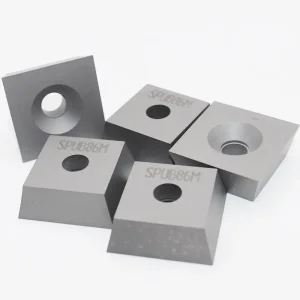
China Factory wholesale boxes tungsten woodworking carbide button inserts Supplier, Factories
Explore Specification
China Square Tungsten special carbide carbide tools button insert Supplier, Suppliers
Explore Specification
China Wholesale SPUB-63 series carbide wood insert milling carbide insert Supplier, Suppliers
Explore Specification
China Wholesale carbide insert cutting tools cnc Supplier, Factory
Explore Specification
China OEM Customizable HIP Processed Square Tungsten Carbide Plate, Polished Flat Blank for Industrial Cutting Tools Manufacturer, Factories
Explore Specification
China Factory supply SPUB86 CVD coating radius tungsten carbide tips brazed insert Manufacturer, Factory
Explore SpecificationLocalized Technical Support & Global Regulatory Compliance
How Jiangxi Zhongfu guarantees supply transparency, customs safety, and dedicated engineering consultation for overseas OEMs.
Full Material Certifications
Every shipment includes comprehensive Inspection Certificates (EN 10204 Type 3.1) detailing exact chemical composition, density, Vickers hardness, coercivity, and magnetic saturation curves.
Conflict-Free RMI Minerals
Fully compliant with the Responsible Minerals Initiative (RMI) and Dodd-Frank Act Section 1502. We provide verifiable Conflict Minerals Reporting Templates (CMRT) verifying smelter origins.
Expedited Global Logistics
Partnered with premier global forwarders to deliver DDP air shipments within 4 to 6 business days to North America and Europe, supported by sea-freight consignment stocking programs.
Frequently Asked Questions: Technical & Commercial Guide
Direct engineering answers covering material grades, EDM processing, tolerances, and custom foundry production schedules.
We utilize high-precision CNC automatic presses equipped with real-time pressure feedback to guarantee homogenous green-body compact density. Furthermore, our sintering cycles take place in state-of-the-art ALD vacuum Sinter-HIP furnaces with multi-zone thermal control within ±2°C. For ground rods and precision blocks, automated centerless grinders and 5-axis profile grinders achieve standard h6 tolerances (down to +0.000/-0.008 mm) and mirror finishes down to Ra 0.05 µm.
Standard tungsten carbide employs metallic cobalt (Co) as the binder phase due to its exceptional wetting of WC grains and high mechanical strength. However, cobalt is ferromagnetic and susceptible to rapid acid leaching in aqueous environments. Nickel-bonded tungsten carbide (WC-Ni) eliminates ferromagnetism entirely (magnetic permeability µ < 1.005), making it critical for MWD/LWD drilling assemblies, magnetic stamping dies, and corrosive petrochemical fluid seals.
Wire EDM generates localized electrical spark temperatures exceeding 10,000°C, which preferentially melts the cobalt binder and creates a brittle recast layer (white layer) typically 0.005 mm to 0.015 mm deep with tensile micro-cracks. When manufacturing stamping dies or punching tools from our YG15 or YG20 blocks, we recommend multiple finish trim passes at lower spark energies, followed by light polishing or chemical etching to eliminate the recast zone and restore ultimate fatigue life.
Yes. Direct customization represents over 60% of our foundry output. If your current tools suffer from chipping, micro-welding, thermal cracking, or chemical erosion, send us worn samples or operating parameters. Our engineering metallurgists analyze the failure mode via scanning electron microscopy (SEM) and calibrate grain sizes (0.4 µm to 3.0 µm) and binder content (3% to 25%) to optimize hardness versus toughness for your application.
For standard inventory items—including h6 ground rods, square plates, and SPUB scarfing inserts—orders dispatch within 48 to 72 hours. For custom-pressed geometries or proprietary die blanks requiring custom tooling, sample prototypes are delivered within 10 to 14 days, with full production batches completing within 3 to 4 weeks. Minimum order quantities depend on part size: custom precision components start at just 10 to 50 pieces, while standard inserts are supplied in standard boxes of 10 pieces.
Recycled scrap carbide reclaimed via zinc recovery methods or acid digestion frequently retains trace tramp impurities like iron, copper, titanium, and silica. In cutting applications, these contaminants create metallurgical weak spots, micro-voids, and erratic cobalt pooling, leading to unexpected fracture under heavy load. Jiangxi Zhongfu exclusively uses 100% virgin sub-micron tungsten derived directly from primary mineral extraction, ensuring uncompromised transverse rupture strength.