High-Yield Tooling Catalog
Precision Cemented Carbide Cutting Inserts & Wear Components
Engineered from certified virgin and high-purity recycled tungsten carbide powders. Sintered through ultra-dense HIP furnaces to deliver micron-level dimensional tolerances.

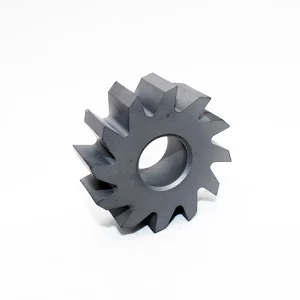
Wholesale Factory Custom Tungsten Carbide Spiral Bevel Gear Milling Cutters
Configure & Quote
China Hot Sale SPUB63M30 Tungsten Carbide OD/Internal Scarfing Insert
Configure & Quote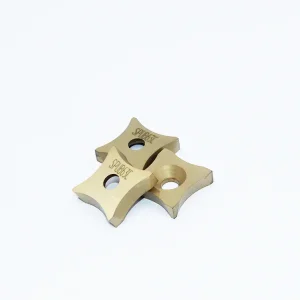
Wholesale Best Price SPUB-63C Tungsten Scrap Brake Lathe Cutting Inserts
Configure & Quote
Wholesale Custom Tungsten Carbide Steel Cutters Concrete Scarifier Blade
Configure & Quote
Dia 8 × 330 mm Nano Grain Size Tungsten Carbide Rods for 0.25 µm Endmills
Configure & Quote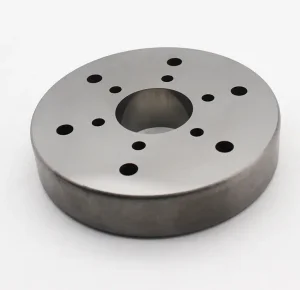
Buy Customized Tungsten Cemented Carbide Wear Parts for Roll Crushing
Configure & Quote
Factory Supply Non-Magnetic Carbide Pin for Jewelry and Precision Gauge
Configure & Quote
Market Intelligence & Valuation
Macro Dynamics of Tungsten Carbide Scrap Pricing (Hartmetall Schrott Preis)
Deciphering European and global price discovery benchmarks, secondary raw material recovery economics, and physical hedging mechanisms across industrial manufacturing hubs.
In contemporary metallurgical commerce, the term Hartmetall Schrott Preis (Cemented Carbide Scrap Price) represents far more than a secondary scrap index; it serves as a critical barometer for raw tungsten concentrates, Ammonium Paratungstate (APT), and refined cobalt briquette pricing on the global stage. Due to tungsten’s classification as a critical strategic raw material by both the European Commission and the U.S. Department of the Interior, recycled cemented carbide scraps—encompassing worn CNC milling inserts, worn-out solid carbide drill blanks, drawing dies, and heavy mining bits—have evolved into prime assets in closed-loop supply chains.
Historically, the pricing structure of scrap carbide (Hartmetall Schrott) was pegged loosely to local scrap metal yards with severe price discounts against primary raw ore. However, modern analytical metallurgy, optical sorting technologies, and automated X-ray fluorescence (XRF) hand-held gun verification have transformed secondary scrap procurement into a highly digitized, transparent, and hedge-linked commodity market. Global enterprises no longer view spent carbide as factory waste; it constitutes high-density, pre-alloyed feedstock that drastically cuts carbon footprints, bypasses primary mining extraction energy, and stabilizes raw material supply against geopolitical disruptions.
APT & LME Index Correlation
Scrap valuation directly correlates with European Fastmarkets and Asian Metal Ammonium Paratungstate (APT) quotations, indexed on a per-kilogram tungsten contained basis.
Scrap Grade Segmentation
Valuation splits into Clean Solids (uncoated solid end mills & drill rods), Multi-Layer Coated Inserts (CVD/PVD TiAlN), Heavy Mining Compacts, and Tungsten Soft Sludge/Grinding Swarf.
Chemical Purity & Cobalt Leaching
Pricing incorporates the cost of chemical zinc process thermal reclamation versus hydrometallurgical digestion, depending on binder percentages (3% to 25% Co/Ni).
| Scrap Category (Hartmetall Sorte) | Typical WC-Co Assay Range | Contamination Allowance | Reclamation Route | Relative Pricing Index (% of APT Basis) |
|---|---|---|---|---|
| Solid Carbide Tooling (VHM Bohrer/Fräser) | WC 88-94%, Co 6-12% | < 0.1% Fe / Brazing Flux | Direct Zinc Thermal Process | 90% – 95% of equivalent contained W |
| Mixed Indexable Inserts (Wendeplatten) | WC 80-92%, Co 5-10%, TiC/TaC/NbC | < 0.5% Steel shanks / screws | Zinc or Hydrometallurgical digest | 82% – 88% of equivalent contained W |
| Mining Buttons & Road Milling Picks | WC 89-94%, Co 6-11% (Coarse Grain) | < 1.0% Sand, rock & braze alloy | De-brazing followed by Zinc Process | 78% – 84% of equivalent contained W |
| Hardmetal Grinding Sludge (Schleifschlamm) | WC 60-80% (Dry basis), Oil/Moisture 15-30% | Contains cooling oil, grinding grit | Hydrometallurgical chemical recycling | 55% – 70% of equivalent contained W |
Enterprise Procurement Strategy
Global Sourcing Mandates: Circular Economy & Hedging Schemes
How Tier-1 aerospace, automotive, and precision manufacturing OEMs integrate scrap buy-back agreements into long-term wholesale supply agreements.
Corporate procurement directors across Germany, the United States, Japan, and South Korea no longer manage cutting tools as purely consumable tooling expenditures. Instead, advanced enterprises deploy a Closed-Loop Circular Procurement (CLCP) framework. Under this operational architecture, the procurement of new tungsten carbide blanks, rods, and indexable inserts is directly interlocked with an authorized buy-back credit system for spent carbide scrap.
By establishing contractual buy-back pricing tied to the ruling Hartmetall Schrott Preis, manufacturing consortiums insulate their bottom-line cost from dramatic price spikes in primary tungsten ore. Furthermore, this circular economy model satisfies stringent ISO 14040/14044 Life Cycle Assessment (LCA) environmental guidelines and fulfills Corporate Sustainability Due Diligence Directive (CSDDD) mandates in the European Union. Utilizing secondary tungsten powders processed from clean scrap slashes the total carbon footprint per kilogram of manufactured carbide by up to 75% compared to virgin ammonium paratungstate derived from open-pit mining.
75%
Carbon Emission Reduction vs Virgin Ore
99.8%
Theoretical Density Post Sinter-HIP
< 8 Hrs
Technical Specification & Pricing Response
20+
Industrial Export Destination Nations
The Metallurgical Dilution Paradox: Virgin vs. Recycled Balance
A vital consideration for precision tooling buyers is determining the optimal metallurgical ratio between virgin tungsten monocarbide and secondary reclaimed powders. While zinc-process reclaimed powders excel in wear plates, stone crushing tips, and heavy impact mining buttons, high-speed micro-drills (< Ø 0.5 mm) and titanium aerospace milling cutters necessitate high-purity submicron virgin grains with strict limitation of trace elements such as iron, calcium, and sulfur.
As an integrated manufacturer and global supplier, Jiangxi Zhongfu Cemented Carbide Co., Ltd. implements strict spectrographic validation. Reclaimed materials destined for high-performance grades undergo extensive chemical hydrometallurgical processing back into pure APT crystals, ensuring that when re-carburized into Tungsten Carbide (WC), the crystal lattice matches virgin ore purity atom for atom.
Smart Manufacturing Ecosystem
China Factory 4.0: Metallurgical Mastery & Scale Efficiency
How our Nanchang production facility leverages geographic proximity to world-class tungsten reserves, Sinter-HIP technology, and automated precision engineering.
Located in Jiangxi Province—the absolute epicenter of global tungsten mining, smelting, and powder synthesis—our 5,000+ square meter facility embodies the pinnacle of China’s Industrial Modernization 4.0. Controlling the entire production continuum from wet-ball milling and spray drying to CNC multi-axis green machining and overpressure Sinter-HIP (Hot Isostatic Pressing), we eliminate intermediate trader markups and deliver institutional pricing resilience directly to overseas wholesalers and equipment manufacturers.
Overpressure Sinter-HIP
100-bar argon atmospheric sintering eliminates micro-voids, elevating transverse rupture strength (TRS) to over 3,800 N/mm².
Submicron Formulations
Patented grain growth inhibitor dosing (VC, Cr3C2) guarantees stable nanoscale microstructures from 0.2 µm to 0.6 µm.
Rigorous Metallography
Every batch undergoes magnetic saturation (4πσ), coercive force (Hc), and Rockwell HRA hardness testing before release.
Custom Shape Sintering
High-speed CNC profile grinding and slow-feeding wire EDM guarantee tolerances up to ±0.002 mm for intricate draw dies.
Real-World Application Environments
Engineering Grade Matching for Severe Industrial Environments
From high-speed tube scarfing in heavy steel mills to non-magnetic downhole oil exploration and railway tamping maintenance.
Tungsten cemented carbide cannot be approached with a one-size-fits-all mentality. Industrial wear resistance represents a delicate equilibrium between extreme micro-hardness (to withstand abrasive cutting actions) and fracture toughness (to absorb devastating mechanical shocks). Understanding the specific operating conditions of our international clients allows our engineering team to formulate custom binder combinations:
Steel Tube Scarfing & Rolling
Heavy duty weld bead removal requires inserts such as SPUB63, SPUB86, and SNMX. Formulated with balanced Co-TiC-Ta(Nb)C solid solutions to endure thermal cracking and continuous red hardness up to 900°C.
Railway Track Tamping & Ballast Maintenance
Tamping tine tools endure violent, cyclical percussion against granite ballast. We employ coarse-grained YG11C and YG15 grades with high cobalt matrices to arrest micro-cleavage crack propagation.
Downhole MWD/LWD & Non-Magnetic Tooling
Oilfield telemetry requires zero magnetic interference. We substitute cobalt entirely with Nickel-Chromium (Ni-Cr) binders, producing non-magnetic wear sleeves resistant to extreme H2S and saline corrosion.
Technical & Commercial FAQ
Frequently Asked Questions on Carbide Pricing, Reclamation & Sourcing
Transparent technical answers directly from our metallurgists and international commercial export desk.
What primary factors govern the daily wholesale Hartmetall Schrott Preis?
The wholesale cemented carbide scrap price (Hartmetall Schrott Preis) is predominantly anchored to the European and Chinese Ammonium Paratungstate (APT) spot index. It is further modulated by three vital physical variables: (1) Total tungsten contained purity verified by XRF/ICP analysis, (2) Scrap physical morphology (clean solid drill rods command premiums over coated inserts or grinding sludge), and (3) Trace contaminant limits—specifically the absence of brazing alloys (Ag, Cu, Zn) or iron clamping screws that necessitate cost-intensive pre-sorting.
Can reclaimed secondary carbide achieve the same mechanical performance as 100% virgin powder?
Yes, provided the reclamation methodology matches the intended end use. Through the Chemical Hydrometallurgical Reclamation Route, scrap carbide is completely digested, purified, and re-crystallized into pure APT, producing secondary tungsten monocarbide powders virtually indistinguishable from virgin ore. For less critical wear applications such as roll crushers, road milling picks, or sand making shoes, Zinc Reclaimed Powders offer identical abrasive wear longevity at an advantageous 20% to 35% cost reduction.
How does Zhongfu Carbide ensure dimensional stability across high-volume OEM production?
Dimensional consistency begins with homogeneous granulate characteristics. We utilize computerized spray drying towers to form uniform, spherical WC-Co agglomerates with superior flowability. Furthermore, our electric pressing dies feature multi-action electronic feedback control to prevent density gradients within the green blanks. Finally, our overpressure Sinter-HIP furnaces utilize localized thermal profiling, keeping shrinkage variations within ±0.05% prior to final precision diamond grinding.
What are the lead times for custom-formulated tungsten carbide wear components?
Standard inventory items (such as standard SPUB/SNMX scarfing inserts, h6 ground round rods, and standard EDM plates) ship within 48 to 72 hours. For custom bespoke parts requiring specialized press tooling, wire EDM profiling, or custom metallurgical powder blending, typical delivery lead times range between 15 to 22 business days, supported by expedited DHL/FedEx air freight or consolidated ocean container shipments to Europe and North America.
How do you handle assay validation and export documentation for overseas bulk contracts?
Every export shipment is accompanied by a formal Mill Test Certificate (MTC) conforming to EN 10204 3.1 standards. This encompasses density (ISO 3369), Rockwell hardness HRA (ISO 3738), coercive force Hc (ISO 3326), magnetic saturation 4πσ, and metallographic micrographs confirming the absence of uncombined free carbon (C-porosity) or brittle eta-phase (W3Co3C). Third-party inspections via SGS or Alex Stewart are accommodated on enterprise framework contracts.
Extended Industrial Inventory
Engineered Wear Parts, Heavy Tooling Inserts & Precision Components
Retaining original product line compatibility. Manufactured to international metallurgical specifications with direct factory wholesale supply pricing.

Custom 60 Knife Variable Speed Fixed Gear Cast Iron Heavy Metal Gear
Configure & Quote
China Tungsten Carbide Tamping Tines for Railway Construction Equipment
Configure & Quote
Buy New Shape Tungsten Carbide Tamping Tine Tools for Railway Maintenance
Configure & Quote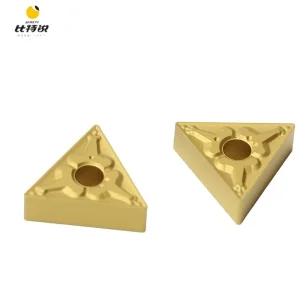
Tungsten Carbide Bar Peeling Insert for Centerless Lathe Steel Rod
Configure & Quote
Wholesale Heavy Tungsten Carbide Scarfing Insert SQ8615WCB
Configure & Quote
Pressureless Sintered Silicon Carbide Plate Polished SiC Ceramic Plate
Configure & Quote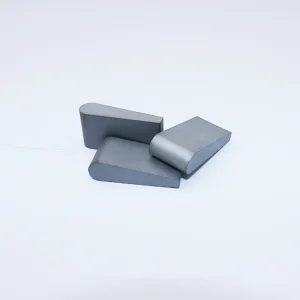
China Optimized Shape Tungsten Carbide Tamping Tines for Track Ballast
Configure & Quote