High-Performance Carbide Dies, Inserts & Blanks
Ultra-dense metallurgical grade stock and precision ground cutting geometries engineered for cold forming, high-impact wire drawing, and slab scarfing lines.







Global State of Forming Dies & Advanced Metallurgy Dynamics
The global transition toward high-strength steels, lightweight non-ferrous alloys, and gigacasting sub-assemblies has altered the engineering requirements for industrial forming dies.
Severe Wear & Micro-Spalling Mitigation
Traditional cold heading and blanking tools suffer from localized abrasive scoring when handling high-strength sheet stock. Sinter-HIP carbide inserts ensure uniform grain cohesion, preventing micro-chipping along critical shearing borders.
Near-Zero Porosity via Hot Isostatic Pressing
Our integrated vacuum Sinter-HIP furnaces apply 10 MPa of inert argon pressure at temperatures exceeding 1400°C. This collapses internal micropores, ensuring structural reliability under extreme hydraulic press cycles.
Total Cost of Ownership (TCO) Optimization
Procurement teams achieve direct bottom-line advantages. While virgin tungsten carbide carries higher initial material investment than tooling steel, it yields 8x to 25x continuous operational cycles, mitigating downtime across production lines.
Emerging Technology Trends Reshaping Industrial Forming Tooling
Continuous evolution in automotive lightweighting, ultra-fast electronics stamping, and battery container deep-drawing requires responsive tooling innovations.
Ultrafine & Nano-Grain WC
Adoption of submicron grain sizes (0.2–0.5 µm) balances rock-hard wear faces (HRA 91–93) with fracture toughness, eliminating edge flaking on thin-gauge battery can drawing punches.
Multilayer PVD & CVD Coatings
Integration of AlTiN, Diamond-Like Carbon (DLC), and multilayer CVD architectures reduces friction coefficients below 0.15, avoiding micro-welding in non-lubricated transfer presses.
Precision Wire-EDM Optimization
Controlled low-cobalt formulations and non-magnetic nickel binders allow wire electrical discharge machining without initiating sub-surface micro-cracks or cobalt-depletion zones.
Additive Pre-Forming Blanks
Near-net shape powder compaction paired with modular multi-cavity press dies minimizes grinding stock allowances, dropping manufacturing turnaround times down to industrial baselines.
Engineering Grade Selection for Forming & Stamping Dies
Forming die lifespan relies directly on harmonizing the carbide binder percentage, grain structure, and density against mechanical load parameters.
| ISO / National Grade | Binder (Co/Ni %) | Density (g/cm³) | Hardness (HRA) | Transverse Rupture (TRS MPa) | Optimal Forming Application Domain |
|---|---|---|---|---|---|
| YG6 (ISO K10-K20) | 6.0% Co | 14.90 - 15.00 | 90.5 | 1900 - 2100 | Light-load sizing dies, wear plates, ceramic tile compaction tooling. |
| YG8 (ISO K20-K30) | 8.0% Co | 14.60 - 14.80 | 89.5 | 2200 - 2400 | Non-ferrous drawing dies, wire flattening rollers, lathe scarfing inserts. |
| YG15 (ISO K40) | 15.0% Co | 13.90 - 14.15 | 87.0 | 2800 - 3100 | High-pressure cold heading dies, progressive piercing punches, fastener tooling. |
| YG20 (Impact Heavy) | 20.0% Co | 13.45 - 13.70 | 85.5 | 3200 - 3600 | Heavy cold extrusion dies, automotive bolt cold-forming, heavy stamping blocks. |
| NM-12 (Non-Magnetic) | 12.0% Ni Base | 14.40 - 14.65 | 88.5 | 2400 - 2600 | Ferrite magnet compacting dies, MWD directional downhole tools, sensor seals. |
Localized Application Scenarios & Turnkey Industry Solutions
From industrial manufacturing corridors across North America and Europe to emerging stamping hubs in Southeast Asia, our forming dies resolve localized wear dilemmas.
Automotive Cold Heading & Fasteners
For fastener production plants across Mexico, the USA, and Germany, our YG15 and YG20 heading die cores endure continuous multi-station upsetting operations without longitudinal split failures.
EV Battery Can Deep-Drawing Lines
Supplying prismatic and cylindrical battery shell manufacturers with mirror-polished (Ra < 0.05 µm) carbide drawing rings that completely eliminate wall thinning, scoring, and burst defects.
Heavy Tube Scarfing & Pipe Calibration
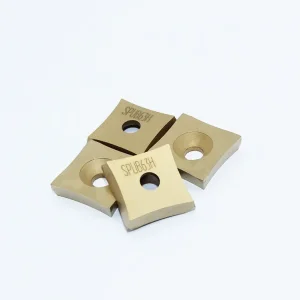
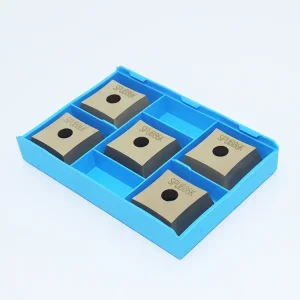
Direct supply of SPUB63 and SPUB86 series scarfing inserts for continuous high-frequency welded (ERW) steel tube mills, stripping internal and external weld beads at high temperatures.
Engineering Roadmap: The Next Decade in Tooling Metallurgy
Our R&D roadmap targets the intersection of powder metallurgy, advanced sensor integration, and sustainable circular recycling.
Phase 1: Zero-Porosity HIP
Continuous refinement of 60-bar pressure sinter-HIP cycles to achieve pore-free metallurgical matrices for ultra-demanding blanking lines.
Phase 2: Nickel Binder Systems
Developing non-ferromagnetic, acid-resistant nickel-chromium bonded dies engineered for harsh chemical compaction and downhole magnetic operations.
Phase 3: Sensorized Smart Dies
Embedding micro-thermocouple and acoustic emission tracking channels inside carbide casing collars for predictive tooling life analytics.
Phase 4: Circular Zinc Recycling
Adopting clean zinc-recovery technology to reclaim virgin-quality WC crystals without increasing the tooling's baseline carbon footprint.
Phase 5: Sub-Micron Precision Grinding
Automated multi-axis CNC contour grinding delivering profile tolerances to within ±0.001 mm on intricate cold punch forms.
Frequently Asked Questions on Wholesale Forming Dies
Critical metallurgical answers for tooling designers, manufacturing directors, and supply chain managers.
Cemented Carbide Wear Parts & Tooling Inserts
Explore our secondary lineup of precision brazed tips, gear cutters, ceramic composites, and custom-ground wear parts available for global OEM supply.